
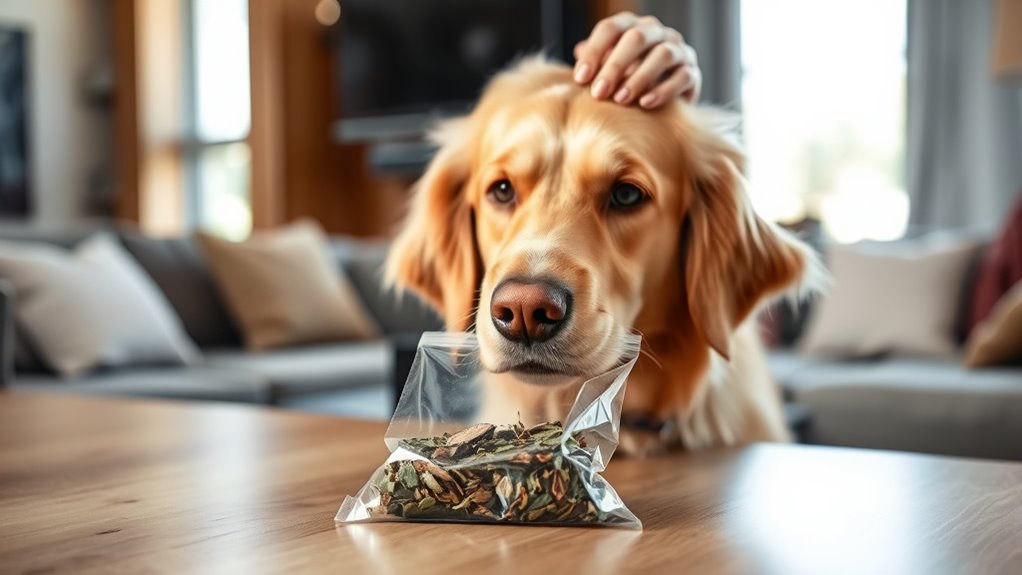
How to Train Your Dog to Smell Through Vacuum-Sealed Bags
You can train your dog to smell through vacuum-sealed bags by starting with bags that are only partially sealed. This way, some scent can escape, making it easier for your dog to catch the smell.
Place treats inside and reward your dog immediately when they find them. Use praise and high-value treats to keep motivation high.
As your dog gains confidence and skills, gradually tighten the seals on the bags. This method helps build reliable detection and keeps your dog enthusiastic about the game.
Keep going, and you’ll discover how to increase the challenge and deepen your dog’s scent abilities. It’s a fun way to sharpen their nose and boost their confidence!
Key Takeaways
- Begin training with high-quality vacuum bags that have slight gaps to allow scent molecules to escape for detection.
- Place treats inside partially sealed bags and reward your dog immediately upon successful scent detection.
- Gradually tighten the bag seals over time to increase the difficulty of scent detection.
- Use positive reinforcement such as praise and high-value treats to motivate and encourage your dog.
- Progress from simple scent setups to odor-proof, multi-layered bags to build reliable detection skills.
It’s all about patience and keeping things fun for your pup!
Start Training With Partially Sealed Vacuum Bags
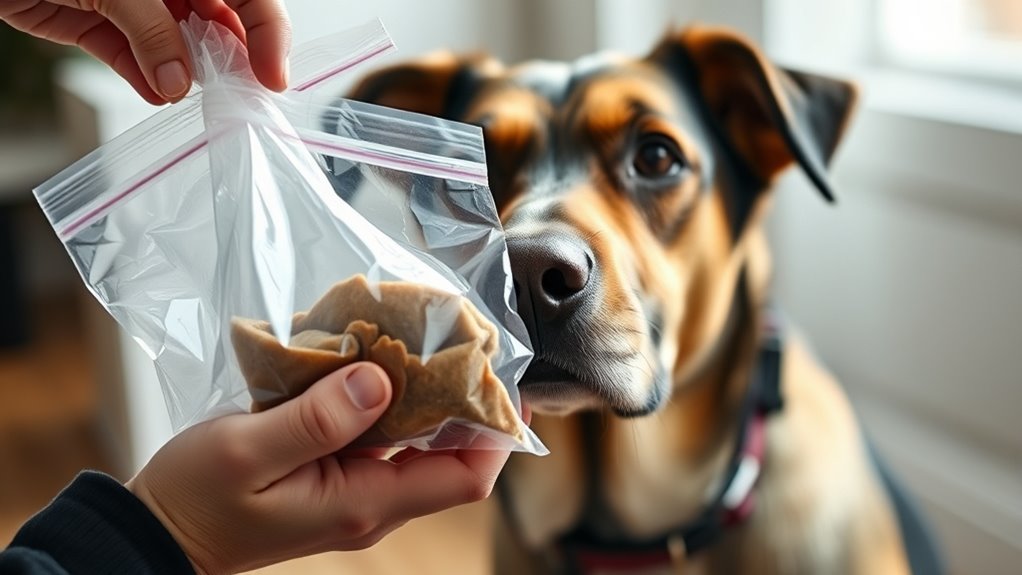
When you start training your dog to detect scents, using vacuum-sealed bags that are only partially sealed can make the process easier. These high-quality vacuum bags with slight gaps let scent molecules escape just enough for your dog to smell through, which is vital in early scent detection training.
You’ll want to place treats or scented objects inside the partially sealed bags to help your dog associate the scent with a reward. This connection builds your dog’s confidence and enthusiasm during training sessions.
Keeping the bags at room temperature also helps maintain consistent scent release, allowing your detection dogs to focus on the target odor. As your dog improves, gradually tighten the seal on the vacuum bags to increase the challenge.
This step-by-step approach guarantees your dog develops strong scent detection skills, making each training session both effective and rewarding.
Use Positive Reinforcement to Detect Treats in Vacuum Bags
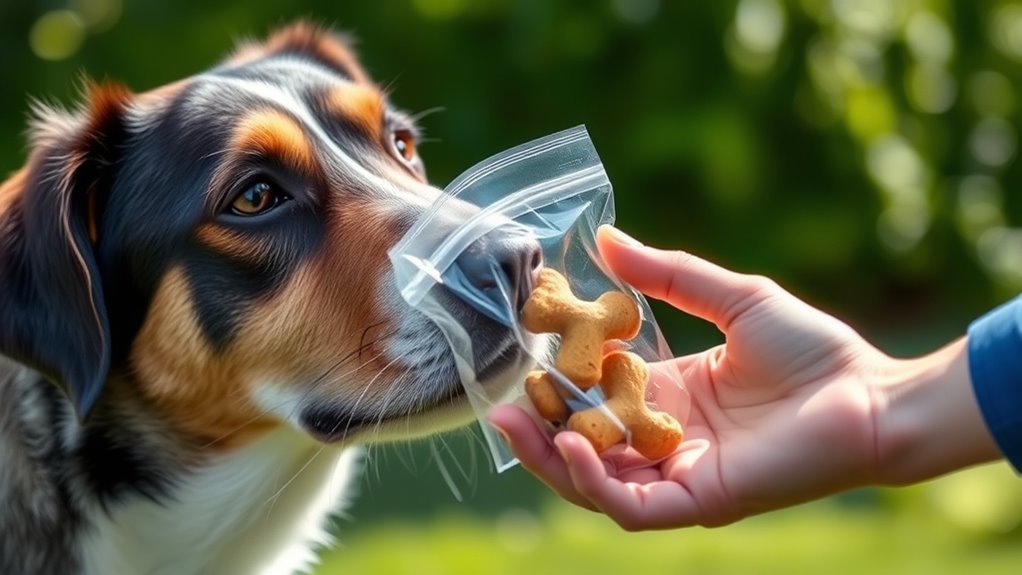
Although scent detection can be challenging, using positive reinforcement makes it easier for your dog to learn and actually enjoy the process. When your dog successfully detects treats inside vacuum-sealed bags, reward them immediately with high-value treats and plenty of praise. This positive reinforcement boosts their motivation and encourages them to want to do it again.
During training, keep sessions short and frequent to keep your dog excited and to prevent them from getting tired. Start with partially sealed bags and then slowly make it harder by using odor-proof, tightly sealed vacuum-sealed bags or even multi-layered setups.
Consistency is key here—always reward your dog when they successfully find the treats. This helps reinforce their scent detection skills and builds a reliable ability to locate treats, even when they’re well concealed.
Incorporating positive reinforcement into your dog’s scent work not only sharpens their ability but also makes training fun for both of you. With some patience and regular rewards, your dog will become a pro at sniffing out treats through vacuum-sealed bags in no time.
Frequently Asked Questions
Can Dogs Smell Through Vacuum Seal Bags?
Yes, your dog can smell through vacuum seal bags because tiny scent leaks exist.
You’ll find that with training, your dog can detect odors despite airtight seals. Especially if microscopic flaws or surface contamination are present.
How to Train Your Dog to Smell?
Think of scent training as planting seeds in your dog’s nose garden. You start by rewarding them for finding smells, then gradually hide scents deeper.
With patience, you’ll watch their sniffing skills bloom beautifully. It’s all about taking it step by step and having fun together. Keep it light and encouraging!
Can Sniffer Dogs Smell Through a Smell Proof Bag?
Yes, your sniffer dog can often smell through smell-proof bags because tiny scent particles escape through seals or microscopic flaws.
Keeping bags clean and sealed tightly helps, but trained dogs still might detect odors inside.
Can Dogs Smell Drugs Through an Airtight Container?
You might think airtight containers trap scents like a fortress, but dogs can still sniff drugs through them. Their noses catch even the tiniest leaks or scent traces on the surface, making detection nearly impossible to hide.
It’s pretty amazing how sensitive their noses are. Even if you think the scent is sealed tight, dogs can pick up on those subtle clues. So, trying to hide drugs in airtight containers? Not as foolproof as you might hope.
Conclusion
Now that you’ve started training with partially sealed bags, you’ll build your dog’s confidence. As you use positive reinforcement, you’ll strengthen their skills and deepen your bond.
When your dog detects treats through vacuum-sealed bags, you’ll celebrate success and encourage progress. Keep practicing, keep rewarding, and keep enjoying the journey together.
With patience, persistence, and positivity, you’ll train your dog to master smelling through vacuum-sealed bags in no time. Remember, the key to success is consistent training and lots of positive reinforcement.
By focusing on these steps, you’ll help your dog become a pro at sniffing through vacuum-sealed bags, making the whole process fun and rewarding for both of you. Keep it up, and you’ll see amazing results before you know it!




One Comment