Can You Vacuum Diatomaceous Earth?
You can vacuum diatomaceous earth, but only if you use a shop vac or a vacuum fitted with a HEPA filter. This helps avoid damage and controls the fine dust that DE creates.
Regular household vacuums often clog or get ruined by DE’s abrasive particles.
Vacuum slowly and carefully to prevent dust from spreading or settling deeper into surfaces.
Using the right equipment and technique keeps your space and vacuum safe.
Want to know which tools work best and how to clean effectively? Keep exploring!
Key Takeaways
- Vacuum diatomaceous earth only with a shop vac or a vacuum equipped with a HEPA filter to avoid damage and clogging. Regular household vacuums are not recommended for DE as they can clog and harm the motor.
- Use slow, deliberate suction to minimize dust dispersal and ensure effective cleanup of DE particles. Shop vacs with strong suction and HEPA filters are ideal for safely vacuuming abrasive, fine DE particles.
- Alternatively, consider sweeping or wiping DE with a damp cloth to avoid vacuum-related risks. This way, you can clean up without worrying about damaging your vacuum.
When Is It Okay to Vacuum Diatomaceous Earth?
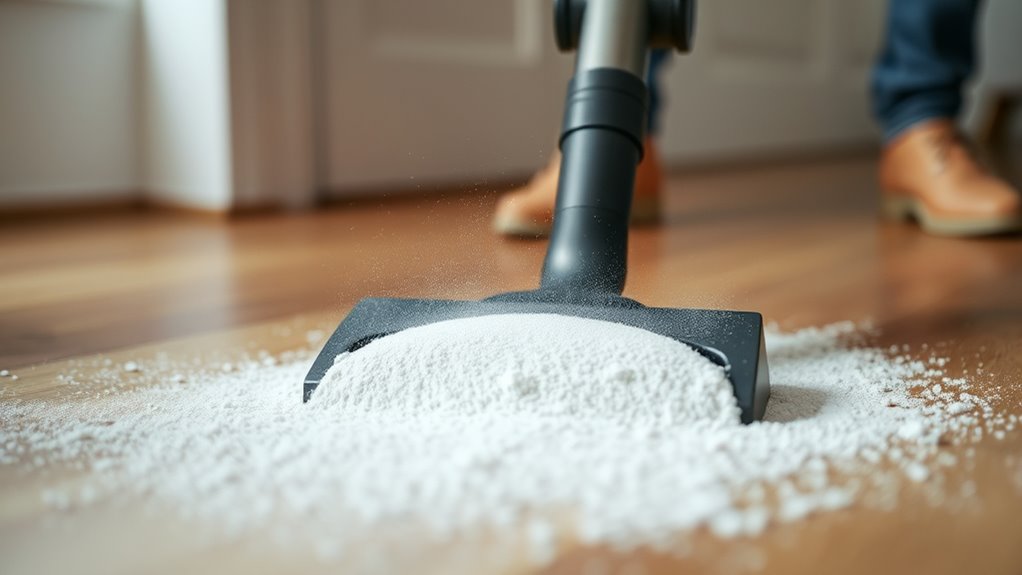
Although vacuuming diatomaceous earth (DE) with a regular household vacuum isn’t recommended because it can clog and damage your machine, you can safely vacuum it if you use a shop vac or a vacuum with a high-quality HEPA filter.
Vacuum diatomaceous earth only with a shop vac or a vacuum equipped with a HEPA filter to prevent damage.
When you’re cleaning up DE for pest control or powder removal, using the right equipment is super important. This helps avoid damage to your vacuum and prevents it from getting clogged.
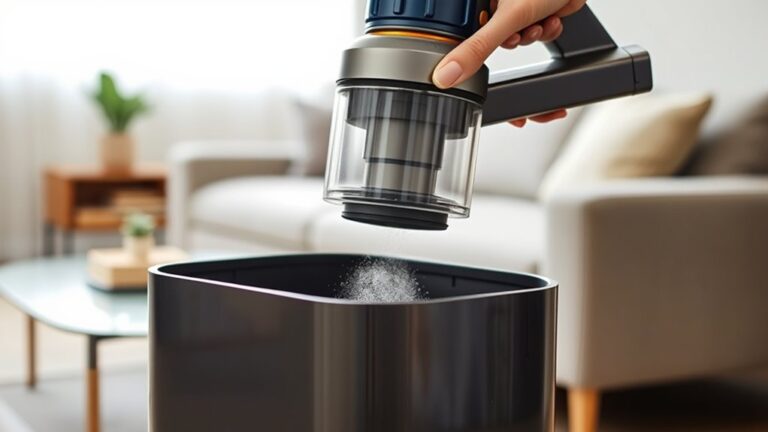
A shop vac is designed for heavy-duty tasks, so it handles those fine, abrasive particles much better than your standard vacuum. On the other hand, a good HEPA filter traps airborne dust, which reduces the chance of DE particles spreading around in the air.
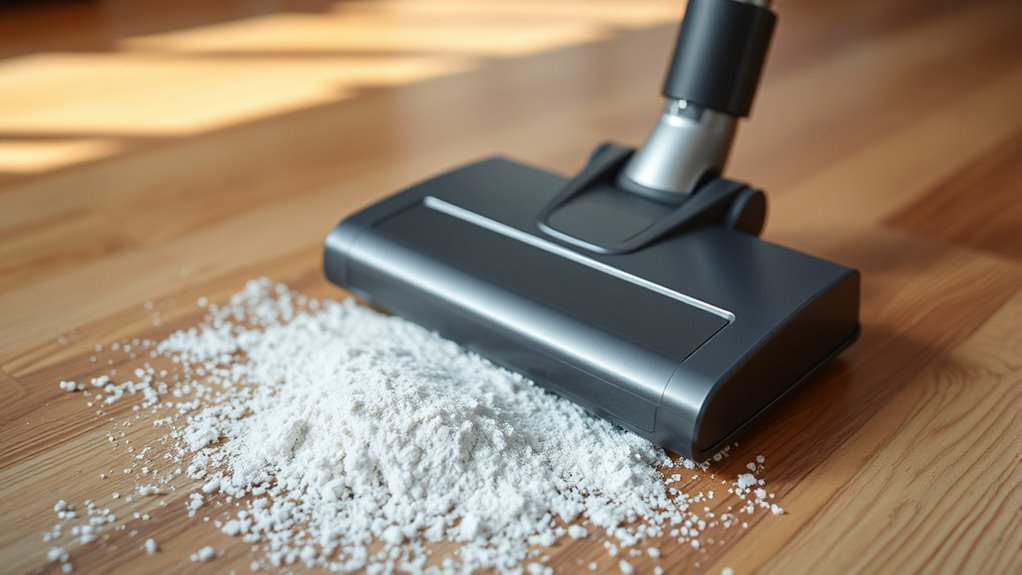
To keep dust from flying everywhere, vacuum slowly and carefully. Try not to push the powder deeper into surfaces.
Vacuuming DE can be tricky, but if you take these precautions, you’ll clean up effectively without harming your vacuum or creating a dusty mess. So, only vacuum DE when you’ve got the right tools and know-how to keep both your space and equipment safe.
Best Vacuum Types and Alternatives for Cleaning Diatomaceous Earth
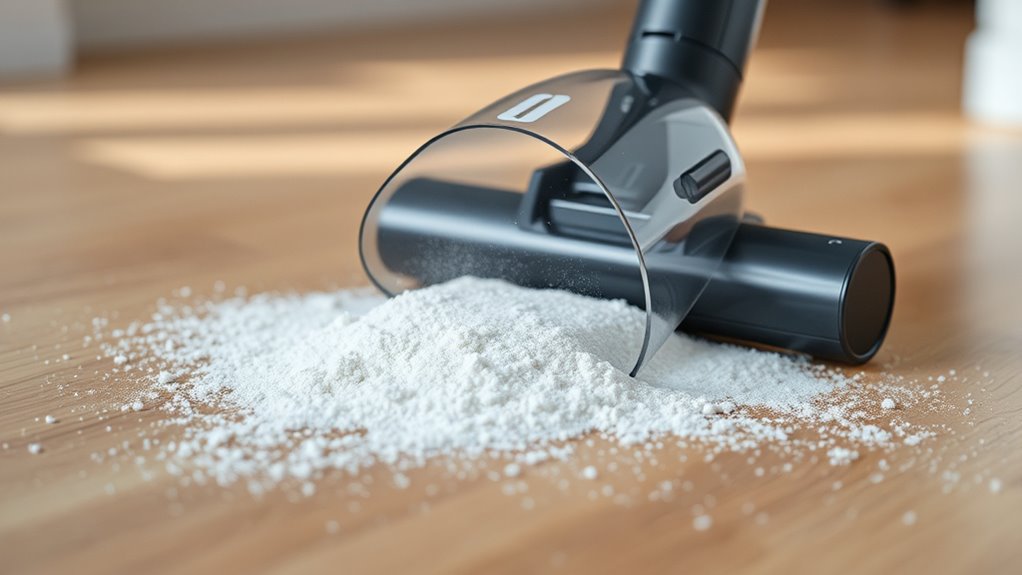
Choosing the right vacuum for cleaning diatomaceous earth (DE) makes all the difference in protecting your equipment and getting the job done efficiently. A shop vacuum with strong suction and durable construction is your best option. Regular vacuum cleaners often get clogged or suffer damage from DE’s abrasive powder.
Opt for a filterless vacuum or one equipped with a HEPA filter designed to handle fine particles without clogging or leaking dust back into the air. Use slow, deliberate suction to prevent overloading the vacuum and to capture DE thoroughly.
Many standard vacuum cleaners, especially bagged models, aren’t suitable—they risk clogging and motor damage. If you want to avoid vacuum issues altogether, consider alternative cleaning methods like sweeping with a dustpan or wiping with a damp cloth.
These approaches reduce the chance of vacuum damage while effectively removing diatomaceous earth from your space.
Frequently Asked Questions
Is Diatomaceous Earth Safe for Vacuums?
Diatomaceous earth isn’t safe for most vacuums because it can clog and damage motors. You should only use a durable shop vac with a HEPA filter to protect your vacuum and avoid overheating or clogging issues.
It’s kind of a delicate situation. Regular vacuums just aren’t built to handle those tiny, abrasive particles. So, if you want to keep your vacuum running smoothly, stick to a heavy-duty shop vac instead.
How Long Should Diatomaceous Earth Sit Before Vacuuming?
You might want to wait 24 to 48 hours before vacuuming diatomaceous earth. Letting it settle reduces dusty clouds and protects your lungs and vacuum.
This way, cleanup is safer and more effective than rushing in immediately. It’s definitely worth the wait!
Is It Safe to Sleep in a Room With Diatomaceous Earth?
Yes, you can safely sleep in a room with diatomaceous earth if you avoid inhaling dust, keep it undisturbed, and guarantee proper ventilation.
Wearing a mask during cleanup and moistening DE helps reduce airborne particles.
Why Do Exterminators Not Use Diatomaceous Earth?
Exterminators don’t use diatomaceous earth because it’s messy, damages vacuums, and loses effectiveness when wet.
You’ll find chemical treatments or traps are easier to apply, manage, and pose fewer health risks during cleanup.
Plus, these options tend to work faster, which is what most people want when dealing with pests.
Conclusion
When you vacuum diatomaceous earth, imagine a fine, powdery ghost swirling in the air, ready to settle again if you’re not careful. You can vacuum it safely only with a vacuum equipped with a HEPA filter, capturing those tiny, sharp particles.
Otherwise, opt for a damp cloth or broom to gently gather the dust. Protect your lungs and keep the air clear—because handling diatomaceous earth calls for care as delicate as the powder itself.
So, can you vacuum diatomaceous earth? Yes, but only with the right equipment, like a HEPA-filter vacuum. If not, it’s better to avoid vacuuming altogether to prevent inhaling the fine dust. Using a damp cloth or broom is a safer and more effective way to clean it up without stirring up harmful particles. Always prioritize your health and safety when dealing with diatomaceous earth.