How to Use a Vacuum Pump in 10 Essential Steps
To use a vacuum pump effectively, start by preparing your work area and gathering all the necessary tools. Make sure you have everything on hand before you begin to keep things running smoothly.
Next, inspect the pump and accessories for any damage and check the oil condition.
Connect hoses and fittings securely to prevent leaks—that step is super important. Once everything is tight and in place, start the pump while keeping an eye on the oil level and temperature.
Use the vacuum gauge to reach and maintain your target vacuum, and watch out for any leaks or unusual signs.
After you finish testing, release the pressure safely and clean the pump thoroughly.
Regular maintenance like this will help prolong the life of your vacuum pump. Following these steps guarantees smooth, reliable operation and helps you get the best performance every time.
Key Takeaways
– Prepare a clean, stable work area and gather all necessary tools before starting the vacuum pump.
It’s best to have everything ready so you don’t have to stop midway.
– Inspect the pump, hoses, gauges, and power connections for damage or leaks prior to use.
You want to catch any issues early to avoid problems later.
– Connect vacuum-rated hoses securely, check for leaks with soapy solution, and ensure airtight fittings.
This step is key to making sure your vacuum pump works efficiently.
– Start the pump gradually, monitor oil level, temperature, and vacuum gauge readings to maintain proper operation.
Keep an eye on those gauges to make sure everything runs smooth.
– Release pressure safely after use, perform maintenance like oil changes, and store the pump in a ventilated area.
Taking care of your pump will help it last longer and work better next time.
Prepare Your Work Area and Gather Tools

Before you begin using the vacuum pump, make sure your work area is clean, well-ventilated, and free of dust, debris, or corrosive chemicals. This guarantees safety and prevents contamination that could affect the vacuum pump’s performance.
Next, check that your work surface is flat, stable, and vibration-free to keep your equipment steady during operation. Gather all necessary tools, including the vacuum pump itself, hoses, gauges, adapters, and safety gear like gloves and eye protection.
Arrange everything within easy reach to streamline your workflow and avoid unnecessary movement. Keeping your work area organized not only saves time but also reduces the risk of accidents.
Inspect the Vacuum Pump and Accessories Before Use

Before you start, check the vacuum pump for any visible damage or leaks. Make sure all accessories like hoses and gauges are clean, connected properly, and compatible with your pump.
Don’t forget to inspect the power cord and verify the oil level if your pump requires lubrication. It’s always better to be safe than sorry!
Check Pump Condition
Although it might be tempting to skip this step, you should always inspect your vacuum pump and its accessories carefully before use. First, visually check the pump for any damage, leaks, or worn seals that could affect performance.
Make sure the oil level is sufficient and that the oil is clean and free of contaminants. Dirty oil can cause mechanical issues, so don’t overlook this part.
Next, examine all accessories like hoses and adapters to ensure they’re clean, undamaged, and properly connected. It’s important to double-check these before you start.
Don’t forget to check the power cord and electrical connections to confirm they’re intact and meet voltage requirements. Safety first, right?
Finally, briefly run the pump to listen for unusual noises or vibrations. These signs can indicate mechanical problems that need attention before you proceed.
Verify Accessory Completeness
After checking the pump’s condition, turn your attention to the accessories that come with it. Make sure all necessary accessories—hoses, adapters, and gauges—are present and compatible with your vacuum pump.
Inspect the vacuum pump and accessories visually for any damage, leaks, or worn seals that could reduce performance. Check that vacuum-rated hoses and fittings are clean, crack-free, and properly connected to prevent leaks during operation.
Verify the gauge is working correctly and calibrated to provide accurate pressure or vacuum readings. Confirm all connections are secure and no parts are missing or damaged.
Doing this guarantees your vacuum pump and accessories operate safely and efficiently. It helps you avoid potential issues during use.
Connect and Secure Vacuum Pump Connections to Prevent Leaks

When you connect a vacuum pump, make sure all hoses and fittings are vacuum-rated and tightly secured to prevent leaks during operation. Use appropriate adapters and seals to guarantee airtight connections between the pump and system.
Avoid kinks or sharp bends in hoses, as these can cause pressure loss or leaks. Firmly tighten all fittings and clamps, but don’t over-tighten to avoid damaging components.
After securing the connections, conduct a leak test by applying a soapy solution to each joint. Watch closely for bubbles, which indicate leaks that need correction.
Properly connecting and securing your vacuum pump’s connections is essential for efficient operation and accurate evacuation. Taking these steps will help you avoid unnecessary downtime caused by leaks, ensuring your vacuum pump performs reliably every time.
Start the Vacuum Pump and Monitor Oil & Temperature
Before you start the vacuum pump, check that the oil level is within the recommended range and free of contaminants.
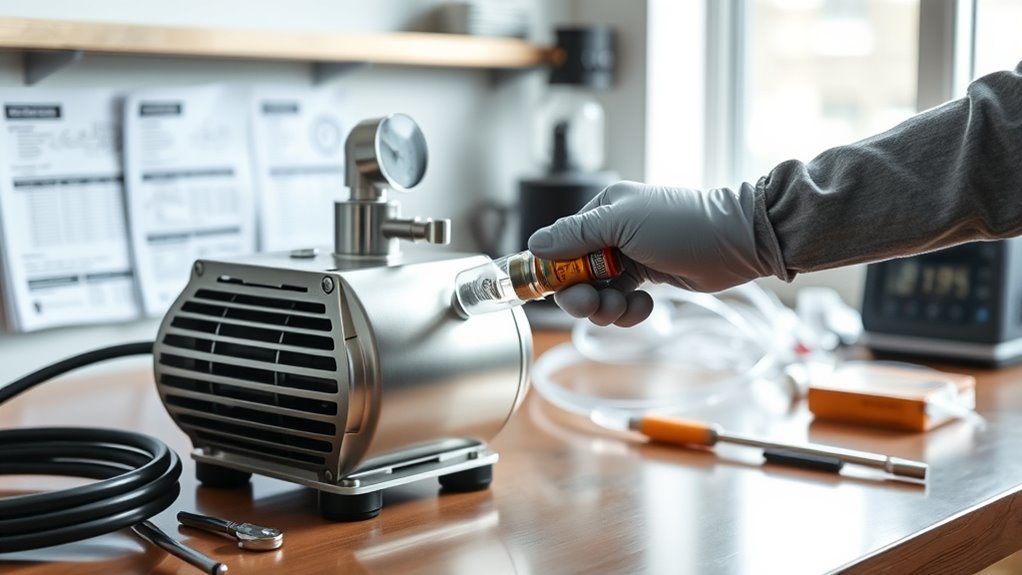
Turn on the pump slowly while monitoring the temperature using an infrared thermometer or the HMI display.
Keep an eye on both oil condition and temperature to guarantee the pump runs smoothly and safely.
It’s important to stay alert during this process to avoid any issues. Just take it step by step, and you’ll be good to go!
Oil Level Inspection
How do you guarantee your vacuum pump runs smoothly during operation? First, start the pump and check the oil level using the sight glass or dipstick to ensure it’s within the recommended range. Maintaining the proper oil level is vital for effective lubrication and performance.
During initial startup, monitor the oil temperature closely to prevent overheating. Keep an eye out for any unusual discoloration or contamination in the oil, as these signs can indicate internal wear or problems.
Add oil as needed, especially during prolonged use, to keep the level stable. After you turn off the pump, perform another oil level check and inspect the oil’s condition to confirm no excessive degradation or contamination has occurred. This helps extend your pump’s lifespan.
Temperature Monitoring Methods
After checking the oil level and condition, start the vacuum pump and let it run for several minutes to reach its operating temperature. Use an infrared thermometer or a temperature sensor on the pump housing to measure the surface temperature during operation.
Regular temperature monitoring helps you guarantee the oil temperature stays within the recommended range, typically between 35°C and 50°C (95°F to 122°F). Keep an eye on temperature fluctuations since a rising temperature might indicate overloading or insufficient cooling.
Also, monitor the vacuum level alongside temperature to detect any performance issues early. Record temperature readings during startup and after extended operation to confirm consistent thermal performance.
This approach keeps your vacuum pump running efficiently and prevents damage caused by overheating or improper vacuum levels. It’s a simple step that goes a long way in maintaining your equipment.
Use the Vacuum Pump Gauge to Achieve Vacuum Level
Once you connect the vacuum pump gauge securely to the system, you can turn on the pump and watch the pressure drop on the gauge as it works toward the specified vacuum level. Attach the vacuum gauge directly to the component you’re testing, guaranteeing a tight, airtight seal to avoid false readings.
As the pump runs, monitor the gauge closely—the pressure will decrease, showing you’re moving closer to your target vacuum. Keep pumping until the gauge hits the manufacturer’s specified level, usually noted in microns or inches of mercury.
Hold the reading steady for several seconds to confirm you’ve achieved vacuum properly. If the gauge doesn’t reach the target level or fluctuates, don’t proceed just yet.
Instead, check the system for leaks or blockages that might prevent you from achieving vacuum. Using the vacuum gauge accurately makes sure your system is properly evacuated before you move on to the next step.
Check the System for Leaks or Abnormal Movement
Before you start, guarantee the vacuum pump to the system’s service port to ensure a tight seal. Watch the vacuum gauge closely for any pressure changes that could signal leaks or abnormal movement.
You can also inspect joints visually and listen for unusual sounds to pinpoint potential issues. This way, you catch problems early before they get worse.
Visual Leak Inspection
How do you quickly spot leaks or abnormal movement in your system? First, connect the vacuum pump using vacuum-rated hoses, making certain every connection is airtight. This setup is essential for accurate leak detection.
Once the pump is running, inspect the system closely by spraying a soap solution or leak detection fluid around joints, valves, and seals. Look for bubbles forming, which indicate escaping air.
Keep an eye on the vacuum gauge for any sudden drops or fluctuations, as these suggest leaks or damage. Finally, confirm the system holds a stable vacuum over time.
If the gauge remains steady and you see no bubbles, you’ve successfully inspected the system and guaranteed it’s leak-free. Easy, right?
Detect Abnormal Movement
Where should you focus to catch abnormal movement or leaks in your system? Start by securely connecting the vacuum pump to the system component or test port to guarantee an airtight seal.
Once you operate the pump and create a vacuum, closely observe connected parts like actuators or valves for any unexpected motions. Listen carefully for hissing sounds, which can help you detect leaks.
Maintain the vacuum for the specified time, monitoring the gauge for pressure drops that signal slow leaks or irregular behavior. After releasing the vacuum, inspect the system again for any movement or leaks that persisted or appeared during testing.
Use Vacuum Gauge
Why should you use a vacuum gauge when checking your system for leaks or abnormal movement? A vacuum gauge helps you monitor system integrity by providing accurate readings of vacuum pressure.
Attach the gauge securely at a clean connection point and watch for stable readings. A steady vacuum means no leaks, while a rising needle signals potential problems.
Record initial levels and observe changes over time to detect slow leaks. Confirm the system holds vacuum for several minutes without pressure increase, then compare readings to manufacturer specs for leak detection.
| Reading Type | Meaning | Action Required |
|---|---|---|
| Steady Vacuum | System integrity intact | No action needed |
| Rising Needle | Leak or abnormal movement | Inspect and repair |
| Pressure Stable | Holds vacuum as expected | Confirm system is sealed |
Maintain Vacuum and Monitor Pump Performance
When do you know your vacuum pump is performing at its best? You monitor vacuum gauge readings continuously during operation to guarantee the system maintains the desired vacuum level, typically around 500 microns.
Regularly check the pump’s oil condition and level—oil changes are vital to prevent loss of vacuum caused by oxidation or poor lubrication.
Keep an eye out for unusual noises, vibrations, or rising temperatures. These signs often point to leaks or performance issues.
Use flowmeters and vacuum gauges to verify that your pump meets manufacturer specifications, confirming consistent flow rates and vacuum stability.
Don’t forget to schedule periodic maintenance such as oil changes and filter inspections to sustain efficiency. It really helps keep everything running smoothly.
Release Pressure Safely After Testing
How do you safely release pressure after using your vacuum pump? First, always turn off the pump before starting the pressure release process. Then, use the release button or knob on the pump to vent the system slowly.
This helps equalize pressure and prevents sudden bursts or damage. Never rush this step.
Before disconnecting any hoses or components, double-check that the system is fully depressurized. You can verify this by looking at the pressure gauge—it should read zero or atmospheric pressure.
Following the manufacturer’s instructions for pressure release is vital to avoid damaging the pump or connected parts. By taking these precautions, you guarantee you handle pressure release safely, protecting both yourself and your equipment.
Clean and Maintain Pump After Use
Although it might be tempting to skip this step, cleaning and maintaining your vacuum pump after each use guarantees it performs effectively and lasts longer. Start by cleaning the exterior with a damp cloth to remove dust and debris.
Next, drain any residual oil and replace it with fresh, manufacturer-recommended oil to prevent contamination. Be sure to inspect and clean filters, vents, and inlet/outlet ports to maintain unobstructed airflow and proper ventilation.
This helps avoid performance issues caused by blockages. After cleaning, store your pump in a cool, dry, and well-ventilated area to prevent moisture buildup and corrosion.
While cleaning, periodically check for signs of wear or damage. Address any minor repairs or part replacements promptly to keep your pump functioning at its best.
Schedule Regular Maintenance to Extend Pump Life
Regular maintenance plays a crucial role in keeping your vacuum pump running smoothly and extending its lifespan. To guarantee your pump stays reliable, you need to follow a consistent maintenance routine.
Key steps include:
- Change the pump oil every 3-6 months to prevent wear and maintain sealing performance. This simple step goes a long way in keeping things running well.
- Clean or replace filters regularly, especially when clogged or worn. This helps keep airflow ideal and avoids contamination.
- Schedule annual inspections to catch early signs of component wear. Fixing issues early means you can avoid bigger problems down the line.
- Keep the pump and its surroundings clean from dust and debris. This reduces internal damage and lowers the risk of overheating.
Sticking to these maintenance tasks, along with following the manufacturer’s guidelines, will help you avoid costly repairs and downtime. By prioritizing oil changes and regular check-ups, you’ll maximize your vacuum pump’s efficiency and lifespan.
Frequently Asked Questions
How to Use a Vacuum Pump Correctly?
You connect the pump securely and turn it on. Then, gradually build the vacuum while watching the gauge.
Keep it running for a bit to check for any leaks. Once the desired vacuum level holds steady, carefully disconnect the pump.
What Is the Correct Method for Starting the Vacuum Pump?
You start the vacuum pump by ensuring all connections are sealed and checking the oil level. Then, turn it on gradually.
Make sure to monitor the gauge carefully as it reaches the recommended vacuum. Also, it’s best to run it in a well-ventilated area for safety.
How Is a Vacuum Pump Used?
You’ll use a vacuum pump by connecting it securely, then starting it to remove air and moisture.
Did you know it can create vacuums as low as 0.001 torr? That helps ensure accurate system testing and leak detection.
How Long Should You Leave a Vacuum Pump On?
You should leave the vacuum pump on for 15 to 30 minutes, depending on your system size and pump capacity.
Always monitor the vacuum gauge and turn it off once the desired vacuum level holds steady. It’s a good idea to keep an eye on things so you don’t run it longer than necessary.
Conclusion
Using a vacuum pump might seem tricky at first, but with these steps, you’ll handle it like a pro. Remember, every connection secured and every gauge monitored brings you closer to flawless results.
Think of the pump as your trusty partner—treat it well with proper care and maintenance. It’ll serve you faithfully for years.
So, don’t just use the pump—master it. With the right techniques, your vacuum pump will help your projects reach new heights, ensuring efficiency and precision every time.