
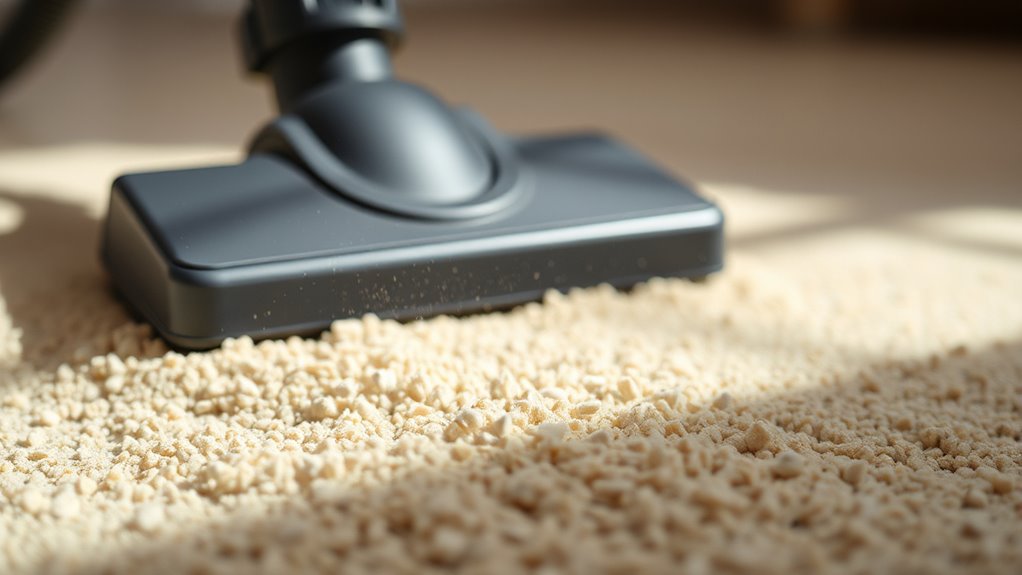
Can You Vacuum Cat Litter?
You can vacuum dry, loose cat litter safely if you use a pet-specific vacuum with strong suction and sealed HEPA filters. These vacuums are designed to handle pet messes without spreading dust or allergens around.
Avoid vacuuming wet or clumping litter, as moisture can damage your vacuum and cause blockages.
Use appropriate attachments to prevent scattering and vacuum small amounts at a time. This helps keep the mess contained and makes cleanup easier.
Regularly clean or replace filters to maintain performance.
Following these tips keeps your home cleaner and your vacuum working well. Keep going to discover how to choose and use the right vacuum for litter cleanup.
Key Takeaways
- Vacuuming dry, loose cat litter like clay or silica is safe when using a pet-specific vacuum designed for fine particles. Just make sure the litter is completely dry before you start.
- Avoid vacuuming wet or clumping litter to prevent damage and blockages in the vacuum cleaner. It’s best to scoop those out by hand instead.
- Use vacuums with strong suction and sealed HEPA filters to contain dust and allergens effectively. This helps keep the air cleaner while you vacuum.
- Employ appropriate attachments and vacuum small amounts at a time to avoid scattering litter and overloading the vacuum. Taking it slow makes the job easier and less messy.
- Regularly clean or replace filters and empty the dustbin to maintain vacuum performance and hygiene. Keeping up with this will help your vacuum last longer too.
Is It Safe and Effective to Vacuum Cat Litter?
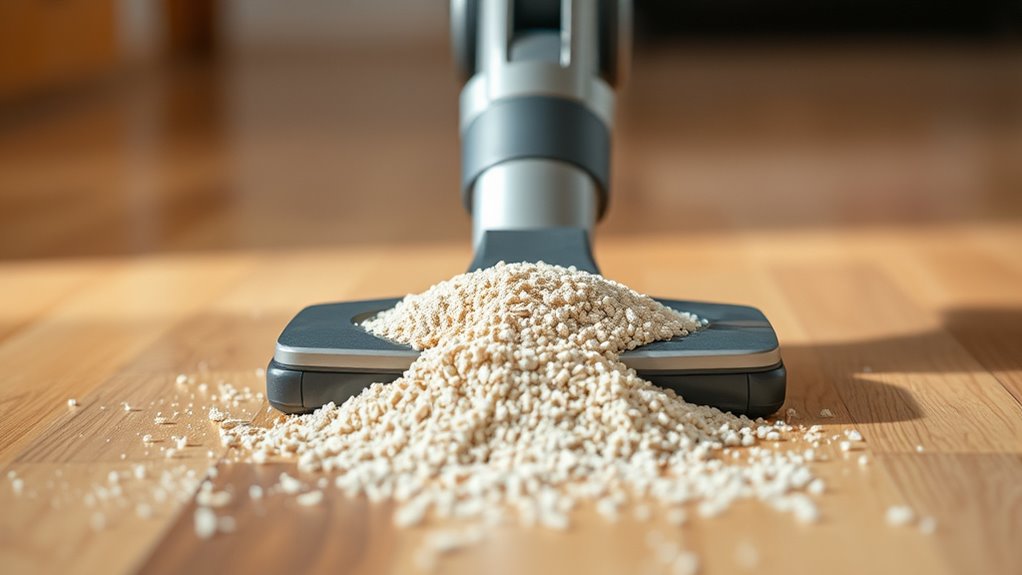
Although vacuuming cat litter can seem convenient, you should only do it with dry, loose litter like clay or silica and a pet-specific vacuum designed to handle fine particles.
Vacuuming cat litter is safe when you avoid wet litter or clumping litter, as moisture can damage your vacuum and cause blockages.
Using a pet-specific vacuum with strong suction and sealed filters helps capture fine dust from litter, preventing filter clogging and maintaining suction power.
To protect your vacuum, vacuum small amounts at a time and use proper attachments to avoid overloading the motor.
Regular vacuum maintenance is essential—clean filters frequently and empty the dustbin to keep your vacuum running efficiently and safely.
Ignoring these precautions can lead to reduced performance and costly repairs. So, sticking to dry litter and a vacuum made for pet messes ensures effective and safe cleanup every time.
How to Choose and Use a Vacuum for Cat Litter Cleanup
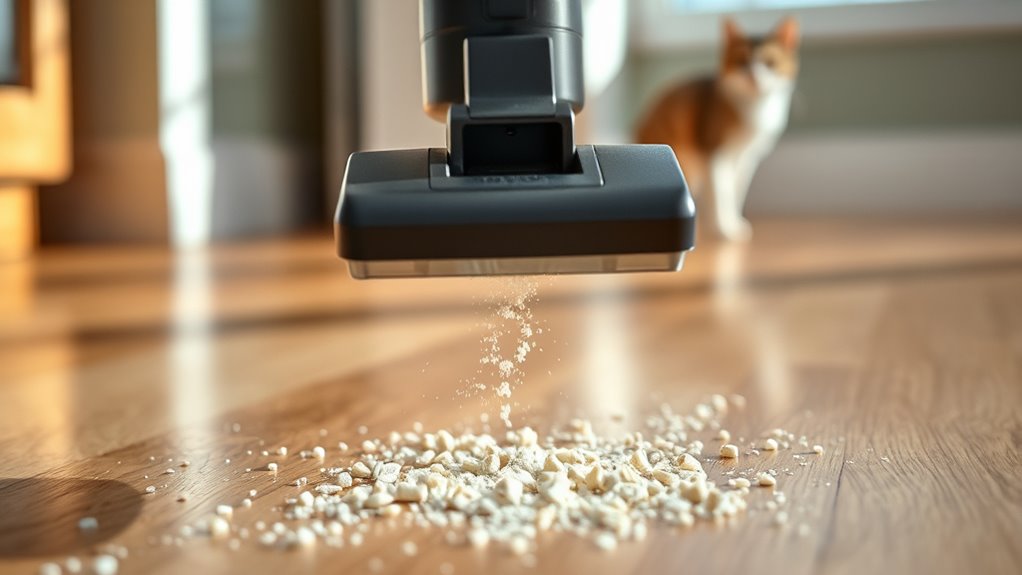
When you choose a vacuum for cleaning up cat litter, focus on models with sealed HEPA filters and strong suction to capture fine dust and prevent it from spreading. A sealed vacuum guarantees litter dust doesn’t escape back into the air, making cleanup more effective.
Choose vacuums with sealed HEPA filters and strong suction to trap fine litter dust effectively.
Opt for a vacuum designed for dry litter, as wet or clumping litter can clog and damage your machine. Use vacuum attachments like flat nozzles or wand tools to reach tight spaces and avoid scattering litter further.
Vacuum small amounts frequently to keep your vacuum cat litter-friendly and prevent buildup. Besides litter, this vacuum can also handle vacuuming pet hair, keeping your home cleaner overall.
Don’t forget to regularly empty the dustbin and clean or replace filters to maintain strong suction and hygiene. By choosing the right vacuum with HEPA filters and using proper attachments, you’ll efficiently prevent dust and keep your vacuum performing at its best.
Frequently Asked Questions
Is It Better to Sweep or Vacuum Cat Litter?
It’s better to sweep large cat litter piles to avoid vacuum damage. But you can vacuum dry, scattered litter and fine debris for thorough cleaning.
Combining both methods keeps your space tidy and protects your tools. That way, you get the best of both worlds!
What Is the Best Way to Dispose of Dirty Cat Litter?
You might think flushing dirty cat litter is fine, but it’s not.
The best way to dispose of it is by securely bagging and throwing it in the general waste.
This helps avoid any health and plumbing risks.
What Is the Best Way to Clean Cat Litter?
You should scoop waste and clumps daily, replace all litter weekly, and clean the box thoroughly.
Using clumping or eco-friendly litter makes cleaning way easier. Also, don’t forget to sweep or vacuum any scattered dry litter to keep the area tidy.
Can I Vacuum up Cat Litter With My Dyson?
You can carefully vacuum cat litter with your Dyson, choosing dry, crisp clumps. Consistently clean filters and cautiously use correct attachments to prevent problems.
Avoid wet or chunky clumps, or you’ll risk ruining your reliable machine. It’s all about being gentle and smart with how you clean up.
Conclusion
You might think vacuuming cat litter is a wild adventure, but it’s not some impossible mission! With the right vacuum, you can tackle those stubborn granules like a cleaning superhero.
Just don’t use any old vacuum—choose one built to handle the grit without coughing up a storm. Follow the tips, and you’ll breeze through cleanup like it’s a breeze, turning your litter mess into a dust-free victory every time!
Vacuuming cat litter can be super effective when done correctly. Using a vacuum designed for fine particles helps prevent clogging and keeps dust from spreading around your home. So, if you want to keep your space clean and your floors spotless, picking the right vacuum and following proper techniques is key.
In short, can you vacuum cat litter? Absolutely! Just make sure you use a vacuum suitable for the job and clean regularly to avoid buildup. That way, your litter area stays fresh, and cleanup becomes quick and easy every single time.


