
Do You Vacuum or Dust First?
You should dust before you vacuum to catch loose particles early and stop debris from scattering across your floors. Dusting first lets dust fall downward, making vacuuming easier and more thorough.
Plus, it improves air quality by removing allergens upfront.
Vacuuming first can work for carpets or high-traffic areas, but generally, dusting sets you up for a more efficient clean. Keep going to find out when vacuuming first makes the most sense and how to master both steps.
It’s all about knowing the best order to get your home spotless!
Key Takeaways
- Dusting first captures loose particles and prevents debris from settling on floors before vacuuming. It’s a simple way to keep things cleaner overall.
- Vacuum carpets and rugs first to remove loose dirt and avoid scattering dust during dusting. This helps keep dust from flying all over the place.
- Follow a top-to-bottom cleaning order to ensure dust falls downward for easier vacuuming. It just makes the whole process smoother.
- Use HEPA-filtered vacuums to improve air quality and reduce dust re-contamination. They’re a great investment if you want cleaner air.
- Adjust cleaning sequence based on area type: dust first on surfaces, vacuum first in high-traffic carpeted zones. It’s all about what works best for your space.
Why Dusting First Improves Your Cleaning Order
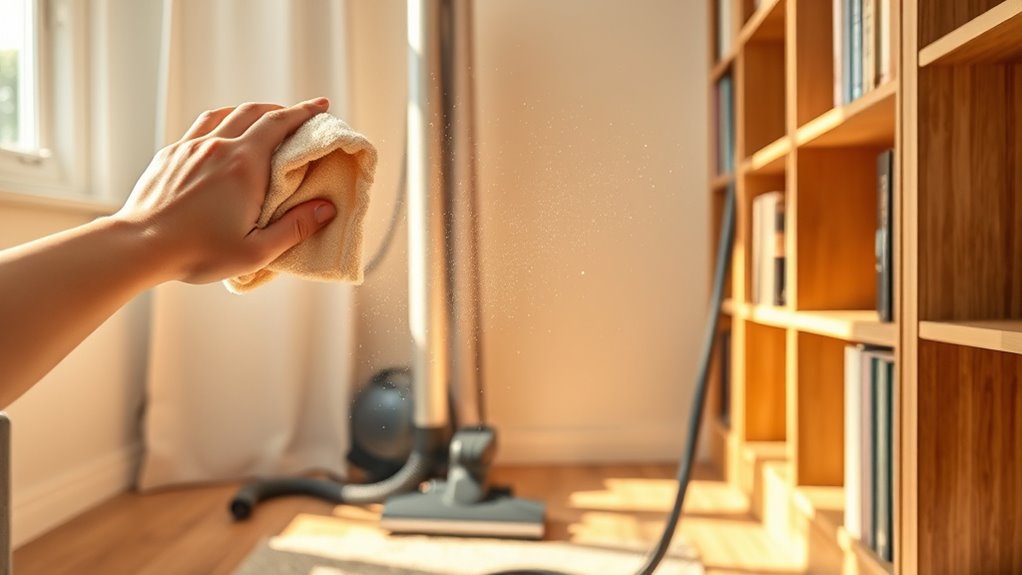
Because dusting captures loose particles before they settle, you’ll prevent debris from landing on your floors or being stirred up during vacuuming. By dusting first, you actively avoid dust build-up on surfaces, making your cleaning routine more efficient.
Starting from top to bottom ensures that any dust and debris fall downward, allowing your vacuum to pick them up afterward without re-contaminating cleaned areas. This approach also minimizes airborne particles that can clog vacuum filters and reduce vacuuming efficiency.
When you dust first, you remove allergens and dirt before they spread, leading to better indoor air quality. Plus, incorporating dusting first into your cleaning routine reduces the need for repeated vacuuming, saving you time and effort.
It’s an essential step for a deep clean, ensuring surfaces and floors are truly free of dust and debris. Prioritizing dusting first makes your overall cleaning process more effective and healthier for your home environment.
When Vacuuming First Works Best and How to Do It Right
Although dusting first is often recommended, vacuuming before dusting works best when dealing with carpets and rugs. It removes loose dirt and debris that could otherwise scatter during cleaning.
When you vacuum first, especially in high-traffic areas, you prevent dust and pet hair from settling further onto floors and furniture during dusting. Using a vacuum with HEPA filters enhances dust removal by trapping fine airborne dust particles. This reduces indoor allergens and improves air quality.
For the best order to clean, start vacuuming those busy spots before moving on to dusting higher surfaces and corners. This approach minimizes re-soiling and makes your cleaning process more efficient.
Frequently Asked Questions
What Is the Correct Order for Cleaning?
You should dust first, starting from the top and working downward, then vacuum. This way, you catch falling dust early and clean it up afterward.
It makes your cleaning more effective and prevents recontamination of surfaces. Easy, right? Just follow this order and you’re good to go!
What Is the First Thing to Do Before Vacuuming a Carpet?
Before you even plug in your vacuum, clear the area of clutter and loose objects.
You’ll want an obstacle-free zone to guarantee every inch of your carpet gets thoroughly cleaned without interruptions or missed spots.
What Are Common Dusting Mistakes?
You often make common dusting mistakes by using dry cloths, dusting top to bottom, skipping microfiber tools, using harsh cleaners, and neglecting to clean your dusters.
This actually spreads dust instead of removing it effectively.
What Is the 20 Minute Rule of Cleaning?
Think of the 20 Minute Rule of Cleaning as your secret weapon—it breaks tasks into bite-sized chunks.
You’ll focus hard for 20 minutes, boosting motivation and beating procrastination, making cleaning feel less like climbing a mountain.
Conclusion
You might think vacuuming first is the superhero move, but dusting first is like releasing a cleaning tornado! Dust particles fly everywhere, and if you vacuum first, you’re basically chasing ghosts.
Dusting first grabs all that sneaky dirt, sending it straight to the floor for your vacuum to gobble up in one epic swoop. So, dust first, vacuum second—your cleaning game will never be the same again!
When it comes to cleaning, the order matters. Dusting before vacuuming ensures you catch all those pesky particles that would otherwise settle back down. By dusting first, you’re setting yourself up for a more efficient vacuuming session and a truly spotless home. So, remember: dust first, vacuum second, and watch your cleaning routine transform into a breeze!


