
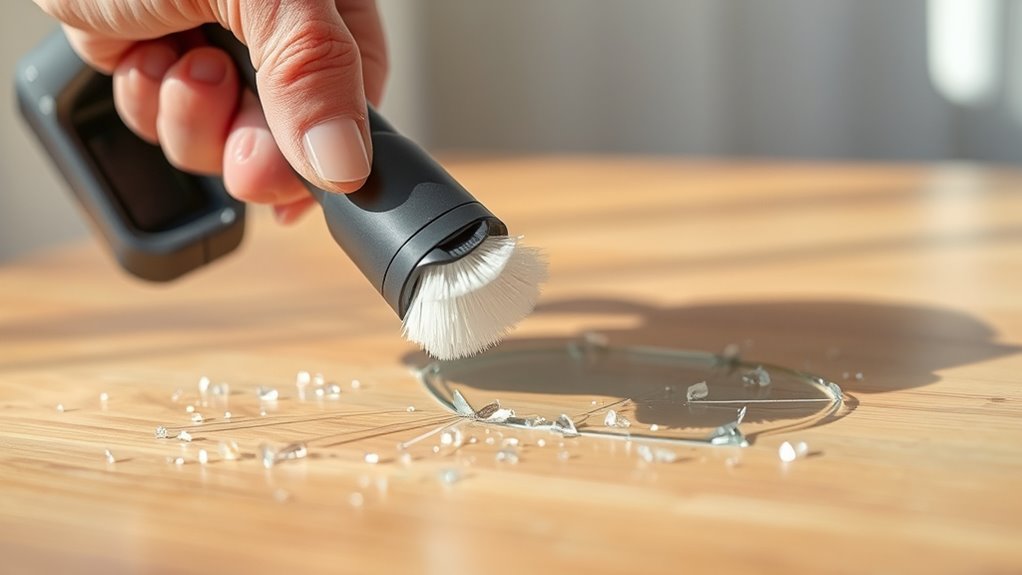
How to Safely Vacuum Glass Without Damage
To safely vacuum glass without damaging your vacuum, start by choosing the right equipment. Use a sturdy, industrial-grade shop vacuum that’s designed for sharp debris. Avoid cordless or flexible-hose models because they might get clogged or damaged easily.
First, pick up the large shards by hand using gloves and a dustpan. This step helps prevent clogs in your vacuum and keeps you safe from cuts. Once the big pieces are gone, vacuum the small fragments gently.
Start with low suction and increase power as needed while working methodically under good lighting.
After you finish, don’t forget to inspect and clean your vacuum to keep it running smoothly. Following these simple steps will make your glass cleanup safer and more effective. You’ll find helpful tips ahead to guide you through the process!
Key Takeaways
- Use a sturdy, industrial-grade shop vacuum that’s specifically designed to handle sharp glass debris safely.
- Before vacuuming, pick up large shards by hand while wearing gloves. This helps prevent clogging and damage to your vacuum.
- Start vacuuming with low suction power. Then, gradually increase it to avoid harming the vacuum’s components.
- Vacuum slowly in a well-lit area, moving in a grid pattern. This way, you’ll make sure to remove all the glass fragments thoroughly.
- After you’re done, inspect and clean the vacuum parts right away. Removing trapped shards will help maintain your vacuum’s performance.
Choose the Right Vacuum for Glass Cleanup and Prepare Your Space
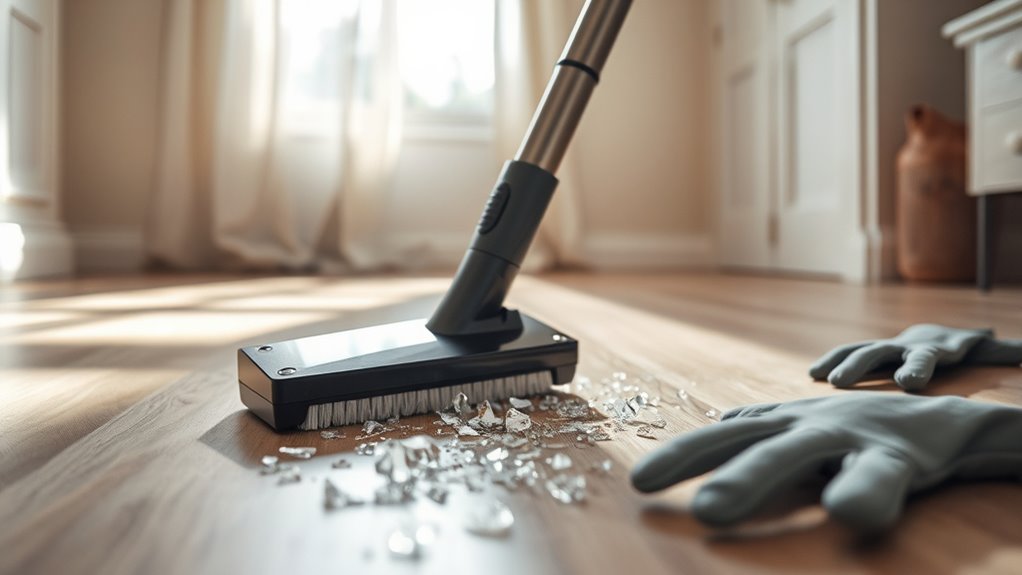
Before you start vacuuming glass, choose a sturdy, industrial-grade shop vacuum designed to handle sharp debris. This type of vacuum cleaner is built to safely pick up both large pieces and tiny shards without damaging the hose or internal parts.
Avoid using cordless stick vacuums, robot vacuums, or wet/dry floor washers. They aren’t suited for glass cleanup and can break easily.
To prepare your space, first clear away any large pieces manually using protective gloves and a dustpan. This helps reduce the risk of clogging your vacuum.
Make sure your shop vacuum has a secure, non-flexible hose and a wide opening to handle the sharp debris safely. Taking these safety steps guarantees your vacuum performs well and keeps your space hazard-free.
Step-by-Step: How to Vacuum Glass Safely Without Damaging Your Vacuum
When you vacuum glass, start by manually removing large shards with gloves and a dustpan to protect your vacuum from damage. Next, use a handheld, bagless vacuum without a flexible hose to safely pick up small fragments.
Begin vacuuming on low suction to avoid dislodging or harming vacuum components, then gradually increase power if needed. Work slowly and methodically in a grid pattern under bright lighting to catch every shard and small piece.
This careful approach helps prevent damage to both your vacuum and the surface. After vacuuming, inspect your vacuum components thoroughly—focus on the brush roll and filters—as glass shards can cause long-term issues.
Clean these parts carefully to maintain your vacuum’s performance and extend its life. Following these safety precautions guarantees an effective cleanup and protects your vacuum from unnecessary wear or damage when dealing with glass shards and debris.
Frequently Asked Questions
What Is the Safest Way to Vacuum Glass?
The safest way to vacuum glass is to use a handheld, bagless vacuum without a hose or brush. You should remove large shards by hand first.
Then, vacuum slowly on low and carefully inspect the vacuum afterward.
It’s all about taking your time and being cautious to avoid any accidents.
Will Vacuuming up Glass Ruin My Vacuum?
Vacuuming glass can wreck your vacuum like sandpaper inside a machine. If you don’t protect filters or avoid large shards, you’ll damage hoses, motors, and reduce suction.
What Safety Precautions for Vacuuming Glass?
You should wear gloves, goggles, and a mask. Clear the area of kids and pets to keep everyone safe.
Use a vacuum with a strong filter. Try to avoid picking up large shards because they can damage the vacuum.
After you’re done, inspect your vacuum carefully. This helps prevent any damage or injury later on.
Is It Better to Vacuum or Sweep Glass?
It’s better to sweep glass first because large shards can damage your vacuum. Vacuum only small fragments cautiously after sweeping.
This approach protects your vacuum and guarantees a safer, more effective cleanup without risking damage. It’s just the smarter way to handle broken glass!
Conclusion
Think of vacuuming glass like guiding a delicate dancer across a fragile stage—you want to move with care, precision, and the right tools to keep the performance flawless.
By choosing the right vacuum and preparing your space, you’re ensuring no shards slip through or harm your equipment.
When you treat this cleanup like a graceful dance, you’ll protect your home and vacuum, leaving everything sparkling safely and smoothly.
Vacuuming glass safely means taking it slow and steady, using attachments designed for delicate surfaces.
This way, you avoid scratches or damage while efficiently picking up tiny shards.
Remember, the key to a successful cleanup is patience and the right technique, so your home stays spotless and your vacuum stays intact.
In conclusion, safely vacuuming glass requires careful handling, proper tools, and a gentle approach. Treating the process like a delicate dance helps prevent damage to your floors and vacuum cleaner. Using specialized attachments and moving slowly ensures all glass shards are removed without scratches or further mess. By following these tips, you protect your home environment and keep your vacuum running smoothly, making glass cleanup safe and effective every time.




3 Comments