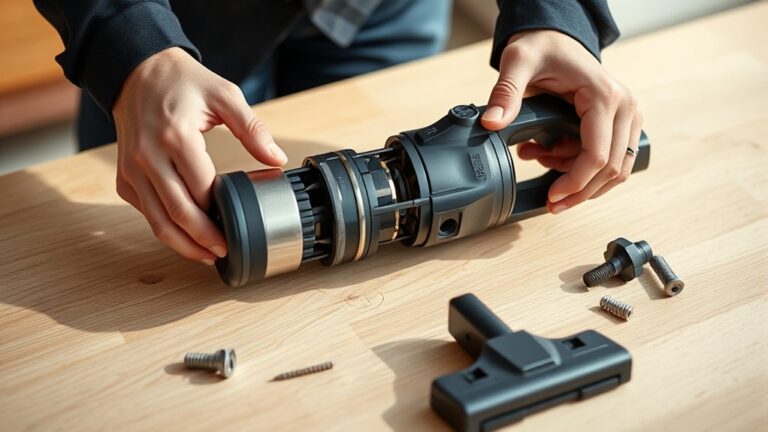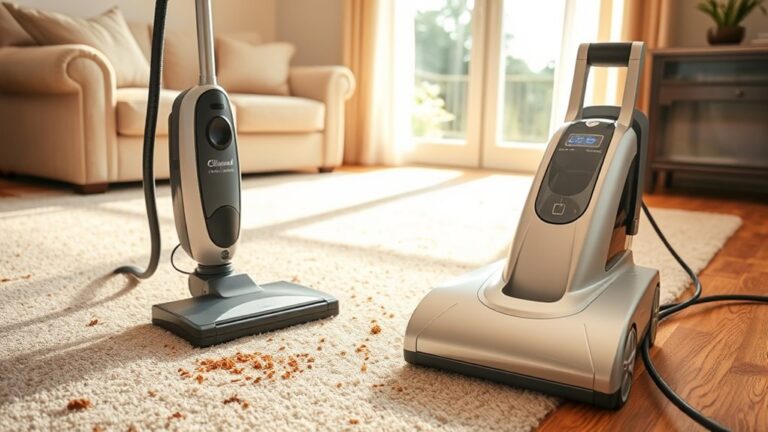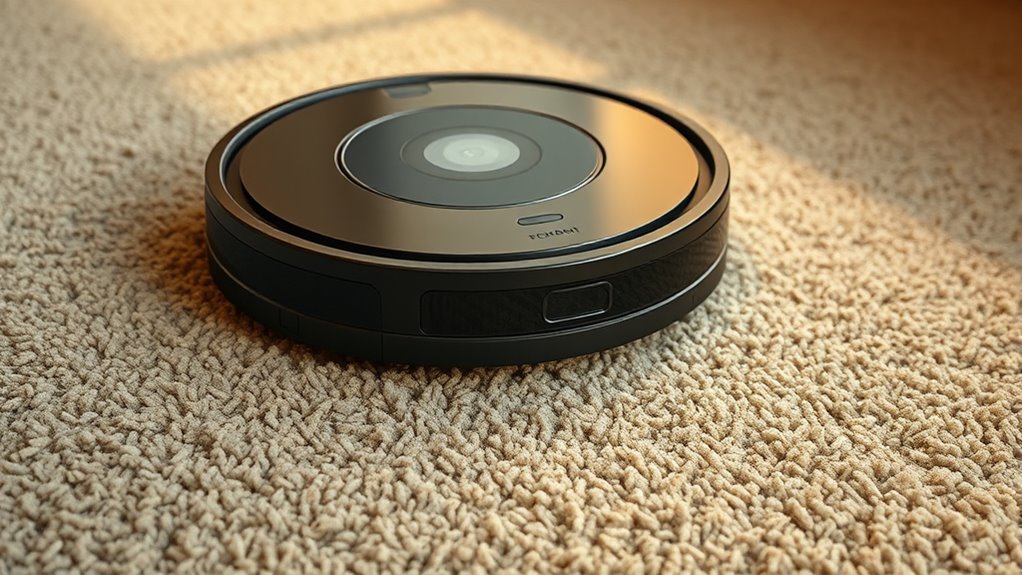
How Does a Robot Vacuum Work on Carpet?
When your robot vacuum detects a carpet, its sensors automatically boost suction power to lift deeply embedded dirt. It also adjusts brushes to agitate fibers, loosening pet hair and debris from low- and high-pile carpets alike.
This means your floors get a much deeper clean than with regular vacuuming.
Advanced navigation technology helps the robot cover every inch without missing spots or getting stuck. Plus, obstacle avoidance protects your furniture and delicate surfaces.
This adaptive system works seamlessly across various carpet types, delivering deep cleaning with great efficiency. Keep exploring to discover the key features that make it all possible.
Key Takeaways
- Robot vacuums detect carpet surfaces using sensors to automatically increase suction power for deep cleaning. They know when they’re on carpet and adjust accordingly.
- Rotating brushes agitate carpet fibers to loosen embedded dirt and pet hair. This helps get all that stubborn stuff out from deep inside.
- Suction power is boosted on carpets to lift dirt from both low-pile and high-pile carpets effectively. So whether your carpet is thin or thick, it still gets cleaned well.
- Advanced mapping and navigation technologies ensure complete coverage without missing spots or getting stuck. The vacuum plans its route smartly.
- Integration of sensors and brushes allows adaptive cleaning based on carpet texture and type. It’s like the vacuum knows exactly how to handle your carpet!
How Robot Vacuums Effectively Clean Different Carpet Types
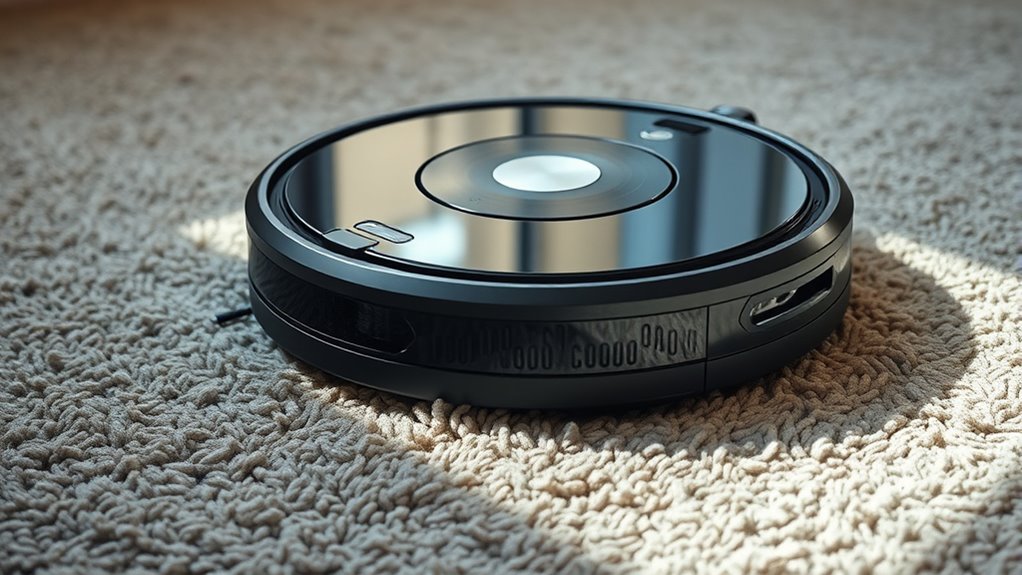
How do robot vacuums manage to clean different carpet types so effectively? They rely on carpet detection sensors that recognize when they move from hard floors to carpets. This triggers an automatic boost mode, increasing strong suction power to lift embedded dirt from deep within carpet fibers.
Robot vacuums detect carpets and boost suction to lift dirt deep within fibers effortlessly.
Whether it’s low-pile carpets or thick, high pile varieties, the vacuum adjusts its cleaning accordingly. Rotating brushes play an essential role by agitating the carpet surface, loosening debris and pet hair stuck in the fibers.
Advanced navigation systems, like LiDAR or camera sensors, help the vacuum map your space and tailor its cleaning path for maximum coverage. These technologies guarantee the robot handles various textures without missing spots or getting stuck.
Combined, these features enable your robot vacuum to provide deep cleaning carpets efficiently, leaving them fresh and dirt-free every time. Pretty neat, right?
Key Features That Make Robot Vacuums Work Best on Carpets
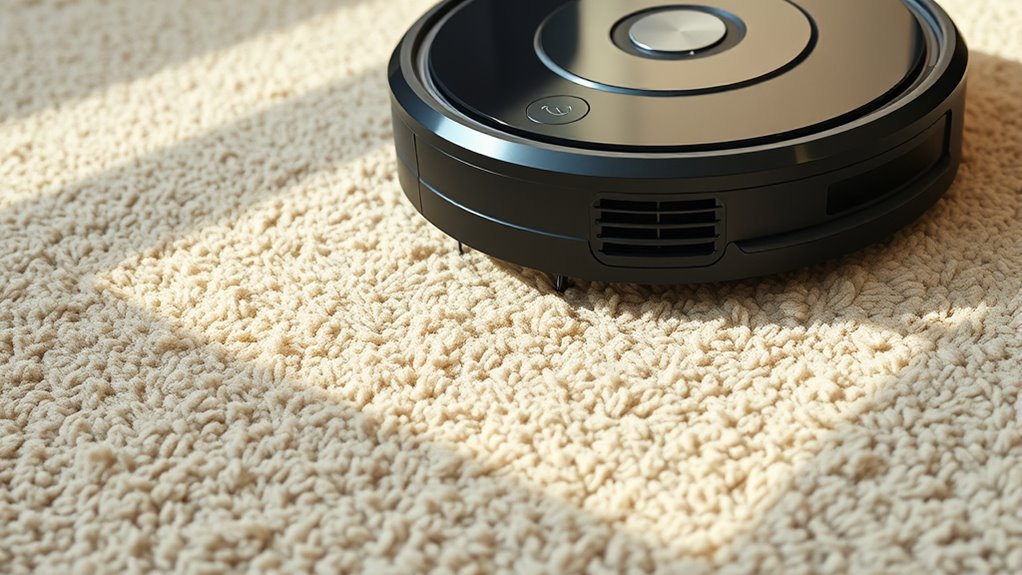
Robot vacuums use a combination of powerful suction, specialized brushes, and smart sensors to tackle carpets effectively. High suction power, often exceeding 10,000 Pa, guarantees deep cleaning by extracting embedded dirt.
Bristle brushes lift debris and pet hair from various carpet types. Thanks to carpet detection sensors, your vacuum can switch to auto-boost cleaning, increasing suction automatically when on carpets.
Advanced sensors like LiDAR enable precise mapping and obstacle avoidance, so the vacuum covers every inch efficiently.
| Feature | Benefit |
|---|---|
| High Suction Power | Deep cleaning of carpet fibers |
| Carpet Detection | Auto-boost cleaning mode |
| Advanced Sensors | Obstacle avoidance and mapping |
With these features working together, your robot vacuum adapts to different carpet types in automatic mode, providing thorough, hassle-free cleaning every time.
Frequently Asked Questions
Do Robot Vacuums Really Work on Carpet?
Yes, robot vacuums really work on carpet, especially low-pile ones. You’ll get good surface cleaning, but don’t expect deep dirt removal.
Higher-end models boost suction automatically, improving performance on thicker carpets. So, if you have plush or shaggy rugs, investing in a better model can make a noticeable difference.
What Are the Downsides of a Robot Vacuum?
Oh, you’ll love how your robot vacuum gets stuck, misses spots, and struggles with thick carpets. It’s great—
if you enjoy untangling hair, emptying filters, and watching it quietly fail on delicate rugs.
Where Does the Dirt Go in a Robot Vacuum?
The dirt goes into a dustbin inside the robot vacuum, which you can manually empty. Some models even transfer debris to a larger container in a self-empty station, keeping the vacuum ready for your next cleaning session.
It’s pretty handy because you don’t have to worry about emptying it after every single use. Just let it do its thing, and when it’s full, you can take care of the mess all at once.
How Does a Robot Vacuum Know Not to Mop Carpet?
Your robot vacuum uses sensors and AI to detect carpets and automatically stops mopping or lifts the mop.
This prevents water from damaging the carpet fibers while still cleaning hard floors effectively.
Pretty smart, right? It knows exactly when to switch modes so your floors stay safe and spotless.
Conclusion
So, how does a robot vacuum work on carpet? It uses powerful suction, rotating brushes, and smart sensors to tackle dirt and debris deep within fibers. Whether you have plush or low-pile carpet, these features adapt to clean effectively.
With advances in technology, robot vacuums make maintaining your carpets effortless. Why spend hours cleaning when a robot can do it for you?
Embrace the convenience of a robot vacuum to keep your carpets looking fresh and dirt-free. These smart devices handle everything from pet hair to dust embedded in carpet fibers, giving you more time to relax. With efficient suction and adaptive brushes, robot vacuums are a game-changer for carpet care, making your home cleaner with less effort every day.