How to Clean Dyson Ball Vacuum in 3 Easy Steps
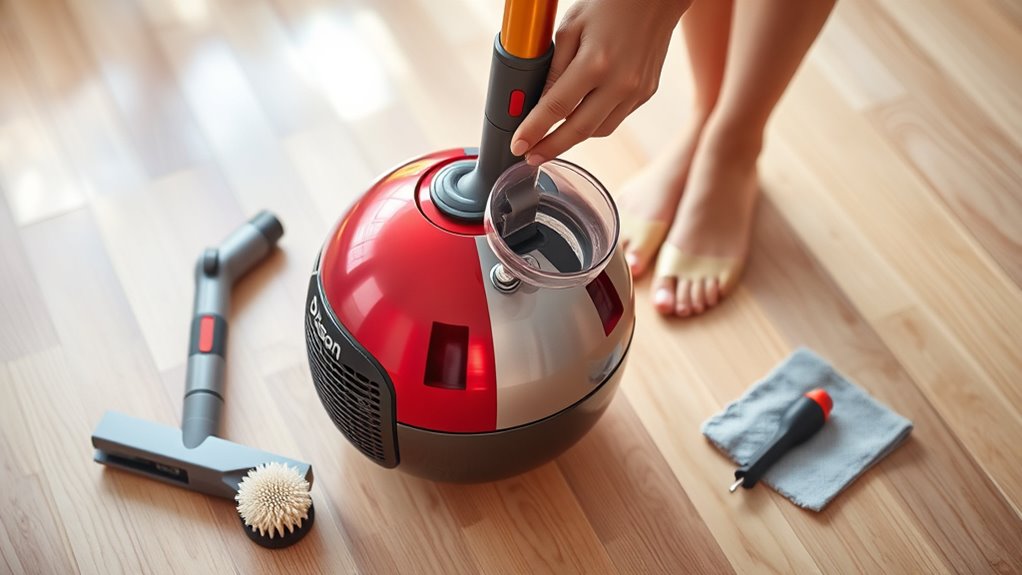
To clean your Dyson Ball vacuum in three easy steps, start by removing the bin, cyclone, and filters. Discard any debris, then wash these parts with cold water and mild soap. Make sure to let them dry completely before moving on.
Next, detach the cleaner head and take out the brush roller. Clear away any hair and debris that might be tangled around it. This helps keep your vacuum running smoothly and prevents blockages.
Finally, reassemble all parts securely. Double-check that the brush roller and filters are properly in place. Doing this ensures your Dyson Ball vacuum performs at its best.
Keep going to uncover tips for thorough maintenance and lasting results!
Key Takeaways
- Remove the bin by pressing the handle and red tab. Then empty it and wash with cold water and mild soap.
- Detach the cleaner head by flipping the side tabs. Use a Phillips screwdriver to remove the brush roller.
- Clear debris from the brush roller, cleaner head, and cyclone center. A soft cloth and small dowel work great for this.
- Wash and dry all washable parts thoroughly, including filters. Make sure everything is completely dry before reassembling to avoid damage.
- When you’re ready, reassemble by securely locking all parts in place. Clip the brush roller back in and reinstall the HEPA filter properly.
Step 1: Remove and Clean Ball Vacuum Bin, Cyclone, and Filters
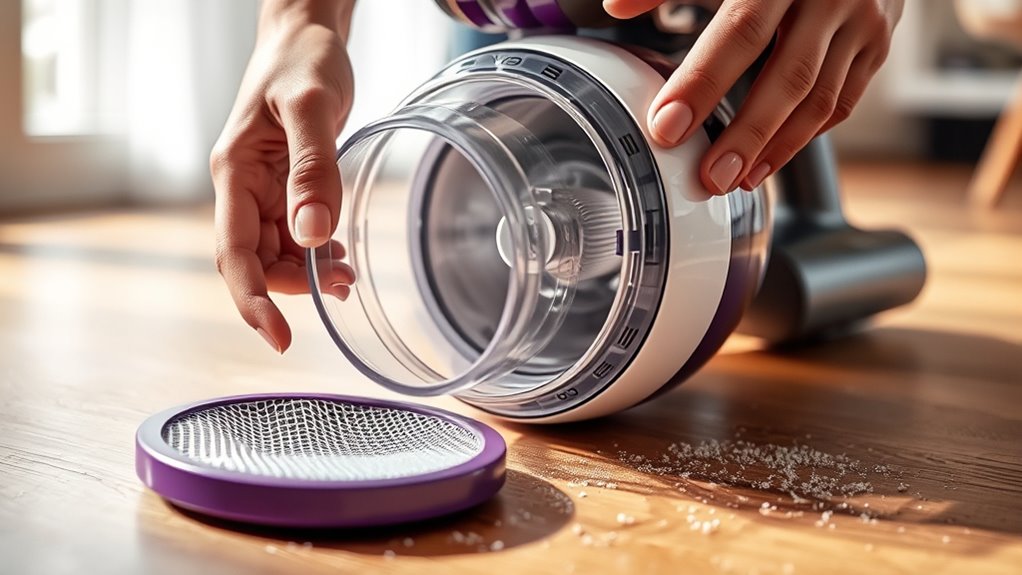
Before you begin, make sure to press the handle and red tab to release the bin, then discard any debris inside. Once emptied, remove the cyclone handle and pre-filter carefully.
Press the handle and red tab to release the bin, then empty and carefully remove the cyclone handle and pre-filter.
Clean the cyclone center with a soft cloth or brush, avoiding water to prevent damage. Next, wash the bin and filters gently with cold water and mild soap.
Be thorough but gentle to avoid harming any parts. After washing, use a small dowel to clear any compacted dust stuck in the bin and cyclone components for a complete clean.
It’s crucial that you let the filters and bin dry completely—ideally for at least 24 hours—before reinstalling them. You want them fully dry to maintain proper sealing and filtration.
Only once everything is dry and reassembled should you start vacuuming again, ensuring your Dyson Ball Vacuum performs at its best.
Step 2: Disassemble Cleaner Head and Remove Debris From Brush Roll
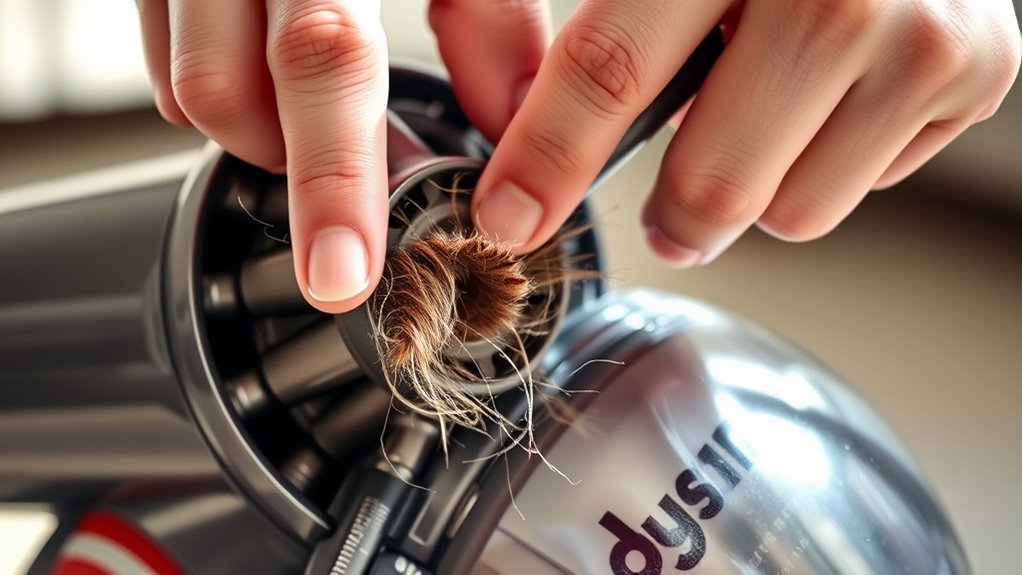
Once you’ve removed the bin and filters, flip open the side tabs on the cleaner head to detach it from the vacuum. Next, use a Phillips screwdriver to remove the brush roller for a thorough cleaning.
Carefully inspect the roller brush for hair, string, and other debris wrapped around it. Use scissors to cut away any tangled debris so you can pull it off easily.
Don’t forget to check inside the cleaner head itself—small bits of debris often get lodged in tight spaces. Use a small wooden dowel or a similar tool to clear these hard-to-reach areas.
Finally, wipe down the cleaner head with a damp cloth or a lightly sprayed cleaner to keep it in good condition. Removing all this debris from the brush roller and cleaner head guarantees your Dyson Ball vacuum maintains excellent suction and cleaning performance.
Step 3: Reassemble Ball Vacuum Parts for Best Performance
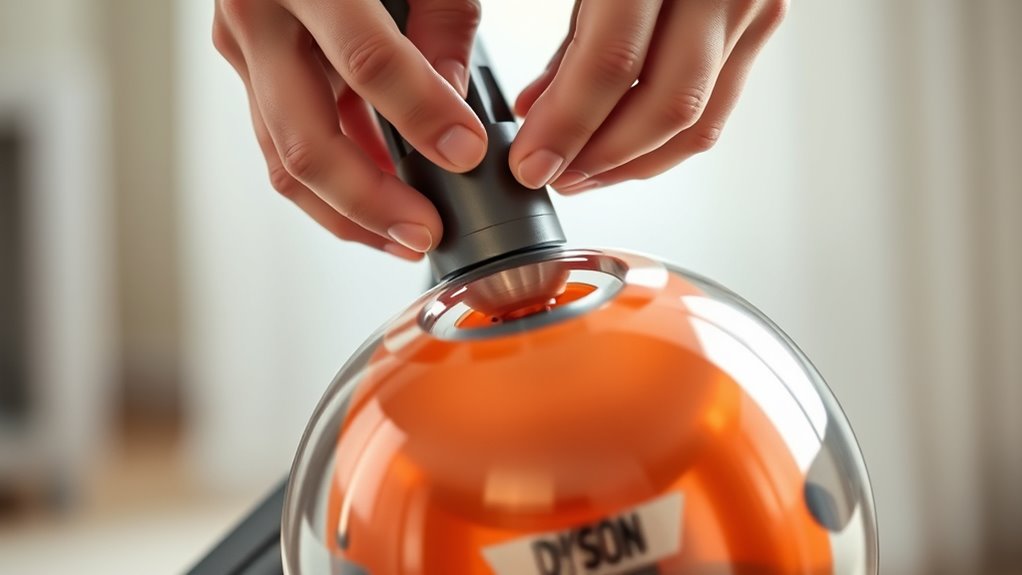
Although cleaning the parts thoroughly is essential, reassembling your Dyson Ball vacuum correctly guarantees it performs at its best. To start, make sure you line up and lock the cleaner head parts using the red tabs for a secure fit.
Next, insert the cyclone into the bin until you hear a click, confirming it’s properly secured. When reconnecting the cleaner head to the base, align the prongs and holes carefully, then click it into place.
Pay special attention to the roller brush area. Clip the C-clip onto the cleaner head to firmly secure the roller and base components—this prevents any loose parts that might affect cleaning efficiency.
Finally, reinstall the HEPA filter by aligning it with the arrow and twisting it clockwise until it locks in place. Following these steps guarantees your vacuum runs smoothly and maintains peak suction every time you use it.
Frequently Asked Questions
How to Take Apart a Dyson Ball Vacuum to Clean?
You’ll start by unplugging the vacuum, then flip open the side tabs to remove the cleaner head.
Next, twist the glamour cap to detach the shell.
After that, press the red tab to remove the bin and cyclone.
Finally, take out the filters.
It’s pretty straightforward once you get the hang of it!
How Do I Take My Dyson Vacuum Cleaner Apart to Clean It?
You’ll unplug your Dyson, flip open the side tabs to remove the cleaner head,
then detach the bin and cyclone by pressing the handle and red tab.
After that, twist out the HEPA filter for cleaning or replacement.
It’s pretty straightforward once you get the hang of it!
How to Clear a Blockage in a Dyson Ball?
You might be surprised where the blockage hides. First, switch off and unplug your Dyson Ball.
Then, check the cleaner head, wand, and cyclone carefully. Clear any debris you find to restore powerful suction.
How to Run a Deep Clean Cycle in Dyson?
To run a deep clean cycle, first unplug your Dyson. Then, clean and dry all the filters thoroughly.
Next, reassemble the cyclone and bin securely. Once everything is put back in place, power the vacuum on.
If your model has a deep clean mode, go ahead and select it. Just be sure to follow your specific model’s instructions carefully.
Conclusion
By following these three simple steps, you’ll transform your Dyson Ball vacuum into a powerhouse of cleanliness that practically cleans the house by itself.
Neglecting this routine? That’s like expecting a race car to win with flat tires. Keep your vacuum’s bin, filters, and brush roll spotless, and you’ll enjoy peak performance every time.
Trust me, your home—and your vacuum—will thank you with spotless floors and flawless suction! Regular cleaning of your Dyson Ball vacuum not only boosts its efficiency but also extends its lifespan. So, make it a habit to clean your vacuum regularly and experience the difference in your cleaning routine.