

How to Fix a Vacuum Leak in 3 Easy Steps
You can fix a vacuum leak in three easy steps. First, look for signs like rough idling or hissing sounds to confirm the leak. These are common clues your engine might be losing vacuum pressure.
Next, inspect your vacuum hoses carefully. Check for cracks, disconnections, or wear, especially near the air intake. Catching these issues early helps prevent bigger problems down the road.
Finally, seal minor cracks with RTV sealant or replace damaged hoses to restore engine performance. Make sure to tighten all connections and listen closely for any persistent hissing sounds. This will help guarantee your repair was successful.
Keep going to uncover simple tricks for more reliable repairs and keep your engine running smoothly. Fixing vacuum leaks doesn’t have to be complicated!
Key Takeaways
- Identify vacuum leaks by listening for hissing sounds and observing rough engine idle or stalling.
- Visually inspect vacuum hoses and connections for cracks, disconnections, or wear near the air intake.
- Use a smoke test or spray brake cleaner on suspected areas to pinpoint exact leak locations.
- Repair leaks by replacing damaged hoses, sealing minor cracks with RTV sealant, and tightening all fittings.
- Confirm repair success by rechecking for hissing sounds and testing vacuum pressure with a gauge or smoke test.
It’s pretty straightforward once you get the hang of it! Just take your time and be thorough with each step.
How to Identify a Vacuum Leak: Signs and Inspection Methods
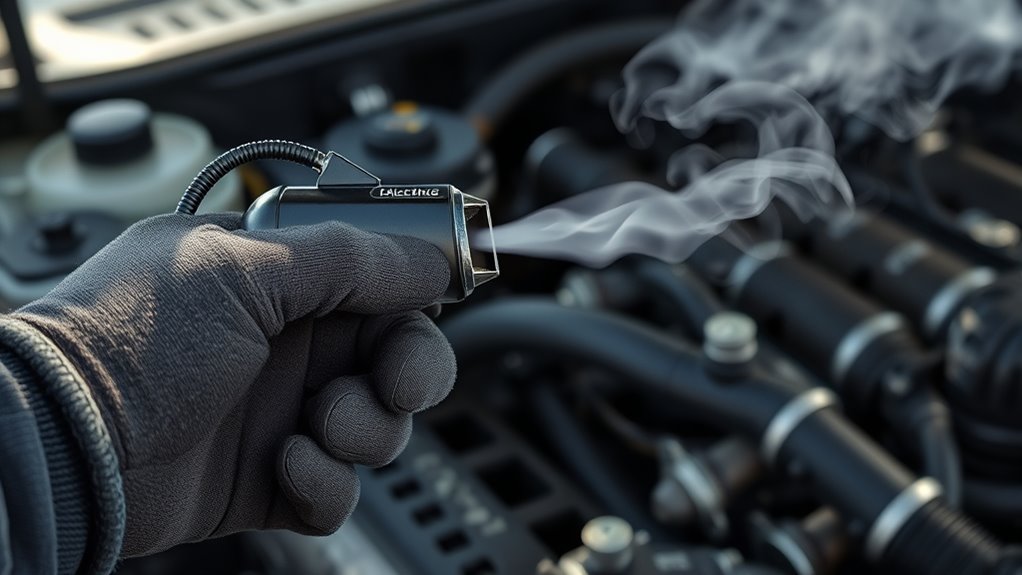
Although vacuum leaks can be tricky to spot, you can identify them by paying attention to signs like rough idling, engine stalling, or hesitation during acceleration.
Start with a visual inspection of vacuum hoses in the engine bay. Look for cracks, disconnections, or deterioration around the air intake and other connections.
Begin by visually checking vacuum hoses for cracks, disconnections, or wear near the air intake and connections.
Listen closely for a hissing sound, which often signals escaping air from a vacuum leak. To pinpoint the leak, you can use a smoke test or carefully spray brake cleaner on suspected areas.
If the engine RPM changes, you’ve found the leak. Also, keep an eye on the check engine light—vacuum leaks often trigger trouble codes related to vacuum pressure issues.
Using an OBD-II scanner can help you confirm these problems and narrow down the source. By combining these inspection methods, you’ll effectively locate vacuum leaks impacting your engine’s performance.
Simple and Affordable Ways to Repair Vacuum Leaks

Once you’ve identified a vacuum leak, you can take simple and affordable steps to fix it yourself. Proper vacuum leak repair improves engine performance and prevents further damage to your vacuum system.
Here are three inexpensive fixes to think about:
- Replace damaged vacuum hoses with low-cost aftermarket parts. This DIY repair is often the quickest way to restore your vacuum lines.
- Use household materials like hot glue or RTV sealant to temporarily seal minor cracks in vacuum lines or around the intake manifold gasket.
- Regularly inspect and tighten all vacuum connections and clamps to prevent leaks before they affect engine performance.
How to Test and Confirm Your Vacuum Leak Repair
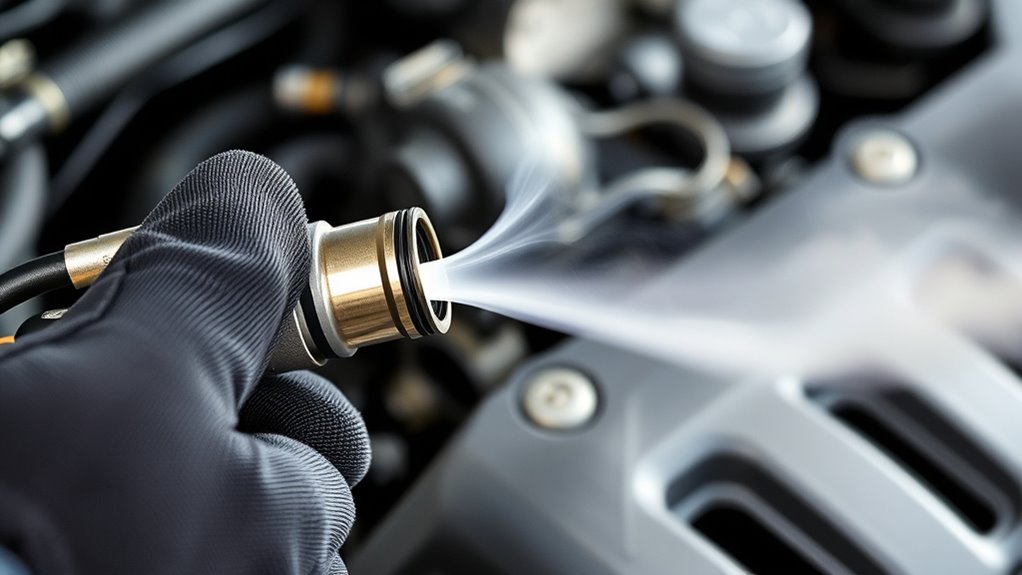
After you repair a vacuum leak, you’ll want to test your work carefully to guarantee the problem is fully fixed. Start the engine and listen for hissing around the repaired area. Any noise may indicate the leak persists.
Next, use a vacuum gauge to measure vacuum pressure. A steady, high reading suggests the sealed leak is holding. Perform a visual inspection to ensure all hoses and fittings are properly reconnected and tight.
To further confirm the vacuum leak is sealed, spray carb cleaner over the repaired area while the engine is idling. If the engine RPM rises, the leak might still be there. If you have access to a smoke test, use it to see if any smoke escapes from the repaired area—it’s a definitive check.
Frequently Asked Questions
How Easy Is It to Fix a Vacuum Leak?
Fixing a vacuum leak is usually easy if it’s a simple hose or connection issue. You can spot and repair these yourself.
But if it’s inside the engine, you might need professional help or advanced tools. Sometimes it’s best to leave that part to the experts.
What Is the Easiest Way to Find a Vacuum Leak?
Finding a vacuum leak is like hunting a whisper in a storm. You’ll want to spray carburetor cleaner around hoses while the engine runs; if RPM jumps, you’ve found your leak—simple, quick, and effective every time.
It really is that straightforward. Just keep an eye on the engine’s response as you spray, and you’ll pinpoint the leak before you know it.
What Can I Use to Seal a Vacuum Leak?
You can use high-temperature RTV silicone sealant or a specialized automotive vacuum sealant to fix leaks. Make certain the area’s clean and dry before applying.
Then, let it fully cure to guarantee a strong, lasting seal. This way, you’ll be sure the fix holds up over time.
How to Get Rid of a Vacuum Leak?
You can’t let a vacuum leak steal your engine’s thunder!
Spray brake cleaner to find it, then dry the area.
After that, slather black RTV sealant on cracks or replace faulty hoses to banish that leak for good.
Conclusion
Now that you’ve spotted the faint hiss of a vacuum leak and patched it up with ease, imagine your engine running smoothly—no more rough idles or stutters.
Picture driving confidently, knowing you fixed the problem yourself without breaking the bank. By testing your repair, you’ll hear only the steady hum of a healthy engine.
With these simple steps, you’ve turned frustration into satisfaction. You brought your car back to life with just a little patience and care.
Fixing a vacuum leak doesn’t have to be complicated. By following these easy steps, you save time and money while improving engine performance. So next time you hear that hiss, you’ll know exactly how to fix a vacuum leak and keep your car running smoothly.





3 Comments