
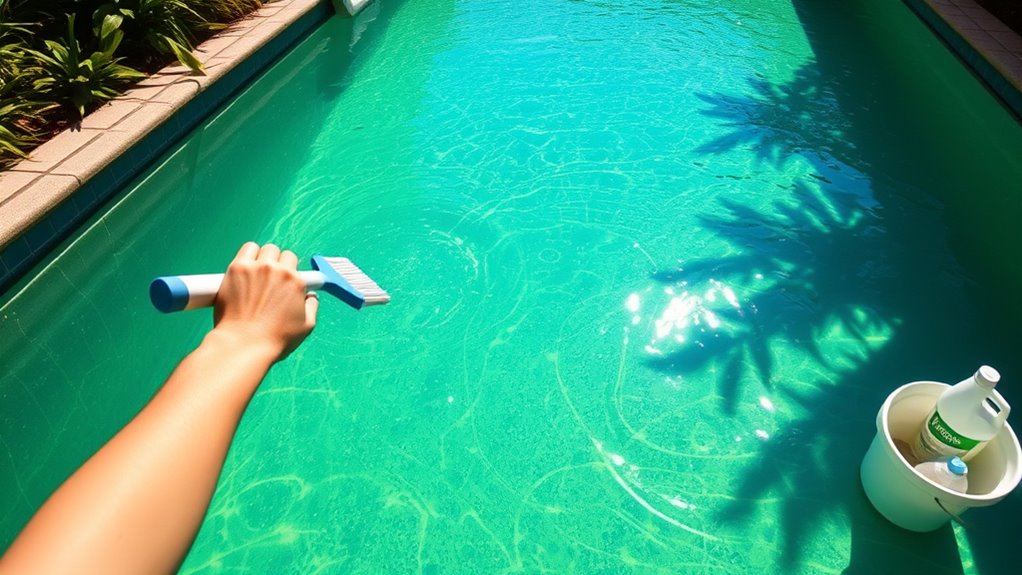
How to Remove Algae From Your Pool Without a Vacuum
To remove algae from your pool without a vacuum, start by testing and adjusting your pH to 7.2–7.4. This helps create the perfect environment to fight algae growth.
Next, brush all surfaces thoroughly, especially corners and steps, where algae love to hide.
After brushing, skim away any loose algae floating on the surface.
Then, apply algaecide followed by a shock treatment to kill the remaining algae.
Keep your filtration system running to maintain water circulation, which is key in preventing algae from coming back.
For stubborn algae, use a flocculant to clump the algae together and let it settle at the bottom.
Once settled, manually remove the debris with a skimmer or leaf rake.
Stick with these steps consistently, and you’ll fully restore your pool’s clarity and cleanliness without needing a vacuum.
Key Takeaways
- Test and adjust your pool’s pH to between 7.2 and 7.4. Also, make sure there’s enough chlorine in the water to keep algae at bay.
- Next, give all the pool surfaces a good brushing. Pay extra attention to corners, steps, and any shaded spots where algae love to hide.
- After brushing, use a skimmer or a fine mesh net to scoop up any loose algae debris. It’s best to do this before you add algaecide or shock the pool.
- Then, try using a flocculant. This helps clump suspended algae together so they’re easier to remove. Once they float to the surface, skim them off and scrub the pool surfaces to get rid of the dead algae.
- Finally, manually remove any algae that has settled at the bottom with a leaf rake or skimmer. Keep the filtration system running continuously to help clear the water and keep it circulating well.
Prepare Your Pool and Treat Algae Without a Vacuum
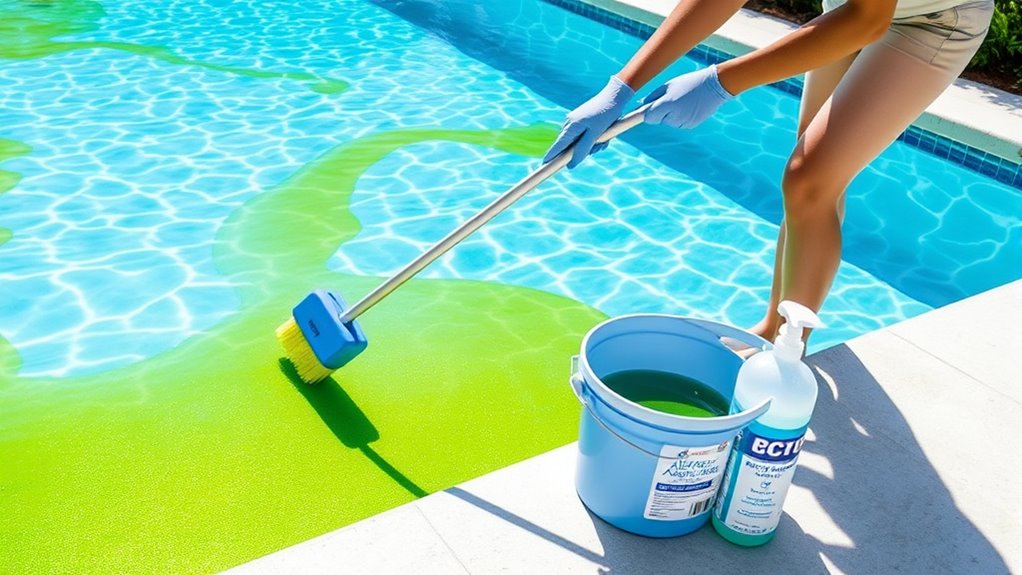
Before you begin, test your pool’s pH and adjust it to between 7.2 and 7.4. Make sure chlorine levels are strong enough to fight algae. Maintaining the right pH balance and chlorine levels is essential for effective algae removal.
Test and balance your pool’s pH to 7.2–7.4 and ensure strong chlorine levels for effective algae control.
Start brushing all pool surfaces with a stiff brush. Focus on corners, steps, and shaded areas where algae often hide.
For stubborn black algae, use a pumice stone or wire brush to dislodge growth embedded in rough surfaces. After scrubbing, manually remove loose algae and debris from pool surfaces using a skimmer or fine mesh net.
This manual cleaning helps reduce algae before chemical treatments. Then, apply the appropriate algaecide and shock treatment to kill remaining algae without needing a vacuum.
Throughout the process, keep your filtration system running to help clear out debris and maintain water circulation. This combined approach makes sure you remove algae thoroughly and prevent it from coming back on your pool surfaces.
Remove Dead Algae and Restore Water Clarity Without a Vacuum
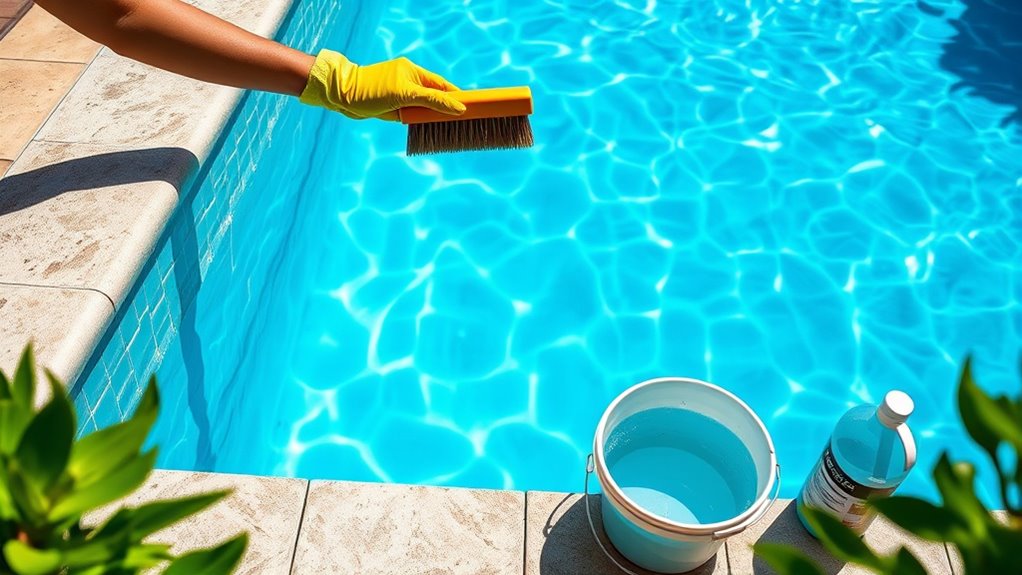
Once the algae are dead, you’ll want to clear your pool’s surface by skimming floating debris with a fine mesh net. Then, scrub the walls and floor to loosen any remaining particles for easier filtration.
Use a pool brush to dislodge dead algae stuck on surfaces. Next, apply a flocculant to bind suspended algae into larger clumps.
Allow water circulation to continue for at least 24 hours. This helps the settled algae sink to the bottom.
Finally, manually remove the settled algae with a leaf rake or skimmer.
| Step | Tool/Method | Purpose |
|---|---|---|
| Surface Cleaning | Skimmer/Net | Remove floating dead algae |
| Scrubbing | Pool Brush | Loosen stuck algae |
| Settling & Removal | Flocculant + Manual Removal | Clarify water by removing settled algae |
This process ensures thorough pool cleaning and restores water clarity without a vacuum after algae treatment.
Frequently Asked Questions
How Do I Get Rid of Algae in My Pool Without a Vacuum?
You get rid of algae by scrubbing pool surfaces with a stiff brush. Then, shock the water with chlorine to kill off the algae.
After that, add algaecide to keep it from coming back. Make sure to run the pump nonstop to circulate the water properly.
Finally, use a flocculant to settle the debris so you can easily remove it with a net or skimmer. It’s a simple process once you get the hang of it!
What Kills Algae in a Pool the Fastest?
You might think quick fixes don’t work, but shocking your pool with chlorine combined with algaecide kills algae fastest—often within 24 to 48 hours.
Keep your filter running to spread chemicals evenly and speed results. It really makes a difference!
How to Get Rid of Algae in Pool Quickly DIY?
To get rid of algae quickly, you’ll brush all surfaces, shock the pool with chlorine, and add algaecide.
Then, brush again to loosen any remaining algae. After that, run the filter nonstop for 24 hours.
Finally, manually remove dead algae using nets or skimmers. It’s a straightforward process that really works!
How to Get Rid of Pool Algae in 24 Hours?
You can get rid of pool algae in 24 hours by brushing surfaces and shocking the pool with chlorine. Adding algaecide also helps tackle the problem fast.
Make sure to run your filter nonstop to clear out the algae. Don’t forget to rebalance the chemicals after all that to keep your water clear and algae-free quickly.
Conclusion
Removing algae from your pool without a vacuum is easier than you might think. By brushing the walls, balancing chemicals, and using a pool shock treatment, you can restore clarity and keep your water sparkling.
Did you know that regular brushing can reduce algae growth by up to 85%? It’s a simple step that makes a big difference in keeping your pool clean and clear.
With these easy steps, you’ll enjoy a cleaner pool without the hassle of a vacuum. Keep up the routine, and your pool will stay algae-free all season long! Remember, consistent algae removal from your pool not only improves water clarity but also helps maintain a healthy swimming environment. So, stick to brushing, balancing your pool chemicals, and using shock treatments regularly to keep your pool sparkling and algae-free all year round.



One Comment