
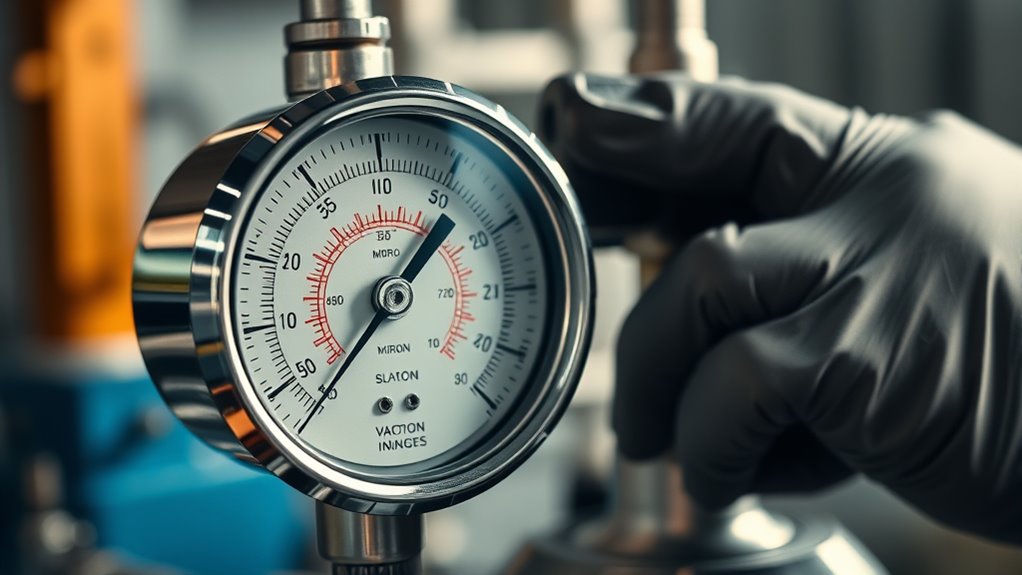
Is 1000 Microns a Good Vacuum and How to Measure It
Yes, 1000 microns is a good vacuum level for HVAC systems. This is because it ensures you’ve removed almost all moisture and non-condensable gases.
This is crucial because it helps prevent corrosion and acid formation inside the system.
To measure it, connect a micron gauge to the service port and remove the valve cores. Then, start the vacuum pump and wait for stable readings below 500 microns.
Make sure all connections are leak-free to get accurate measurements.
Keep going to understand why hitting this vacuum level is essential and how to confirm it properly. Knowing how to measure and achieve 1000 microns can save your HVAC system from costly damage down the line.
Key Takeaways
- A vacuum level of 1000 microns indicates effective moisture and non-condensable gas removal in refrigeration and air conditioning systems. It’s a good target to aim for when evacuating these systems.
- Achieving 1000 microns or lower helps ensure the system operates properly. This prevents moisture-related issues and keeps the system running efficiently.
- If you can’t reach 1000 microns, it might be due to leaks. Leaks increase contamination risks and reduce overall system performance.
- To measure the vacuum, use a micron gauge connected to the service port. Remove the valve cores and run the vacuum pump until you get stable readings below 500 microns.
- Make sure your vacuum measurements are accurate by calibrating the gauge first. Also, check for leaks, give the readings time to stabilize, and use reliable equipment for the best results.
Why 1000 Microns Vacuum Level Indicates Proper System Dryness
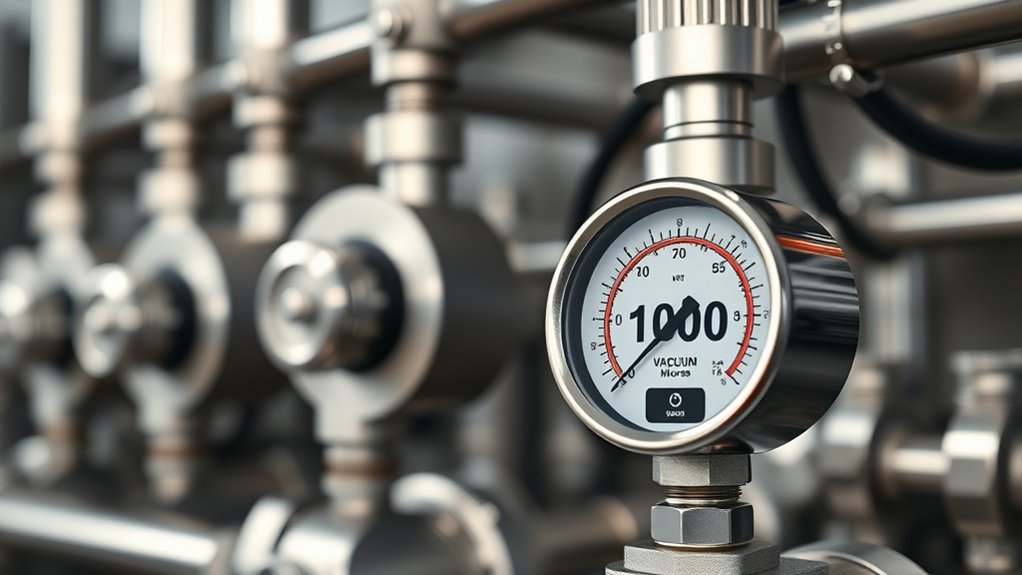
When you achieve a vacuum level of 1000 microns, you confirm that most moisture and non-condensable gases have been removed from the system, guaranteeing it’s properly dry. This vacuum level signals effective evacuation and moisture removal, critical for maintaining system dryness in refrigeration and air conditioning units.
Reaching 1000 microns or lower means you’ve created a deep vacuum that boils off water vapor, preventing corrosion and acid formation inside the system. Using a reliable vacuum gauge helps you monitor this process accurately.
If your system leak allows air back in, maintaining this ultimate vacuum becomes impossible, risking moisture contamination and inefficiency. Achieving and holding 1000 microns ensures that the refrigerant will operate properly without moisture-related problems.
How to Accurately Measure Vacuum on HVAC Systems Using a Micron Gauge
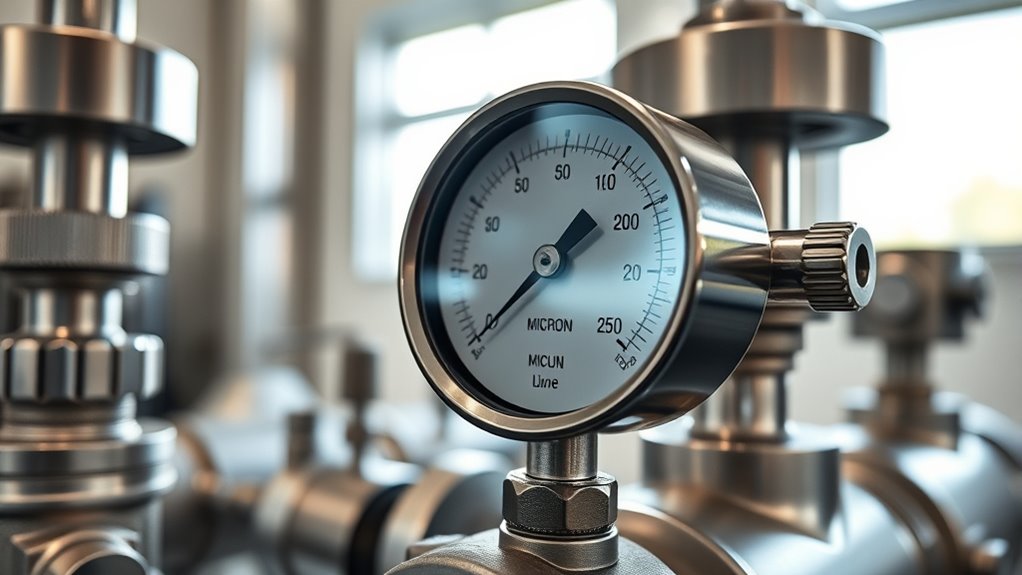
Although measuring vacuum accurately requires some care, you can easily get precise readings by connecting a micron gauge directly to the system’s service port and removing all valve cores. Start by turning on the vacuum pump to evacuate the system, watching the micron gauge as the vacuum level steadily drops.
A vacuum gauge will show fluctuations, but you want to wait for stable readings indicating the system pressure has reached a low point. Hold the vacuum level below 500 microns for a few minutes to confirm no leaks or moisture remain.
Be sure all service valves are fully open, and double-check for hose leaks or contamination that could affect the gauge’s accuracy. Regular calibration of your micron gauge is vital to ensure accurate measurement, especially since atmospheric pressure changes can impact readings.
Frequently Asked Questions
How Many Microns Is 30 Inches of Vacuum?
30 inches of vacuum equals 762,000 microns. You multiply 30 by 25,400 microns per inch to get this.
This means you’re dealing with an extremely deep vacuum, close to a perfect vacuum level. It’s pretty impressive when you think about how low that pressure really is!
How Many Microns for a Good Vacuum?
Imagine clearing fog from a window—aim for 500 microns or less for a crystal-clear vacuum.
You’ll know you’ve done well when the gauge stays steady below that, ensuring your system’s dry and ready to perform.
How Many Microns Is Considered a Deep Vacuum?
A deep vacuum is typically considered below 500 microns. You’ll want to reach this level to guarantee thorough moisture removal and system cleanliness.
This is especially important for sensitive HVAC systems or refrigeration units. Getting down to 500 microns ensures everything is properly prepared and protected.
How Many Microns Is a True Vacuum?
A true vacuum dances below 100 microns, where gas molecules nearly vanish.
You’ll want readings under that threshold to reach near perfection, creating a space so empty it almost whispers in silence.
Conclusion
You might think 1000 microns isn’t a strong enough vacuum, but it actually shows your HVAC system is properly dried and ready for use. Using a micron gauge lets you see this clearly—like watching a tire pressure gauge drop to the right number.
Trusting this measurement helps avoid moisture-related issues and guarantees your system runs efficiently. So, don’t underestimate 1000 microns; it’s a reliable sign of a well-prepared system.
In fact, a vacuum level of 1000 microns or lower is often recommended for most HVAC applications to ensure all moisture and air are removed. Measuring vacuum in microns gives you precise control and confidence that your system is sealed and ready to perform optimally. Remember, using a micron gauge to measure vacuum strength is key to maintaining a healthy HVAC system.






One Comment