How Do Ants Die When Using a Vacuum Cleaner?
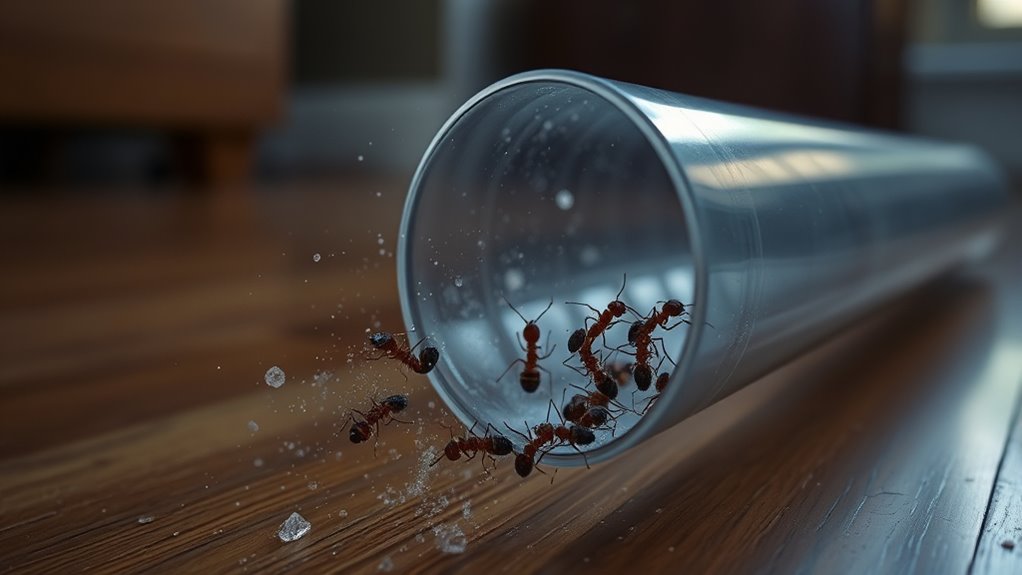
When you vacuum ants, you kill them mainly through physical trauma as they’re sucked in at high speed and slammed against the vacuum’s interior, rupturing their tiny bodies.
Inside, they quickly lose moisture and suffocate when dust clogs their breathing holes.
To make sure they don’t escape or survive, you should promptly empty or seal the vacuum contents.
If you want to learn how to maximize this method’s effectiveness and keep ants away long-term, there’s more to contemplate.
Key Takeaways
- Ants die from physical trauma caused by high-velocity airflow and collisions inside the vacuum hose. It’s like they get tossed around really hard.
- Plus, dehydration sets in fast because the vacuum environment is dry and dusty. They lose moisture quickly, which is bad news for them.
- Dust and debris can block their spiracles, which are like tiny breathing holes. That causes suffocation and respiratory failure.
- Using upright vacuums with strong airflow and crevice tools works well. They not only suck them up but also damage the ants effectively.
- Also, make sure to empty or seal the vacuum contents right away. Otherwise, some ants might escape and come right back.
Mechanisms Behind Ant Mortality in Vacuum Cleaners
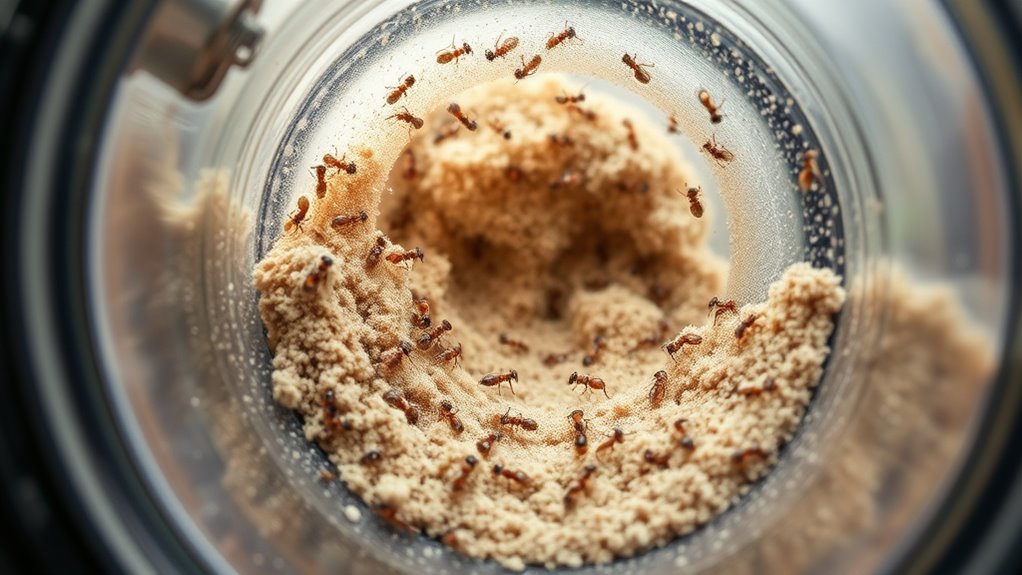
When you vacuum ants, several factors work together to cause their death. As tiny ants get sucked into the vacuum, the high-velocity airflow and collisions inside the hose can rupture their exoskeletons, killing insects quickly.
The dry, dusty environment inside the vacuum bag also dehydrates ants, making survival unlikely. You should make sure your vacuum bag is sealed properly; otherwise, some ants might escape.
Dust and debris can clog the vacuum, suffocating ants by blocking their spiracles, which stops them from breathing. Unlike ant traps that rely on poison and slow effects, a vacuum kills insects immediately through physical trauma and environmental stress.
Without a queen or colony inside, ants trapped in the vacuum rarely survive, so vacuuming remains an effective method to deal with ant infestations.
Best Practices for Ensuring Ants Are Effectively Eliminated
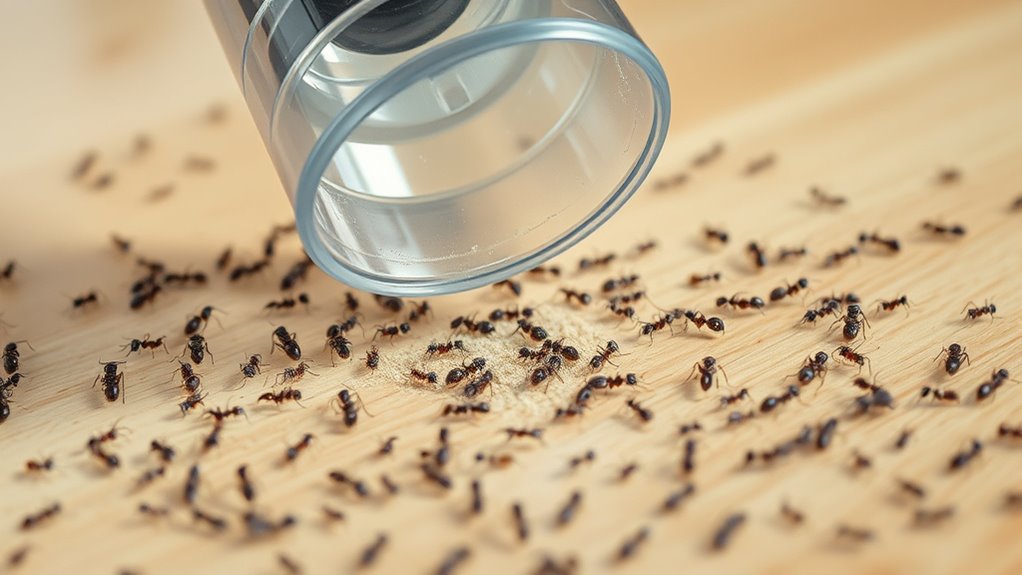
Vacuuming effectively damages and dehydrates ants, but to fully eliminate them, you need to follow specific steps. Using an upright vacuum cleaner with high airflow and crevice tools works well to suck up sugar ants and reduce their chances to survive the trip.
Vacuuming with high airflow and crevice tools effectively damages sugar ants and lowers their survival odds.
Here’s what you should do:
- Use a spray bottle to apply insecticide inside the vacuum bag or canister to kill ants that survive suction.
- Empty or seal the vacuum contents outside promptly to prevent ants from escaping and going back to the nest.
- Regularly clean your vacuum to remove residual ants and pheromone trails.
- Seal entry points to stop more ants from coming into your house and combine vacuuming with baiting for best results.
It might sound like a lot, but these steps really help make sure the ants don’t come back. Plus, combining vacuuming with baiting is a smart move to tackle the problem from all angles.
Conclusion
When you use a vacuum cleaner to deal with ants, you’re not just picking them up—you’re exposing them to extreme pressure changes and injury from the suction force. This often leads to their death.
Surprisingly, studies show that over 80% of ants caught this way don’t survive the vacuum’s harsh environment. So, by vacuuming, you’re effectively reducing their numbers.
It’s a quick and practical method to control ant infestations in your home. Using a vacuum cleaner not only removes ants but also kills most of them due to the intense suction and pressure changes. This makes vacuuming an efficient way to manage ant problems without using chemicals.