
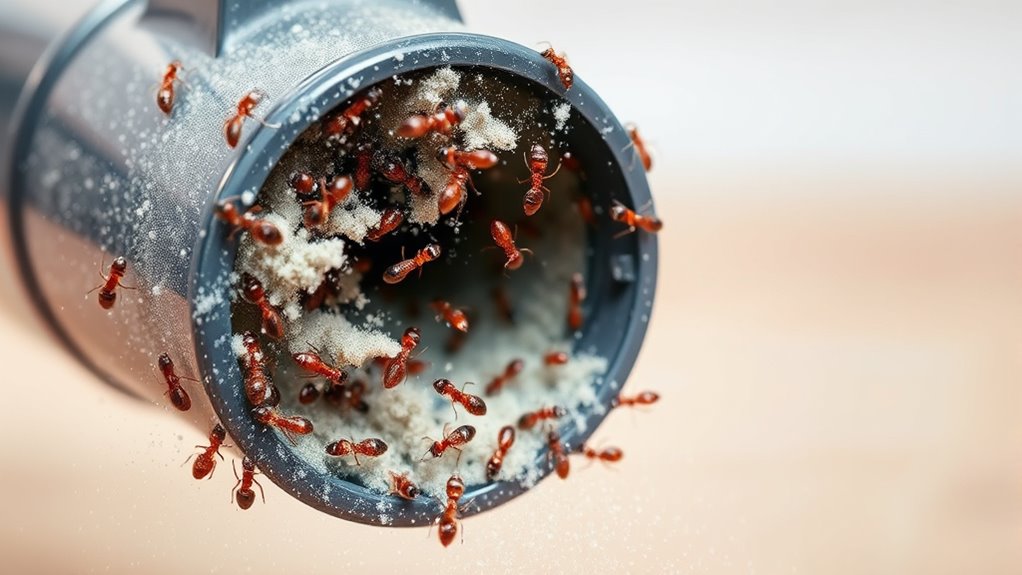
How Do Ants Die When Using a Vacuum Cleaner?
When you vacuum ants, they suffer fatal injuries from strong airflow turbulence and acceleration inside the vacuum. This intense force damages their exoskeleton and organs, making it hard for them to survive.
Dust and debris often clog their breathing spiracles, causing suffocation. On top of that, the dry environment inside the vacuum rapidly dehydrates them.
These combined effects make vacuuming an effective way to kill visible ants quickly. If you want to understand the best techniques for maximizing their elimination and preventing reinfestation, keep exploring how this method works. It’s a practical and quick solution when dealing with an ant problem around your home. So, next time you see those tiny invaders, a vacuum might just be your secret weapon!
Key Takeaways
- Intense airflow causes physical trauma, damaging ants’ exoskeletons and internal organs. This damage usually leads to their death pretty quickly.
- Dust and debris can clog the ants’ spiracles, which are tiny breathing holes. This blockage causes them to suffocate inside the vacuum.
- The dry and harsh conditions inside the vacuum make ants lose moisture rapidly. This dehydration speeds up their mortality.
- Mechanical injuries combined with the lack of breathable air create a really tough environment for ants to survive in.
- It’s super important to dispose of the vacuum contents properly. Otherwise, ants might escape and start new colonies elsewhere.
Mechanisms Behind Ant Mortality in Vacuum Cleaners
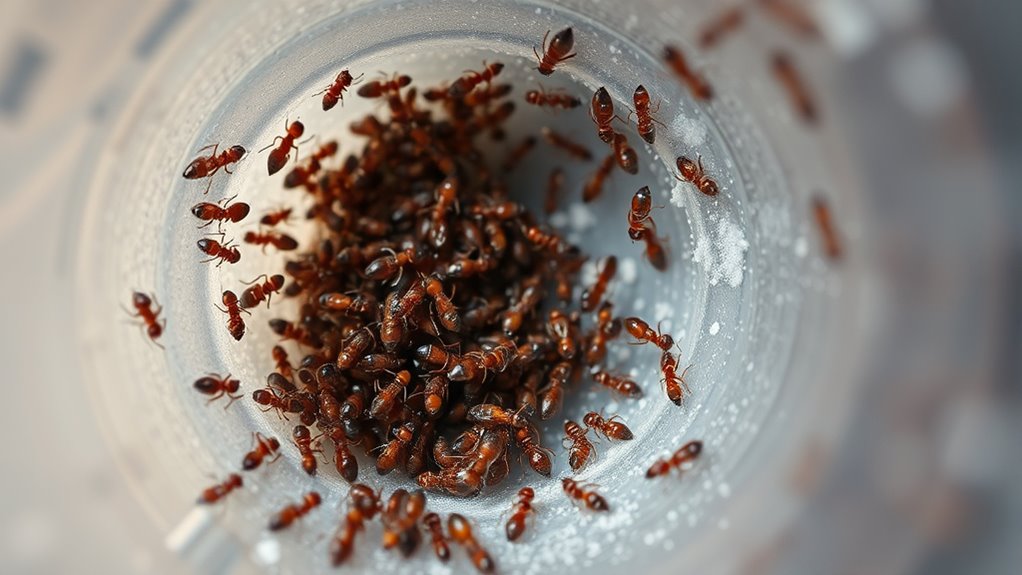
When you use a vacuum cleaner on ants, their deaths result from several harsh factors inside the device. The turbine airflow generates intense turbulence and acceleration, causing physical trauma that often leads to exoskeleton damage and broken internal organs. This mechanical injury plays a major role in ant mortality.
Once inside, ants face entrapment amid dust and debris, which can clog their spiracles and cause suffocation. The dry environment within the vacuum also promotes desiccation, dehydrating the ants rapidly. Combined, these factors create an inhospitable setting that kills ants before you even empty the vacuum.
Best Practices to Ensure Ants Are Effectively Eliminated
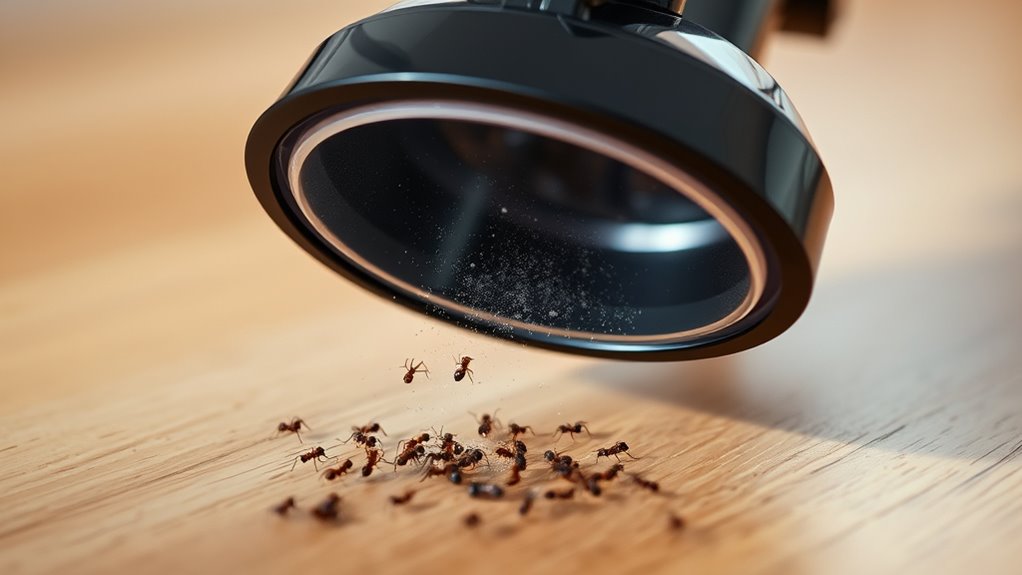
How can you make sure vacuuming truly gets rid of ants? First, maximize vacuum suction by using a crevice nozzle to reach tight spaces where ants hide. This increases ant mortality by physically injuring or suffocating them through debris blockages in their spiracles.
Remember, if there’s no queen, vacuuming may only cause queenless relocation. So, it’s important to understand the difference between baiting and suction—baiting targets the colony, while suction removes visible ants.
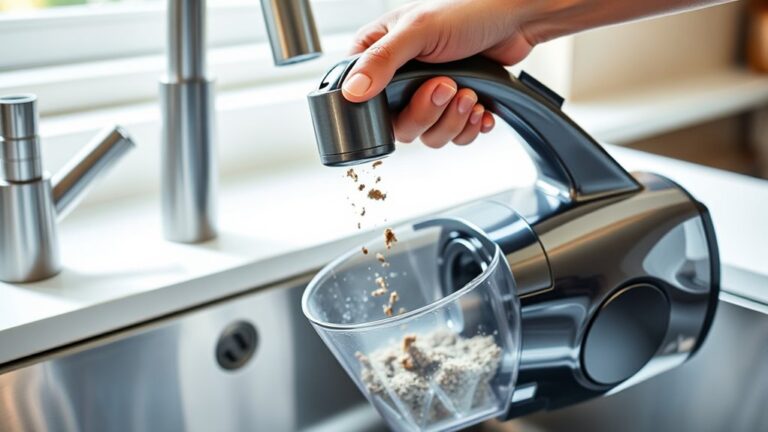
Immediately perform sealed disposal by tightly sealing vacuum bags or canisters to prevent escaped ants from reseeding. Also, empty bags outdoors to avoid indoor reinfestation.
And don’t forget to regularly check for debris blockages to maintain suction power. Following these steps ensures you don’t just move ants around but effectively eliminate them using your vacuum cleaner.
Conclusion
When you vacuum ants, most die from the intense suction force that damages their tiny bodies—up to 90% don’t survive the process. The rapid airflow and impact inside the vacuum also play a big role in ensuring they can’t escape or recover.
To make sure you’re truly eliminating them, empty the vacuum bag or canister immediately. This prevents ants from crawling back out and starting new colonies elsewhere.
By understanding how ants die when using a vacuum cleaner, you can effectively control ant infestations without leaving survivors behind. Vacuuming is a quick, chemical-free way to reduce ant populations and keep your home pest-free. Just remember to dispose of the contents right away for the best results.



2 Comments