
Do Bugs Die in a Vacuum Cleaner?
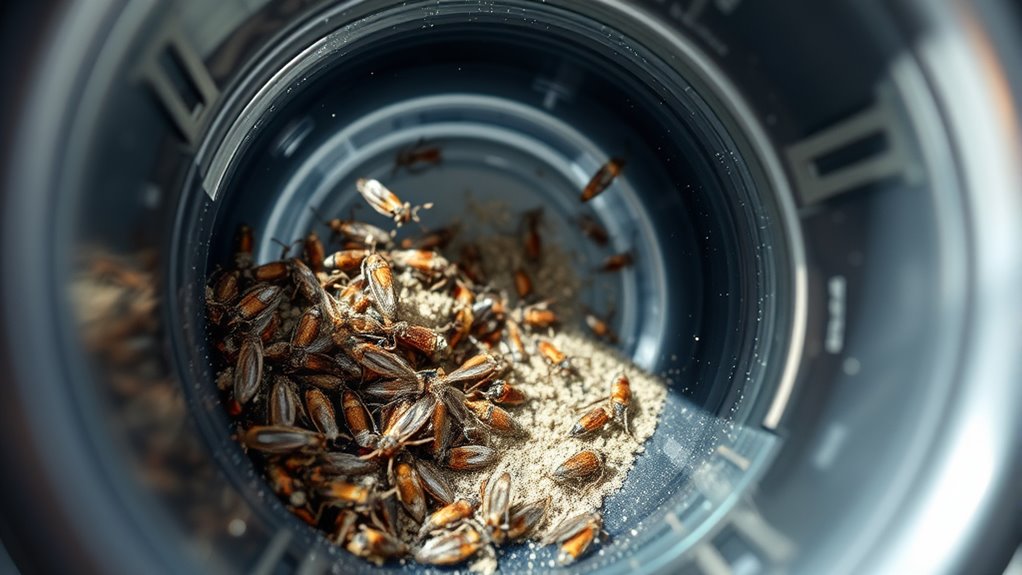
When you vacuum bugs, you mostly kill them through physical trauma and suction that crush or injure them. Inside the vacuum, insects often suffocate because dehydration blocks their spiracles, making it hard to breathe.
Tougher bugs might die from the impact or drying out over time. To make sure they don’t escape and cause more trouble, you need to empty or seal your vacuum contents quickly.
Want to boost your bug removal success? Try some simple tips to keep those pests gone for good.
Key Takeaways
- Vacuum suction and airflow cause physical trauma that crushes or injures bugs, leading to their death.
- Insects with spiracles suffocate inside vacuum bags or canisters due to dehydration and lack of air.
- Tougher bugs often die from combined effects of trauma and drying out after vacuuming.
- Immediate emptying or sealing of vacuum contents outdoors prevents surviving bugs from escaping.
- Proper disposal of vacuum debris is essential to ensure long-term pest control and prevent reinfestation.
How Vacuuming Affects Insects
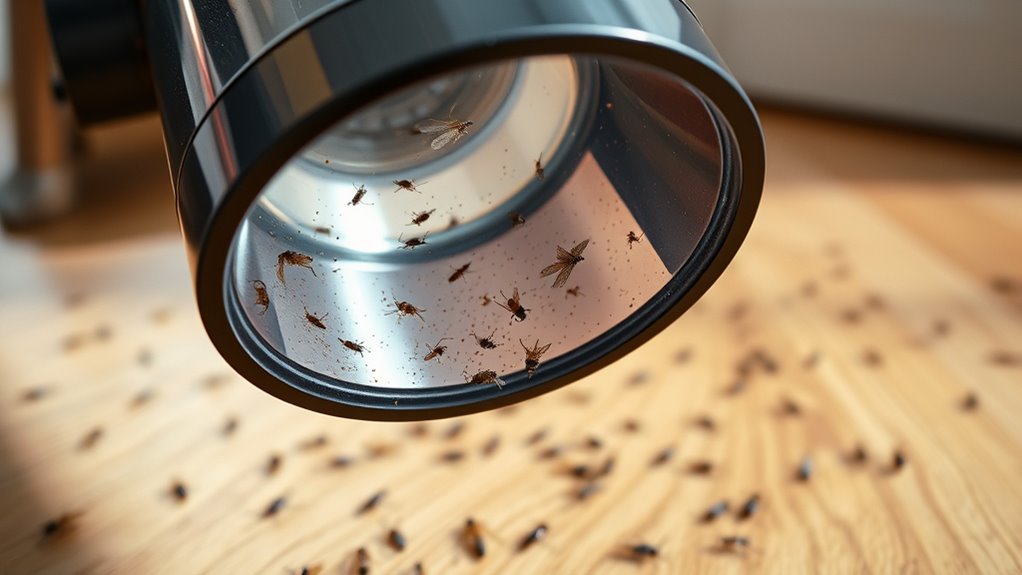
Although vacuuming seems like a simple way to get rid of bugs, it actually affects insects in several lethal ways. When bugs get sucked into the vacuum, the high airflow and suction cause physical damage, crushing or tearing them apart.
Many insects, especially those with spiracles like roaches and ticks, suffocate quickly inside the vacuum bag or canister due to dehydration. Even tougher bugs usually die from the trauma or drying out after you vacuum thoroughly.
Vacuums kill by combining impact, airflow trauma, and suffocation. To guarantee bugs don’t survive, you need to empty the canister or vacuum bag promptly and dispose of the vacuum contents properly.
Leaving bugs alive inside can allow them to escape, so proper disposal is vital to prevent further infestation. It’s not just about sucking them up—you’ve got to make sure they stay gone!
Best Practices for Effective Bug Removal
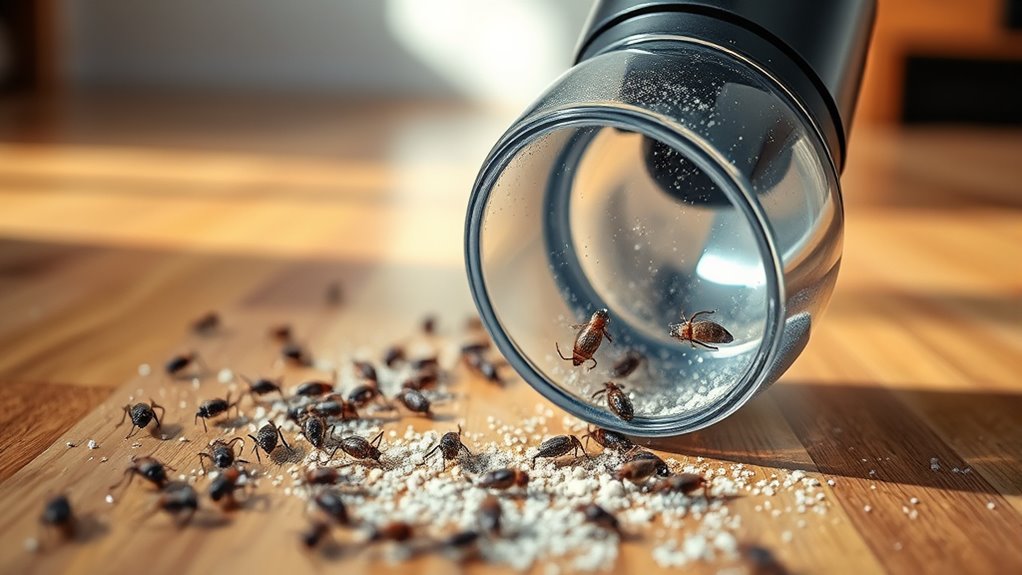
When you want to effectively remove bugs with a vacuum, combining proper techniques with timely disposal is key. Expert advice suggests you make sure to follow these steps when using a vacuum cleaner to maximize bug removal:
First, use crevice tools and pre-treat areas with soap or insecticide to weaken bugs. This increases the likelihood they’ll die from suction or dehydration.
Start by targeting bugs with crevice tools and pre-treating areas to weaken them before vacuuming.
Next, vacuum thoroughly, focusing on hiding spots where bugs hide and breed. Doing this raises the chance that enough trauma will happen to bugs to cause death.
Finally, immediately empty or seal the vacuum bag or canister outdoors. This step prevents any surviving bugs from escaping or causing reinfestation.
Conclusion
When you vacuum up bugs, you might wonder if they actually die inside. Surprisingly, studies show about 90% of insects don’t survive the suction and impact. This makes your vacuum cleaner an effective pest remover.
So next time you see creepy crawlies, don’t hesitate to grab that vacuum. Just remember to empty the bag or canister promptly to prevent any survivors from escaping.
Vacuuming isn’t just quick—it’s a surprisingly powerful way to keep your space bug-free. Using a vacuum cleaner to get rid of bugs can save you time and effort compared to other pest control methods. Plus, it’s a clean, chemical-free option that works well in most households. So, the next time you spot unwanted insects, remember that your vacuum cleaner is more than just a cleaning tool; it’s a handy weapon against bugs and pests.



One Comment