
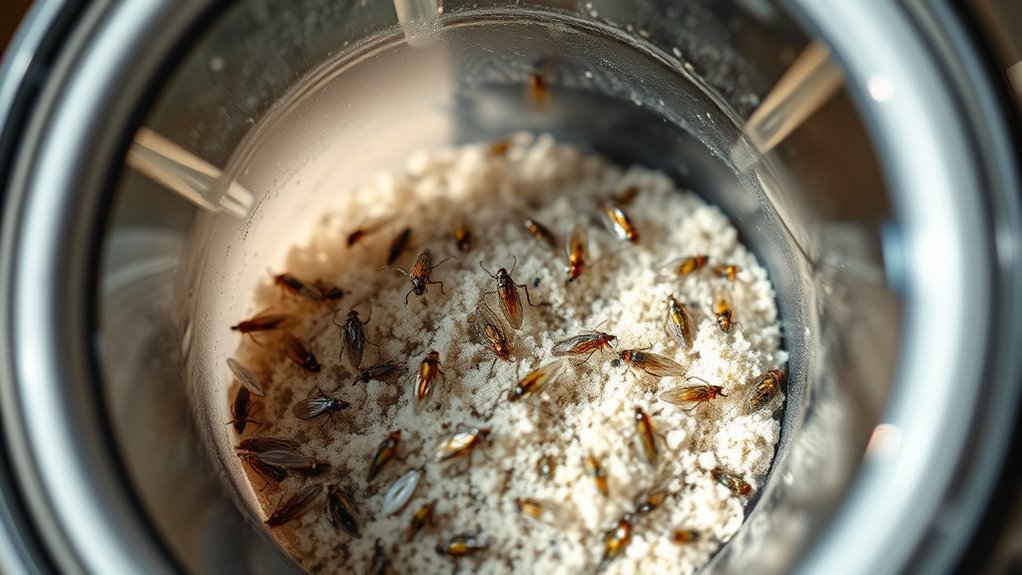
Do Bugs Die in a Vacuum Cleaner?
Yes, when you vacuum up bugs, most of them die quickly due to the strong suction, high airflow, and physical trauma inside the vacuum. The intense pressure and movement inside the machine can be pretty brutal for these little creatures.
Rapid dehydration and suffocation through their spiracles also speed up the process. Sometimes, you’ll even see their remains in the bag or canister, which can be a bit unsettling.
To keep things hygienic and avoid reinfestation, it’s important to dispose of the vacuum contents properly. Emptying the bag or canister right after vacuuming helps prevent any bugs from crawling back out.
If you want to know the best ways to trap and handle these pests, keep exploring. There are plenty of tips and tricks to make your bug control efforts more effective and less stressful!
Key Takeaways
- Insects typically die quickly inside vacuum cleaners due to strong suction, airflow, and physical trauma. Rapid dehydration and suffocation through spiracles contribute to insect death in vacuum bags or canisters.
- Some vacuums have electric grids or see-through chambers that kill and allow visual confirmation of insect death. It’s kind of handy to know for sure if they’re really gone.
- Dead insects often remain inside the vacuum bag or canister and can start to decay if not disposed of promptly. So, it’s best to get rid of the vacuum contents soon after cleaning.
- Proper disposal of vacuum contents outside the home helps prevent reinfestation and keeps your space hygienic. Nobody wants bugs crawling back in, right?
How Vacuum Cleaners Affect Insects
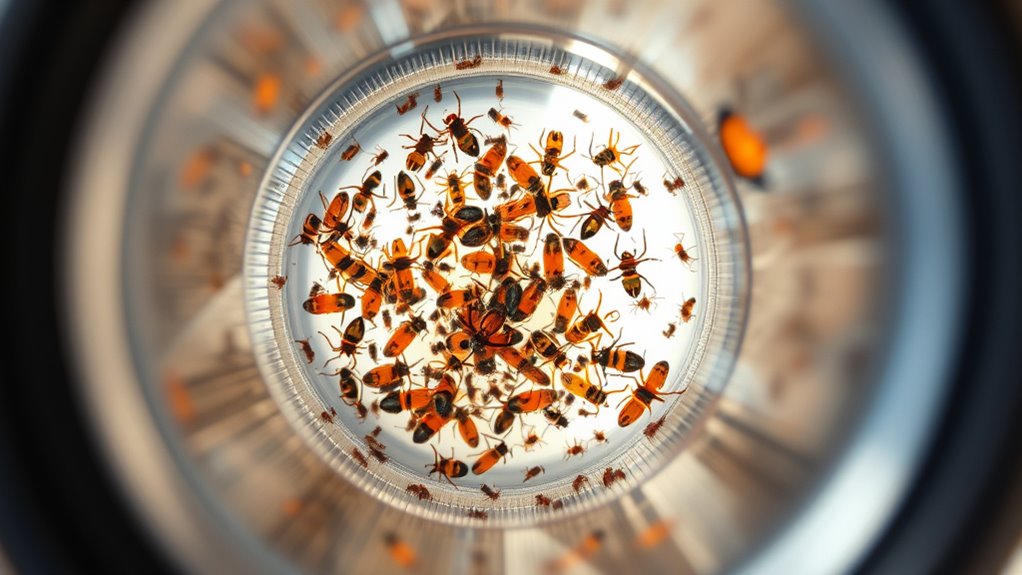
How exactly do vacuum cleaners affect insects when you use them? When insects get caught in the vacuum’s suction, many die instantly due to a mix of high airflow, physical trauma, and dehydration.
Vacuum cleaners kill insects instantly through strong airflow, physical damage, and rapid dehydration.
Insects with spiracles suffer rapid suffocation inside the vacuum, as these tiny breathing holes dry out quickly. Larger bugs often get torn apart or crushed by turbulent air and the vacuum’s internal parts, with their remains visible in the vacuum bag.
Some vacuums even have see-through chambers or electric grids that electrocutally kill insects the moment they enter, ensuring immediate death. Generally, bugs don’t survive long traveling through the vacuum hose.
Over time, any carcasses left in the vacuum bag can decay, so it’s important to be mindful of disposal. It’s a good idea to empty the vacuum regularly to avoid any unpleasant smells or potential hygiene issues.
Best Practices for Vacuuming Bugs and Disposal
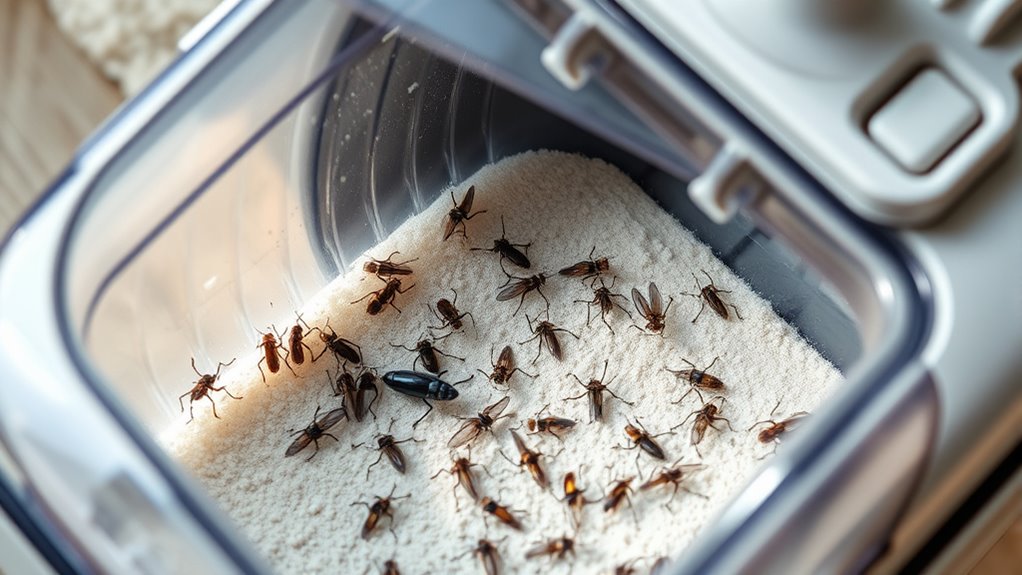
When you vacuum bugs, what steps should you take to ensure effective removal and safe disposal? First, use a vacuum cleaner with strong suction to quickly trap insects. Most bugs die rapidly from dehydration and physical trauma inside the bag or canister due to high airflow.
To confirm their death, opt for see-through bags or chambers where you can spot any remaining live bugs. After vacuuming, immediately seal the bag or empty the canister into a sealed container to prevent escapes.
Dispose of this container outside your home to avoid reinfestation. Remember, thorough disposal is key—don’t leave the vacuum bag or canister open indoors.
Following these best practices guarantees effective bug removal and prevents them from surviving or escaping after vacuuming.
Conclusion
When you vacuum bugs, many don’t survive the journey—studies show about 90% of insects die from the suction or impact inside the vacuum.
So, while some might escape, most won’t make it. To keep your space bug-free, vacuum regularly and empty the bag or canister right away.
This way, you’re not just moving pests around—you’re actually getting rid of them efficiently and keeping your home cleaner and healthier. Using a vacuum cleaner is a practical method to reduce bugs because it captures and kills them quickly.
Regular vacuuming combined with immediate disposal of the contents ensures fewer insects survive, making your home a less hospitable place for pests. So yes, bugs do die in a vacuum cleaner, which makes it a smart tool in your pest control routine.


2 Comments