
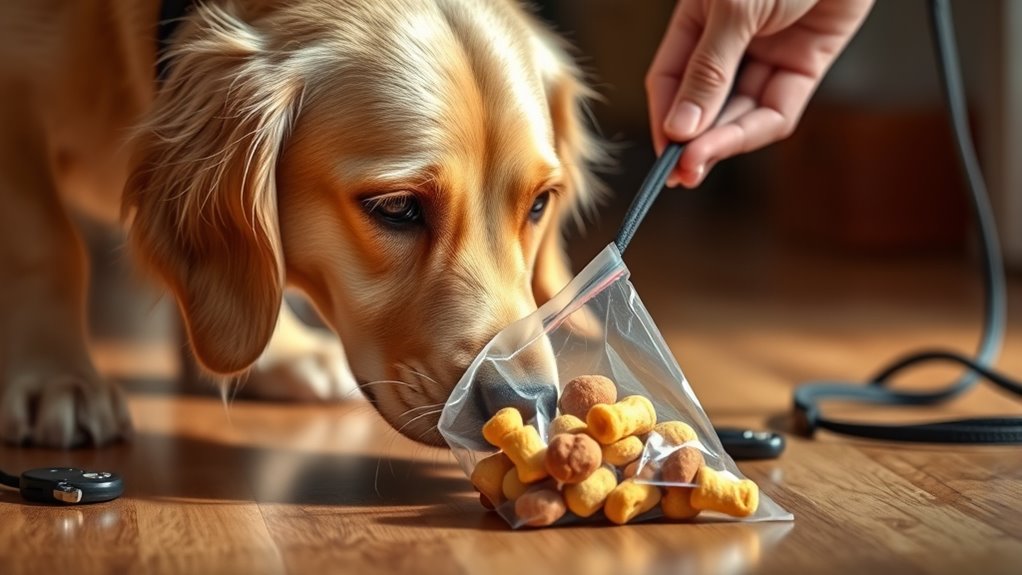
How to Train Dogs to Smell Thru Vacuum-Sealed Bags
You’ll start by training your dog with open scents to build strong odor recognition using positive reinforcement. This step is super important because it helps your dog understand what to look for without any distractions.
Then, gradually introduce sealed containers to help your dog get used to detecting scents through mild barriers.
Once your dog is confident with sealed containers, move on to vacuum-sealed bags. Begin with strong seals and varied seal qualities to challenge your dog. This helps them identify faint odors and improves their overall scent sensitivity.
Keep practicing like this, and you’ll strengthen your dog’s detection skills for real-world success. There are more techniques to explore next, so stay tuned for those!
Key Takeaways
- Begin by reinforcing reliable scent recognition with open scents before introducing any barriers. This helps your dog get really good at identifying smells without any distractions.
- Gradually train dogs with sealed containers to build skills detecting odors through mild obstacles. It’s a nice step up that prepares them for more challenging tasks.
- Use vacuum-sealed bags with strong seals to challenge and build confidence in detecting faint odors. This step really pushes their nose to work harder.
- Incorporate varied seal qualities and low-concentration odors to improve accuracy and discrimination. Mixing it up keeps your dog sharp and focused.
- Practice controlled contamination scenarios to enhance scent sensitivity and reduce false positives. This way, your dog learns to be precise and reliable every time.
Train Dogs With Open Scents Before Vacuum-Sealed Bags
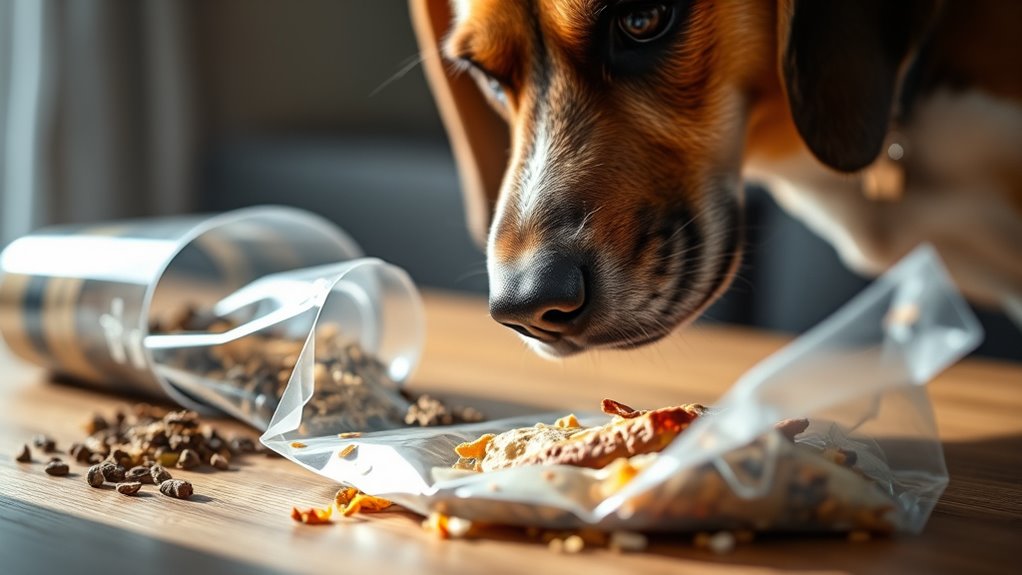
How do you help your dog recognize a scent before introducing more challenging barriers like vacuum-sealed bags? Start by exposing your dog to open scents in a controlled environment to establish a strong scent association with the target odor. This clear exposure helps build reliable scent recognition without confusion from barriers.
Use positive reinforcement—treats or praise—immediately after your dog gives a correct detection response. This strengthens their motivation and focus during the training process.
Once your dog consistently identifies odors on open items, gradually introduce sealed containers that aren’t vacuum-sealed yet. This barrier training teaches your dog to detect the target odor through mild obstacles, preparing them for more difficult challenges ahead.
Throughout, practice scent recognition across different contexts to ensure your dog can generalize the skill. By mastering open scents and sealed containers first, you set a solid foundation, making the transition to vacuum-sealed bags smoother and more effective.
Introduce Vacuum-Sealed Bags to Boost Detection Skills
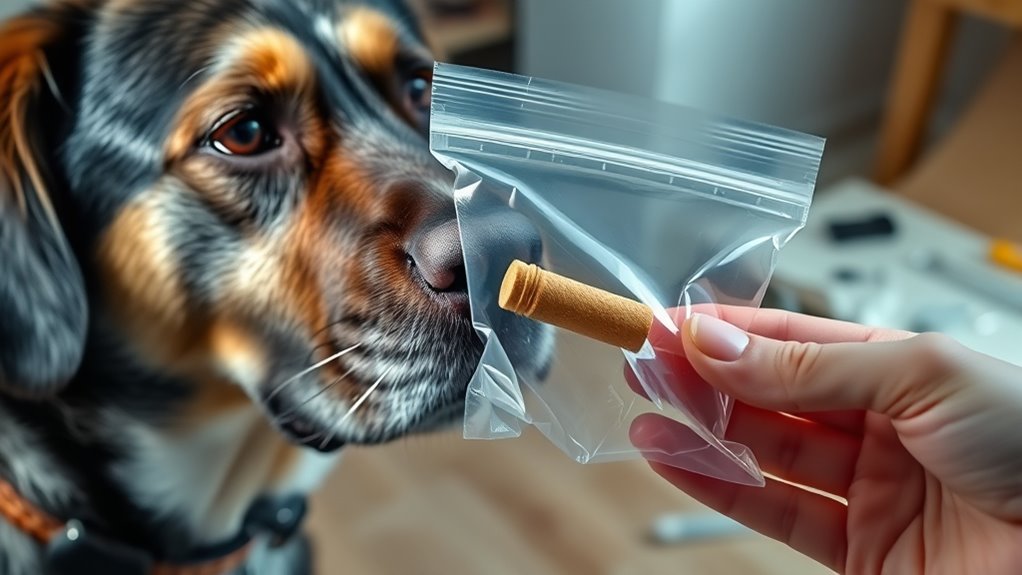
Although vacuum-sealed bags create strong barriers, introducing them into your dog’s training sharpens their ability to detect faint odors that might escape through tiny imperfections.
Using sealed bags with varying seal qualities exposes your detection dogs to real-world odor leaks, improving their scent sensitivity. This gradual exposure aids odor recognition, training your dog to identify low-concentration odors and distinguish true scents from false positives.
Here’s a quick guide to enhance your training methods with vacuum-sealed bags:
| Training Stage | Focus Area | Benefit |
|---|---|---|
| Initial Exposure | Strong seals | Builds confidence with faint odors |
| Varied Seal Quality | Imperfect seals | Improves scent detection under real conditions |
| Repeated Practice | Low-concentration odors | Boosts odor recognition accuracy |
| Controlled Contamination | False positives | Enhances discrimination skills |
Incorporate these steps to boost your dog’s ability to smell through vacuum-sealed bags effectively.
Frequently Asked Questions
Can Dogs Smell Through Vacuum Seal Bags?
Yes, dogs can smell through vacuum seal bags, especially if the seal isn’t perfect or the material is porous.
You’ll notice they detect even tiny leaks or external scent contamination on the bag’s surface.
It’s pretty amazing how sensitive their noses are, right? Even the smallest scent can catch their attention.
What Can You Train a Dog to Smell?
You can train your dog to smell drugs, explosives, currency, or even specific foods. They’re incredibly precise, detecting faint odors you’d never notice.
With patience and consistency, your dog’s nose becomes an amazing, reliable scent detector. It’s pretty impressive how much they can learn!
Are There Bags That Drug Dogs Can’t Smell Through?
You won’t find bags drug dogs can’t smell through completely.
High-quality, non-porous vacuum-sealed bags reduce scent detection, but over time, microscopic flaws or contamination can let dogs catch a trace of the odor inside.
How Do Sniffer Dogs Smell Through Bags?
You rely on your dog’s incredible nose to detect faint scent molecules escaping through tiny flaws or porous materials in bags.
They can pick up even the slightest odors, especially if the seal isn’t perfect or the bag’s surface is contaminated.
It’s pretty amazing how sensitive their noses are, right? They can sniff out what we often can’t even notice.
Conclusion
Training your dog to smell through vacuum-sealed bags takes patience, but it’s worth it. Did you know dogs’ noses have up to 300 million scent receptors—compared to our 5 million? This incredible ability means they can detect scents even when sealed tightly.
Start by introducing your dog to open scents first. Once they’re comfortable, gradually move on to vacuum-sealed bags. You’re tapping into their natural skills and boosting their detection power with this method.
Keep practicing regularly, and you’ll see impressive results in no time! Training dogs to smell through vacuum-sealed bags not only sharpens their natural scent detection but also builds their confidence. With consistent effort, your dog will become a pro at detecting scents even when they’re tightly sealed. So, stick with it—your dog’s amazing smelling abilities will surprise you!


2 Comments