
How to Wash Dyson Vacuum Filter in 10 Easy Steps
To wash your Dyson vacuum filter in 10 easy steps, start by unplugging the vacuum for safety. Gently remove the filter without twisting it to avoid damage.
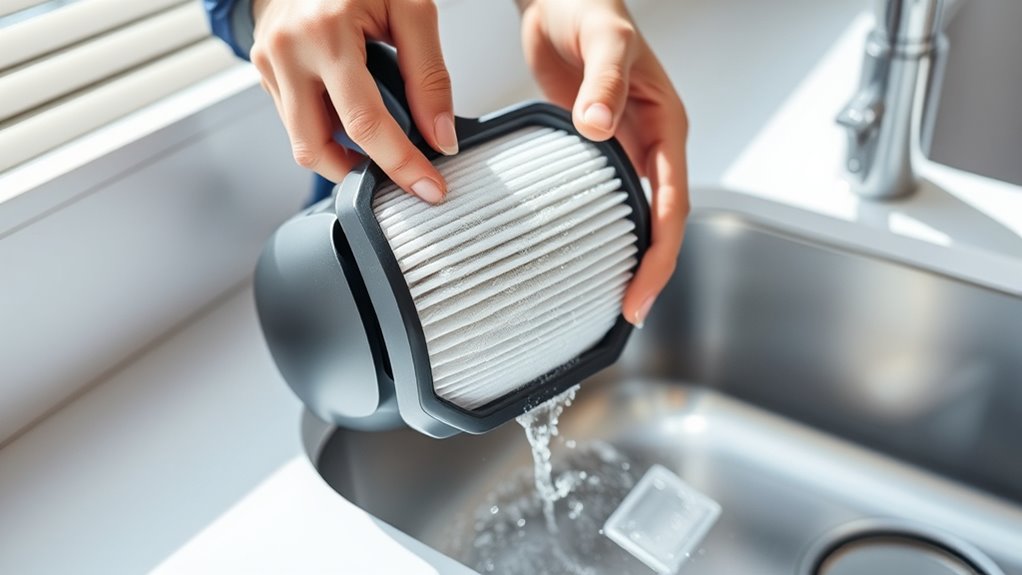
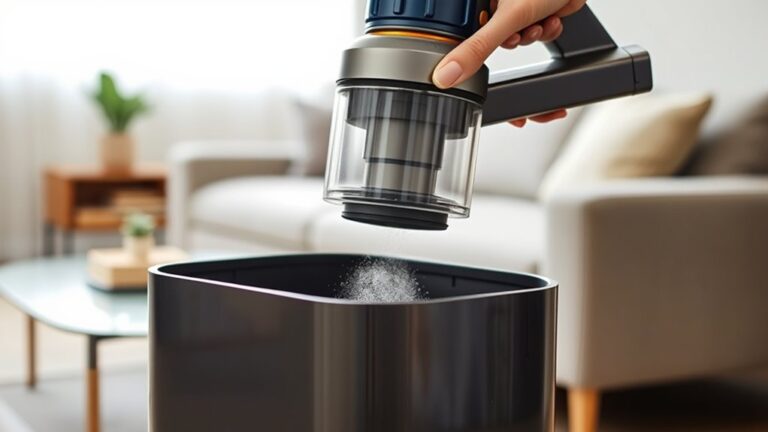
Next, tap and shake the filter over a bin to get rid of loose dust and debris. Then, rinse it under cold water until the water runs clear—this helps keep your vacuum’s suction strong.
Make sure to let the filter air dry completely for 24 hours. Never use heat or a dryer, as this can damage the filter.
Once the filter is dry, reinstall it back into your Dyson vacuum. Cleaning your filter every month or more often if needed will help maintain peak performance.
You might also want to rotate between multiple filters to avoid downtime while drying. Keep reading for more tips to protect your vacuum’s life and performance!
Key Takeaways
- Turn off and unplug the vacuum, then gently remove the filter without twisting or forcing.
- Tap the filter over a bin to dislodge dust before rinsing under cold, gentle water until clear.
- Avoid detergents and heat; air dry the filter naturally for at least 24 hours until completely dry.
- Perform a touch test to ensure no moisture remains before reinstalling the filter into the vacuum.
- Clean the filter monthly and consider rotating filters for continuous vacuum performance and longevity.
How to Safely Remove Your Dyson Vacuum Filter
Before you start, make sure your Dyson vacuum is turned off and unplugged to avoid any accidents.
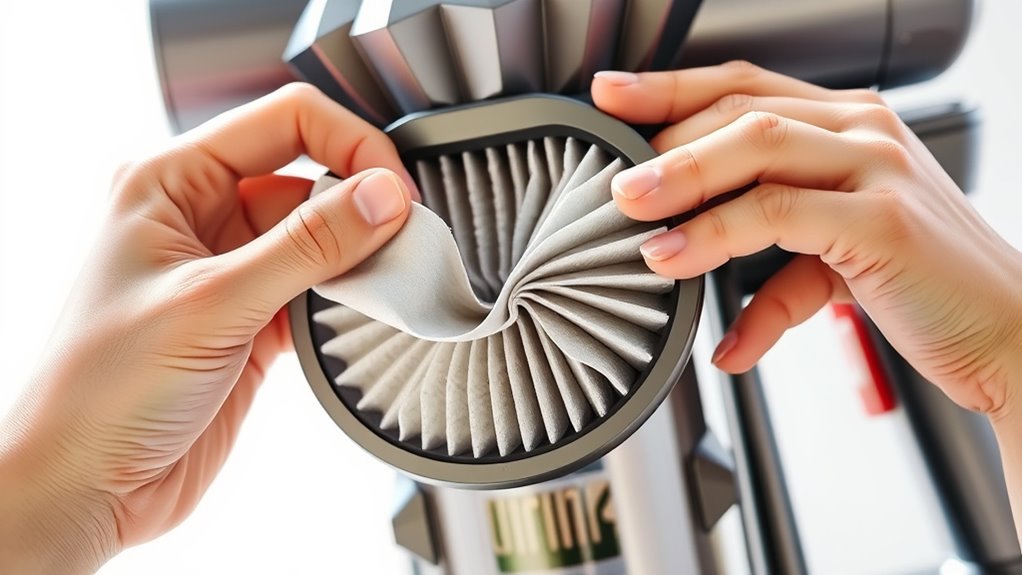
To safely remove your Dyson vacuum filter, hold the vacuum steady with one hand and gently pull the filter straight out using your other hand. Avoid twisting or forcing the filter, as this can damage the filter pleats or vacuum components.
Hold the vacuum steady and gently pull the filter straight out without twisting or forcing it.
For models like the Dyson Outsize and V11, locate the central filter and grip it firmly, applying only gentle pressure. Always handle the filter with clean, dry hands to prevent introducing dirt or moisture that could compromise its integrity.
Taking these precautions guarantees you remove the filter safely, protecting both the vacuum and the filter itself. By following these steps, you’ll be ready to proceed with cleaning your filter without risking damage or injury.
Tapping Out Loose Dust and Debris From Your Dyson Filter
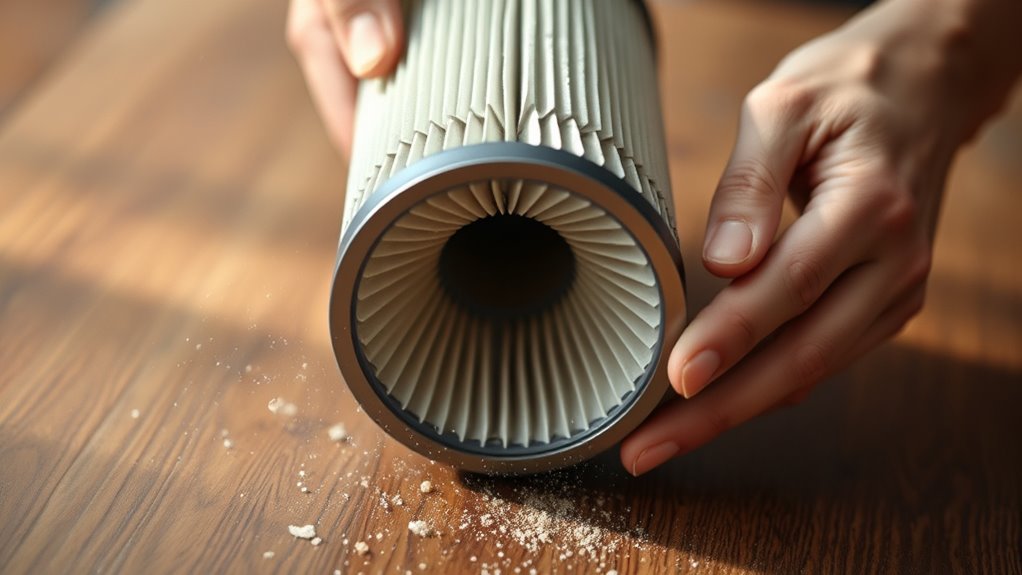
While you might be enthusiastic to jump straight into washing, tapping out loose dust and debris from your Dyson filter first helps preserve its structure and improves cleaning efficiency.
This step is vital to maintaining suction and prolonging the life of your HEPA filter.
Here’s how to do it properly:
- Hold the filter over a waste bin and gently tap it to dislodge dust and dirt without damaging the pleats.
- Use light, controlled taps to avoid bending or breaking the delicate ribs of the filter.
- Repeat until no more loose debris falls out, reducing the amount of dust you’ll rinse later.
How to Rinse Your Dyson Vacuum Filter Properly
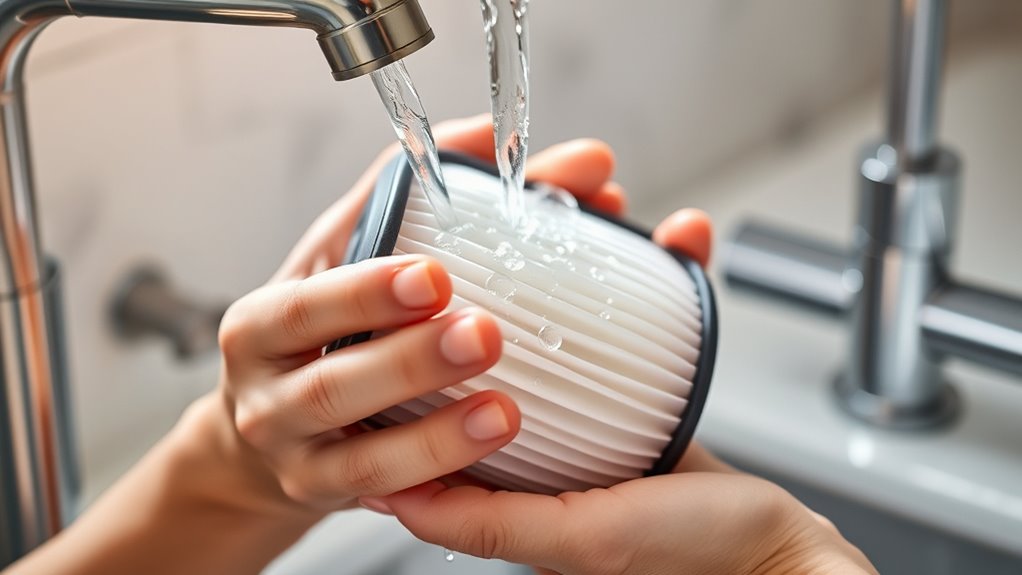
After tapping out loose dust, it’s time to rinse your Dyson vacuum filter thoroughly with cold water. Hold the filter under a gentle stream, making sure the water flows through all the pleats and internal areas. This helps to clean out trapped dirt effectively.
As you rinse, gently shake or agitate the filter to loosen any stubborn debris. Be careful not to use hot water or any harsh cleaning agents, as these can damage the filter’s materials.
Keep rinsing until the water runs clear, signaling that all the dirt has been washed away. Handle the filter with care throughout the process to avoid damaging the delicate pleats or ribs inside.
Properly rinsing your Dyson filter guarantees it stays clean and maintains peak suction power, extending the life of your vacuum. So, take your time and do it right!
How to Shake and Agitate Your Dyson Filter for a Deep Clean
To give your Dyson filter a deep clean, start by gently shaking it over a bin to release loose dust. Use your hands to carefully agitate the folds without squeezing, so you don’t damage the delicate pleats.
Proper Shaking Technique
Although cleaning your Dyson filter starts with rinsing, you’ll want to first gently shake it over a waste bin to dislodge loose dust and debris without damaging the delicate pleats.
To master the proper shaking technique, make sure to follow these steps:
- Hold the filter vertically or at a slight angle to allow fine dust to fall out from all sides.
- Use a firm but controlled motion—avoid vigorous shaking to prevent breaking or deforming the pleats and ribs inside.
- After shaking, inspect the filter carefully to ensure no damage occurred before moving on to rinsing.
This approach helps remove trapped dirt effectively while protecting the filter’s structure. That way, you get a deep clean without compromising its performance.
Gentle Agitation Methods
When you gently shake and agitate your Dyson filter, you help loosen stubborn dust without harming its delicate pleats. Hold the filter firmly with both hands and use light, controlled movements over a waste bin to dislodge loose particles.
For a deeper clean, softly tap the filter against a hard surface to shake off dust buildup. Avoid aggressive shaking or hitting, as it can damage the filter’s ribs and pleats.
Once you’ve removed the debris, you’re ready to put it back into your cordless vacuum. These gentle agitation methods extend your filter’s lifespan and keep your vacuum running efficiently.
Taking the time to handle the filter carefully ensures a thorough clean without compromising its structure. It’s a simple step that really makes a difference!
Avoiding Filter Damage
Shaking and agitating your Dyson filter properly helps remove deep-set dust without harming its structure. To avoid filter damage during cleaning, follow these steps:
- Gently shake the filter over a waste bin to dislodge loose dust. Avoid vigorous shaking that could harm the pleats or ribs.
- While rinsing with cold water, carefully agitate the filter with your hands. Don’t squeeze or twist, as this can break the pleats.
- Avoid hot water, harsh detergents, and bending the filter. These can weaken the material, crack ribs, and reduce filtration efficiency.
Handle your filter delicately to maintain ideal airflow and vacuum performance. Proper care during shaking and agitation keeps your Dyson filter effective for longer.
Avoiding Damage When Handling Your Dyson Filter
To keep your Dyson filter in good condition, handle it gently to prevent damaging the delicate pleats and ribs inside. When washing, avoid hot water and harsh chemicals, as these can degrade the filter material.
After rinsing, carefully shake off or squeeze excess water without applying too much force to maintain its shape. Never use heat sources like hairdryers or tumble dryers to speed up drying — these can warp or damage the filter permanently.
Instead, always let it air dry naturally in a well-ventilated area for at least 24 hours before reinstalling. By treating your filter with care during cleaning, you’ll extend its lifespan and maintain your vacuum’s performance.
How to Air Dry Your Dyson Filter Thoroughly
Although rinsing removes dirt and debris, your Dyson filter won’t perform well unless it dries completely. Proper air drying is vital to keep your vacuum working efficiently and avoid damage.
Here’s how to air dry your Dyson filter thoroughly:
- After rinsing, shake off excess water to speed up drying and minimize moisture retention.
- Place the filter in a well-ventilated area near a fan and let it dry for at least 24 hours. Avoid heat sources like hairdryers, tumble dryers, or direct sunlight, as high temperatures can harm the filter material.
- Store the filter in a clean, dry place during drying to prevent dust and debris from sticking.
Following these steps ensures your filter dries thoroughly and stays in great condition. That way, your Dyson vacuum keeps strong suction and long-lasting performance.
Checking If Your Dyson Filter Is Fully Dry Before Reinstalling
Before you reinstall your Dyson filter, make certain it’s completely dry by feeling for any moisture and holding it up to a light to spot damp areas.
Even a small amount of moisture can damage your vacuum’s motor, so don’t rush this step.
Always let the filter air dry for at least 24 hours in a well-ventilated spot to guarantee it’s safe to use again.
Moisture Check Techniques
How can you tell if your Dyson filter is completely dry and ready to be reinstalled? It’s crucial to check for any lingering moisture to avoid damage or mold growth.
Here are three simple moisture check techniques:
- Gently touch the filter to feel for dampness. If it feels wet or cool, give it more drying time.
- Hold the filter up to a bright light. If light passes through evenly without dark spots, it’s likely dry.
- Shake the filter lightly and listen for sloshing sounds. Any liquid movement means it’s not fully dry.
You can also pat the filter with a clean, dry paper towel to see if moisture transfers. Use these checks to make sure your filter is perfectly dry before reinstalling.
Importance Of Complete Drying
Two key reasons make ensuring your Dyson filter is completely dry before reinstalling critical: preventing motor damage and avoiding mold growth. Moisture left in the filter can damage internal components and reduce suction power due to impaired airflow.
Plus, a damp filter encourages mold, unpleasant odors, and lowers filtration efficiency. Always air dry your filter for at least 24 hours near a fan and perform a touch test to confirm no moisture remains.
Use this table to understand the consequences and benefits clearly:
| Condition | Impact |
|---|---|
| Wet Filter | Motor damage, mold growth |
| Partially Dry | Reduced suction, odors |
| Fully Dry | Peak performance, no damage |
Complete drying protects your vacuum and keeps it running efficiently. So, don’t rush it — your vacuum will thank you!
How Often to Clean and Maintain Your Dyson Vacuum Filter
Although Dyson vacuums are designed for durability, you should clean the filter at least once a month to keep your vacuum running efficiently. Regular cleaning guarantees your vacuum traps 99.99% of dust and bacteria and helps prevent motor damage.
Sometimes, you might need to clean it more often, especially if you have pets shedding fur and dander regularly. Or maybe your home collects a lot of dust, or you live in an older house.
Also, if you notice reduced suction or unusual vacuum noises, it’s a good sign to check the filter sooner. Keeping on top of this helps your vacuum work at its best!
Why Genuine Dyson Vacuum Filters Are Essential for Performance
Because your Dyson vacuum relies heavily on its filtration system to perform at its best, using genuine Dyson filters is essential. These filters meet strict quality standards, ensuring peak filtration efficiency and consistent performance every time you clean.
When you use authentic Dyson filters, you maintain the vacuum’s fully-sealed filtration system, which traps 99.99% of dust and allergens. This keeps your home cleaner and the air healthier.
Original Dyson filters fit perfectly and are tested for durability, so they prevent air leaks that could reduce your vacuum’s effectiveness. Choosing genuine filters also protects your vacuum’s warranty and prevents damage that inferior or incompatible filters might cause.
Plus, authentic Dyson filters are made from high-quality materials designed to sustain filtration and airflow over time. Unlike generic alternatives that can degrade quickly, these filters help keep your Dyson vacuum working like new.
Using an Extra Dyson Filter to Keep Cleaning Without Delay
Keep an extra genuine Dyson filter handy so you can swap it out while the other one dries. That way, you avoid any cleaning breaks.
Rotating filters not only saves time but also helps each filter last longer. It’s a simple routine that keeps your vacuum running at peak performance without delay.
Benefits Of Extra Filter
When you have an extra Dyson filter on hand, you can keep cleaning without interruption while the other filter dries. This simple swap lets you maintain your cleaning routine smoothly and efficiently.
Here are three key benefits you’ll enjoy:
- Continuous Cleaning: No need to pause and wait for a filter to dry, so your vacuum stays ready to go.
- Better Air Quality: Using a clean, dry filter maintains consistent filtration, ensuring the air in your home stays fresh and dust-free.
- Longer Filter Life: Rotating between filters prevents overuse, helping each one last longer and saving you money.
With an extra filter, you avoid damage caused by running your vacuum with a wet filter. Plus, you always have a backup ready during maintenance.
Filter Rotation Tips
If you want to maintain a seamless cleaning routine, rotating your Dyson filters is crucial. Using an extra genuine Dyson filter lets you keep vacuuming while the primary one dries for at least 24 hours.
Always have a spare filter ready to avoid cleaning delays. Label or store your spare filters properly so you can switch them quickly without confusion.
Regular rotation ensures each filter dries completely, preserving maximum filtration and protecting your vacuum’s motor from damage. Remember, never reinstall a damp filter, as moisture can harm the motor.
Frequently Asked Questions
How to Clean a Dyson Filter Quickly?
You can’t rush cleaning a Dyson filter, but to speed it up, tap off dust, rinse thoroughly with cold water, shake gently, then air dry in a well-ventilated spot.
Avoid using heat or wringing it out.
It’s all about being gentle and patient. Just give it some time to dry completely before putting it back in.
Can a Dyson Vacuum Filter Be Washed?
Yes, you can wash a Dyson vacuum filter. Just rinse it under cold water without detergent.
Then, let it dry completely for at least 24 hours before putting it back. This keeps your vacuum working efficiently.
How Do You Clean the Inside of a Dyson Filter?
You clean the inside of a Dyson filter by rinsing it gently in cold water, shaking to remove debris.
Did you know a dirty filter can reduce suction by up to 75%?
Always air dry completely before putting it back in.
Where Are the Two Filters on a Dyson Vacuum?
You’ll find the main filter near the motor, usually inside the vacuum body.
The second filter, if your model has one, is often at the top or near the cyclone.
Check your manual for exact spots. It’s the best way to be sure!
Conclusion
Think of your Dyson vacuum filter as the heart of your cleaner—it needs care to keep the whole machine beating strong. By gently tapping out dust, rinsing with care, and ensuring it’s fully dry, you’re giving your vacuum a fresh breath of life.
Regular cleaning and using genuine filters keep performance sharp, like a well-tuned engine. With a spare filter on hand, you’ll always be ready to tackle dirt without missing a beat.
Keeping your Dyson vacuum filter clean not only boosts suction power but also extends the life of your machine. Follow these easy steps regularly, and you’ll maintain peak performance every time you clean. Remember, a clean Dyson vacuum filter means better air quality and a more efficient clean overall. So, treat your filter right and enjoy a stronger, longer-lasting vacuum that’s always ready for action!



2 Comments