
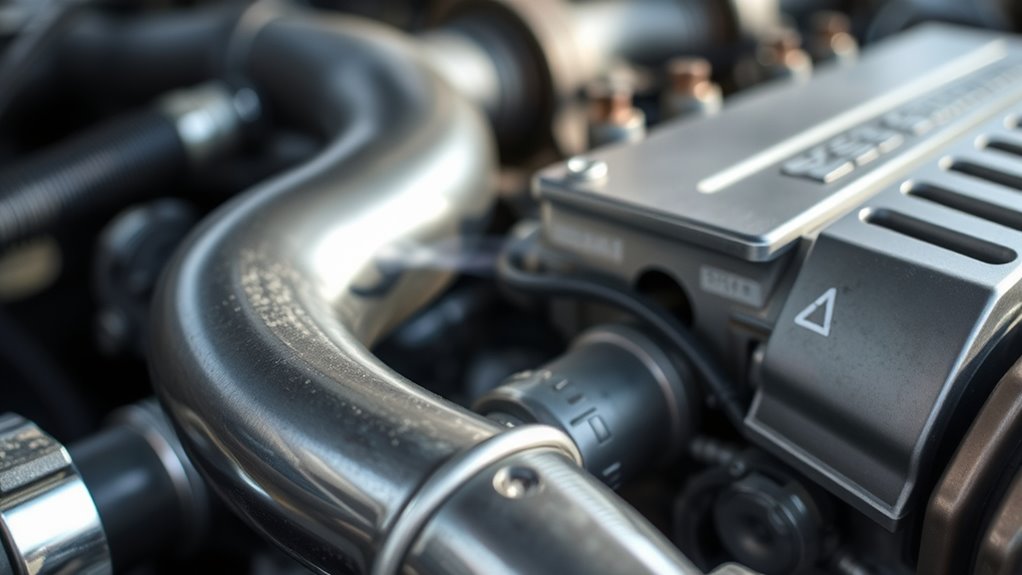
What Does a Vacuum Leak Sound Like in an Engine?
You’ll hear a high-pitched hissing or whistling sound coming from your engine bay if there’s a vacuum leak. This kind of noise is pretty common when air escapes through tiny gaps in your engine’s vacuum system.
It often changes with engine speed or acceleration, especially near vacuum hoses or connections.
The leak causes air to rush through small gaps, creating a distinctive whistle that’s louder at idle or light throttle.
If you pay close attention, the sound helps pinpoint worn hoses or gasket issues.
So, next time you hear that hiss, it might just be your engine telling you there’s a vacuum leak.
To better understand what causes this noise, keep exploring the details.
Key Takeaways
- A vacuum leak sounds like a high-pitched hissing or whistling noise coming from the engine bay.
- You’ll notice the sound changes with the engine speed. It’s usually more obvious when the engine is at idle or under light throttle.
- Most of the time, the noise comes from areas around vacuum hoses or the intake manifold gasket where there might be cracks or gaps.
- This sound happens because air rushes turbulently through small leaks in the vacuum system.
- If the noise is faint or hard to hear, using a mechanic’s stethoscope can really help pinpoint the leak.
How to Identify Vacuum Leak Sounds in Your Engine
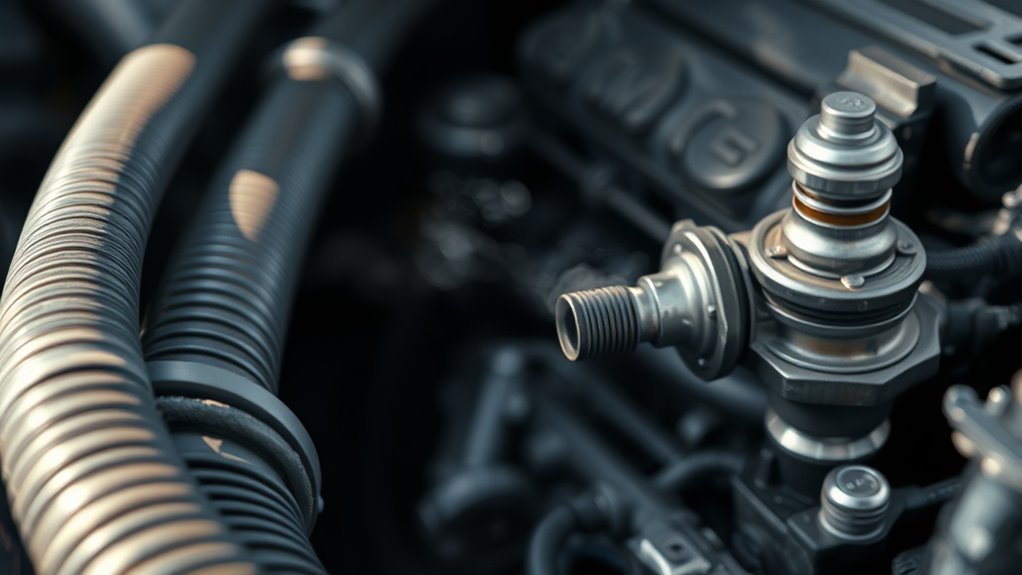
When your engine creates more vacuum pressure at idle or during acceleration, you might notice a high-pitched hissing or whistling sound coming from the engine bay. This hissing or whistling often signals a vacuum leak.
To identify it, listen for hissing that fluctuates or changes with engine speed. You may hear this diagnostic sound near vacuum hoses, where leaks commonly occur.
Listen for hissing that varies with engine speed, often near vacuum hoses where leaks typically happen.
Paying attention to any sudden increase in engine noise or a shift in engine pitch can also help detect a significant vacuum leak. For more precise sound detection, use a mechanic’s stethoscope or carefully place your ear close to suspected vacuum hoses.
This method helps you catch faint or hard-to-hear sounds that otherwise go unnoticed. By focusing on these specific engine noises and the location of the hissing, you can effectively identify vacuum leaks and address issues before they worsen.
What Causes a Vacuum Leak to Make That Whistling Noise?
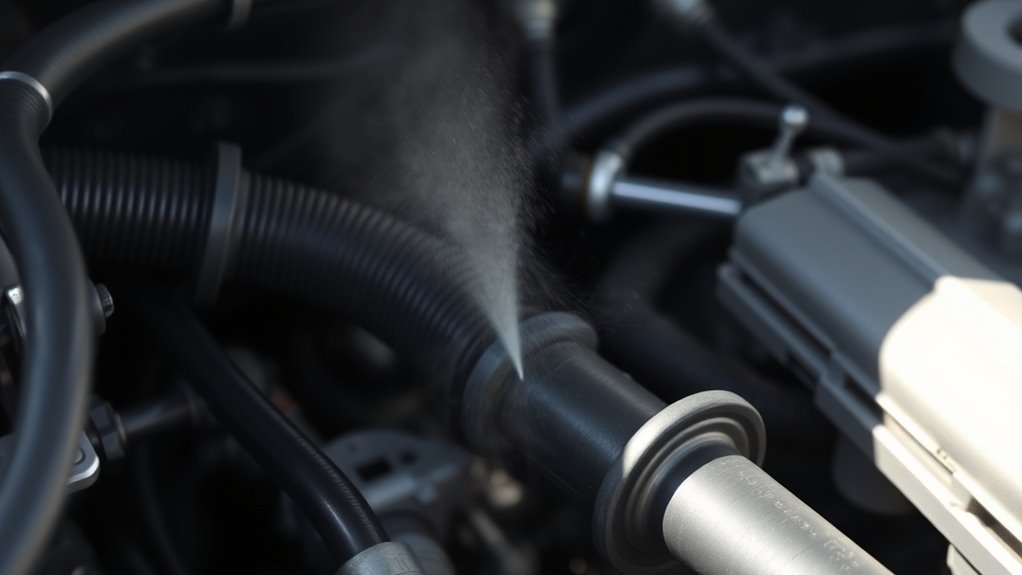
The high-pitched whistling you hear from a vacuum leak comes from air rushing through a small gap or crack in the engine’s vacuum system. This air rushing creates turbulence, which produces the distinctive whistling noise you notice in the engine bay.
Typically, this high-pitched sound becomes more apparent when your engine is idling or under light throttle because vacuum pressure is at its peak. Common sources of these leaks include worn vacuum hoses or damaged intake manifold gasket areas.
The size and location of the vacuum leak affect the intensity and pitch of the whistling noise. When air forcefully moves through these narrow openings, it generates a consistent whistle that stands out from other engine sounds.
Frequently Asked Questions
How to Tell if You Have a Vacuum Leak in Your Engine?
You’ll notice a hissing or whistling sound near the engine, especially at idle. Your engine might run rough or stall.
Try listening closely around the vacuum lines. You can also spray carb cleaner to see if you notice any changes that might indicate a leak.
Can You Still Drive a Car With a Vacuum Leak?
Imagine driving with a ticking noise coming from your engine—that’s usually a vacuum leak.
You can still drive, but it’ll cause rough idling and poor fuel economy.
It’s not something to ignore for long. Don’t wait; fix it quickly to avoid costly damage.
How Does a Car Act With a Vacuum Leak?
You’ll notice rough idling, stalling, or hesitation during acceleration. Your car might struggle with higher RPMs, feel sluggish, and the check engine light could come on.
It’s best not to ignore these signs. They’re your car’s way of telling you something’s not right under the hood.
What Is the Most Common Cause of a Vacuum Leak?
Think of your engine as a balloon—if its string frays, air escapes. The most common cause of a vacuum leak is cracked or disconnected vacuum hoses.
You’ll want to inspect those first to keep everything tight and running smoothly. It’s usually a quick fix that can save you from bigger problems down the road.
Conclusion
If you’ve ever heard a whistle through a tiny crack in a window on a windy day, you’ll recognize a vacuum leak’s sound in your engine. That sharp, persistent noise is your engine’s way of telling you it’s struggling to breathe right.
Ignoring it is like ignoring a cough—it might seem small, but it can lead to bigger problems. Catch it early, and your engine will thank you with smoother rides and better performance.
A vacuum leak sound in an engine often resembles a high-pitched whistle or hissing noise. It usually happens when air escapes through a small crack or hole in the intake system. This sound is a clear sign that your engine isn’t getting the right air-fuel mixture, which can cause rough idling, stalling, or decreased fuel efficiency.
So, when you hear that distinct vacuum leak noise, don’t brush it off. Addressing vacuum leaks promptly helps maintain engine health and ensures your car runs smoothly. Remember, catching a vacuum leak early prevents costly repairs and keeps your engine performing at its best.






One Comment