
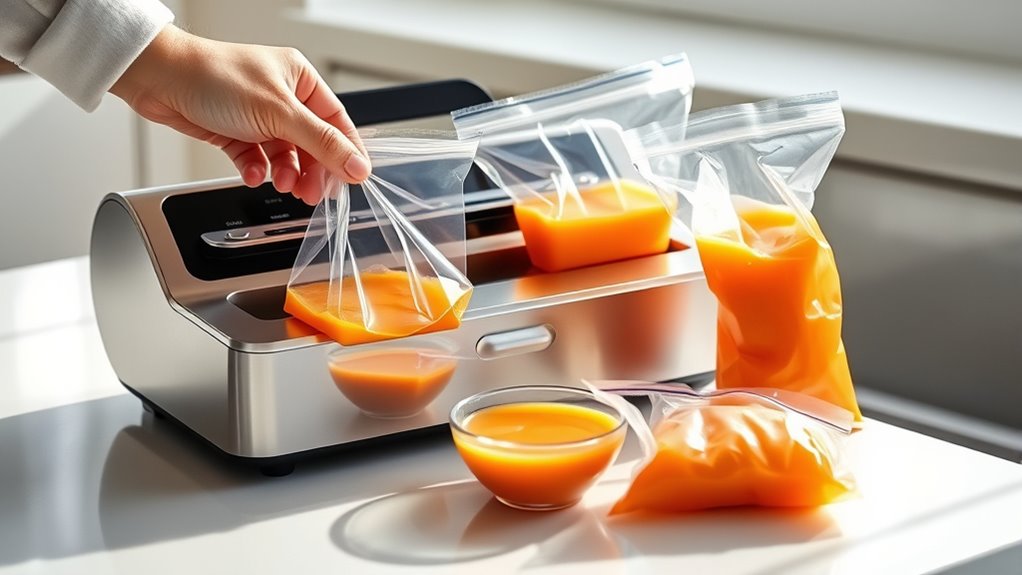
How to Vacuum Seal Liquids in 3 Easy Steps
To vacuum seal liquids easily and effectively, start by cooling or partially freezing your liquid. This step helps prevent spills and makes the sealing process much smoother.
Next, divide your liquid into smaller portions for easier handling and better control.
Now, use the water displacement method. Fill your vacuum bag with the liquid, but leave some headspace at the top.
Slowly submerge the bag in water, letting the water pressure push out the air. Seal the bag while it’s still underwater to keep all that air out.
Finally, store your sealed bags in the freezer. Make sure they are labeled clearly and sealed tightly to keep your liquids fresh for longer.
Keep going to discover tips for perfect sealing and storage that will make your vacuum sealing hassle-free!
Key Takeaways
- Cool or partially freeze liquids before sealing to prevent overflow and ensure a clean seal. It really helps keep things neat and tidy.
- Portion liquids into smaller bags or containers to simplify handling and thawing. Smaller portions make life so much easier when you’re ready to use them.
- Use the water displacement method by submerging the bag to remove air without spills. This trick keeps everything mess-free while you work.
- Seal the vacuum bag while still submerged to avoid leaks and water entering the bag. It might sound tricky, but it’s super effective.
- Confirm the seal is airtight and dry before storing to maintain quality and prevent spoilage. A good seal means your liquids stay fresh longer!
Cool and Portion Liquids Before Vacuum Sealing
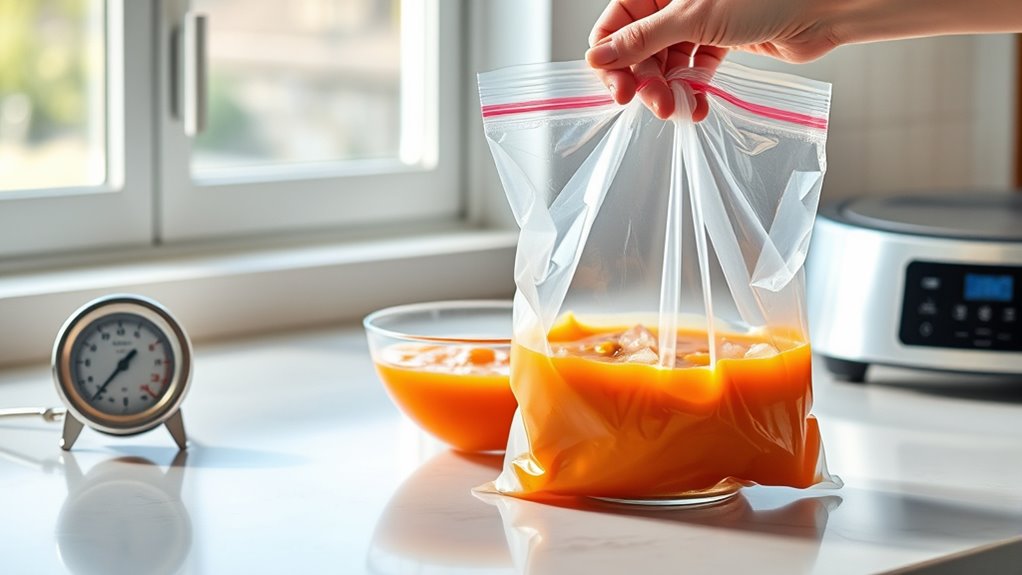
Before vacuum sealing liquids, you should cool or refrigerate them to prevent overflow and guarantee a strong seal. Cooling helps lower the temperature, reducing the risk of liquids expanding and spilling during sealing.
Portioning liquids into smaller bags or containers makes the process easier and improves stability, especially when you freeze them flat. Freezing liquids partially or fully allows you to handle them without worrying about overflow.
When you’re ready to seal, let the cooled liquids reach room temperature to avoid temperature-related sealing problems. Using smaller portions also means you can thaw only what you need later, saving time and reducing waste.
Seal Liquids Leak-Free Using the Water Displacement Method
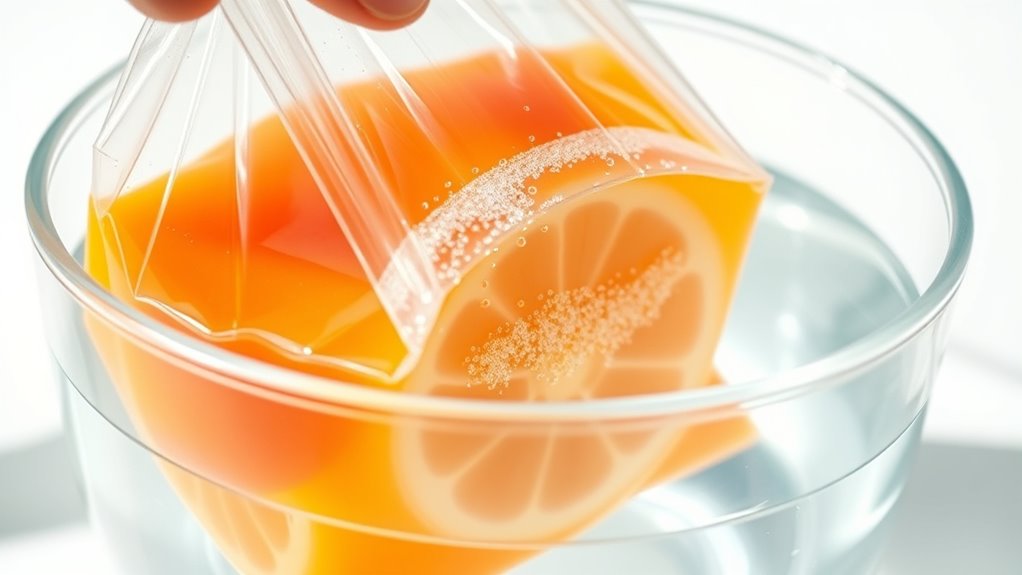
When you need to vacuum seal liquids without risking spills, the water displacement method offers a reliable solution. Start by filling your vacuum sealer bag with the liquid, leaving enough headspace to fold it over.
Next, submerge the bag slowly in water up to the seal line. This water displacement method forces air out as you lower the bag, displacing air and creating a near-vacuum environment inside.
Once the air is pushed out, seal the bag properly while it’s still submerged to prevent leaks and stop water from entering. This liquid sealing technique is especially effective for vacuum sealing liquids that are tricky to seal without leaks.
Store Vacuum-Sealed Liquids Safely for Long-Lasting Freshness
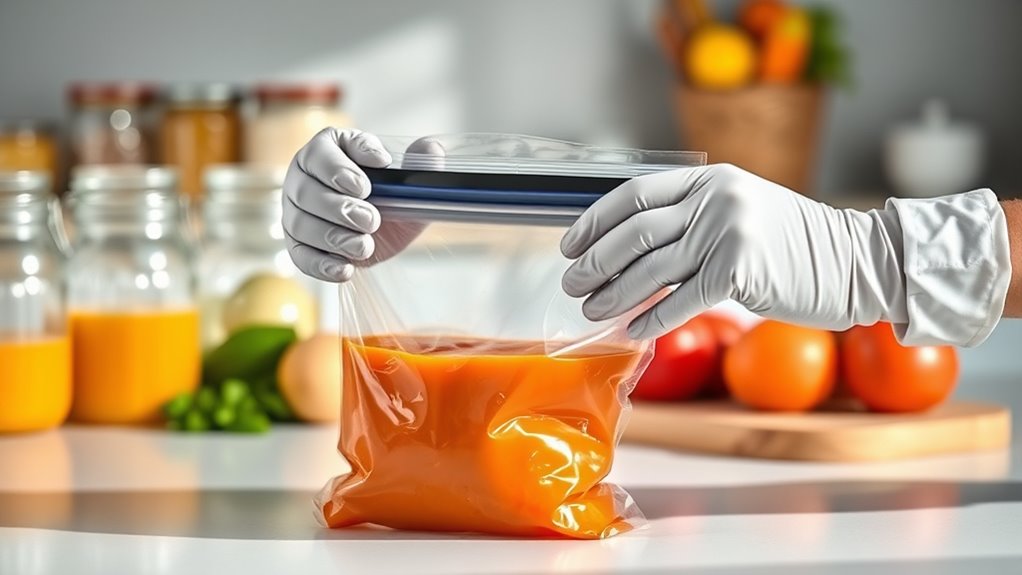
Although vacuum sealing liquids helps preserve freshness, storing them properly is crucial to extend their shelf life. To keep your vacuum-sealed liquids fresh for months, always use durable vacuum bags that resist punctures and leaks.
Freeze liquids in small portions to reduce the risk of bag damage and make thawing easier. Also, double-check that the airtight seal is complete and dry—any moisture buildup inside can cause spoilage or freezer burn.
Be sure to label each bag with the contents and sealing date. This helps you track freshness and practice proper rotation.
Store vacuum-sealed liquids in consistent, temperature-controlled freezer storage to maintain long-lasting freshness. This method prevents freezer burn and keeps your liquids tasting great.
Frequently Asked Questions
What’s the Best Way to Vacuum Seal Liquids?
The best way to vacuum seal liquids is to freeze them first, use thick vacuum bags, leave headspace, and vacuum seal slowly. This prevents spills, guarantees a tight seal, and protects your vacuum machine from damage.
Freezing the liquid before sealing makes the process much cleaner and easier. Plus, using thick bags helps avoid punctures or leaks.
Leaving some space at the top of the bag means the liquid has room to expand. And sealing slowly ensures the vacuum doesn’t pull liquid into the machine. It’s a simple way to keep everything safe and spill-free.
How to Use a Vacuum Sealer Step by Step?
You place the bag in the sealer, align the open edge, then close the lid.
Press the vacuum button to remove air, and the machine seals the bag.
Finally, check the seal and store your item properly.
Can You Put Liquids in a Vacuum Sealer?
Yes, you can vacuum seal liquids, but don’t worry about messes—you should freeze them first.
This prevents spills and guarantees a tight seal, keeping your liquids secure and your vacuum sealer safe from damage.
Can I Use Regular Ziploc Bags in a Vacuum Sealer?
You shouldn’t use regular Ziploc bags in a vacuum sealer because they aren’t designed for airtight seals.
Instead, choose vacuum sealer-specific bags to avoid leaks, bursts, and poor sealing results when preserving your food.
Trust me, using the right bags makes a big difference in keeping your food fresh longer!
Conclusion
So, now that you’re a liquid vacuum-sealing wizard, you can impress your friends with your leak-free bags and perfectly portioned soups. Just remember, if you skip cooling or forget the water displacement method, you might end up with a kitchen flood instead of freshness—because who doesn’t love a little indoor water feature?
Follow these steps, and you’ll keep your liquids safe, fresh, and contained. Vacuum sealing liquids isn’t just for the food elite—it’s a game changer for anyone wanting to store soups, sauces, or broths without mess or spoilage.
By mastering these simple techniques, you’ll enjoy leak-free bags every time and maximize your food’s shelf life. So go ahead, vacuum seal your liquids like a pro and say goodbye to spills and wasted food!



2 Comments