
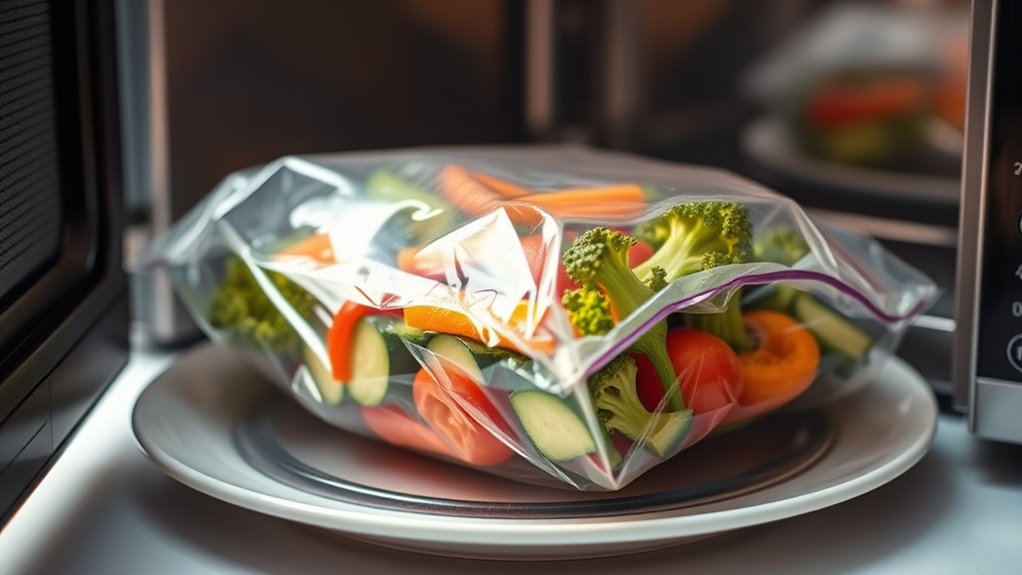
How You Can Safely Microwave Vacuum Seal Bags
You can safely microwave vacuum seal bags by first making sure the bag is labeled microwave-safe and made from materials like polyethylene or heat-resistant films. These materials handle heat well and won’t release harmful chemicals.
Avoid any bag with metallic parts or foil since they can cause sparks and damage your microwave.
Always vent the bag by poking small holes or opening a corner to release steam. This step is super important because trapped steam can cause the bag to burst.
Use medium power in short intervals to prevent melting or bursting.
If you want to master these steps and protect your food and microwave, keep exploring how to handle these bags properly. It’s all about being careful and following simple guidelines to keep your meals safe and your microwave in good shape.
Key Takeaways
- Use vacuum seal bags labeled microwave-safe or made from polyethylene or heat-resistant films. These materials handle heat better, so your food heats safely without any issues.
- Always vent or open vacuum seal bags before microwaving. This helps release steam and prevents pressure from building up inside the bag.
- Avoid bags with metallic elements or foil linings. They can cause sparks and may damage your microwave.
- Microwave on medium power in short intervals of 1-2 minutes. This way, your food heats evenly and stays safe.
- Before using a new bag, do a quick test by microwaving an empty one briefly. Check for any warping or strange odors to make sure it’s safe to use.
How to Identify Microwave-Safe Vacuum Seal Bags
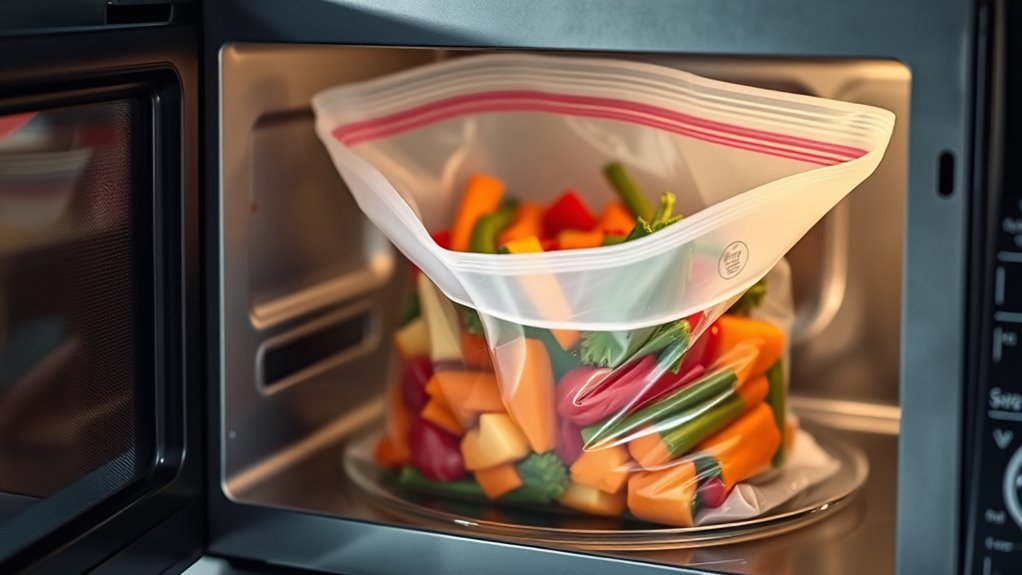
How can you tell if a vacuum seal bag is safe to microwave? First, check the packaging or the bag itself for a microwave-safe symbol or an explicit note saying it’s compatible with microwave use. Not all vacuum seal bags are created equal, so look for materials like polyethylene (PE) or multi-layer films designed to withstand heat.
Avoid any bags containing metallic elements or foil linings, as they’re not microwave-safe and could cause sparks. Always review the manufacturer’s instructions carefully; they often include important details or warnings about microwave use.
If you’re unsure, you can perform a quick test by microwaving an empty bag for 10-15 seconds. If it warps, melts, or gives off a strange odor, it’s definitely not safe. By following these simple checks, you’ll make sure your vacuum seal bags are truly microwave-safe before heating your food.
How to Microwave Vacuum Seal Bags Safely
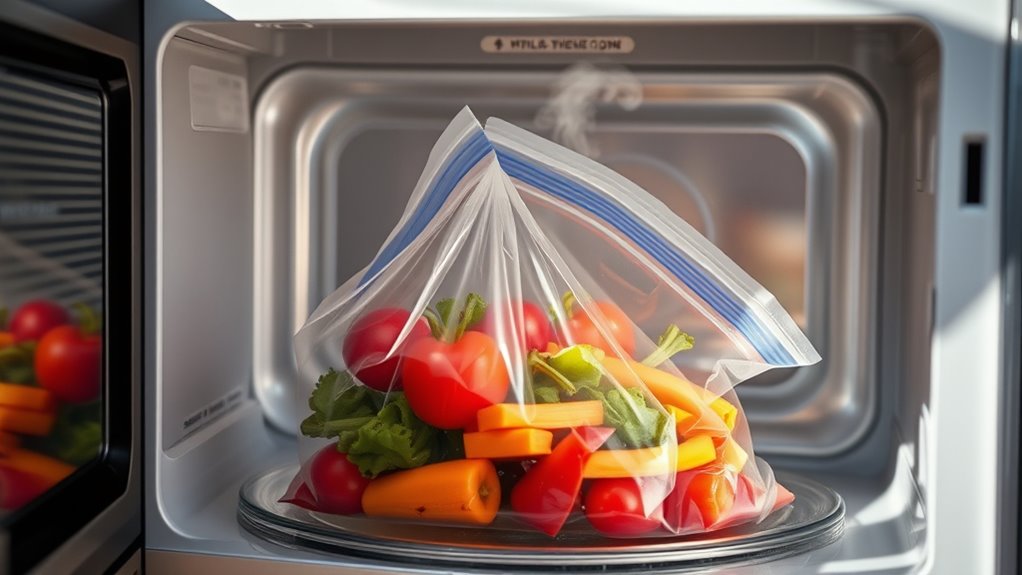
Once you’ve confirmed your vacuum seal bag is microwave-safe, take a few simple steps to heat your food without risk. First, never microwave sealed vacuum seal bags as the pressure build-up can cause them to burst.
Confirm your vacuum seal bag is microwave-safe and always vent it before heating to prevent bursting.
Instead, poke small holes or cut open a corner of the bag to allow steam release, preventing pressure buildup. Use medium microwave power and heat in short intervals, such as 1-2 minutes, to ensure even warming and avoid overheating.
Avoid bags designed to block liquids or those not explicitly labeled microwave-safe, as they pose safety hazards. By following these steps, you can safely microwave vacuum seal bags without damaging the bag or risking injury.
Always prioritize ventilation for steam release to maintain safe cooking conditions and preserve the quality of your food.
Frequently Asked Questions
Is It Safe to Microwave Vacuum Seal Bags?
It’s safe to microwave vacuum seal bags only if they’re labeled microwave-safe. You should poke small holes or open a corner to release steam, and always follow the manufacturer’s instructions to avoid melting or hazards.
Just remember, not all vacuum seal bags are made for the microwave. So, double-check the label before you zap your food. That way, you keep things safe and avoid any messes.
What Is the Healthiest Way to Cover Food in the Microwave?
The healthiest way to cover food in the microwave is by using a microwave-safe glass lid or plate. This prevents splatters, allows steam to escape, and avoids harmful chemicals from plastic wrap or non-safe vacuum seal bags.
It’s a simple switch that really makes a difference. Plus, glass lids are easy to clean and reuse, so they’re good for the environment too!
How to Avoid Botulism When Vacuum Sealing?
To avoid botulism, don’t seal food at room temperature. Cook thoroughly, cool quickly, then vacuum seal.
Refrigerate or freeze immediately. Use bags designed for cold storage.
Following these steps keeps your food safe and fresh. It’s a simple way to protect yourself and enjoy your meals worry-free.
Can You Put a Vacuum Seal in the Microwave?
You can microwave vacuum seal bags only if they’re labeled microwave-safe. Always vent the bag by cutting a corner or poking holes to release steam, preventing explosions or melting.
Never microwave sealed, unvented bags. It’s really important to let that steam escape, or things could get messy fast!
Conclusion
Microwaving vacuum seal bags safely is like opening a treasure chest—you’re protecting your food’s flavor and nutrition while avoiding hidden dangers. By choosing microwave-safe bags and following simple steps, you keep your meals fresh and your kitchen safe.
Remember, each careful action is a key that preserves the quality inside. So, treat your sealed bags with respect, and enjoy the convenience without worry.
When you microwave vacuum seal bags properly, you’re not just heating food—you’re preserving freshness and nutrients. Using microwave-safe bags and venting them correctly helps avoid melting or bursting.
This way, every meal stays delicious and safe to eat. So, embrace these tips to microwave vacuum seal bags safely and turn every meal into a hassle-free, tasty moment. Your food—and your kitchen—will thank you!



One Comment