
Can You Vacuum a Wet Carpet?
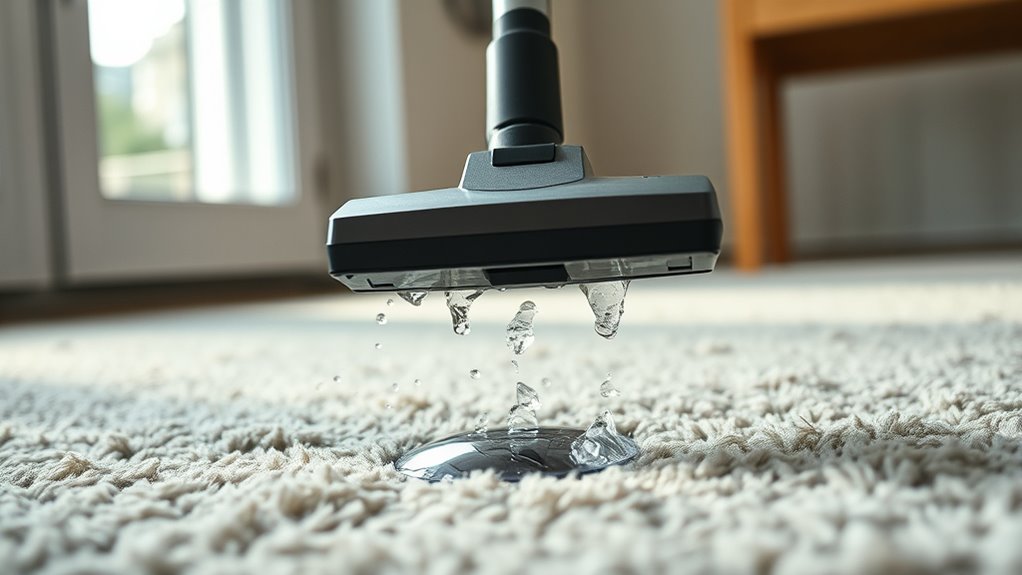
You shouldn’t use a regular vacuum on a wet carpet because moisture can damage the motor and electrical parts, causing short circuits. It can also push water deeper into the fibers, increasing the risk of mold growth.
Regular vacuums aren’t designed for wet cleaning and lack proper seals and filters.
Instead, use a wet/dry vacuum or carpet extractor to safely remove water. These tools are made to handle moisture without breaking down.
Keep going to discover the best way to dry and protect your carpet after spills.
Key Takeaways
- Regular vacuums can be damaged by moisture and are not designed for wet carpet cleaning. Using a regular vacuum on wet carpets risks motor damage and electrical short circuits.
- Wet/dry vacuums or carpet extractors are safer alternatives for removing water from carpets. They’re built to handle moisture without causing damage.
- Vacuuming a wet carpet without proper equipment can push water deeper, increasing mold risk. You definitely want to avoid making the problem worse.
- To dry wet carpets safely, remove excess water first. Then, use fans and dehumidifiers to make sure everything dries thoroughly.
Why You Shouldn’t Use a Regular Vacuum on Wet Carpets
If you try to vacuum a wet carpet with a regular vacuum, you risk damaging the motor because these devices aren’t built to handle liquids. Moisture can seep into the electrical components, causing a short circuit or a damaged motor that may permanently ruin your vacuum.
Besides equipment failure, using a regular vacuum on a wet carpet can push water deeper into the fibers and padding, making water damage worse. This trapped moisture creates an ideal environment for mold growth, which poses health risks and is tough to remove later.
Regular vacuums lack waterproof filters and seals, so they can’t safely perform water extraction tasks. You also face the danger of electrical shock since these vacuums aren’t designed for wet conditions.
Instead, you should rely on specialized cleaning tools made for wet carpet cleaning, which can safely remove moisture without risking damage to your equipment or your health. It’s just a smarter and safer way to go about it.
How to Dry Your Wet Carpet Safely After a Spill
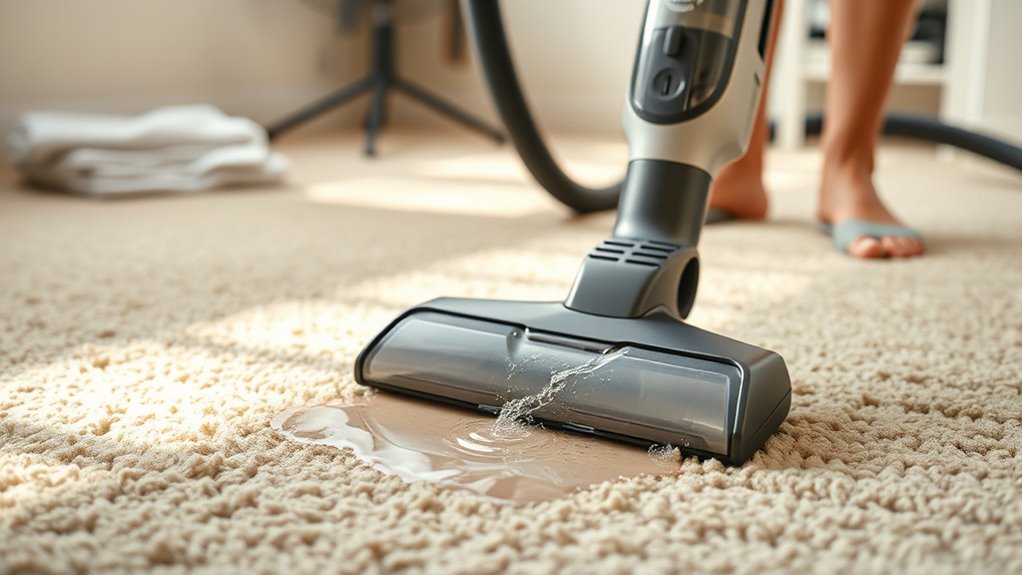
When your carpet gets wet from a spill, act quickly to remove as much water as possible using a wet/dry vacuum or carpet extractor. This helps prevent the wet carpet from soaking deeper into the carpet padding.
After removing excess water, open windows to improve air circulation and use a fan to speed up the drying process. Lifting the carpet edges allows air to reach underneath, promoting moisture removal from both the fibers and padding.
Open windows and use fans to speed drying, lifting carpet edges for better airflow underneath.
You can also use a dehumidifier to draw out hidden moisture, ensuring the carpet dries thoroughly. Throughout the drying process, press the carpet to check for dampness or cold spots.
If it still feels wet, keep using fans and ventilation until the carpet is completely dry. By following these steps, you’ll dry a wet carpet safely and avoid mold or damage caused by lingering moisture.
Frequently Asked Questions
Is It Safe to Vacuum Over Wet Carpet?
No, you shouldn’t vacuum a wet carpet with a regular vacuum. Instead, use a wet/dry vacuum designed for moisture to avoid electrical hazards, damage, and mold growth.
Always dry the carpet thoroughly afterward. It’s really important to make sure no moisture is left behind. Otherwise, you could end up with mold or other issues.
Will a Wet Carpet Dry on Its Own?
You’ll notice your wet carpet dries on its own, but it takes 24 to 72 hours.
If you speed up airflow and ventilation, you’ll cut drying time and avoid mold or odors developing. It’s a simple way to keep things fresh and prevent any nasty smells.
How to Vacuum a Wet Carpet?
You should use a wet/dry vacuum set to wet mode with a waterproof filter. Work slowly in sections to extract water, avoiding overfilling.
Afterward, boost airflow with fans and dehumidifiers to prevent mold growth. This step is super important to keep your carpet fresh and dry.
Can You Turn a Regular Vacuum Into a Wet Vac?
You can’t safely turn a regular vacuum into a wet vac without risking damage or electrical hazards.
Instead, use a dedicated wet/dry vacuum designed for liquids to protect yourself and your machine effectively.
It’s really not worth the risk when there are tools made just for the job!
Conclusion
You shouldn’t use a regular vacuum on a wet carpet because it’s like trying to catch lightning in a bottle—it just won’t work and can damage your vacuum. Instead, focus on drying your carpet safely by blotting spills and using fans or a dehumidifier.
Taking these steps will help prevent mold and keep your home fresh. Remember, patience is key—treat your carpet gently, and it’ll bounce back like new.
When dealing with a wet carpet, avoid using a standard vacuum to prevent damage both to your machine and carpet. Instead, prioritize drying methods like blotting excess water and running fans or a dehumidifier to speed up moisture removal. This approach helps stop mold growth and keeps your living space smelling clean. So, be patient and gentle with your carpet during the drying process, and you’ll restore it to its original condition without any issues.


