
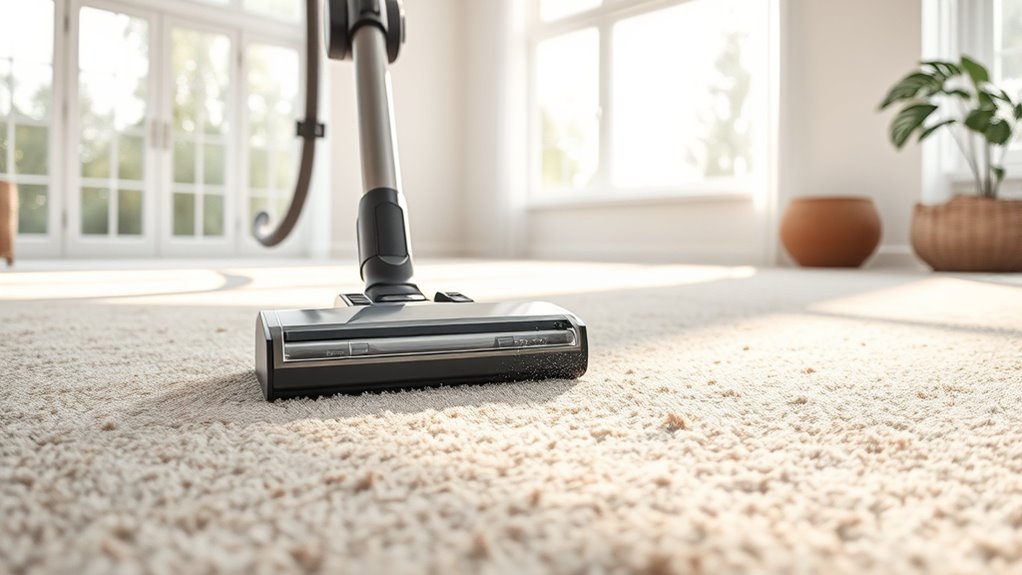
How You Are Supposed to Vacuum After Carpet Cleaning
You should never vacuum your carpet until it’s fully dry, usually after 4-6 hours. This helps avoid damaging both your vacuum and the delicate carpet fibers. Patience here really pays off for the longevity of your carpet.
Once the carpet feels dry to the touch, grab a vacuum with strong suction and adjustable settings. Move slowly and use overlapping strokes to make sure you pick up all the dirt and debris.
It’s especially important to focus on high-traffic areas and edges, where dirt tends to build up the most.
Don’t forget to maintain your vacuum regularly—clean filters and check for blockages. Following these simple steps guarantees your carpet stays cleaner and lasts longer.
Ready to learn more about the best techniques and equipment next?
Key Takeaways
- Wait 4-6 hours for the carpet to dry completely before vacuuming. This helps avoid motor damage and prevents dirt from getting re-deposited.
- Use a vacuum with strong suction and adjustable settings. This protects the carpet fibers and makes cleaning more effective.
- Vacuum slowly with overlapping strokes. Pay special attention to high-traffic areas and edges to remove dirt thoroughly.
- Make sure your vacuum’s filters and brushes are clean and well-maintained. This will help maximize its performance.
- After cleaning, regularly vacuum dry carpets to keep their texture and appearance looking great. It also helps extend the carpet’s lifespan.
When and How to Vacuum After Carpet Cleaning
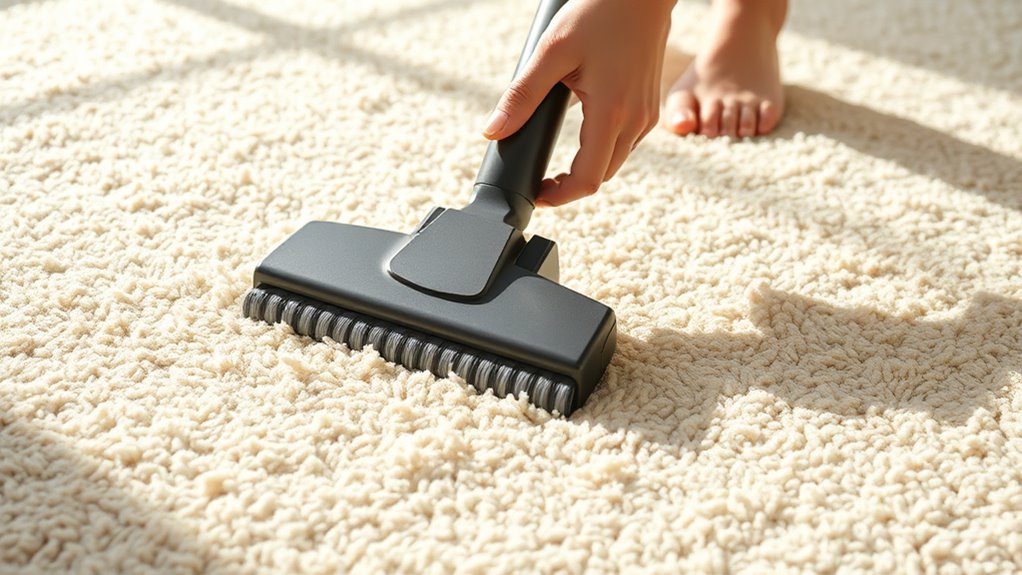
Although it’s tempting to vacuum right after cleaning, you should wait at least 4 to 6 hours for your carpet to dry completely. Vacuuming a damp or wet carpet can harm your vacuum’s motor and reduce cleaning effectiveness.
Plus, residual moisture in carpet fibers not only risks damage but can also cause dirt transfer. So, it’s really important to make sure your carpet is fully dry before you start vacuuming.
You can speed up drying by improving air circulation with fans or open windows. When the carpet feels dry, use a high-quality vacuum with strong suction and adjustable settings.
This helps protect the carpet fibers and maximize cleaning results. Waiting for a dry carpet prevents damage and helps restore the carpet’s texture, keeping your carpet clean and lasting longer.
Best Practices for Effective Post-Cleaning Vacuuming
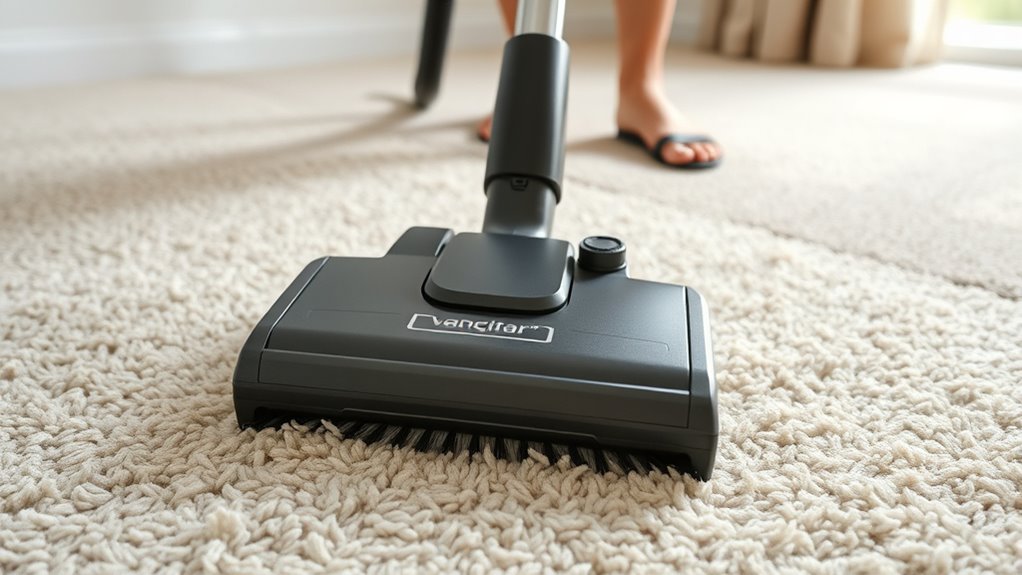
Once your carpet is completely dry, you’ll want to vacuum carefully to remove any remaining dirt and restore its texture. Use a high-quality vacuum with strong suction and adjustable settings for effective post-cleaning vacuuming.
Vacuum slowly with overlapping strokes for a thorough clean, focusing on high-traffic areas and edges. Regular maintenance of your vacuum guarantees peak performance during this vital step of the cleaning process.
| Best Practice | Tip |
|---|---|
| Wait for Dry Carpet | 4-6 hours or longer before vacuuming |
| Use Right Equipment | High-quality vacuum with strong suction |
| Vacuum Methodically | Slow, overlapping strokes |
| Target High-Traffic Areas | Focus on edges and busy spots |
| Maintain Vacuum | Clean filters and brushes regularly |
Conclusion
After your carpet dries, vacuuming is key to keeping it fresh and dirt-free. For example, imagine Sarah, who waited 24 hours after steam cleaning before vacuuming gently; this helped lift leftover debris without damaging fibers.
You should wait until the carpet is completely dry, then vacuum slowly with a clean vacuum to remove any loosened dirt. This approach prevents damage and ensures the fibers stay intact.
Following these steps guarantees your carpet stays cleaner longer and looks its best every day. Proper vacuuming after carpet cleaning is essential for maintaining the carpet’s appearance and extending its lifespan, so don’t rush the drying process before vacuuming.




2 Comments