Do Self-Cleaning Vacuums Really Work?
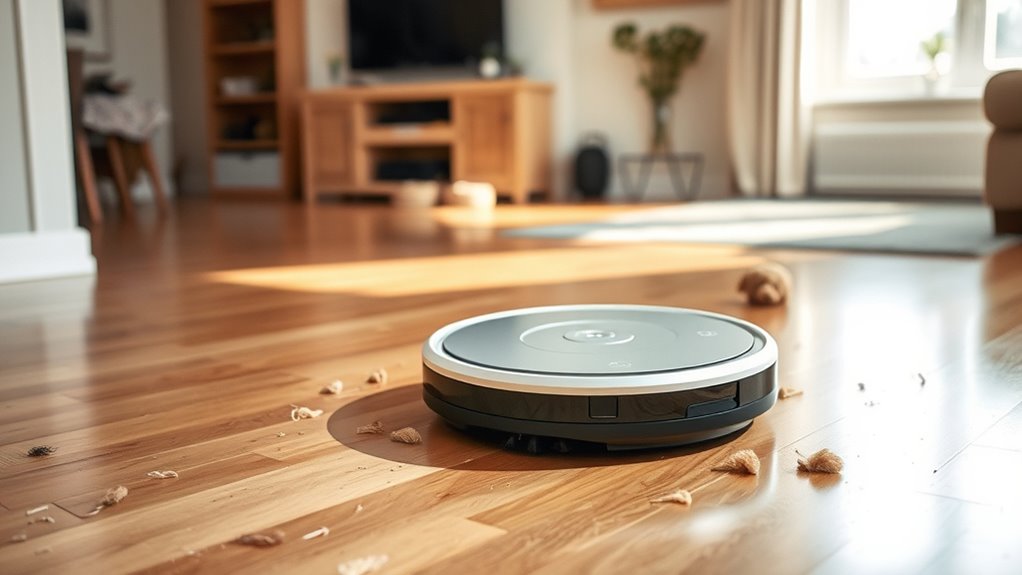
Yes, self-cleaning vacuums really work by automatically washing, drying, and disinfecting their mop pads after each use. These smart vacuums use advanced sensors to navigate your home efficiently and return to their dock when the job is done.
At the dock, they don’t just recharge—they empty debris into sealed containers that trap allergens, making maintenance easier and your air cleaner.
This means you spend less time cleaning the vacuum and more time enjoying spotless floors.
If you’re curious about how these features boost both performance and convenience, keep reading. Understanding the technology behind self-cleaning vacuums will show you why they’re a game-changer for any home.
Key Takeaways
- Self-cleaning vacuums automatically wash, dry, and disinfect mop pads. This means you get hygienic cleaning without lifting a finger.
- They come with advanced sensors and mapping technology. This helps them navigate efficiently and dock seamlessly for maintenance tasks.
- These vacuums use sealed dust containers to trap allergens and debris. So, the air quality in your home improves, and allergens are reduced.
- Automated maintenance helps extend the vacuum’s longevity. Plus, it keeps the cleaning performance consistent over time.
- And the best part? They save you a ton of time and effort by handling cleaning, drying, and debris disposal all on their own.
How Self-Cleaning Robot Vacuums Operate
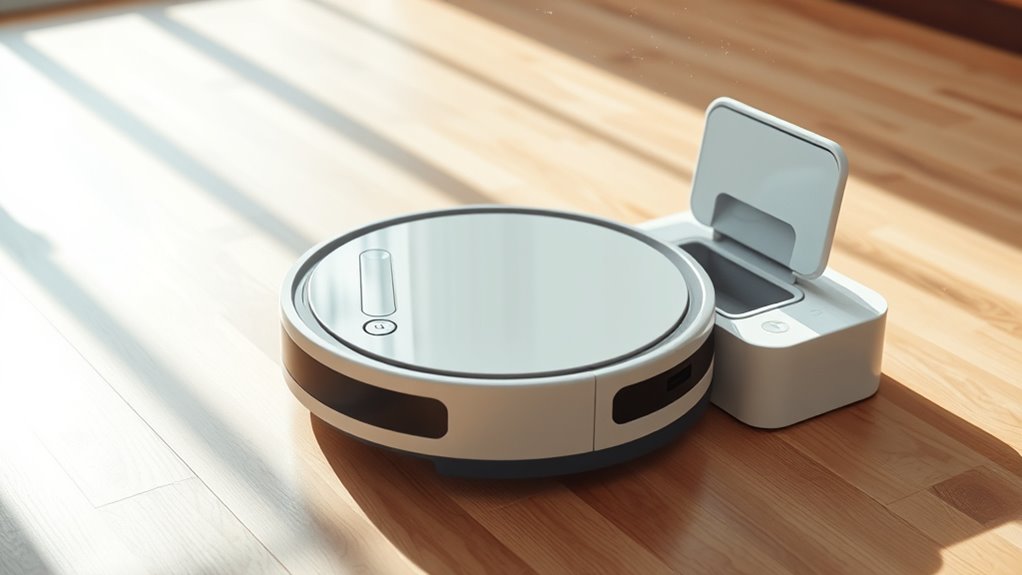
While you focus on other tasks, self-cleaning robot vacuums handle the dirty work by automatically washing, drying, and disinfecting their mop pads after each cycle. These devices use advanced sensors and mapping technology to navigate your home efficiently and return to their docking station for maintenance-free operation.
There, the automatic washing and drying process employs hot water cleaning and warm air to eliminate bacterial buildup, ensuring disinfected mop pads are ready for the next use. Their self-emptying dustbin empties debris into sealed containers, trapping allergens and minimizing your contact with dirt.
Thanks to hands-free operation, you avoid manual cleaning or frequent maintenance. It’s a smart, hygienic solution for keeping floors spotless without lifting a finger.
Benefits and Performance of Self-Cleaning Vacuums
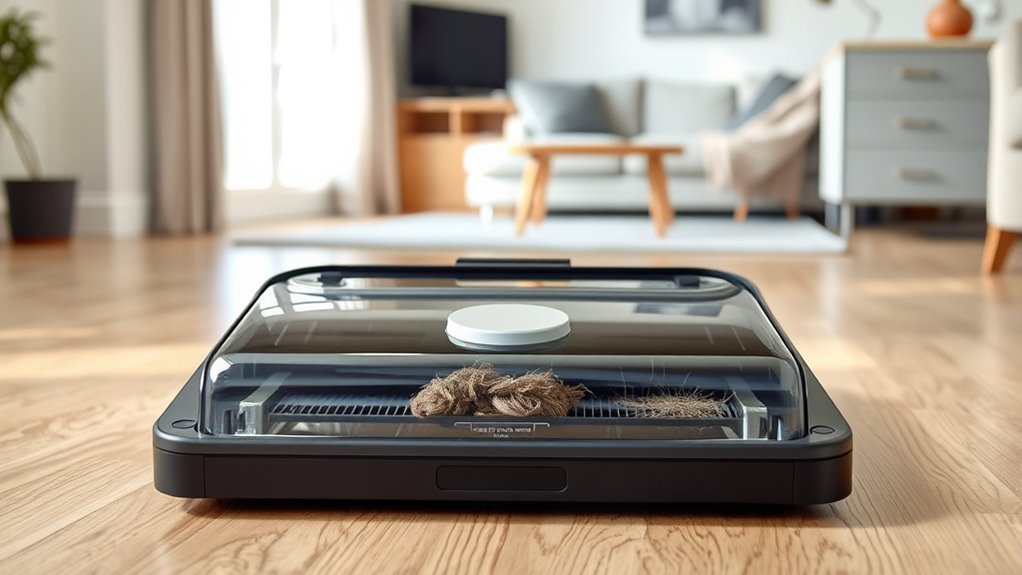
Because self-cleaning vacuums handle washing, drying, and debris disposal on their own, you save significant time and effort on maintenance. These devices use advanced navigation to dock for debris disposal, water refilling, and mop maintenance automatically, ensuring continuous operation without your intervention.
Their sealed dust containers trap allergens and pet hair effectively, enhancing hygiene and air quality in your home. Thanks to automation, your vacuum maintains ideal cleaning performance consistently, reducing manual upkeep.
This integrated approach not only improves allergen removal but also extends the vacuum’s longevity. With self-cleaning vacuums, you get reliable, hands-free cleaning that keeps your floors spotless and your environment healthier, making them a smart choice for busy households.
Conclusion
If you’re tired of constantly emptying your vacuum, self-cleaning robot vacuums might be a game-changer. They automatically dispose of dirt into a larger bin, meaning you only empty it every few weeks.
In fact, some models reduce your cleaning chores by up to 90%. Imagine all that extra time you’ll get back! These vacuums don’t just clean—they give you freedom from one of the most annoying parts of vacuuming.
So, do self-cleaning vacuums really work? Absolutely. They combine convenience with powerful cleaning, making them ideal for busy households. If you’re looking to save time and effort, investing in a self-cleaning vacuum can truly transform your cleaning routine. It’s not just about cleaning; it’s about making life easier.



2 Comments