
3 Easy Steps to Check Vacuum Leaks in Your Car
You can quickly check for vacuum leaks in your car by first watching for common signs like rough idle, engine stalling, or unusual hissing sounds. These symptoms often point to a vacuum leak causing your engine to run poorly. Catching these early can save you time and money on repairs.
Next, visually inspect hoses and connections for cracks or loose fittings while listening closely for escaping air. Pay attention to any spots that look worn or brittle, as these are common leak points.
Finally, warm up your engine, spray soapy water on suspect areas, and look for bubbles indicating leaks. These easy steps help you spot issues early, and with a bit more effort, you can confidently pinpoint the source of your vacuum trouble.
Key Takeaways
- Inspect vacuum hoses and connections visually for cracks, disconnections, or damage using a flashlight and mirror. Take your time to check every nook and cranny.
- Listen closely for unusual hissing sounds or escaping air by holding a rubber hose to your ear near suspect areas. It might sound subtle, but those noises are key clues.
- Warm up the engine and let it idle steadily before starting the leak test for accurate detection. A warm engine gives you the best chance to spot leaks.
- Spray soapy water on vacuum hoses and intake manifold; watch for bubbles indicating air leaks. Those bubbles are like little flags waving to catch your attention.
- Observe engine RPM changes during testing to identify leaks affecting idle and performance. If the RPM jumps or drops, you might have found a leak.
Common Signs Your Car Has a Vacuum Leak
If your car’s engine idle feels rough or fluctuates unexpectedly, you might have a vacuum leak. A rough engine idle often signals that unmetered air is entering the vacuum system, disrupting the air-fuel mixture.
One common source is the intake manifold, where cracks or loose connections let air escape. Along with this, you might hear a distinct hissing sound coming from the engine bay, another classic sign pointing to a vacuum leak.
Detecting these issues early can help you avoid more serious engine problems and boost fuel efficiency by ensuring the right air-fuel ratio. Besides rough idling and noises, you might notice poor acceleration or even engine stalling caused by vacuum leaks.
Vacuum leak detection involves checking these symptoms carefully, as ignoring them can lead to increased fuel consumption and engine performance issues. Paying attention to these signs keeps your car running smoothly and efficiently.
Easy Visual and Listening Tests to Detect Vacuum Leaks
While the engine is running, you can easily spot vacuum leaks by visually inspecting hoses and connections for cracks or damage and listening closely for hissing or whistling sounds.
Grab a flashlight and mirror to thoroughly examine all vacuum hoses, paying close attention to any disconnections or worn spots.
Use simple listening tests by holding a rubber hose to your ear, placing the other end near suspected areas to detect escaping air.
Focus on the intake manifold and hose connections, as these spots often reveal leaks through distinct engine noise.
Unusual engine sounds or fluctuating RPM during idle can also hint at vacuum leaks.
By combining visual inspection with careful listening, you’ll quickly narrow down potential problem areas.
These straightforward steps help you efficiently detect leaks without specialized tools, saving time and effort during your car’s maintenance.
How to Confirm Vacuum Leaks Using Soapy Water and DIY Methods
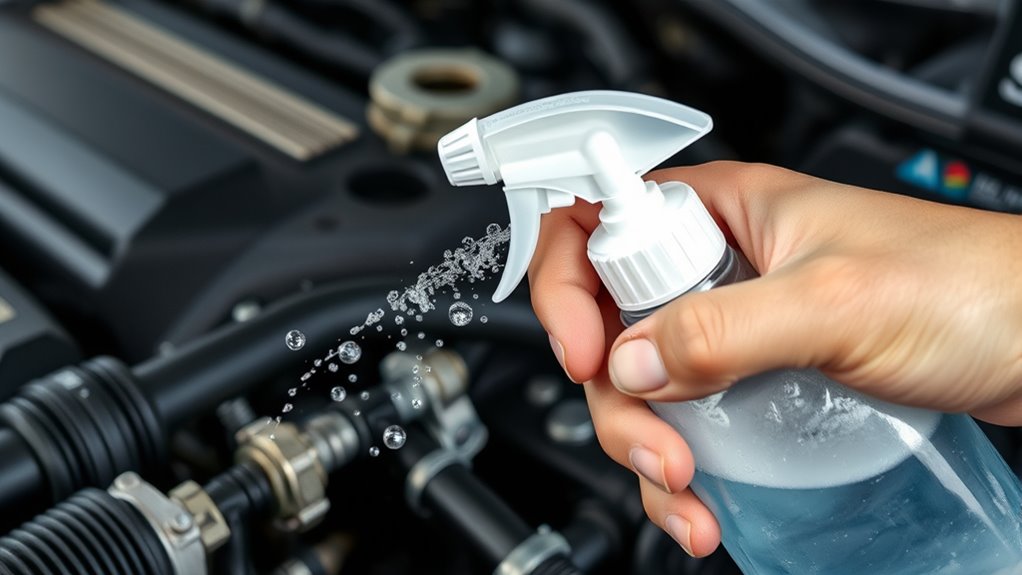
After spotting potential leaks through visual and listening checks, you can confirm their presence using soapy water. This DIY method helps you detect vacuum leaks by revealing escaping air with visible bubbles.
Start your inspection with the engine warm and idling steadily to ensure accurate results. Spray a dish soap and water mix evenly on suspect vacuum hoses, fittings, and the intake manifold area. Watch closely for bubbles forming, which signal air leaks.
Keep these tips in mind:
- Use a spray bottle for even soapy water application
- Target common leak points like vacuum hoses and connections
Also, observe the engine idle RPM for sudden increases during testing. It’s best to perform the check when the engine is running smoothly.
This simple soapy water test is an effective way to detect vacuum leaks and confirm what your eyes and ears have already suggested. It’s easy to do and can save you a trip to the mechanic!
Frequently Asked Questions
Can You Use WD-40 to Find a Vacuum Leak?
Yes, you can use WD-40 to find a vacuum leak by spraying it around hoses and intake areas. If the engine’s RPM changes, you’ve likely found a leak.
Just avoid spraying near hot or electrical parts. It’s a simple trick that can save you some time when troubleshooting.
Can an OBD Scanner Detect a Vacuum Leak?
Think of an OBD scanner as your car’s detective—it can’t find every whisper of a vacuum leak but will flag trouble codes and fuel trim clues.
This helps you pinpoint where unmetered air disrupts your engine’s balance.
How Does a Car Act When It Has a Vacuum Leak?
When your car has a vacuum leak, you’ll notice rough idling, stalling, or fluctuating engine speed. It might hesitate during acceleration, consume more fuel, and produce hissing sounds while the check engine light flashes.
It’s kind of annoying, right? Your car just doesn’t run as smoothly as it should, and you start wondering what’s going on under the hood. Those little hissing sounds? They’re a big clue that air is sneaking in where it shouldn’t.
Where Is the Most Common Place for a Vacuum Leak?
The most common place for a vacuum leak is the intake manifold gasket. It often deteriorates and cracks over time, so you should check it first if your car shows symptoms of a vacuum leak.
It’s kind of the usual suspect when things go wrong. So, before you look anywhere else, give that gasket a good once-over. You might just save yourself some time and hassle!
Conclusion
Now that you know the signs and simple tests to find vacuum leaks, you’re ready to tackle the problem head-on. Like a detective following faint clues, your eyes and ears can uncover hidden leaks before they turn into big headaches.
With soapy water and a little patience, you’ll have your car running smoothly again in no time. Don’t let those sneaky leaks drain your engine’s power—take action and breathe new life into your ride!
Checking for vacuum leaks is easier than you think. By spotting these leaks early, you can prevent poor engine performance and save on costly repairs. So, grab your tools and get started—your car’s engine will thank you!




5 Comments