
How to Clean Your Vacuum Brush in 10 Easy Steps
To clean your vacuum brush in 10 easy steps, start by unplugging your vacuum for safety.
Then, remove the brush roll by unscrewing the cover carefully.
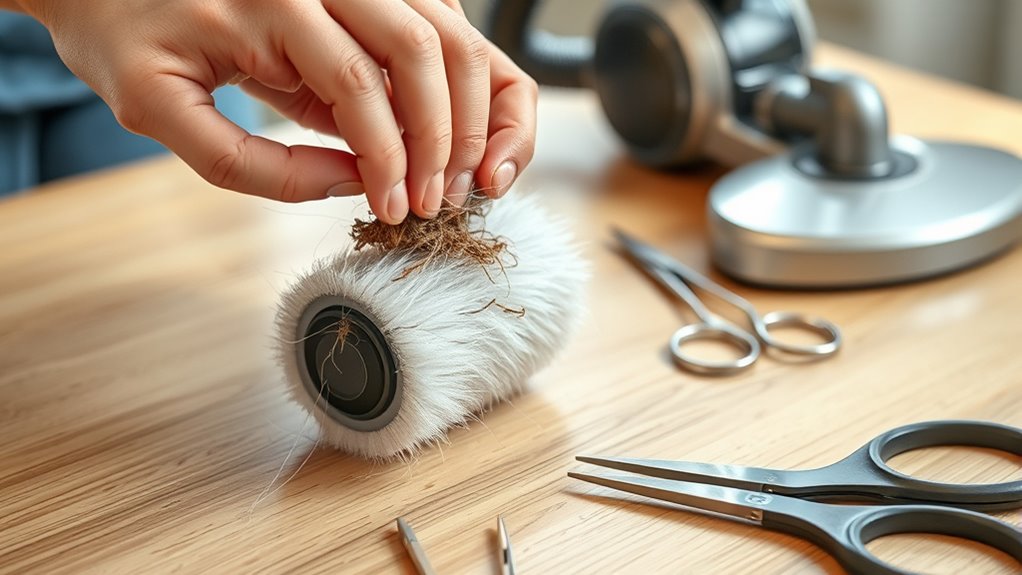
Next, use scissors to cut away hair and debris wrapped around the brush. Be gentle to avoid damaging the bristles.
If needed, wipe the brush with a damp cloth and soak it briefly to loosen stubborn dirt.
After cleaning, make sure to dry the brush thoroughly to prevent any moisture damage.
Take a moment to check the brush roll for any signs of wear or damage before putting everything back together.
Finally, reassemble the parts properly and test your vacuum.
Make sure the brush spins smoothly and the suction is strong.
Keep following for more easy tips to maintain your vacuum’s performance and keep it running like new!
Key Takeaways
- Unplug the vacuum and flip it over to remove the bottom cover. This way, you can carefully access the brush roll without any hassle.
- Grab some scissors and cut away any hair or debris tangled around the brush and bearings. Just be careful not to damage the bristles while you’re at it.
- Next, soak the brush roll in warm, soapy water. If you feel it needs a bit more cleaning, disinfect it with isopropyl alcohol or some diluted vinegar.
- After soaking, make sure to dry the brush thoroughly. Take a moment to inspect it for any wear and ensure the roller spins smoothly before putting it back.
- When you’re ready to reinstall, align the brush roll properly with the belt. Tighten any screws, then test to make sure it spins smoothly and the suction is good.
Why Clean Your Vacuum Brush Roll?
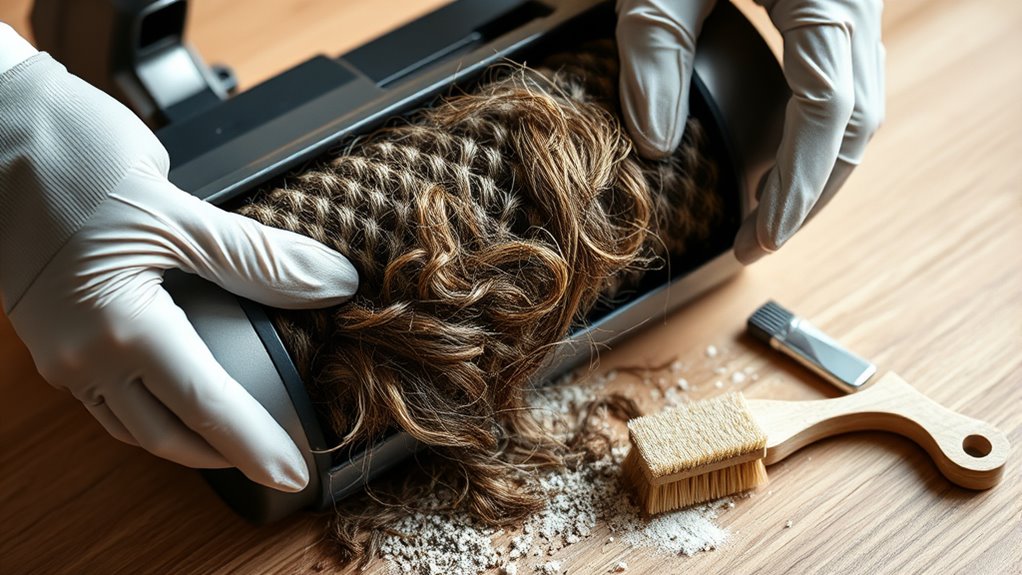
Keeping your vacuum brush roll clean is essential for maintaining its performance. When hair, pet fur, and debris build up, they can tangle around the vacuum brush, hindering its rotation. This not only reduces cleaning efficiency but also puts extra strain on the motor and belt, increasing the risk of overheating or damage.
Regular cleaning and hair removal keep the brush roll spinning smoothly, ensuring your vacuum maintains ideal suction power for thorough carpet and floor cleaning. Plus, it just makes your vacuum work better overall.
Moreover, consistent maintenance prevents clogs and mechanical issues that could compromise your vacuum’s overall performance. Accumulated debris can also lead to foul odors caused by bacteria or mold growth, so cleaning helps keep your vacuum fresh.
Tools You’ll Need to Clean Your Vacuum Brush
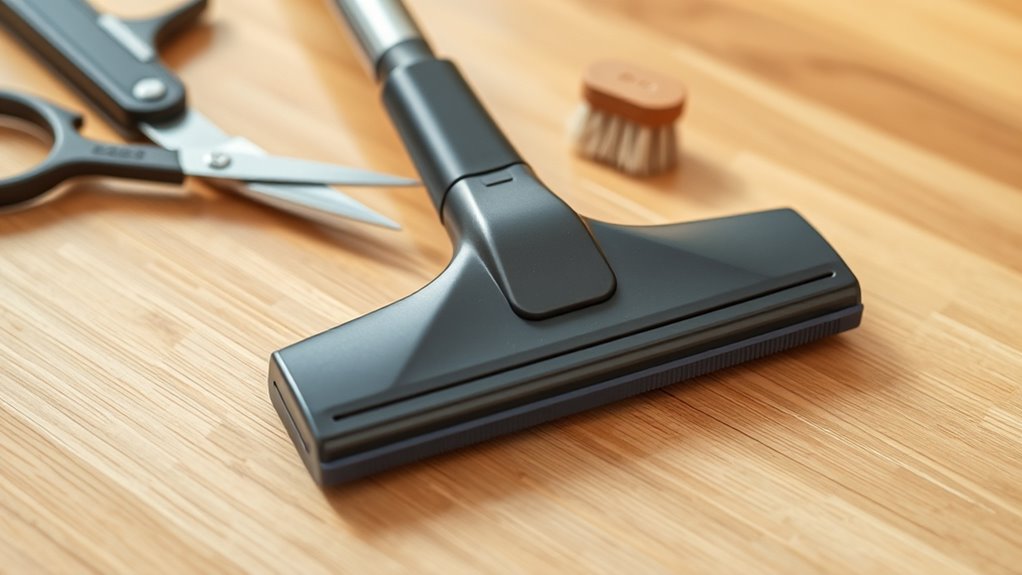
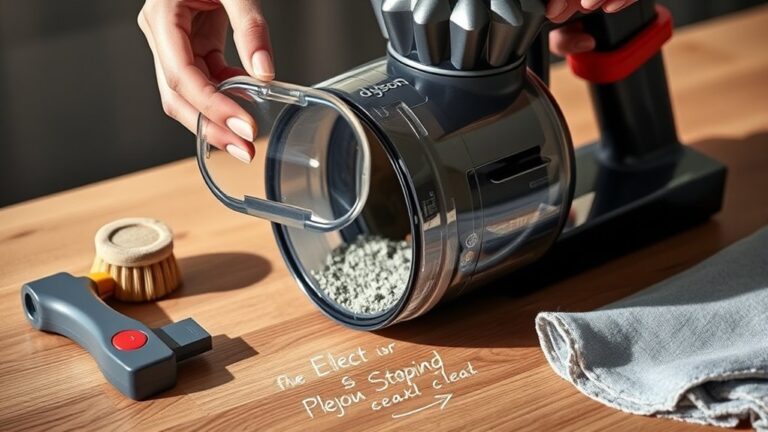
You’ll want a few essential tools on hand before you start cleaning your vacuum brush, like sharp scissors, a small screwdriver, and an old toothbrush.
Don’t forget protective gloves to keep your hands safe from dirt and cleaning solutions. Having the right supplies makes the job quicker and more effective.
It’s all about making the process easier and less messy. So, gather your tools first, and you’ll be set to go!
Essential Cleaning Tools
Before diving into cleaning your vacuum brush, gather a few essential tools to make the process easier and more effective. You’ll need sharp scissors or a seam ripper to cut away tangled hair and threads from the brush roll.
A small cleaning brush, like an old toothbrush, helps remove dirt and debris trapped around the bristles and end caps. Use a microfiber cloth or damp paper towel to wipe down the brush and its housing after clearing out debris.
Disinfectant solutions such as diluted white vinegar or 70% isopropyl alcohol are great for sanitizing the vacuum brush during cleaning. Having all these cleaning tools ready will guarantee a thorough and efficient maintenance routine.
Protective Gear Needed
Since cleaning your vacuum brush involves handling dirt, hair, and chemicals, wearing disposable gloves is essential to protect your hands. Gloves shield your skin from irritants and grime, so don’t skip them.
You’ll also need a screwdriver to safely remove screws securing the brush cover. This helps avoid damage and guarantees safety precautions.
To tackle tangled hair and threads, have scissors or a seam ripper ready. These tools make cutting easier and safer.
Additionally, keep a soft brush or toothbrush nearby to scrub away debris without harming the brush components.
Using the right protective gear and cleaning tools not only makes the process efficient but also keeps you safe throughout the cleaning. So, make sure you have everything ready before you start!
Safety Tips and Setup for Vacuum Brush Cleaning

Although it might seem straightforward, taking proper safety precautions and setting up your workspace well can make cleaning your vacuum brush much easier and safer.
First, always unplug your vacuum to avoid electrical hazards. Next, find a stable surface in a well-lit area to place the vacuum, giving you clear visibility and easy access.
Gather all necessary tools like screwdrivers, scissors, and cleaning brushes before you start. Wearing disposable gloves protects your skin, especially when handling hair buildup or cleaning solutions.
Taking a quick photo of the brush placement helps during reassembly.
| Safety Tip | Setup Advice |
|---|---|
| Unplug the vacuum | Use a flat, stable surface |
| Wear gloves | Ensure the area is well-lit |
| Gather all tools | Take a photo before disassembly |
Following these steps ensures a smooth, safe cleaning process for your vacuum brush.
How to Remove the Brush Roll Step-by-Step
Unplugging your vacuum and preparing your workspace as described earlier sets the stage for safely removing the brush roll. First, flip your vacuum onto its back and use a screwdriver to remove the bottom cover or faceplate. Make sure to keep track of all screws during disassembly.
Once the housing is open, carefully slide or lift out the brush roll. Pay close attention to its orientation so you can reassemble it correctly later.
If needed, detach the end caps by unscrewing or releasing clips to access any hair or debris caught inside. Gently pull the brush roll out, making sure the belt stays slack and detached but intact.
Keeping everything organized during this process helps prevent damage and makes reassembly quick and easy. By following these steps, you’ll have the brush roll safely removed and ready for the next stage of cleaning and maintenance.
How to Cut and Remove Hair and Debris Effectively
You’ll want a pair of sharp scissors or a seam ripper to carefully cut through tangled hair and debris without damaging the bristles. Take your time lifting the cut strands from the brush, especially around the bearings and end caps to keep the roller spinning smoothly.
Finally, use a brush or cloth to clear away any leftover bits for the best cleaning results. This way, you’ll make sure everything is nice and clean without harming your tool.
Tools For Hair Removal
Three essential tools help you remove hair and debris from your vacuum brush efficiently: sharp scissors or a seam ripper, tweezers or small cleaning tools, and disposable gloves. Start by wearing disposable gloves to protect your hands from dirt and sharp debris during brush removal.
Use sharp scissors or a seam ripper to carefully cut tangled hair and threads without damaging the bristles. Next, employ tweezers or small cleaning tools to gently lift hair wrapped around the bearings and end caps.
Be careful not to use excessive force or sharp objects that could scratch or break the plastic housing. After cutting and removing hair, finish by thoroughly cleaning the brush with soft cleaning tools or a cloth to guarantee all debris is cleared and your vacuum brush works smoothly.
Techniques To Untangle Debris
While removing tangled hair and debris from your vacuum brush might seem tedious, using sharp scissors or a seam ripper lets you cut away strands carefully without damaging the bristles. Start by cutting away any visible hair wrapped around the brush roller. Work slowly to avoid harming the bristles or housing.
Next, gently pull and loosen hair near the end caps and bearings using your fingers or tweezers. This helps you remove debris trapped in tight spots. It’s a bit fiddly, but being patient really pays off.
Be methodical throughout the cleaning process to make sure you clear all strands and dirt beneath the end caps. After cutting and removing debris, wipe the brush roller with a damp cloth to get rid of any leftover dust.
This technique keeps your vacuum brush in top shape and improves its performance. So, taking a little extra time here can make a big difference!
Deep Clean and Disinfect Your Brush Roll
Start by removing the brush roll from your vacuum. Carefully cut away any tangled hair or threads to keep it spinning smoothly.
Next, use a soft brush or toothbrush to scrub away remaining hair and debris around the bristles and end caps. This guarantees a thorough cleaning.
If you notice heavy buildup, soak your vacuum brush in warm, soapy water for 10-15 minutes. After soaking, rinse it completely to remove any residue.
Once it’s clean, disinfect the brush roll by wiping it down with 70% isopropyl alcohol or diluted white vinegar. This step helps eliminate bacteria and mold.
Make sure you focus on all parts of the brush roll during disinfecting to keep it as hygienic as possible. Don’t skip removing stubborn debris—it really affects how well your vacuum works.
How to Dry and Inspect Your Brush Roll for Damage
After cleaning your vacuum brush, carefully dry it with a clean towel to prevent moisture buildup that can lead to mold or electrical problems. Make sure every part of the brush roll is completely dry, including the bearings and end caps. This helps avoid rust and corrosion.
Once it’s dry, take a good look at the brush roll for any damage. Check for cracked or worn-out bristles, broken end caps, or any other signs of wear that could affect how well it works.
Next, try spinning the brush roll by hand. It should turn smoothly without any resistance. If it feels stiff, there might be debris stuck inside or the bearings could be damaged.
If you notice significant damage or missing bristles, it’s a good idea to replace the brush roll. Doing this keeps your vacuum cleaning efficiently.
Taking the time to dry and inspect your brush roll properly helps your vacuum run smoothly and last longer.
How to Reassemble Your Vacuum Brush Roll Correctly
Once you’ve thoroughly dried and inspected the brush roll, you can move on to reassembling it. Begin by confirming the vacuum brush’s roller and belt are properly aligned and seated correctly in their housing.
Carefully position the belt around the motor spindle and roller, making sure there are no twists or slack. Next, reattach the end caps securely to prevent debris from entering and to allow smooth rotation of the brush roll.
Tighten all screws evenly to avoid any gaps or loose parts that could impair function. After securing everything, spin the brush manually to verify it rotates correctly and smoothly.
This step helps catch any misalignment before plugging in your vacuum. Taking these steps will ensure your vacuum brush roll is reassembled correctly, maintaining its performance and extending its life.
How to Test Your Vacuum and Troubleshoot Issues
Turn on your vacuum and watch the brush roll to make sure it spins freely without unusual noises or vibrations. Check for any suction problems that might mean a clog or debris buildup around the brush area.
If you notice resistance or strange sounds, it’s time to troubleshoot and clean or adjust the brush roll. Don’t ignore these signs—they usually mean something needs your attention.
Give the brush roll a quick look-over and clear out any hair or debris that’s stuck. Getting it running smoothly again can make a big difference!
Checking Brush Roll Rotation
If your vacuum brush roll isn’t spinning properly, you’ll want to start by turning on the vacuum and watching the brush closely for smooth, unobstructed rotation.
If it’s not spinning, follow these steps:
- Check for tangled hair or debris wrapped around the brush roll and carefully remove any obstruction.
- Inspect the belt that connects the motor to the brush; ensure it’s intact, properly aligned, and not stretched.
- Listen for unusual noises like squeaking or grinding, which may indicate the brush roll is stuck or the belt is slipping.
- Manually spin the brush roll to detect any resistance or wobbling.
- Clean or replace the brush roll and belt if you notice any damage or persistent issues.
This quick check helps keep your vacuum running efficiently. It’s a simple way to avoid bigger problems down the line.
Identifying Suction Problems
How can you tell if your vacuum’s suction is underperforming? Start by holding your hand over the nozzle or hose to feel the airflow. Weak or no airflow signals a blockage or loss of suction power.
Next, check the brush roll, hose, and filters for debris or clogs that might be restricting airflow. Inspect the filters and dustbin—if they’re full or clogged, suction will drop.
You can also perform a simple water test by pouring a small amount into the hose or filter area; if it doesn’t flow freely, a clog is present. Listening for unusual motor sounds can also hint at a blockage affecting suction.
Resolving Noise Issues
When your vacuum starts making unusual noises like rattling or grinding, it’s a clear sign that something needs your attention. Resolving noise issues often means focusing on the vacuum brushes and related components.
Here’s what you should do: Turn on the vacuum and listen carefully for odd sounds indicating debris or worn parts. Then, inspect the roller for tangled hair or debris that could block smooth rotation.
Try manually spinning the brush to check for resistance or wobbling. Also, observe the brush during use to see if it stops spinning or sounds irregular.
Test the vacuum on different surfaces to pinpoint if the noise is brush-related or coming from other parts.
Always clean the brush thoroughly and inspect the roller regularly. This helps keep your vacuum running quietly and efficiently.
Tips to Prevent Hair Tangles and Maintain Your Brush Roll
Although hair tangles can quickly reduce your vacuum’s efficiency, you can prevent buildup by regularly clearing loose hair from your floors before vacuuming. Using tools like rubber brushes to dislodge strands from carpets also helps.
Regularly clearing loose hair and using rubber brushes helps prevent vacuum tangles and maintain efficiency.
This simple step reduces hair tangles on your vacuum brush, improving cleaning performance. To prevent hair wrap, opt for vacuums with tangle-free or self-cleaning brush rolls.
Make brush roll maintenance part of your routine by frequently checking for and trimming any hair or threads wrapped around the roller. Regular cleaning is especially important if you have pet hair or long-haired family members at home.
By staying on top of these tasks, you’ll reduce motor strain and extend your vacuum’s lifespan. Keeping your vacuum brush free of hair tangles not only maintains peak cleaning performance but also saves you time and effort in the long run.
Frequently Asked Questions
How Do I Clean My Vacuum Brush?
You unplug your vacuum, remove the brush roll, and carefully cut away hair and debris using scissors. Then, wipe the brush and bearings with a damp cloth.
Make sure to dry everything thoroughly before putting it back. Once you reinstall the brush roll, check that it spins freely.
That way, your vacuum will work smoothly and pick up dirt better every time you use it.
How to Clean a Vacuum Cleaner Step by Step?
First, unplug your vacuum. Remove dust bags or bins, empty debris, and clean filters.
Next, wipe down the exterior and hose. Make sure to check for any blockages that might be hiding inside.
Don’t forget to clean the brush roll, too. Once everything is clean, go ahead and reassemble your vacuum.
Finally, test it out to make sure it’s running smoothly. Easy, right?
How to Take Apart a Vacuum Brush Roller?
Like revealing a hidden treasure, you start by unplugging your vacuum and flipping it over. Then, you remove screws holding the brush cover.
Carefully slide out the roller, and detach end caps to free the brush roller. Easy, right? Just take it step by step!
What’s the Easiest Way to Clean Brushes?
The easiest way to clean brushes is to cut away tangled hair with scissors, then rinse the brush under warm soapy water. After that, scrub it with a small brush to get rid of any leftover grime.
Make sure to dry it thoroughly once you’re done. And don’t forget to regularly check for debris to keep your brush smooth and working efficiently.
Conclusion
Cleaning your vacuum brush roll regularly not only boosts its efficiency but also extends its lifespan—contrary to the myth that frequent cleaning wears it out faster.
By following these simple steps, you’ll keep your vacuum running smoothly and avoid costly repairs. Remember, a well-maintained brush roll means better suction and cleaner floors.
So, don’t skip this easy but essential task—your vacuum and your home will thank you! Regular cleaning of your vacuum brush helps maintain optimal performance and prevents dirt buildup that can damage your machine.
Keeping your vacuum brush roll clean is a small effort that goes a long way in ensuring your floors stay spotless and your vacuum lasts longer.




3 Comments