
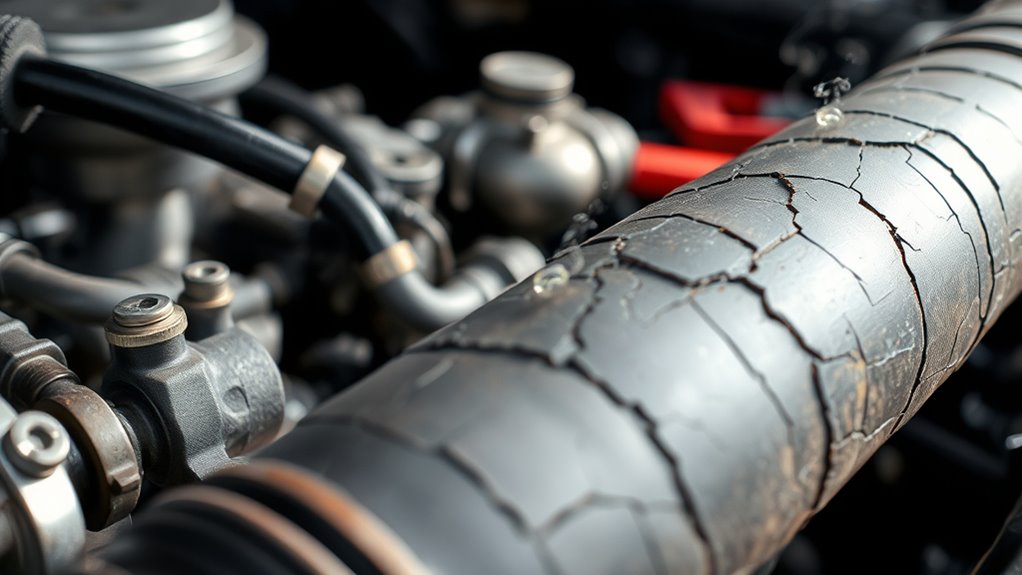
What Is a Vacuum Leak in a Car?
A vacuum leak in your car happens when unmetered air sneaks into the intake system. This disrupts your engine’s air-fuel balance and can really affect its performance. You might notice things like rough idling, engine hesitation, or even the dreaded check engine light turning on.
These leaks usually come from cracked hoses or worn gaskets that let air escape where it shouldn’t. If you ignore a vacuum leak, it can lead to engine misfires and lower your fuel efficiency.
Knowing what causes these leaks and how to spot the signs is key. It helps you keep your engine running smoothly and avoid bigger problems down the road.
So, don’t overlook those little hisses or strange engine behavior—they could be telling you there’s a vacuum leak.
Key Takeaways
- A vacuum leak lets unmetered air into the engine’s intake system, which messes up the air-fuel balance.
- It usually happens because of cracks or gaps in hoses, gaskets, or intake manifold seals.
- When there’s a vacuum leak, you might notice rough idling, engine hesitation, or misfires. It can even trigger the check engine light.
- Catching vacuum leaks early is super important. It helps prevent engine damage and keeps your vehicle running smoothly.
- You might hear hissing sounds coming from the engine bay. Also, keep an eye out for visible wear or cracks in hoses and gaskets.
What Is a Vacuum Leak and Why It Matters
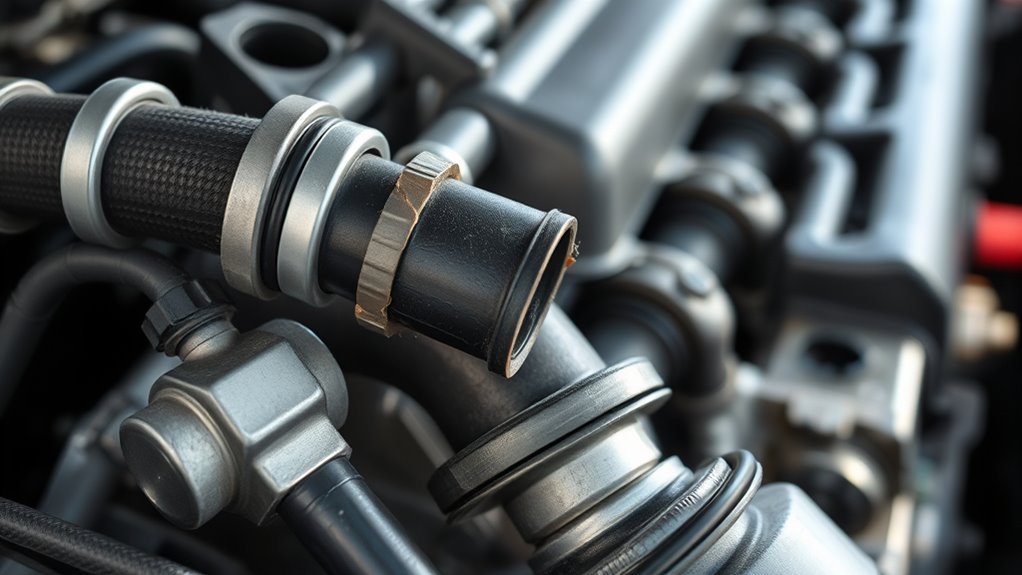
Although it might seem minor, a vacuum leak can seriously disrupt your engine’s performance by allowing unmetered air into the intake system. When this unmetered air enters through cracks or gaps—often in hoses or the intake manifold gasket—it throws off the air-fuel mixture your engine relies on.
A vacuum leak lets unmetered air in, disrupting your engine’s crucial air-fuel balance.
This imbalance can cause a rough idle, hesitation, and even trigger the engine warning light. You might also notice misfires or decreased fuel efficiency.
Diagnosing a vacuum leak quickly is essential because it prevents further damage and keeps your engine running smoothly. Since many vacuum leaks develop as rubber hoses and gaskets deteriorate over time, routine inspections can catch issues early.
Ignoring a vacuum leak means risking poor engine performance and increased emissions. By addressing leaks promptly, you maintain your vehicle’s health and safety, ensuring it operates reliably without unexpected stalls or warning signals.
Common Causes and Signs of Vacuum Leaks
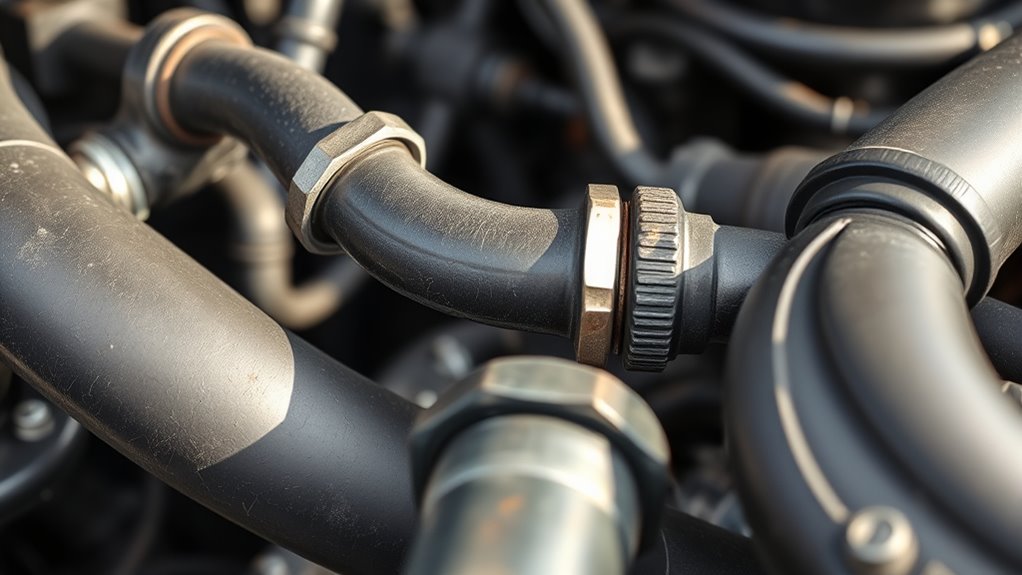
Vacuum leaks usually stem from common issues like cracked hoses, worn gaskets, or damaged intake manifold seals. When you spot a vacuum leak, you’ll often hear a distinct hissing sound coming from the engine bay.
This noise is your first clue that unmetered air is entering through damaged vacuum hoses or the intake manifold. You might notice a rough idle or feel the engine struggling, especially at low speeds. Sometimes, the check engine light will come on, signaling the system has detected abnormal air flow.
To find the source, start with a visual inspection for cracked hoses and worn gaskets.
Here are common causes and signs to watch for:
- Cracked hoses or brittle vacuum hoses
- Worn gaskets around the intake manifold
- Hissing sound from the engine bay
- Rough idle or engine hesitation
- Check engine light triggered by air leaks
Keeping an eye on these helps you catch vacuum leaks early.
Frequently Asked Questions
Can I Drive a Car With a Vacuum Leak?
You can drive with a vacuum leak, but you really shouldn’t. It’ll cause rough idling and poor fuel economy.
Plus, over time, it can lead to engine damage. So, it’s best to get it diagnosed and fixed quickly.
That way, you avoid costly repairs and keep your driving safe. Don’t wait too long to take care of it!
Is It Expensive to Fix a Vacuum Leak in a Car?
You don’t want to face a money pit, but fixing a vacuum leak usually costs between $150 and $1,000.
Simple hose replacements stay affordable, but major repairs can push your wallet to its limits.
How Do You Fix a Car Vacuum Leak?
You fix a car vacuum leak by inspecting hoses and connections, replacing damaged hoses, tightening or swapping gaskets, and using a smoke machine to find hidden leaks.
Finally, test with a vacuum gauge to verify it’s sealed. It’s really about being thorough and patient. Once you catch that leak, your car will run much smoother!
Is It Worth Fixing a Vacuum Leak?
Yes, it’s worth fixing a vacuum leak because you’ll improve engine performance, save fuel, and avoid costly damage.
Timely repairs keep your car reliable and safe. It really makes the investment smart and cost-effective for you.
Conclusion
You might think a small vacuum leak isn’t a big deal, but it can really mess with your car’s performance and fuel efficiency. Ignoring it could lead to rough idling, poor acceleration, or even engine damage over time.
Catching and fixing a vacuum leak early saves you money and stress down the road. So, don’t overlook those signs—addressing a vacuum leak keeps your car running smoothly and reliably.
In short, a vacuum leak in a car may seem minor at first, but it can cause major issues if left untreated. By paying attention to symptoms like rough idle or loss of power and repairing the leak promptly, you protect your engine and improve fuel efficiency. Taking care of a vacuum leak ensures your vehicle performs at its best and avoids costly repairs later on.


One Comment