How to Throw a Vacuum in the Trash
You can’t just throw your vacuum cleaner in the trash because it contains hazardous electronic parts and batteries. These components need special care to avoid environmental damage.
Before you dispose of your vacuum, make sure to unplug it and remove the batteries. It’s a good idea to tape the battery terminals to prevent any short circuits.
Also, don’t forget to empty the dustbin or bag. If you have a smart vacuum, be sure to reset it before disposal.
Most cities require you to take vacuums to designated e-waste or recycling centers. These places handle electronic waste safely and help keep the environment clean.
Following local guidelines is key to staying eco-friendly and safe. Keep reading to find out exactly how to prepare your vacuum for proper disposal.
Key Takeaways
- Most US cities prohibit throwing vacuums in regular trash because they contain electronic parts and hazardous materials.
- It’s a good idea to check your local disposal rules before you toss out a vacuum. That way, you stay compliant and protect the environment.
- Don’t forget to remove rechargeable batteries first. Tape the terminals to avoid any short circuits during disposal.
- Also, empty the dustbin or take out vacuum bags separately. This makes recycling or disposal easier.
- Instead of just throwing your vacuum in the trash, use designated e-waste recycling centers. This helps prevent environmental contamination and reduces injury risks.
Can You Throw a Vacuum Cleaner in the Trash?
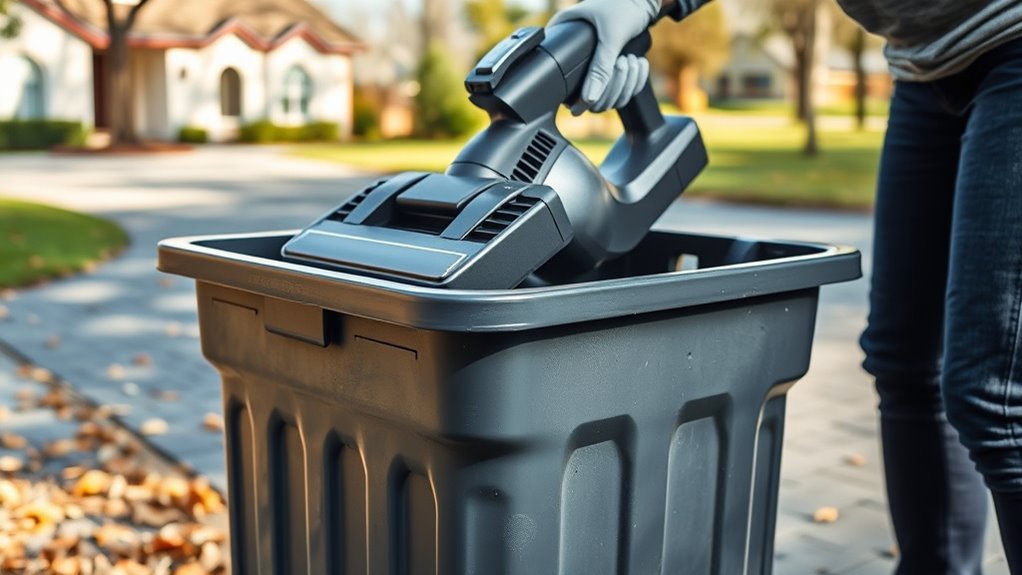
Although it might seem convenient to toss your vacuum cleaner in the trash, most US cities don’t allow it because of environmental and safety concerns. Vacuums contain electronic parts and hazardous materials that make simple trash disposal problematic.
Instead, you should follow local regulations that often require recycling or special e-waste handling. Throwing a broken vacuum in the trash can lead to environmental harm and injury risks due to sharp components inside.
While small parts like filters or accessories might be okay for regular trash, the main vacuum unit typically needs to be recycled. Checking your city’s guidelines guarantees you choose an environmentally friendly and safe disposal method.
Proper recycling helps prevent hazardous materials from contaminating landfills and supports sustainable waste management. So, before discarding your vacuum, confirm your community’s rules and explore e-waste programs or recycling centers designed for electronics.
This approach keeps your disposal responsible and eco-conscious.
How to Prepare Your Vacuum Cleaner for Disposal
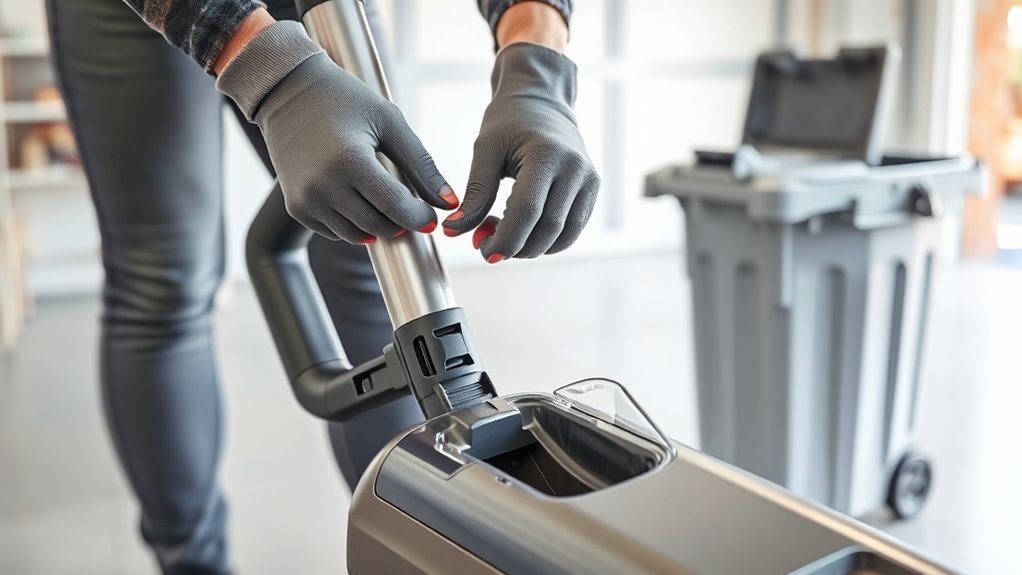
Before you dispose of your vacuum cleaner, you’ll want to prepare it properly to guarantee safe and efficient recycling or disposal. Start by unplugging the vacuum and letting it cool down completely.
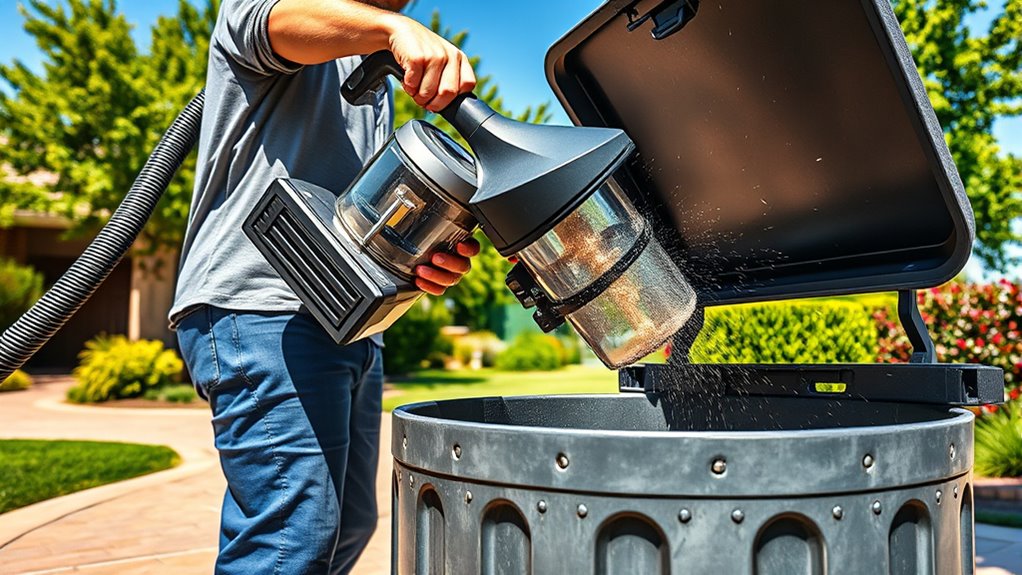
Next, remove rechargeable batteries and tape the terminals to avoid short circuits. Empty the dustbin or take out the vacuum bag, then dispose of or recycle these parts separately.
If you have a smart vacuum, reset smart vacuums to factory settings to erase personal data. Clean vacuum exterior and any removable parts to make handling easier at recycling centers.
Be sure to separate electronic components from other materials to streamline the vacuum cleaner disposal process. Taking these steps will help you prepare for recycling and dispose of your vacuum safely.
This way, you ensure that recyclable parts get processed correctly and hazardous elements don’t cause harm. Following this checklist guarantees a responsible and efficient vacuum cleaner disposal experience.
Frequently Asked Questions
Can I Just Throw My Vacuum in the Trash?
You can’t just throw your vacuum in the trash because it has electronic parts and hazardous materials. Instead, you should recycle it properly or take it to an electronic waste facility.
Doing this helps you avoid fines and prevents harm to the environment. It’s really the best way to get rid of your vacuum safely.
How Do I Dispose of My Old Vacuum?
Like tossing a telegram into a mailbox, you shouldn’t just dump your old vacuum.
Remove batteries, then take it to an e-waste center or follow local rules for recycling.
This way, you help keep the planet safe and sound.
How to Dispose of a Dead Vacuum?
You should first remove batteries and separate recyclable parts from your dead vacuum. Then, check local e-waste regulations and take it to a designated recycling center or bulk trash pickup instead of tossing it in regular trash.
It’s pretty important to do this right, so you don’t harm the environment. Plus, some parts can be reused or recycled, which is always a bonus!
How to Dispose of Vacuum Parts?
You might find that disposing of vacuum parts means separating metals, plastics, and batteries. Don’t toss batteries in the trash; recycle them properly.
Check local centers—they often accept motors and circuit boards for eco-friendly disposal. It’s a simple way to help the environment and keep harmful materials out of landfills.
Conclusion
So, can you just toss your vacuum cleaner in the trash? While it might seem easy, it’s not the best choice for the environment. You want to make sure you prepare it properly—remove batteries, empty dust, and check local disposal rules.
Taking these simple steps helps keep hazardous materials out of landfills. Plus, removing parts like batteries ensures harmful chemicals don’t leak into the soil. Isn’t it worth a little extra effort to do the right thing and protect our planet?
Proper vacuum disposal is key to reducing environmental impact. By following local guidelines and preparing your vacuum before throwing it away, you help keep our planet cleaner and safer. So next time you wonder how to throw a vacuum in the trash, remember these easy steps—your efforts really do make a difference!