
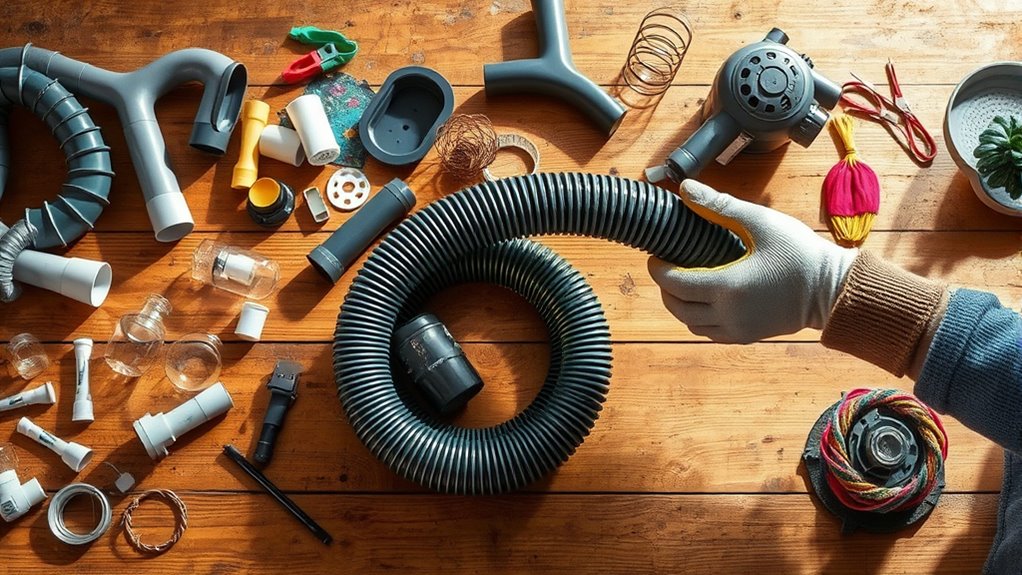
How to Do Easy Recycling With an Old Vacuum: 10 Tips
To easily recycle your old vacuum, start by checking if it still works. Decide whether it’s worth repairing or if you should replace it altogether. This way, you get the most out of your vacuum without wasting resources.
Next, remove reusable parts like belts and motors. These can be sold or donated, giving them a second life instead of just tossing them away. Donating or selling working vacuums is also a great option—try charities or online platforms where others might need them.
If you want hassle-free recycling, look into manufacturer or retailer take-back programs. They often accept old vacuums and handle the recycling process for you.
For broken vacuums, dismantle the components and recycle metals at scrap facilities. Just remember to avoid landfill disposal by following your local e-waste guidelines.
Keep going to discover more smart recycling tips!
Key Takeaways
– Test the vacuum’s functionality and clean components before deciding whether to repair or recycle it.
It’s a good idea to know exactly what you’re working with first.
– Remove and organize reusable parts like motors and belts for resale or donation.
These parts can often find a second life with someone else.
– Donate working vacuums to charities or sell them locally to extend their lifespan.
Giving your vacuum a new home helps reduce waste.
– Use manufacturer or retailer take-back programs for easy and responsible vacuum recycling.
These programs make recycling hassle-free and eco-friendly.
– Disassemble vacuums and recycle metal parts at scrap centers, avoiding landfill disposal.
Recycling metals helps conserve resources and keeps junk out of landfills.
Check If Your Vacuum Is Still Working
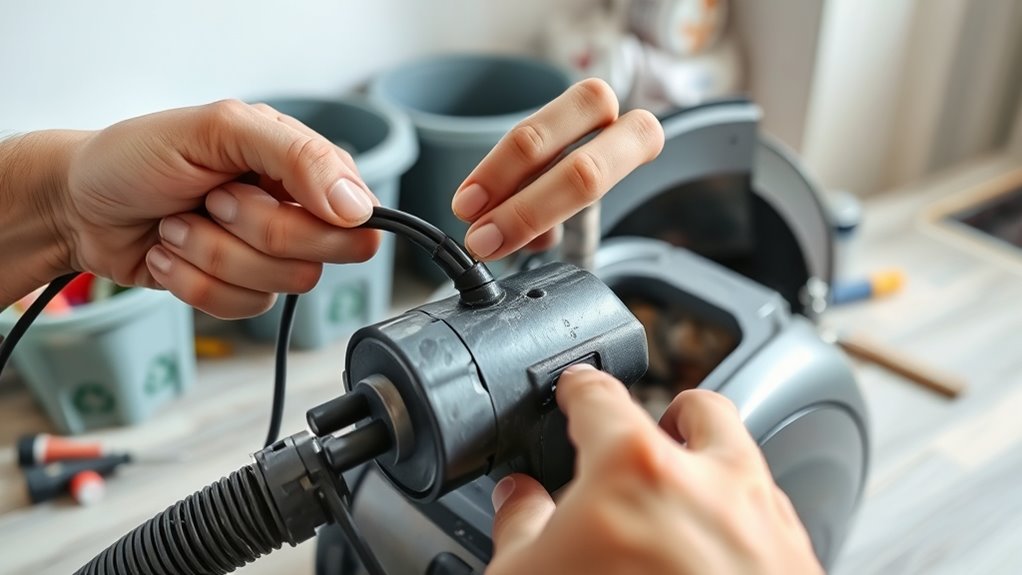
Before deciding what to do with your old vacuum, test it by plugging it in and turning it on to see if it powers up and functions properly. Listen for unusual noises or strange smells, and check if the suction feels weak—these signs could mean internal damage or malfunctions.
Make sure all moving parts, belts, and brushes operate smoothly without sticking or making noise. Also, verify that filters and bags or dustbins aren’t overly full, as that can affect performance.
If your vacuum is still working well and shows no major issues, you can avoid disposal and opt for recycling options like donating, selling, or trading it in. This way, you extend its life and reduce waste.
Decide Whether to Repair or Replace Your Vacuum
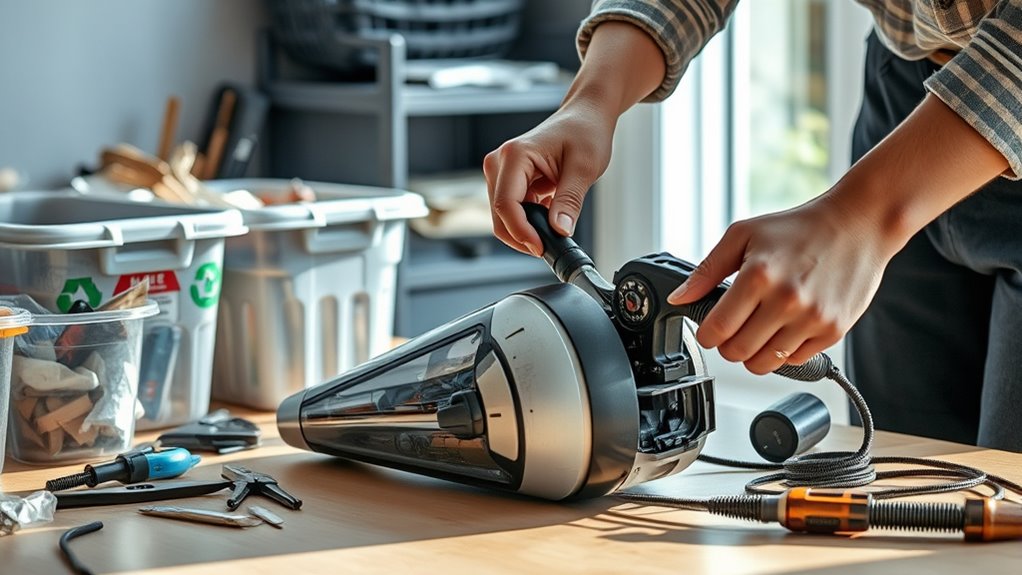
Once you’ve checked your old vacuum and know its condition, the next step is deciding whether to repair it or replace it. Start by evaluating repair costs against buying a new model.
Minor fixes like replacing belts or filters are usually affordable and can extend your vacuum’s life. This makes repair a smart, environmentally responsible choice.
However, if your vacuum has significant mechanical failures or makes strange noises, repair might not be cost-effective. In that case, replacing it with a newer, more efficient model—such as a cordless or smart vacuum—could be worthwhile.
Remember, opting to repair whenever possible reduces waste and postpones disposal, which helps the environment. If you decide to replace your vacuum, be sure to handle its disposal properly to minimize environmental impact.
Balancing cost, performance, and environmental responsibility will guide you to the best choice for your vacuum’s next chapter.
Remove Reusable Vacuum Parts Before Recycling
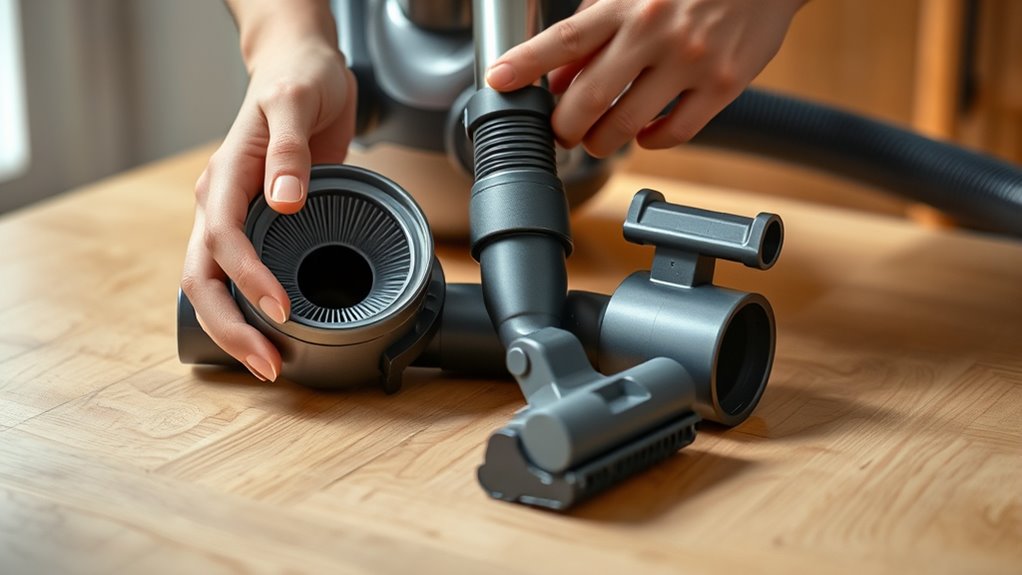
Although recycling your old vacuum is important, you should first remove reusable parts like motors, filters, hoses, and brushes. This step guarantees you maximize the value of components that can be sold or donated, reducing waste and supporting a more eco-friendly recycling process.
Removing reusable parts from your vacuum boosts resale value and promotes eco-friendly recycling.
To effectively disassemble and prepare these parts:
- Carefully detach motors, belts, nozzles, and attachments to avoid damage.
- Clean and organize reusable parts to make them more appealing for resale or donation.
- Store parts separately from the main vacuum to simplify the recycling process for metals and plastics.
- Consider selling online or donating to repair shops to extend the lifespan of these components.
It’s a simple way to make sure nothing useful goes to waste. Plus, you’re helping out folks who might need spare parts for their own vacuums.
Where to Donate Your Working Vacuum
If your vacuum still works, consider donating it to local charities like Goodwill or thrift stores that accept appliances.
You can also explore online platforms to sell or give it away to someone who needs it.
Just make sure it’s clean and in good condition to increase its chances of finding a new home.
It really helps to tidy it up before donating—people appreciate getting something that’s ready to use.
And who knows? Your vacuum might be just what someone else is looking for!
Local Charity Donations
Wondering where to donate your working vacuum? Local charity donations are a great way to give your appliance a second life and help those in need.
Before you donate, make certain your vacuum is clean, dust-free, and fully functional. Many charities prefer vacuums that work well to guarantee they can be reused immediately.
Here are four places to think about for your charity donations:
- Goodwill – accepts gently used appliances.
- Salvation Army – often offers pickup services.
- Local shelters – provide essentials to families in need.
- Community centers – may have donation drives.
Thrift Store Contributions
Looking to make a positive impact with your old vacuum? Consider donating it to a thrift store like Goodwill or Salvation Army. These places rely on working appliances to support their community programs, so make certain your vacuum is clean and fully functional before you donate.
Testing it beforehand ensures it operates properly and increases its chances of being reused by someone in need. Many thrift stores even offer pick-up services for bulky items, making the donation process easier for you.
Online Selling Platforms
Where can you quickly find a new home for your working vacuum? Online marketplaces offer a fast, free of charge way to connect with local buyers or donation centers.
Many platforms let you set your own price and add photos to attract interest. Consider these options:
- Facebook Marketplace, Craigslist, and OfferUp let you list your vacuum free of charge.
- Charities like Goodwill and Salvation Army accept donations via their online portals.
- Some resale sites and classified ads offer trade-in programs for store credit.
- Local recycling programs sometimes partner with online platforms for easy drop-off or pickup.
Before listing or donating, check your vacuum’s condition and remove personal info. It’s a good idea to double-check so everything goes smoothly.
Using these online selling platforms streamlines recycling and helps your vacuum find a new, useful life. It’s an easy way to give your vacuum a second chance!
How to Sell or Trade-In Your Vacuum
You can easily sell your vacuum on platforms like Facebook Marketplace or OfferUp to find it a new home. Many retailers also offer trade-in programs that give you store credit toward a newer model.
Both options help you recycle your vacuum while getting some value back. It’s a win-win! Plus, it’s a simple way to clear out clutter and upgrade your cleaning gear.
Selling Platforms Overview
How can you make the most of your old vacuum instead of just tossing it out? Using the right selling platforms helps you recycle your old vacuum responsibly while earning some cash or store credit.
Here’s where to start:
- Online Marketplaces: Use Facebook Marketplace, Craigslist, or OfferUp to sell locally or nationally. Just make sure to include clear photos and honest descriptions.
- Vacuum Retailers: Check if stores like Best Buy or Home Depot offer trade-in options. You might score discounts or store credit this way.
- Brand Programs: Look into Dyson or Shark’s official recycling and trade-in programs. They often come with added incentives.
- Detailed Listings: Always highlight recent repairs or upgrades. It really helps attract buyers.
Choosing the best selling platforms not only extends your vacuum’s lifespan but also supports eco-friendly disposal practices. It’s a win-win!
Trade-In Program Benefits
Why settle for throwing out your old vacuum when you can trade it in for discounts or store credit? Many retailers and brands offer trade-in programs that let you exchange your vacuum for cash, gift cards, or store credit toward a new model.
These programs consider your vacuum’s age, condition, and model to determine its value. By participating in a trade-in, you’re not only saving money but also ensuring your vacuum is properly recycled or refurbished, which reduces environmental impact.
Popular brands like Dyson and Shark have dedicated trade-in initiatives supporting environmentally friendly recycling. Just remember to check each program’s eligibility rules, as some limit which vacuums qualify.
Trading in your old vacuum is an easy, eco-conscious way to upgrade while helping the planet.
Find Retailer and Manufacturer Take-Back Programs for Vacuums
Although recycling an old vacuum might seem challenging, many manufacturers and retailers make the process straightforward through take-back programs. These initiatives help you recycle vacuums responsibly while minimizing environmental impact.
Recycling old vacuums is easier than you think, thanks to convenient manufacturer and retailer take-back programs.
Here’s how you can find the right recycling programs for your vacuum:
- Check if your vacuum’s manufacturer, like Dyson or Shark, offers a manufacturer take-back program to handle e-waste collection properly.
- Visit retailers such as Best Buy or Lowe’s, which often accept old vacuums for free through their e-waste collection services.
- Look for trade-in options that provide store credit or incentives when you bring in your old vacuum, whether it’s functional or broken.
- Always verify program details and accepted items on the retailer’s or manufacturer’s website to assure your vacuum qualifies.
How to Prepare Broken Vacuums for Recycling or Disposal
Before you recycle or dispose of a broken vacuum, make sure it’s unplugged and completely powered off. This keeps you safe while handling it.
Start by removing any detachable parts like filters, hoses, and batteries. These might need to be disposed of or recycled separately.
Check your local guidelines to see how to dismantle and sort the vacuum’s components. It’s especially important to separate metal parts from plastics and electronics.
Clean or rinse parts that are dusty or dirty to avoid contamination during recycling. This step helps keep the recycling process smooth.
Carefully take the vacuum apart, focusing on getting valuable recyclable materials like copper wiring, plastic housings, and metal parts. Proper preparation ensures these materials can be recycled or disposed of responsibly.
Taking these steps not only makes recycling easier but also helps reduce waste and recover resources effectively. It’s a win-win for you and the environment!
Recycle Vacuum Components at Scrap Metal Facilities
When you take your broken vacuum to a scrap metal facility, you can recover valuable metals like copper wiring and steel parts that these centers often accept for recycling. It’s a great way to give those materials a second life.
To make the process smoother and more efficient, follow these steps:
Here’s how to prepare your broken vacuum for recycling efficiently and hassle-free.
- Disassemble the vacuum components by removing the motor casing, metal tubes, and screws.
- Separate all metal parts from non-metal items like plastic housings, filters, and electronic components. This helps the facility process everything faster.
- Check with your local scrap metal facilities to confirm they accept vacuum parts and whether they require disassembly.
- Bring the sorted metal components to the facility for recycling. You might even earn some money for copper, aluminum, and steel.
Avoid Landfill Disposal of Vacuums by Following Local Guidelines
You can’t just toss your old vacuum in the trash because many places treat it as e-waste with strict landfill restrictions.
Check your local guidelines to find approved drop-off spots or recycling events.
Following these rules helps keep harmful materials out of the environment and guarantees proper disposal.
Local E-Waste Rules
Since vacuum cleaners contain electronic components, many local regulations prohibit tossing them into regular landfills. To handle vacuum cleaner disposal properly, you need to follow your area’s e-waste rules.
Here’s how to get started:
- Visit your city or county’s waste management website to learn about specific vacuum disposal guidelines.
- Use designated e-waste recycling centers that accept vacuum cleaners and other electronics.
- Take advantage of scheduled e-waste collection events or drop-off points for electronic appliances.
- Avoid fines by never disposing of vacuums in regular trash, as improper e-waste disposal can lead to penalties.
Landfill Restrictions Awareness
Understanding local e-waste rules sets the stage for avoiding landfill disposal of old vacuums. Many areas enforce landfill restrictions because vacuums contain electronic waste like batteries and motors that can harm the environment if dumped improperly.
You shouldn’t toss your vacuum in regular trash, as it risks contaminating soil and water. Instead, check with your local waste management authority to learn where to take your vacuum for safe recycling.
Most communities offer designated e-waste centers or collection events specifically for appliances like vacuums. Following these guidelines not only keeps you compliant with regulations but also supports responsible waste management and prevents pollution.
Choose the Best Disposal Option for Your Old Vacuum
Before deciding how to dispose of your old vacuum, check if it still works well enough to donate or sell. Extending its life helps reduce waste and supports recycling efforts.
If your vacuum is broken or sounds off, look into repair options or proper disposal through waste management channels. It’s better to explore these before just tossing it out.
Here’s how to choose the best disposal method:
- Use manufacturer take-back programs from brands like Dyson or Shark for responsible electronic recycling.
- Check local e-waste recycling centers or community collection events for safe drop-off locations.
- Contact local retailers or waste management authorities to learn about specific guidelines and recycling options.
- Avoid tossing your vacuum in the trash to prevent landfill overuse and environmental harm. Trust me, it makes a difference!
Frequently Asked Questions
How Do I Dispose of My Old Vacuum?
You should check local e-waste centers or collection events to recycle your old vacuum properly. If it still works, consider donating or selling it.
Many retailers offer take-back programs, which can be super convenient. Just make sure to always follow your local disposal guidelines.
Are Old Vacuums Worth Anything?
You can strike gold with old vacuums if they’re in good shape or brand-name.
You’ll find value selling, donating, or trading them in.
Even broken ones can fetch something by recycling parts separately.
How to Recycle Tips?
You should separate metal, plastic, and wiring, clean all parts, and check local rules. Use e-waste centers or retailer programs for drop-off.
Don’t toss vacuums in regular trash; recycling responsibly helps the environment. It’s easier than you think and makes a big difference!
What to Do With a Vacuum Cleaner That No Longer Works?
You should take your broken vacuum to a certified e-waste facility or use manufacturer take-back programs.
You can also disassemble it to salvage parts or drop it off at local electronic waste collection events for proper recycling.
It’s a good way to make sure it doesn’t just end up in a landfill. Plus, some parts might still come in handy!
Conclusion
Now, imagine your old vacuum—once tucked away, forgotten—transforming instead into something useful. By checking, repairing, donating, or recycling its parts, you’re not just tossing out a machine; you’re giving it a new life, sparing the landfill’s growing shadows.
Don’t let it gather dust or disappear unseen. Take that simple step today, and watch how easy recycling can turn today’s clutter into tomorrow’s opportunity. Your old vacuum’s next chapter is waiting.
Recycling your old vacuum is easier than you think. With just a little effort, you can reduce waste and help the environment. Whether you fix it up for someone else, donate it, or recycle its components, you’re making a positive impact. So why not start now? Easy recycling with an old vacuum is a smart, simple way to give your appliance a second life and keep our planet cleaner.


