
How to Remove Air From AC System Without Vacuum Pump
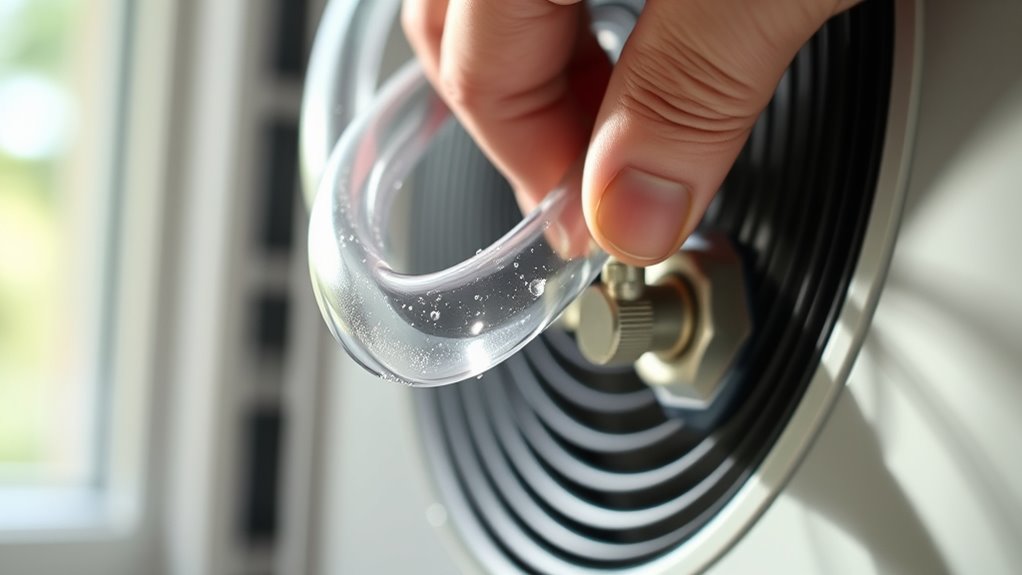
You can remove air from your AC system without a vacuum pump by carefully cracking the low-side service valve to release trapped air, then quickly resealing it. This simple step helps push out some of the unwanted air inside the system. It’s a handy trick when you don’t have access to specialized tools.
You might also open the high-side valve briefly while the system runs or add small amounts of refrigerant manually with the engine off to push out air. These methods rely on refrigerant pressure and aren’t as thorough but work when a vacuum pump isn’t available.
Keep exploring to understand the best approach for your system’s health.
Key Takeaways
- Slightly crack the low-side service valve to release trapped air, then quickly reseal it to minimize air entry.
- Briefly open the high-side valve while the system runs to help displace and push out air.
- Add small amounts of refrigerant manually with the engine off to use pressure for pushing out residual air.
- Use refrigerant pressure carefully to purge air, ensuring constant monitoring of system pressure during the process.
- Understand that these methods do not remove moisture and are suitable only when vacuum pump use is impossible.
Why Vacuum Pumps Are Key for Removing Air From AC Systems
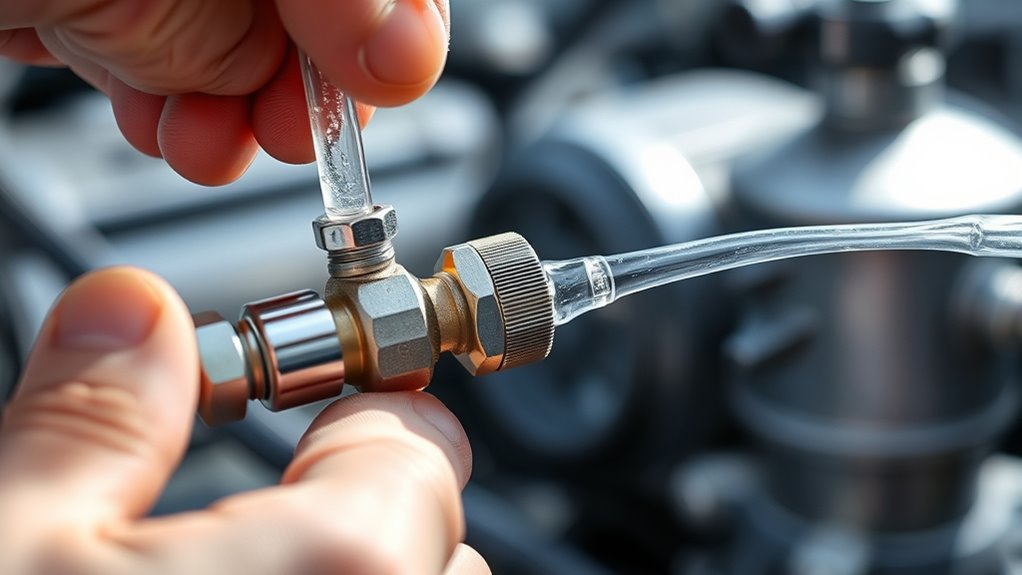
Although some might try skipping this step, using a vacuum pump is vital for removing air and moisture from your AC system. The vacuum pump creates a deep, consistent vacuum that effectively removes air and moisture, preventing contamination and internal corrosion.
Using a vacuum pump is crucial to eliminate air and moisture, preventing contamination and corrosion in your AC system.
Without it, you can’t achieve the necessary low-pressure environment to thoroughly purge the system. When you use a vacuum pump, you confirm the vacuum level drops below 500 microns, which guarantees all air and moisture are out before charging refrigerant.
This step is essential to maintain peak AC system performance. Plus, by monitoring pressure loss during vacuuming, the pump helps detect leaks, guaranteeing your system is sealed tight and ready for refrigerant.
Skipping this step leaves contaminants inside, risking damage and reduced efficiency. So, if you want your AC system to run smoothly and last longer, relying on a vacuum pump for removing air and moisture is non-negotiable.
How to Purge Air and Charge Refrigerant Without a Pump
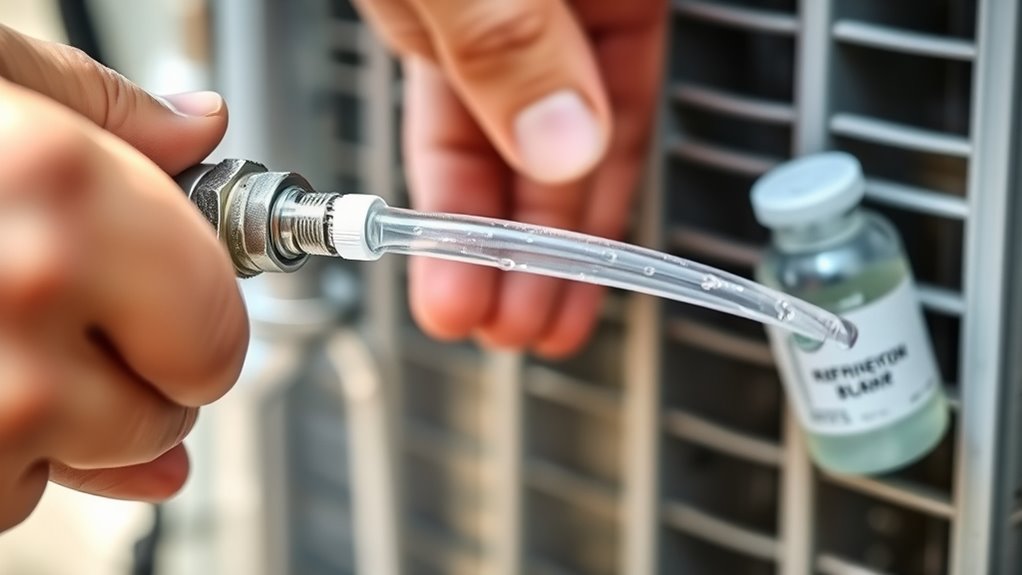
While vacuum pumps provide the most reliable way to remove air and moisture from an AC system, you can still purge air and charge refrigerant without one if necessary. Start by slightly cracking the low-side service valve to let refrigerant escape, pushing out trapped air, then quickly reseal the valve.
Opening the high-side valve briefly while the system runs can help displace remaining air with refrigerant, but watch pressure carefully to avoid overpressure. You can also perform manual refrigerant addition with the engine off, adding small amounts to help push out residual air.
Keep in mind this method uses refrigerant pressure to remove air but doesn’t fully evacuate moisture or complete system evacuation like a vacuum pump does. After purging air with refrigerant, run the AC system with the engine on and monitor pressures closely to ensure proper refrigerant flow.
This approach allows you to remove air and charge refrigerant without vacuum equipment when necessary.
Frequently Asked Questions
What Happens if You Don’t Pull a Vacuum on an AC?
If you don’t pull a vacuum on an AC, you’ll trap air and moisture inside. This can cause corrosion, pressure imbalances, and ice blockages.
All these issues damage components and reduce efficiency. Plus, it shortens your system’s lifespan, which means you’ll end up with costly repairs.
What Can I Use Instead of a Vacuum Pump?
You can carefully connect cans or cylinders of refrigerant, causing controlled coolant circulation to chase out trapped contaminants.
Though clever, this crude compromise can’t completely clear moisture or air like a vacuum pump can. It’s kind of a workaround, but not the full solution.
How to Purge Split System Air Conditioner Without Vacuum Pump?
You’ll slightly open the refrigerant line, letting refrigerant push out air, then use a recharge kit to add refrigerant carefully.
Keep the compressor running to circulate and expel trapped air, watching pressure levels closely. It’s important to monitor everything so you don’t overcharge the system.
Can You Remove an AC Compressor Without Evacuating the System?
You can remove an AC compressor without evacuating the system, but you risk introducing air and moisture, which can damage your system.
It’s best to evacuate properly using a vacuum pump for reliable, long-term operation. Trust me, it’s worth the extra step to keep everything running smoothly.
Conclusion
Removing air from your AC system without a vacuum pump is tricky but doable. For example, imagine you’re camping with a portable AC unit and no pump. You can carefully use the system’s pressure differences to purge air by slowly opening valves and letting refrigerant flow.
While this method isn’t perfect, it can work in a pinch. Just remember, a vacuum pump is always the best choice for a thorough, safe job. Using a vacuum pump helps remove air and moisture completely, ensuring your AC runs efficiently and lasts longer.
If you don’t have a vacuum pump, this alternative method can help you remove air from the AC system temporarily. But for the best results and to avoid damage, investing in or borrowing a vacuum pump is highly recommended. It’s the safest and most effective way to remove air from your AC system.





2 Comments