
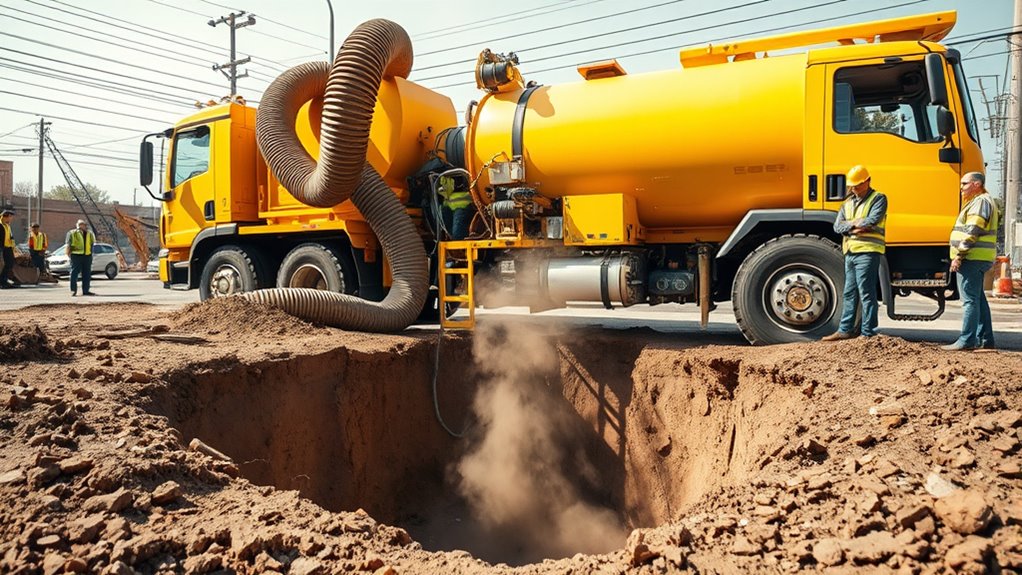
What Is Vacuum Excavation and How Does It Work?
Vacuum excavation lets you safely dig by using high-pressure air or water to gently loosen soil without harming underground utilities like gas or electrical lines. This non-destructive digging method is perfect for working around sensitive infrastructure.
Then, a powerful vacuum system quickly suctions the debris, keeping the site clean and secure.
This approach reduces the risk of damage and minimizes environmental impact. Plus, it helps avoid project delays, offering much more precise control compared to traditional digging methods.
If you want to understand how this technology protects utilities while maintaining efficiency, keep exploring its process and benefits. It’s pretty fascinating once you get into the details!
Key Takeaways
- Vacuum excavation safely loosens soil using high-pressure air or water to prevent damage to underground utilities. It employs a powerful vacuum system to remove loosened soil and debris efficiently from the excavation site.
- There are two main types: hydro excavation uses water jets, while air excavation uses compressed air for different soil conditions. This method makes the digging process much safer and more precise.
- The controlled soil breaking process minimizes surface disruption and protects underground infrastructure from accidental strikes. It’s a smart way to avoid costly damages.
- Vacuum excavation offers precision, reduces safety hazards, limits environmental impact, and speeds up underground utility exposure. All in all, it’s a faster and safer way to get the job done.
What Is Vacuum Excavation?
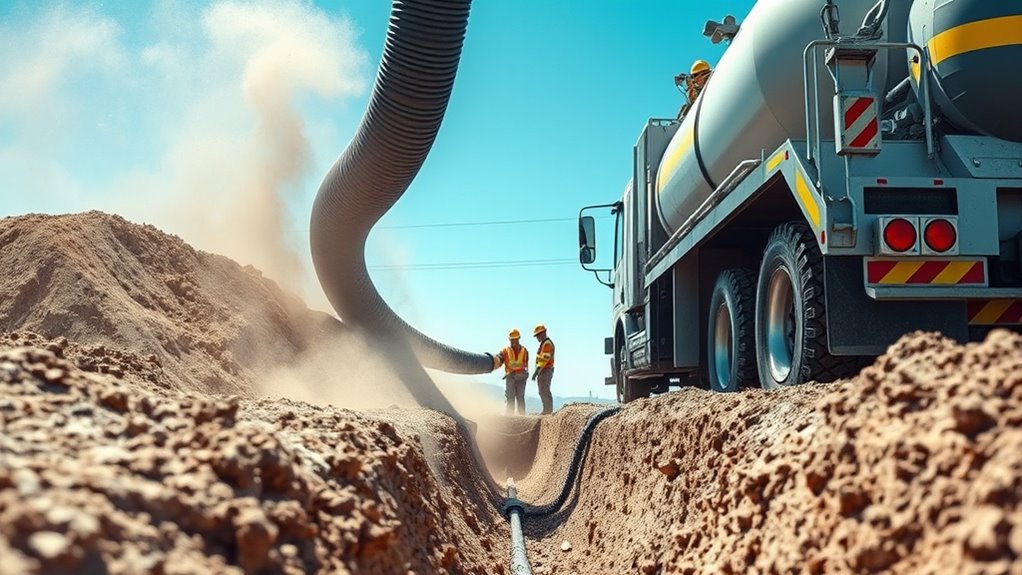
Although traditional digging methods can risk damaging underground utilities, vacuum excavation offers a safer, non-destructive alternative. This technique uses either high-pressure air or water to loosen soil carefully, adapting to different soil conditions without causing harm.
You’ll see two main types: hydro excavation, which employs water jets to break up soil, and air excavation, which uses compressed air. Both methods minimize disruption, ensuring underground utilities like gas, water, and electrical lines remain intact.
Once the soil is loosened, a powerful vacuum system removes it efficiently, collecting debris in a tank for safe disposal. Vacuum excavation prioritizes safety by reducing the risk of accidental strikes on utilities, making it ideal for sensitive environments.
Unlike mechanical digging, it offers precision and control, so you can tackle projects knowing you’re protecting essential infrastructure while limiting environmental impact and downtime. This approach truly transforms how you manage underground work with minimal disruption and maximum safety.
How Vacuum Excavation Breaks Up Soil and Protects Utilities
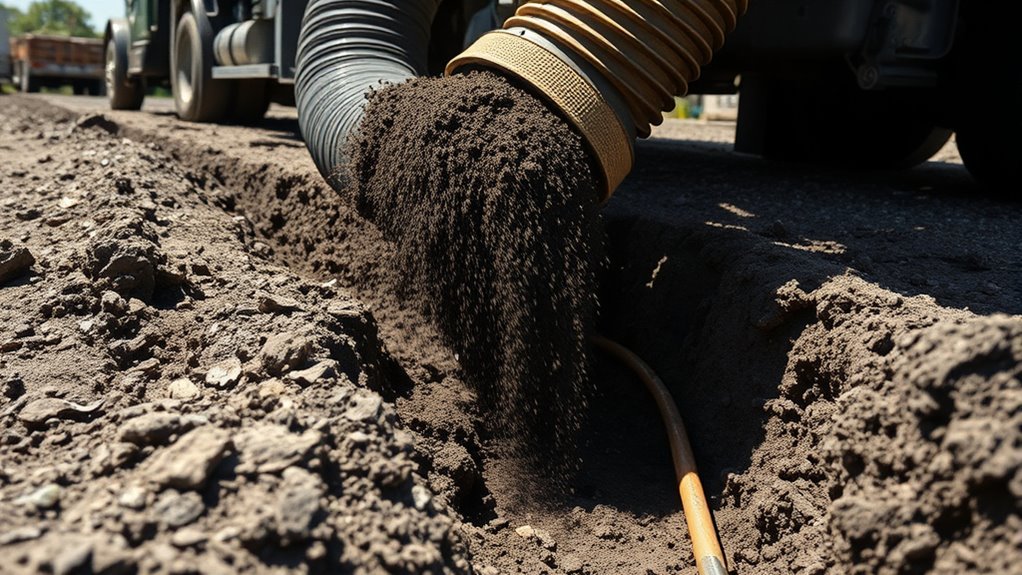
Vacuum excavation breaks up soil by applying high-pressure water or compressed air, which loosens the ground without risking damage to underground utilities. This soil breaking method uses pressurized water or high-pressure air to carefully loosen soil, minimizing surface disturbance and preventing safety hazards.
Vacuum excavation uses high-pressure water or air to safely loosen soil without harming underground utilities.
As you initiate the excavation process, the vacuum system suctions the loosened soil and debris into a tank for efficient debris removal. This controlled approach guarantees utility protection by avoiding accidental strikes to pipes, cables, and other underground infrastructure.
By focusing on precise soil loosening, vacuum excavation exposes underground utilities safely and efficiently. You’ll find that this technique reduces the risk of costly damage and enhances overall safety on the job site.
In short, vacuum excavation offers a reliable way to break up soil and protect underground utilities throughout the excavation process. It’s a smart choice when you want to keep things safe and efficient.
Frequently Asked Questions
How Deep Can You Vacuum Excavation?
You can vacuum excavate up to 10 to 15 feet deep, sometimes reaching 20 feet with specialized equipment. Depth depends on hose length, soil type, and debris capacity.
How Much Does It Cost for a Vac Excavation?
You’ll typically pay $10 to $20 per linear foot for small vacuum excavation jobs.
Larger projects usually range from $3,000 to $15,000. Equipment rental, permits, and disposal fees can add to your overall cost.
How Much Can a Vac Ex Excavate in a Day?
If you’re working on soft soil, your vac ex can clear up to 150 cubic yards in a day. With tougher ground, expect closer to 50.
Your equipment size and site conditions’ll directly impact that rate. So, it really depends on what you’re dealing with out there.
What Are the Limitations of Vacuum Excavation?
You’ll face limitations with vacuum excavation in rocky, dense clay, or frozen soils, and areas with underground debris or hard obstructions.
It’s not ideal for large-scale projects and may require extra traditional methods, increasing costs. Sometimes, you just need to mix things up to get the job done right.
Conclusion
When you choose vacuum excavation, you’re not just digging—you’re protecting what matters beneath the surface. It’s no coincidence that this method gently breaks up soil while keeping utilities safe.
This shows how innovation and care can work hand in hand. So, the next time you need precise digging, remember: vacuum excavation isn’t just about the soil you move.
It’s about the unseen networks you preserve, keeping everything connected and secure. Vacuum excavation offers a safe, efficient, and non-destructive way to expose underground utilities, minimizing risk and damage.
By using this technique, you ensure both the environment and existing infrastructure stay intact. So, for accurate, careful, and reliable digging, vacuum excavation is the smart choice every time.




One Comment