
Why Does My Vacuum Stink and How Can I Eliminate Odors Fast?
Your vacuum stinks because debris, pet hair, and moisture get trapped inside, causing mold, bacteria, and bad smells. Clogged filters and overfilled dustbins also release odors that can make your whole room smell unpleasant. It’s a common problem with vacuums that aren’t cleaned regularly.
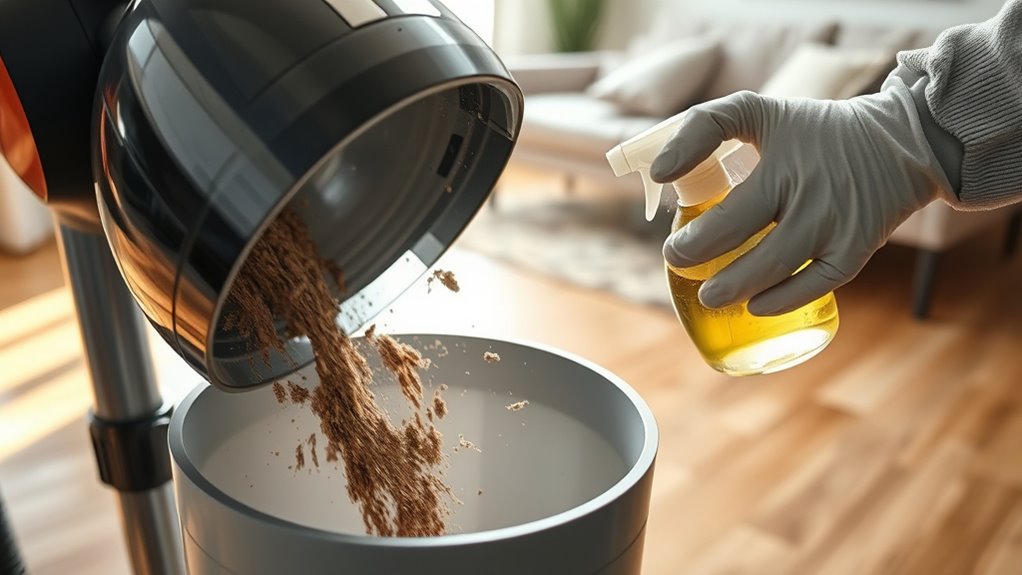
To eliminate these odors fast, start by emptying or replacing the dustbin and filters. Cleaning the brush rolls is also important since hair and dirt can build up there. Make sure to dry all parts thoroughly to prevent moisture from causing more smells.
Sprinkling baking soda inside your vacuum can help neutralize bad odors quickly. And to keep your vacuum fresh for good, always keep it dry and well-ventilated.
Want to know some simple steps to keep your vacuum smelling great all the time?
Key Takeaways
- Vacuum odors often come from debris, pet dander, moisture, and decomposing organic matter inside the dustbin or filters.
- Empty the dustbin or replace the dustbag frequently to prevent buildup and reduce smells quickly.
- Clean or replace filters every 3-6 months to eliminate trapped particles causing unpleasant odors.
- Dry all vacuum parts thoroughly after cleaning to prevent mold and musty smells.
- Use baking soda or manufacturer-approved deodorizers inside the vacuum for fast odor elimination.
Why Does My Vacuum Smell? Common Causes Explained
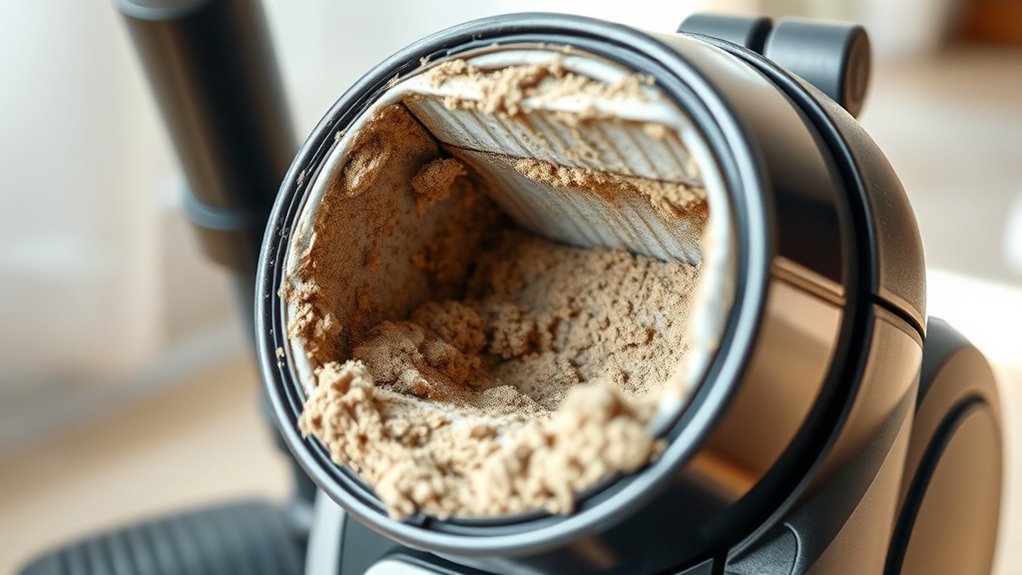
If your vacuum smells unpleasant, it’s usually because debris, pet dander, and dust have built up and started to decompose inside. This buildup often leads to vacuum odors that can range from a musty smell to more intense foul odors.
A dirty vacuum with an overfilled dustbin or bag accelerates decomposition, trapping organic matter inside. Another common cause is a clogged filter—when filters get blocked, they trap particles and release unpleasant scents during use.
Moisture trapped inside your vacuum can encourage mold and bacteria growth, which worsens the smell. Sometimes, the vacuum smell isn’t just from dirt; mechanical issues like worn belts or overheating motors can emit burning or rubbery odors, indicating deeper problems.
To reduce musty smells, guarantee your vacuum’s components air dry completely after cleaning. If the clogged filter is the culprit, you’ll need to replace the filter to prevent vacuum odors from persisting.
How to Fix and Prevent Vacuum Odors: Quick Tips and Maintenance
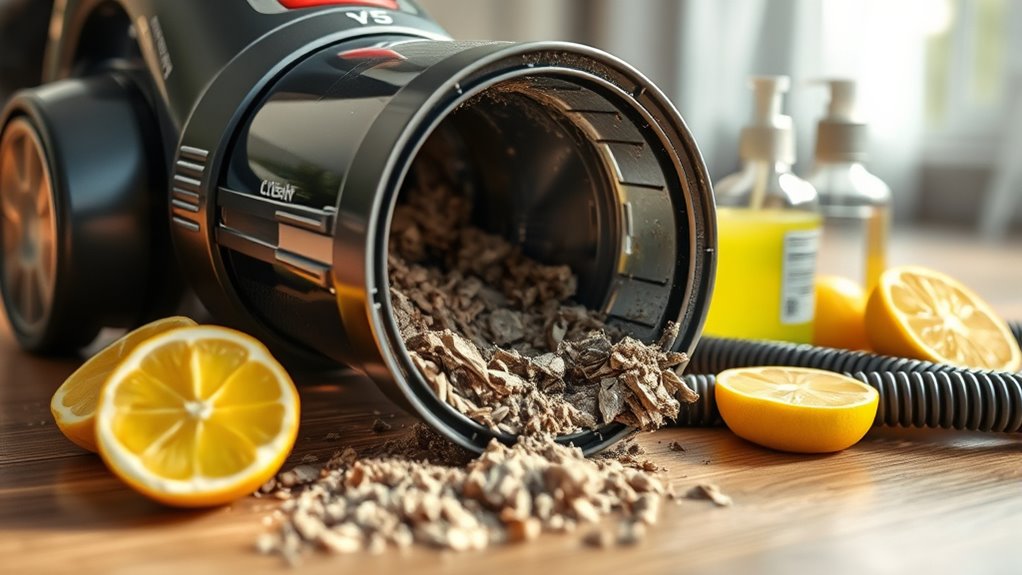
Maintaining your vacuum regularly can keep unpleasant odors at bay and improve its performance. To tackle vacuum smell and prevent odor buildup, follow these quick tips:
- Replace the bag or empty the dustbin frequently. Don’t let it reach full capacity, as this promotes odor buildup and reduces suction.
- Clean or replace the filter every 3-6 months. A blocked filter traps odors and hampers airflow, so keeping it clean is key.
- Inspect the vacuum for pet hair, debris, and moisture. Remove buildup from the brush roll, hoses, and internal parts to stop mold and foul smells.
You can also sprinkle baking soda inside the vacuum or use manufacturer-recommended deodorizers to neutralize lingering odors. Finally, always store your vacuum in a dry, well-ventilated area and allow it to air out after use to maintain vacuum freshness and performance.
Frequently Asked Questions
How to Make Vacuum Smell Go Away?
You can make your vacuum smell go away by emptying and cleaning its dustbin regularly. Washing or replacing the filters also helps a lot.
Make sure to remove any debris stuck in the brushes. You can even sprinkle some baking soda inside for freshening it up.
After each use, it’s a good idea to let your vacuum air out. This keeps it smelling clean and fresh over time.
Why Does My Vacuum Stink Like Rotten Eggs?
Your vacuum stinks like rotten eggs because mold, bacteria, or decomposing debris inside it release sulfur compounds.
Check for trapped moisture, dirty filters, and clogged hoses. Then clean or replace parts to stop the smell quickly.
It’s pretty common, but the good news is it’s usually easy to fix! Just give your vacuum a good once-over, and you’ll be back to fresh cleaning in no time.
What Can You Put in Your Vacuum to Make It Smell Better?
You might think adding perfume solves vacuum odors, but it doesn’t.
Instead, try placing baking soda, scented dryer sheets, or a few drops of essential oils inside your vacuum bag to freshen it up quickly and effectively.
Why Do Vacuums Start to Stink?
Your vacuum starts to stink because dust, pet hair, and moisture get trapped inside, promoting mold and odor buildup. Dirty filters and decomposing debris also cause bad smells.
Plus, mechanical issues can add burning or rubbery odors. It’s like your vacuum is trying to tell you it needs a little TLC!
Conclusion
Just like a refreshing gust after a storm, your vacuum can smell clean again with a little care. By regularly emptying bags, cleaning filters, and checking for hidden debris, you’ll banish odors fast.
Don’t let that stubborn stink linger—treat your vacuum like a trusted companion, and it’ll keep your home spotless and fresh.
Remember, a well-maintained vacuum is your secret weapon against unwanted smells. It turns chore time into a revitalizing breeze.
Keeping your vacuum smelling fresh doesn’t have to be a chore. With simple steps like regular bag changes, filter cleanings, and debris checks, you can quickly eliminate odors and enjoy a cleaner, fresher home environment. These quick fixes help prevent bad smells from building up, making your vacuum a powerful tool in maintaining a healthy living space. So, take a little time to care for your vacuum—it’s worth it for a home that smells great and feels welcoming every day.


