
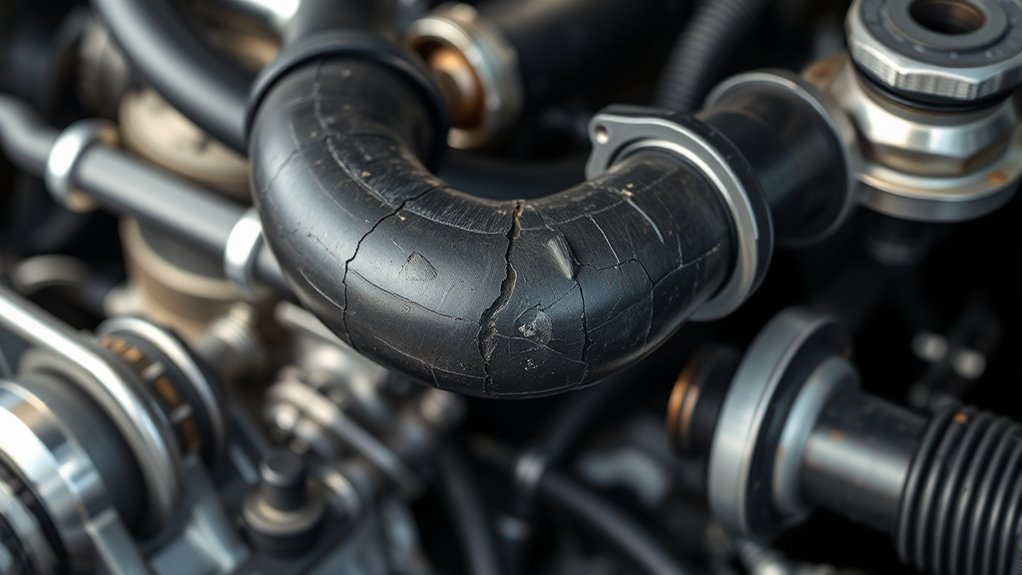
What Is a Vacuum Leak and How Does It Affect Your Engine?
A vacuum leak lets unmetered air slip into your engine’s intake system, messing up the air-fuel mixture. This can lead to a bunch of issues like rough idling, stalling, and making your engine harder to start.
You might also hear hissing sounds or notice poor acceleration and loss of power. These are common signs that something’s not quite right under the hood.
Your engine control unit will struggle to adjust fuel delivery properly, sometimes even triggering the check engine light. It’s important to catch these vacuum leaks early to keep your engine running smoothly.
If you want to learn how to spot and fix these leaks, keep exploring the details ahead. Understanding vacuum leaks can save you time and money down the road!
Key Takeaways
- A vacuum leak lets unmetered air sneak into the intake system, which messes with the engine’s air-fuel mix.
- This can cause rough idling, stalling, and even make it hard to start your engine.
- The engine control unit has a tough time adjusting fuel delivery when this happens.
- That leads to poor performance and might trigger the check engine light.
- You’ll often find vacuum leaks from damaged hoses, bad gaskets, or cracked intake parts.
- To spot a leak, you can do a visual check, use smoke testing, or keep an eye on fuel trims after fixing things.
What Is a Vacuum Leak? How It Affects Engine Performance
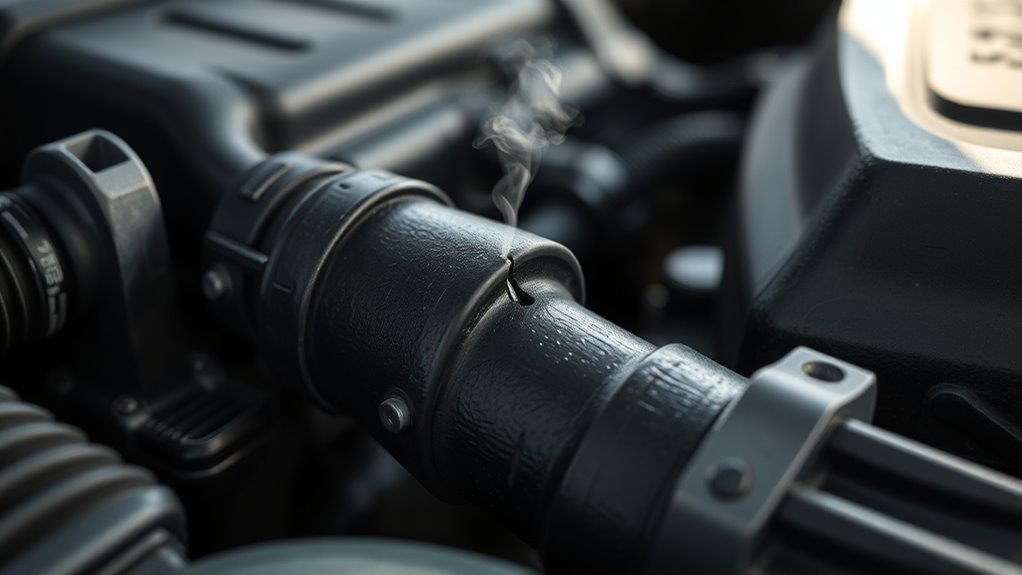
How does a vacuum leak affect your engine? A vacuum leak happens when unmetered air enters the intake system, disrupting the precise air-fuel mixture your engine needs. This causes engine performance issues like rough or inconsistent engine idle, stalling, or difficulty starting.
A vacuum leak lets unmetered air in, disrupting the air-fuel mix and causing rough idle or stalling.
You might even hear hissing or sucking sounds near the intake manifold or vacuum hoses, signaling a loss of sealed airflow. When this happens, the engine control unit struggles to adjust fuel delivery properly, often triggering the check engine light.
Your engine may run poorly, losing power and responsiveness, especially during acceleration. If you don’t address a vacuum leak promptly, it can worsen performance and potentially lead to more costly auto repair.
Understanding the role of vacuum hoses and the intake system helps you recognize symptoms early and avoid these problems. Keeping your engine sealed tight is essential for smooth operation and preventing engine performance issues linked to vacuum leaks.
Detecting and Fixing Vacuum Leaks Before They Cause Damage
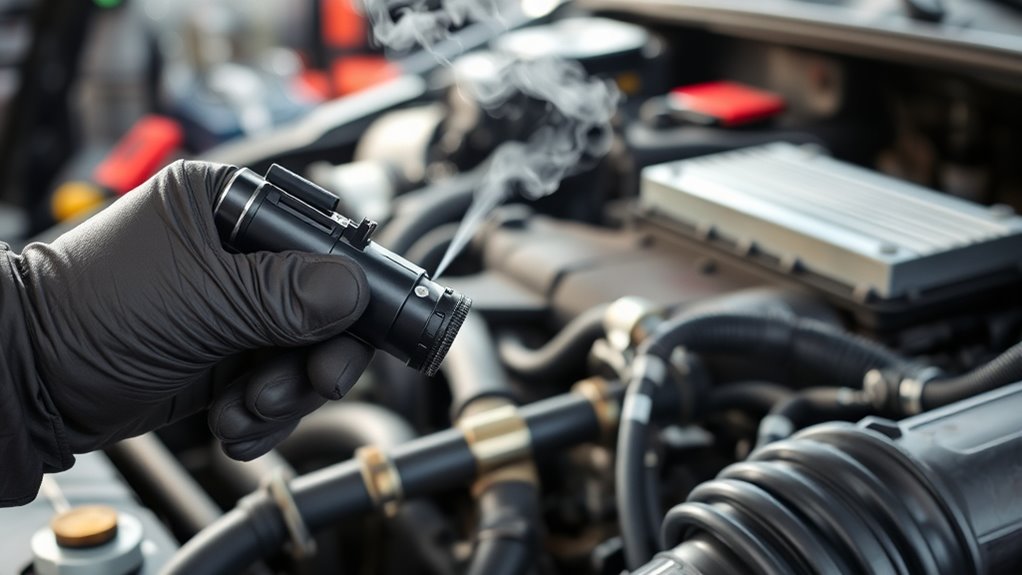
Although vacuum leaks can cause serious engine problems, you can catch them early through visual inspections and smoke testing. Start by checking the intake system for damaged or disconnected hoses, gaskets, and seals, which are common sources of leaks.
Using a smoke machine helps you identify even small leaks by filling the intake with smoke and watching for any escaping vapors. Once you spot the leaks, promptly replace or repair the faulty hoses or gaskets to restore proper air-fuel mixture and improve engine performance.
After repair, monitor fuel pressure and fuel trims; they should stabilize near zero, confirming the leak is sealed. Regular inspections and preventive maintenance of vacuum lines are essential in automotive repair to avoid costly engine issues.
Frequently Asked Questions
Is It Worth Fixing a Vacuum Leak?
Yes, it’s worth fixing a vacuum leak because you’ll improve your engine’s performance, save fuel, and avoid costly repairs. Don’t ignore it—you’ll prevent stalling and protect your engine from long-term damage.
Trust me, taking care of a vacuum leak sooner rather than later really pays off. It keeps your car running smoothly and saves you headaches down the road.
Where Is the Most Common Place for a Vacuum Leak?
Back in the day, you’d check your rubber hoses first—they’re the most common place for a vacuum leak.
You’ll find cracks or disconnections there, especially around the intake manifold, brake booster, or throttle body connections.
These spots tend to wear out or loosen over time, so they’re always worth a close look.
Can You Still Drive a Car With a Vacuum Leak?
You can drive with a vacuum leak, but you’ll notice rough idling, poor acceleration, and potential stalling.
It’s best not to wait—get it fixed to avoid engine damage and keep your car running smoothly.
How to Fix a Vacuum Leak in an Engine?
To fix a vacuum leak, start by inspecting hoses for any damage. Using a smoke machine can really help you locate those tricky leaks.
Next, replace any faulty parts you find and make sure all connections are nice and secure.
After that, clear any trouble codes from your engine’s computer. Finally, keep an eye on the fuel trims to make sure the fix is actually working properly.
Conclusion
A vacuum leak is like a hidden crack in your engine’s heartbeat, silently stealing its rhythm. If you don’t catch it, your engine’s performance will falter, leaving you stranded or frustrated.
But by spotting and fixing these leaks early, you’re giving your engine a fresh breath—restoring its power and smoothness.
Don’t let a tiny tear turn into a roaring storm; protect your ride and keep it running like a well-tuned symphony. Vacuum leaks can cause engine rough idling, poor fuel efficiency, and even stalling. Catching them early helps maintain your engine’s health and prevents costly repairs down the road.
So, pay attention to any signs of a vacuum leak and have it checked promptly. Keeping your engine sealed tight ensures better performance, fuel economy, and a smoother driving experience overall.




2 Comments