
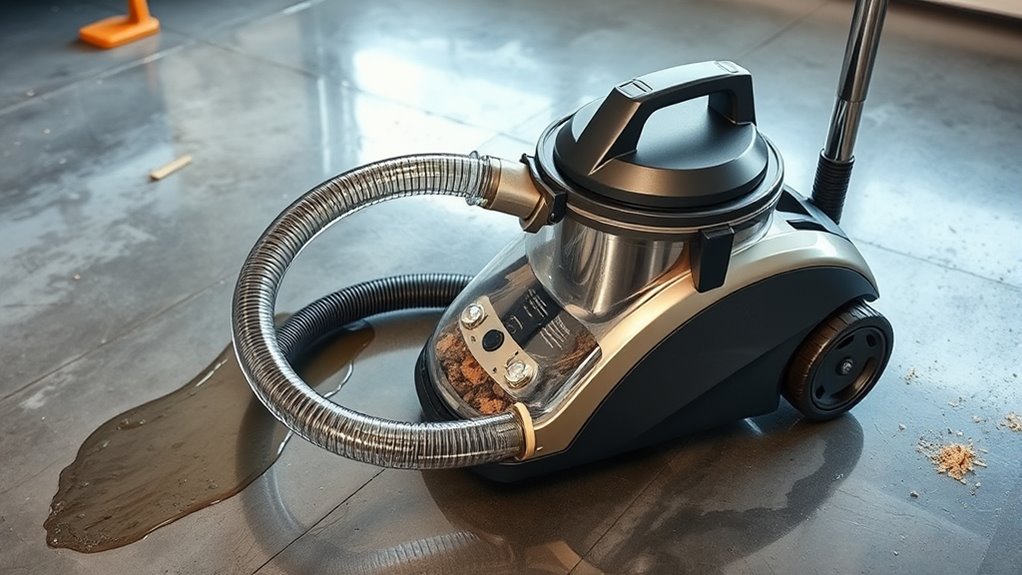
What Is a Wet Dry Vacuum and How Does It Work?
A wet dry vacuum lets you clean both liquids and solids easily with one machine. It’s a handy tool for tackling spills, dust, and debris all at once.
By combining wet and dry cleaning functions, it saves you time and effort around the house or workshop.
It uses separate tanks to keep clean and dirty water apart, while edge brushes and flexible heads reach tight spaces.
Inside, filters protect the motor, and a squeegee seal helps pick up liquids efficiently.
Regular maintenance keeps it working strong and extends its life. If you want to understand how its parts work together for powerful cleaning, keep exploring.
Key Takeaways
- A wet dry vacuum cleans both solids and liquids at the same time. It uses a dual-tank system to keep clean and dirty water separate.
- It has special parts like edge brushes, flexible heads, and squeegee seals. These help pick up dirt and liquids really well.
- The vacuum comes with filters like HEPA or foam screens. These filters trap debris and mist to protect the motor while it’s running.
- It uses a recovery airflow path and separator baffles. This design stops liquid from damaging the inside parts and keeps the suction strong.
- Plus, it has automated cleaning and self-drying features. These make maintenance easier and help the vacuum last longer with good performance.
What Is a Wet Dry Vacuum?
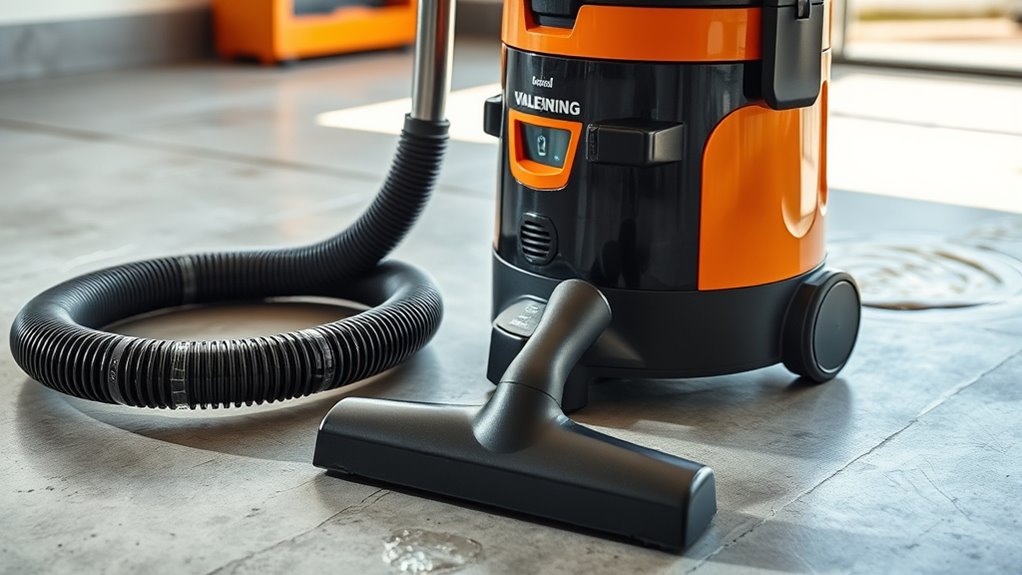
What makes a wet dry vacuum stand out is its ability to handle both solids and liquids at the same time. When you use one, you benefit from a dual-tank system that keeps clean water or cleaning solutions separate from dirty water, ensuring hygiene and efficiency.
This setup lets you tackle messes involving solids and liquids without hassle. Equipped with edge brushes and flexible heads, the vacuum reaches tight corners and edges, giving you deep cleaning results in every nook.
The integrated filter system, often including HEPA or foam filters, protects the motor by trapping debris and mist, boosting durability. Many wet dry vacuums also feature automated cleaning and self-drying functions, so you don’t have to worry about odors or maintenance.
With these features, the wet dry vacuum offers a versatile, powerful solution that lets you clean a variety of surfaces thoroughly and conveniently.
How the Parts of a Wet Dry Vacuum Work
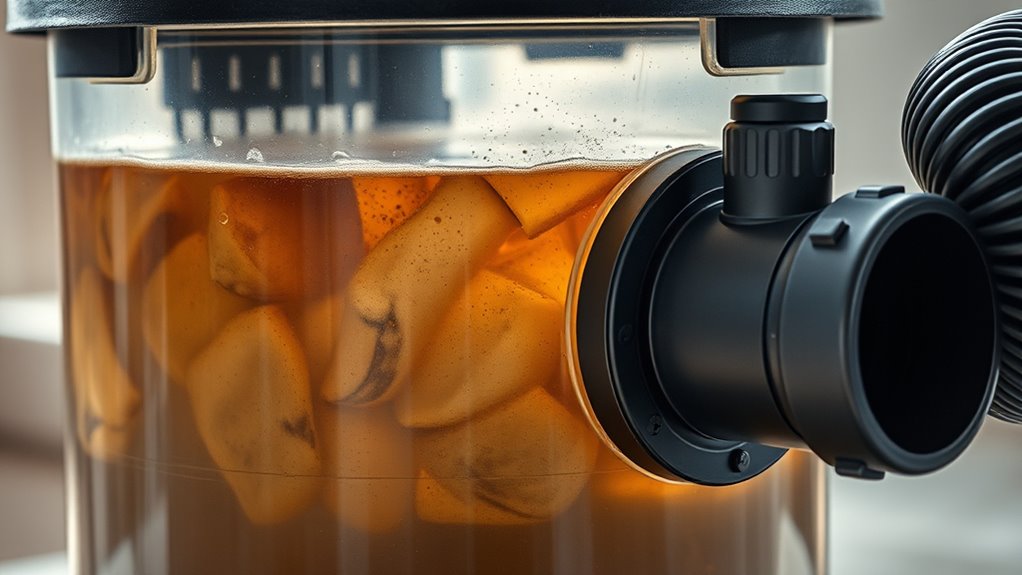
Because each part of a wet dry vacuum plays a specific role, understanding how they work together helps you use the machine more effectively. The vacuum’s internal components, like the separator or anti-foam baffle, prevent liquid from reaching the fan and reduce foam buildup during use.
Filters and foam screens provide essential filter protection by trapping mist, debris, and larger particles before they harm the motor.
Here’s how the key parts work:
- The separator or anti-foam baffle controls foam and protects internal components.
- Filters and foam screens trap particles, ensuring filter protection.
- The recovery airflow path—including hoses—can clog, so keep it clean for strong suction.
- The squeegee seal maintains a low-pressure zone for efficient liquid and debris pickup and maximum liquid recovery.
Knowing these functions helps you maintain your vacuum and improve its performance. It’s all about keeping each part working smoothly so your vacuum does its best job every time.
Frequently Asked Questions
Is It Worth Getting a Wet-Dry Vacuum?
Yes, it’s worth getting a wet-dry vacuum because you’ll save time, reduce cleaning costs, and enjoy deeper, more hygienic cleaning.
It combines multiple functions, making your home maintenance easier and more efficient overall.
Plus, having one tool that handles both wet and dry messes? That just makes life a whole lot simpler.
Do You Put Water in a Wet Dry Vac?
You absolutely do put water in a wet dry vac—it’s like giving it a revitalizing drink! Just fill the clean water tank with water or solution, never the dirty tank, or you might wreck it.
It’s pretty simple once you get the hang of it. Just remember to keep the clean and dirty water tanks separate to avoid any damage.
What Are the Disadvantages of Wet and Dry Vacuum Cleaners?
You’ll find wet and dry vacuums bulky, hard to maneuver, and costly to maintain. They need frequent filter care, struggle with fine dust, and can’t handle hot liquids or hazardous materials, limiting their versatility.
Honestly, that can be a real hassle. It makes you think twice before using them for just any cleaning job. So, they’re not always the most convenient option out there.
Can You Use a Wet and Dry Vacuum as a Normal Vacuum?
Yes, you can use a wet dry vacuum as a normal vacuum by switching to dry mode, emptying the tank, and maintaining the filters.
Just check your model’s instructions for proper settings and attachments to guarantee effective dry cleaning.
It’s pretty straightforward once you get the hang of it! Just make sure everything is set up right before you start.
Conclusion
Now that you know what a wet dry vacuum is and how its parts work together, you’re ready to tackle any mess—wet or dry—with ease. It’s like having a versatile sidekick that jumps in whenever spills or dirt show up.
Just remember, understanding how it works helps you get the most out of this handy tool. Using a wet dry vacuum makes your cleaning tasks quicker and less of a chore. Cleaning just got a whole lot easier!
With a wet dry vacuum, you can handle everything from liquid spills to stubborn dirt without switching devices. This powerful and convenient tool is perfect for both home and workshop cleaning. So, next time you face a messy situation, your wet dry vacuum will be your go-to helper for fast, effective cleanup.




6 Comments