
Will a Vacuum Kill a Spider?
Yes, a vacuum can kill a spider by pulling it into the dust container with strong suction that suffocates or damages it. Using a vacuum to catch spiders is a common and effective method because of its powerful cyclonic suction.
You’ll improve your chances by using a vacuum with minimal obstructions to keep the suction strong. Running the vacuum longer after capturing the spider further reduces its chances of survival.
Afterward, make sure to check the vacuum contents carefully. Dispose of them properly to prevent any survivors from escaping.
Keep going to find out how to handle the cleanup and prevent escapes.
Key Takeaways
- Vacuums capture spiders through strong suction, often killing smaller ones instantly inside the dust canister or bag. Larger or agile spiders may survive if the vacuum’s dust container is not tightly sealed.
- Running the vacuum longer after suction increases the likelihood of spider death by trauma or suffocation. So, don’t be in a hurry to stop right away.
- Immediate inspection and proper disposal of vacuum contents prevent spider escape or re-infestation. It’s a good idea to check the canister or bag as soon as you’re done.
- Using vacuums with strong cyclonic suction and minimal obstructions improves spider capture and kill efficiency. This means the more powerful and clear the airflow, the better your chances.
How Vacuums Catch and Kill Spiders: What You Need to Know

Although vacuums are designed to capture dust and debris, they can also trap and often kill spiders thanks to their strong suction and pressure changes. When you’re vacuuming spiders, the powerful suction pulls them into the dust canister, where the likelihood of spider survival drops considerably.
Vacuums can be effective tools for spider control, especially models with strong cyclonic suction and minimal obstructions. These features increase the chances that house spiders and even spider eggs won’t escape or survive.
That said, spider survival depends on your vacuum’s power and design. Smaller spiders tend to be killed outright, while larger or more agile ones might survive if the dust canister isn’t sealed well.
Running the vacuum longer after suction improves your odds of killing trapped spiders through trauma or suffocation. So, using a vacuum with strong suction is a practical way to reduce spider presence in your home.
How to Dispose of Spiders and Check for Survivors After Vacuuming
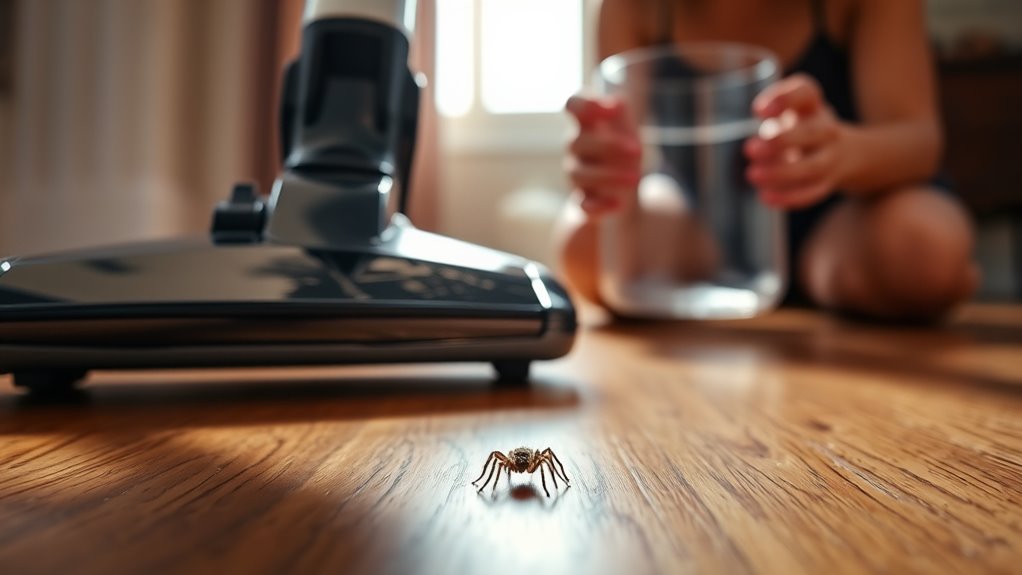
How can you make sure no spiders survive after vacuuming? After vacuuming spiders, immediately check the dust container or vacuum bag for any signs of spider survival or spider eggs.
For bagged vacuums, promptly seal and dispose of the vacuum bag outdoors to prevent escape or re-infestation. With bagless models, empty the dust bin outside into a sealed container to securely contain any survivors.
Running the vacuum longer after capturing spiders can increase their chances of death by suffocation or trauma. Regular vacuum maintenance is crucial to avoid debris buildup that may harbor surviving spiders or eggs.
| Task | Recommended Action |
|---|---|
| Check for survivors | Inspect dust container or vacuum bag |
| Dispose of spiders | Seal vacuum bag or empty dust bin outside |
| Prevent spider eggs | Look for egg sacs and remove them |
| Maintain vacuum | Clean regularly to reduce spider survival |
Frequently Asked Questions
What Is the Most Efficient Way to Kill a Spider?
The most efficient way to kill a spider is to use a high-powered vacuum with sealed HEPA filtration. Run it longer after capture to make sure the spider is completely trapped.
Then, promptly dispose of the bag or empty the canister outdoors. This helps prevent any chance of the spider escaping.
Why Should You Never Squish a Spider?
Squishing a spider is like opening Pandora’s box—you risk spreading bacteria, triggering bites, and creating a messy scene.
Instead, you should gently remove and release them to keep your home safe and clean without unnecessary harm.
How Long Can a Spider Last in a Vacuum?
You’ll find most spiders die within seconds inside a vacuum, but some, especially larger or agile ones, might survive a few minutes if they avoid direct suction or trauma.
It really depends on your vacuum’s strength and design. Some vacuums are more powerful than others, so the outcome can vary quite a bit.
Do Spiders Lay Eggs in a Vacuum?
You won’t find spider eggs cozying up inside a vacuum—it’s not exactly a beachfront condo. Spiders avoid that harsh, noisy environment, so they don’t lay eggs there.
You’re safe from vacuum-laid spider families! No creepy crawlies setting up shop in your cleaning gear.
Conclusion
So, does a vacuum kill a spider? Often, yes—but not always. You’ll want to check the vacuum bag or canister afterward to guarantee no eight-legged survivors are plotting their comeback like a secret agent from a bygone era.
Proper disposal is key to keeping your space spider-free. Remember, a quick vacuum isn’t just about sucking them up; it’s about making sure they don’t make a grand return.
Stay vigilant and spider-smart! Using a vacuum can be an effective way to remove spiders, but it’s important to ensure they are truly gone to prevent any from crawling back out. So, while a vacuum might kill many spiders, double-checking and proper disposal are essential steps in spider control and keeping your home spider-free.