
Can You Vacuum Water Step by Step
Yes, you can vacuum water step by step by first setting your wet/dry vacuum to wet mode and removing any dry filters unless water-resistant ones are installed. This is important to avoid damage to your vacuum.
Always clear the area for safety, unplug any nearby appliances, and position the vacuum near the water you want to clean up.
Move the nozzle slowly over the water surface to make sure you pick up as much as possible.
When the tank is full, empty it promptly to keep things working smoothly.
After you’re done, rinse the tank well to prevent odors and buildup.
Make sure you take care of the filters by cleaning or replacing them as needed.
It’s also a good idea to dry the vacuum thoroughly before storing it away.
Keep following to find out how to handle each step properly and protect your equipment.
Key Takeaways
- Set the vacuum to wet mode and install water-resistant filters for safe water pickup. This step is important to make sure your vacuum can handle liquids without getting damaged.
- Clear the area and unplug electrical devices to avoid hazards during water vacuuming. Safety first, right?
- Move the nozzle slowly in overlapping passes, using crevice tools for tight spots. Take your time so you don’t miss any water.
- Monitor the float indicator and empty the tank promptly when it’s full to maintain suction. Don’t let it overflow!
- Clean and dry all vacuum parts after use, then store the vacuum in a dry place. This keeps everything in good shape for next time.
Prepare Your Wet/Dry Vacuum and Workspace for Water Cleanup
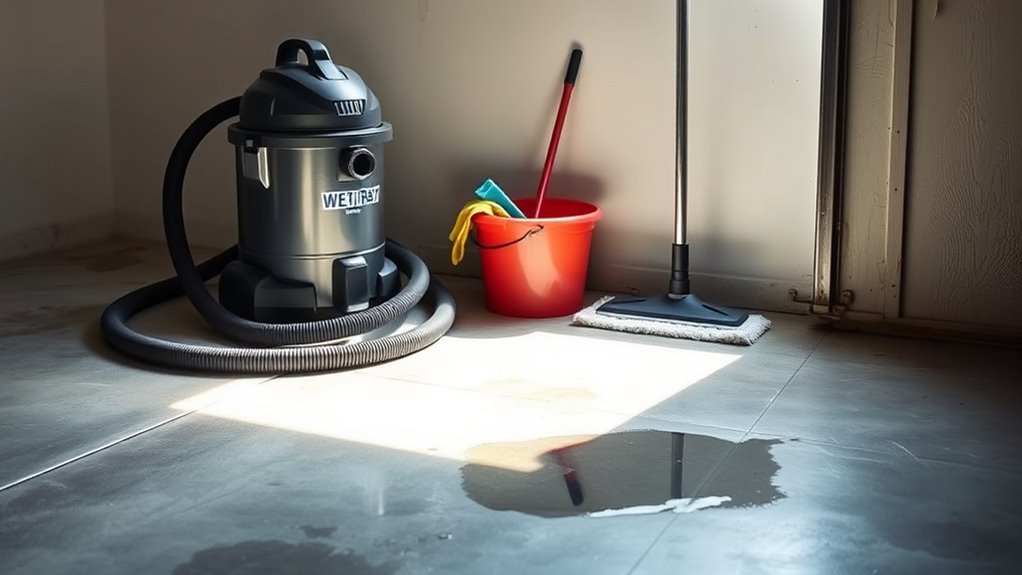
Before you begin vacuuming water, make certain your wet/dry vacuum is set to wet mode and equipped with the proper filters and accessories for water pickup. Check that dry filters or bags are removed unless your vac has water-resistant filters installed. This guarantees your wet/dry vac operates efficiently during water cleanup.
Ensure your wet/dry vacuum is set to wet mode with the correct filters for effective water cleanup.
Next, focus on workspace preparation—clear obstacles and secure the area to prevent slips or trips. Turn off and unplug any electrical appliances nearby to avoid water contact with power sources, following essential safety precautions.
Position your vacuum near sealed hard surfaces where water tends to pool for effective water removal. Have cleaning tools like a squeegee and towels ready to assist the drying process once you finish vacuuming.
Confirm the water tank is empty and properly attached before you start. Taking these steps guarantees a smooth, safe water pickup experience and prepares you for efficient water cleanup without damaging your equipment or workspace.
Vacuum Water Step-by-Step and Care for Your Vacuum After Use
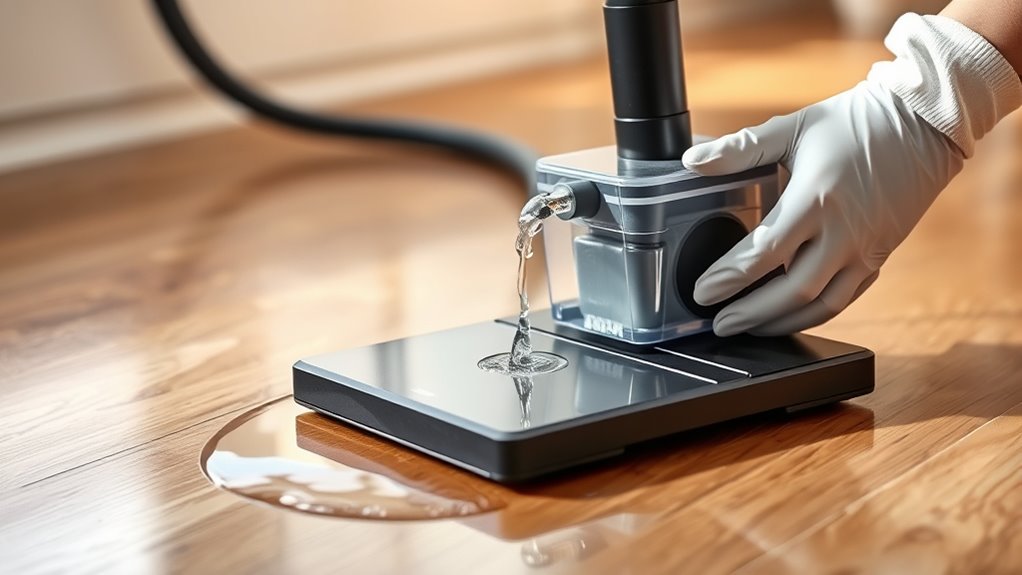
Once you’ve set your wet/dry vacuum to wet mode and equipped it with the right filters, start vacuuming the water by moving the nozzle slowly and methodically in overlapping passes across the spill. Use crevice tools to reach tight spots, ensuring thorough cleanup without overloading the tank.
Keep an eye on the float indicator; when the tank is full, stop and empty the tank promptly to maintain suction and prevent damage. After emptying, rinse the tank thoroughly to avoid odors and bacterial buildup.
Always use sealing filters designed for wet use to protect your vacuum’s motor and optimize performance. Once you finish vacuuming, run the vacuum’s cleaning cycle if it has one to flush out residual water and debris.
Properly caring for your wet/dry vacuums after each use prolongs their lifespan and keeps them ready for the next water spill. Don’t skip these steps — neglecting them can lead to costly repairs and less efficient drying.
Frequently Asked Questions
Is It Possible to Vacuum Water?
Yes, you can vacuum water if you use a wet/dry vacuum designed for liquids. Just make sure to remove regular filters, use proper attachments, and follow safety guidelines to protect the motor and avoid electrical hazards.
It’s pretty straightforward once you have the right vacuum. Just double-check everything before you start, and you’ll be good to go!
Can I Use a Regular Vacuum to Vacuum Water?
No, you can’t use a regular vacuum to vacuum water. It risks damaging the vacuum and causing electrical hazards.
Instead, use a wet/dry vacuum designed for liquids. That way, you stay safe and protect your equipment.
Can You Vacuum a Little Bit of Water?
Yes, you can vacuum a little bit of water if you use a wet/dry vacuum with the right filter.
Just make sure to set it to wet mode and empty the tank promptly to avoid damage.
It’s pretty straightforward, but don’t forget those steps to keep your vacuum safe!
What Can I Use to Vacuum up Water?
You can use a wet/dry vacuum designed for liquids, equipped with water-resistant filters and a float mechanism.
Make sure to remove dry filters and attach proper accessories like a squeegee for efficient water removal. It really makes the whole process easier and faster.
Conclusion
Think of your vacuum like a trusty boat steering a small flood. Just as a boat needs preparation before setting sail and care after docking, your vacuum requires readiness before tackling water and proper cleaning afterward.
When you treat it well, it’ll keep helping you weather any indoor storm. So, handle your vacuum with care, and it’ll be your reliable lifeboat in every splashy situation.
Vacuuming water isn’t as simple as sucking up dust. You need to make sure your vacuum is designed for wet use or has a wet-dry function. Otherwise, you risk damaging the machine or causing electrical hazards. Always check your vacuum’s instructions before you try to vacuum water.
After you’ve used your vacuum to pick up water, clean and dry it thoroughly. This step prevents mold, mildew, and unpleasant odors from developing inside. Proper maintenance ensures your vacuum stays effective and safe for the next time you need to vacuum water.
In short, yes, you can vacuum water—but only if your vacuum is ready for it. Think of it as preparing your boat for a flood: with the right care and attention before and after, your vacuum will be a powerful tool for handling spills and wet messes safely and effectively.



One Comment