
How Does a Central Vacuum System Work?
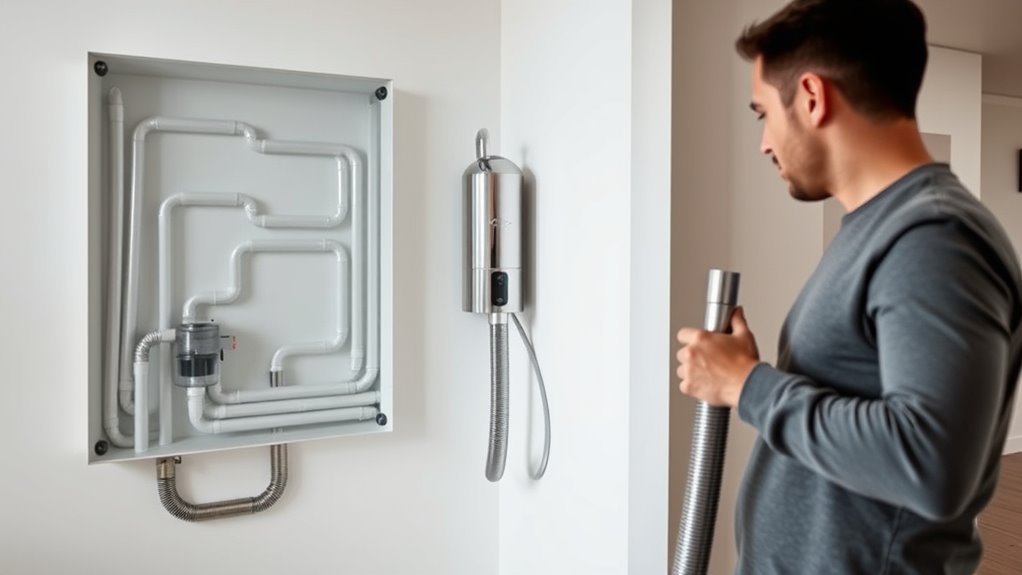
A central vacuum system powers suction with a strong motor that creates high airflow, pulling debris through smooth, low-friction pipes into a collection canister. This powerful setup makes cleaning easier and more efficient than traditional vacuums.
You’ll find it’s designed to handle dirt and dust from multiple rooms without losing suction strength.
It uses cyclonic separation to reduce filter clogging and keep the suction steady. This means less maintenance and better performance over time.
After that, the air passes through HEPA filters to trap fine particles and allergens.
Finally, the clean air is exhausted outside or into a designated area, which helps improve your indoor air quality.
So, not only does a central vacuum system clean debris effectively, but it also keeps your home’s air fresh and healthy. There’s actually more to discover about how dust filtration and air exhaust work in these systems.
Key Takeaways
- A powerful motor generates suction by creating high airflow and pressure differential when the hose is inserted. This is what gives the system its strong cleaning power.
- The suction travels through smooth, low-friction PVC pipes that direct debris to the collection canister. These pipes make sure everything moves efficiently without getting stuck.
- Debris is separated and collected in a large canister or bag. Often, cyclonic action is used to reduce filter clogging, which helps the system run smoothly.
- Air passes through multiple filtration stages, including HEPA filters. These filters trap fine particles and allergens, keeping your home healthier.
- Finally, clean, filtered air is expelled outside or into a designated area. This prevents indoor air contamination and keeps your living space fresh.
How Central Vacuum Systems Generate Suction Power
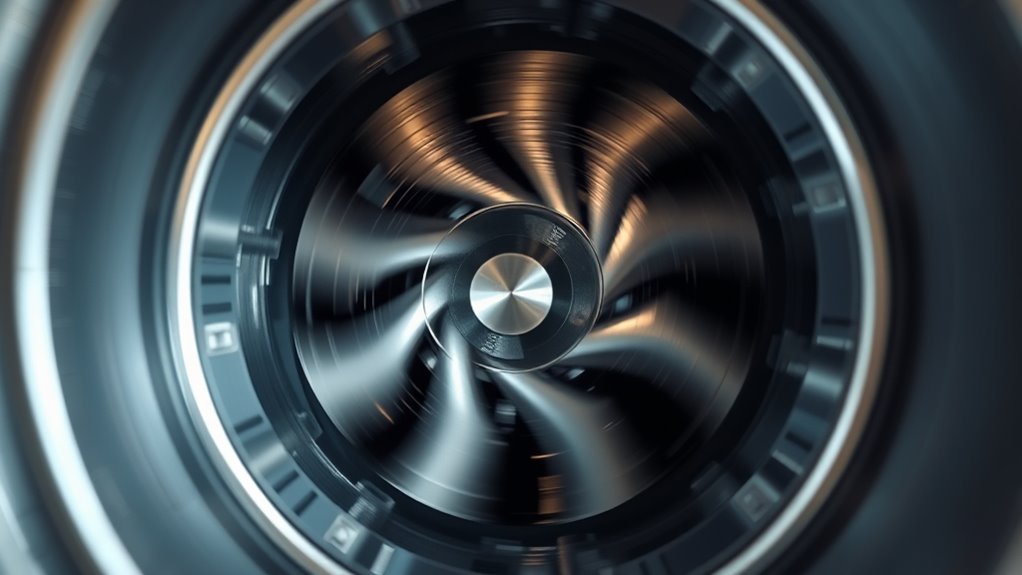
How exactly does a central vacuum system generate the powerful suction you rely on to clean your home? It all starts with a strong motor that creates high airflow, typically measured in airwatts between 500 and 800 for single-motor units.
A central vacuum’s powerful suction begins with a robust motor generating high airflow measured in airwatts.
When you insert the hose into an inlet valve, an electrical control circuit activates the motor. This motor rapidly draws air into the system, creating a pressure differential that enables the suction power to pull debris and dust through the inlet valves.
From there, the suction travels through a network of smooth PVC pipes designed to minimize friction and maintain consistent airflow. The vacuum system’s water lift rating also reflects its ability to lift dense debris or even water, which really shows the strength of its suction.
Thanks to this combination of a powerful motor, efficient pipes, and well-placed inlet valves, your central vacuum delivers the high airflow and suction power needed to keep your home spotless. It’s pretty clever how all these parts work together, isn’t it?
How Dust Is Filtered and Air Is Exhausted in Central Units
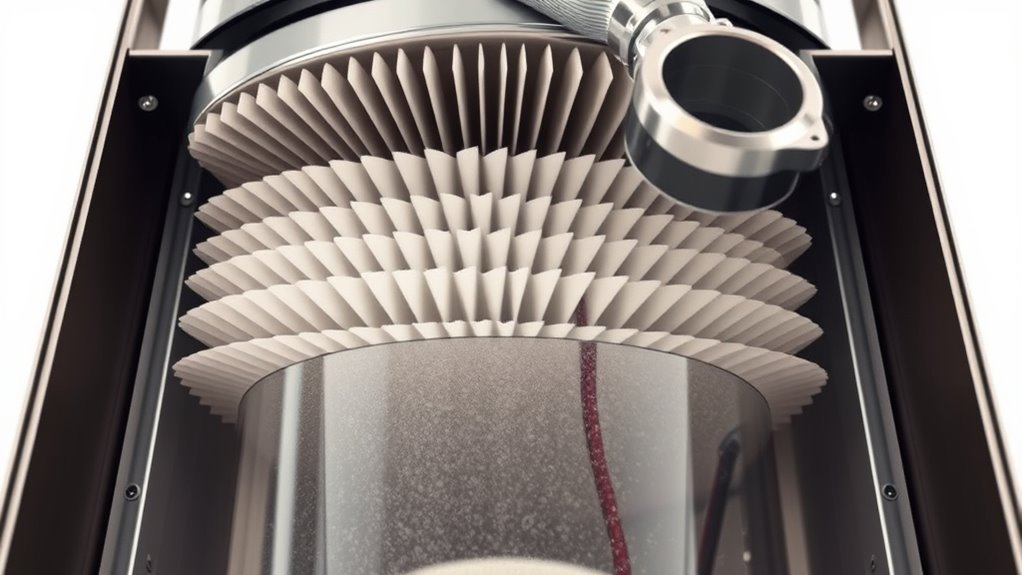
Once debris enters the central vacuum system, it travels through smooth PVC pipes to a large canister or bag where it’s collected. Cyclonic separation spins dust and dirt into a detachable bin, reducing filter clogging and keeping suction strong.
The air then passes through high-efficiency media filters or HEPA filter bags that trap fine particles and allergens. This filtration step is vital for maintaining your home’s air quality.
Finally, the clean air is expelled outside or into a designated area via the exhaust system. This prevents contaminated air from recirculating indoors.
| Feature | Description |
|---|---|
| Cyclonic Separation | Uses centrifugal force to separate debris |
| Filter Bags | Capture fine dust and allergens |
| HEPA Filtration | Traps microscopic particles for cleaner air |
| Air Exhaust | Directs filtered air outside or away |
| Air Quality | Improved by preventing allergen recirculation |
This process guarantees only clean air exits, protecting your indoor environment.
Frequently Asked Questions
Where Does the Dirt Go With a Central Vacuum System?
The dirt goes to a large collection canister or bag located away from your living space, like in the basement or garage.
You’ll empty it a few times a year, keeping your home cleaner and allergen-free.
It’s pretty convenient because you don’t have to deal with dust and debris inside your living areas.
Plus, it helps improve the air quality since the dirt is collected far from where you spend most of your time.
What Are the Disadvantages of a Central Vacuum System?
You’ll face high installation costs, complex retrofitting, and limited portability with a central vacuum system. Repairs can be tricky and expensive, plus the bulky power unit needs extra space and ventilation in your home.
It’s not the easiest system to move around either. And if something goes wrong, fixing it might take a bit longer and cost more than you’d expect.
How Often Do You Empty a Central Vacuum?
You empty your central vacuum every 2 to 4 times a year, or monthly if you clean heavily.
Keep an eye out for reduced suction and visible debris. When you notice these signs, it’s time to empty the canister or replace the bag. This helps keep your vacuum running efficiently.
What Is the Average Cost of a Central Vacuum System?
You’ll typically pay between $1,100 and $2,200 for a central vacuum system, including installation. Costs vary based on your home’s size, installation complexity, and whether you hire a pro or do it yourself.
It really depends on a few things. Like, how big your house is and how tricky the setup might be. Also, doing it yourself can save some cash compared to hiring a professional.
Conclusion
So, you’ve learned how a central vacuum system quietly sucks up dirt and filters the air, all without you lifting a finger—how convenient, right? It’s almost ironic that while you’re busy relaxing, this powerhouse is working hard in the background, making your home cleaner and air fresher.
Who knew cleaning could be so effortless? Maybe next time, you’ll actually thank the machine instead of just ignoring it! Central vacuum systems not only make cleaning easier but also improve indoor air quality by removing dust and allergens more effectively than traditional vacuums.
With a central vacuum system, you get powerful suction, quieter operation, and a cleaner home environment—all without the hassle of lugging a vacuum around. It’s truly a smart and efficient way to keep your living space spotless and healthy.




2 Comments