
How Can You Reuse Livpristvac Vacuum Seal Bags Safely?
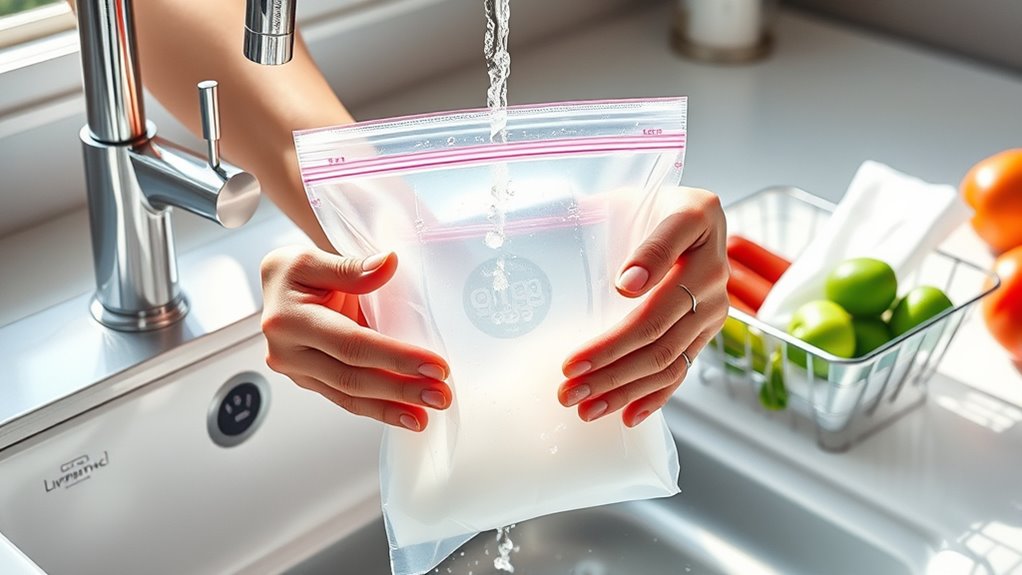
You can safely reuse your Livpristvac vacuum seal bags by rinsing them with cold water right after use to remove any food residue. Then, clean them thoroughly with warm, soapy water to get rid of lingering oils and particles.
Always inspect the bags for leaks or damage before reusing. A good way to do this is by sealing the bag and submerging it in water—watch closely for any bubbles, which mean there’s a leak.
Make sure your bags dry completely before storing them. Keep them in a cool, dry place away from direct sunlight to maintain their durability.
Follow these simple steps consistently, and you’ll keep your Livpristvac vacuum seal bags safe and long-lasting.
Stick around to discover more tips on how to extend their lifespan even further!
Key Takeaways
- Rinse Livpristvac bags immediately with cold water to remove food residue before giving them a thorough clean with warm, soapy water.
- Make sure to inspect the bags carefully for any tears, holes, or weakened seals. You can do this by performing a water submersion test to check for leaks.
- Let the bags air dry completely by hanging them upside down. This helps prevent mold growth. Once dry, store them in a cool, dry place.
- Always use high-quality multi-layer PA+PE bags. Confirm they are fully dry before reusing to keep their durability and safety intact.
- Keep following these steps—cleaning, inspecting, drying, and storing—consistently. This way, you’ll ensure your vacuum seal bags stay safe and last longer.
How to Clean and Inspect Livpristvac Bags for Safe Reuse
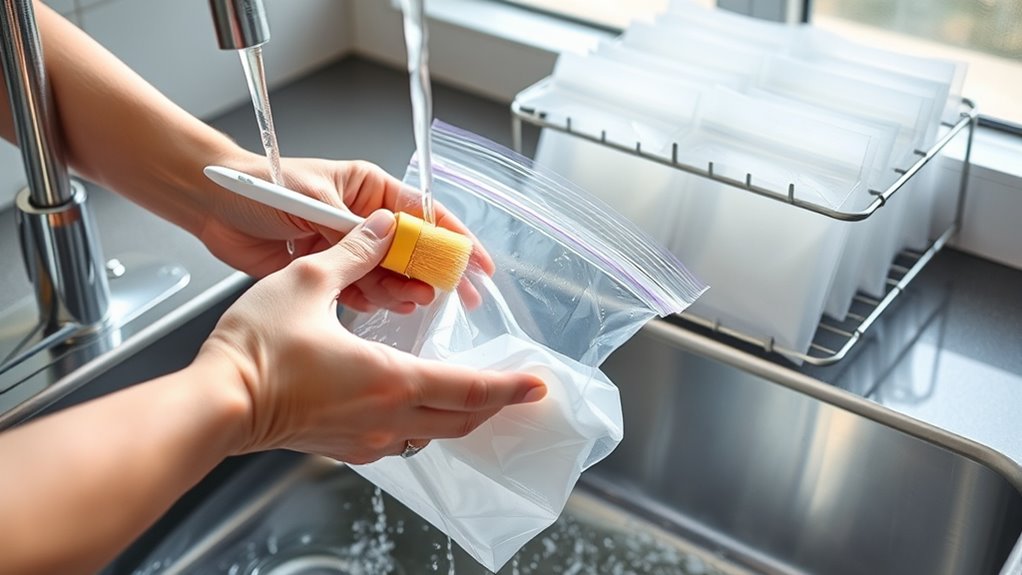
Before you reuse your Livpristvac bags, make sure to rinse them immediately with cold water to remove any leftover food. This quick step helps keep the bags clean and ready for thorough washing.
Use warm, soapy water and a soft sponge to clean all surfaces, paying special attention to seals and valves to maintain proper sanitation.
After cleaning, inspect each bag carefully for tears, holes, or weakened seals that could compromise durability. To check for leaks, perform a water test by sealing the bag and submerging it; bubbles signal a leak, so discard any faulty bags.
Finally, air dry the bags completely by hanging them upside down or placing them over a clean utensil to prevent mold growth. By following these steps, you guarantee your Livpristvac bags remain reusable and safe, preserving their quality and protecting your food from contamination.
Tips to Extend the Life of Your Livpristvac Vacuum Seal Bags
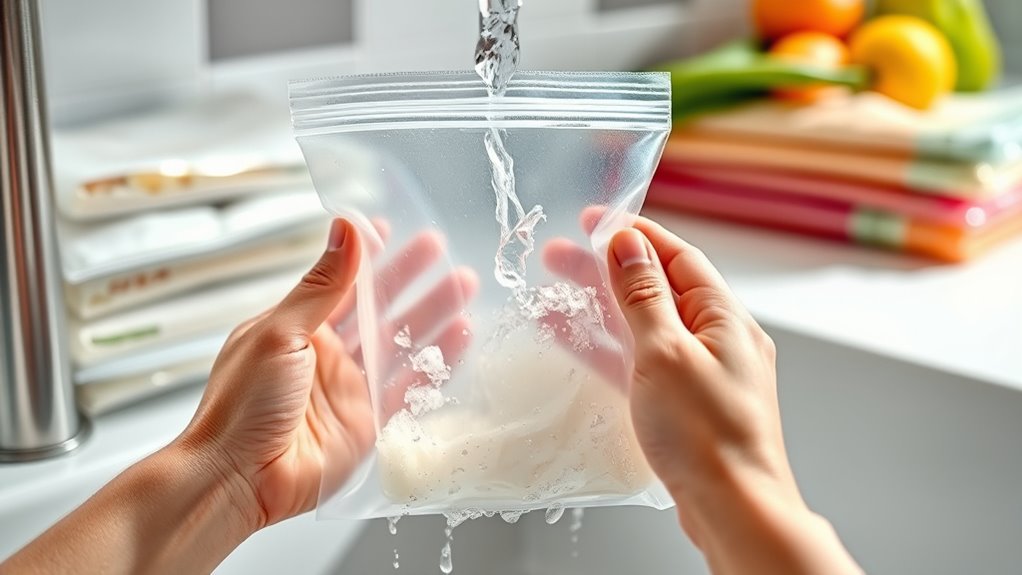
Keeping your Livpristvac bags clean and dry sets the foundation for extending their lifespan. Before reusing, make sure to thoroughly clean each bag with warm water and soap or disinfectant. This helps guarantee residue removal and prevents mold from forming.
After cleaning, take a moment to inspect the seals and valves carefully for any damage. You can even perform a leak test by submerging the bag in water to catch any unnoticed holes or weak spots.
Make sure the bags are completely dry before storing them. Moisture can encourage mold growth and weaken the material, so drying is super important.
Use high-quality, multi-layer PA+PE bags designed for multiple reuse cycles to maximize durability. And when you’re ready to store them, keep your cleaned and dried bags in a dry place, away from direct sunlight and in cool conditions to maintain their integrity.
Following these simple tips will help you reuse your Livpristvac vacuum seal bags safely and effectively. It’s a great way to save money and reduce waste over time.
Frequently Asked Questions
Is It Safe to Reuse Vacuum Seal Bags?
Yes, you can reuse vacuum seal bags if you clean and sanitize them thoroughly. Just make sure to avoid reusing bags that held raw meat, and always check for damage or odors before using them again.
High-quality, durable bags work best for safe multiple uses. So, if you want to get the most out of your vacuum seal bags, investing in good ones is definitely the way to go.
How to Avoid Botulism When Vacuum Sealing?
Botulism causes about 15 deaths yearly in the U.S., so you should always freeze or cook foods thoroughly before vacuum sealing.
Make sure to use sanitized bags, avoid spoiled items, and store sealed foods properly to minimize risks.
Taking these simple steps can really help keep your food safe. It’s all about being careful and following good food safety habits!
How Does TSA Feel About Vacuum Sealed Bags?
TSA generally welcomes vacuum-sealed bags since they’re transparent and safe. Just declare any liquids over 3.4 ounces.
Be ready if agents need to inspect or x-ray your bags during screening. It’s usually no big deal, just part of the process.
How to Make a Vacuum Bag Reusable?
You might think vacuum bags can’t be reused, but you can. Just wash them thoroughly and sanitize with a bleach solution.
Then, check for any damage or leaks. Make sure they’re completely dry before storing them.
This keeps them safe and effective for reuse. It’s easier than you might expect!
Conclusion
You might think reusing Livpristvac vacuum seal bags is risky, but by cleaning and inspecting them carefully, you actually protect your food and save money. It’s funny how taking a few extra minutes to check for damage not only extends the bag’s life but also keeps your meals fresher longer.
So, next time you’re about to toss that bag, remember—safe reuse is a simple step that makes a big difference for both you and the environment. Reusing Livpristvac vacuum seal bags safely means you get more value out of each bag while reducing plastic waste. Just make sure to clean them thoroughly and look for any tears or holes before sealing your food again. That way, you can enjoy fresh, well-preserved meals without worrying about contamination. Safe reuse of vacuum seal bags is an easy, eco-friendly habit that benefits your kitchen and our planet.


3 Comments