

How to Find Vacuum Leak in 3 Easy Steps
To find a vacuum leak in three easy steps, start by inspecting all hoses and connections for cracks, brittleness, or loose clamps. These are common spots where leaks occur, so a close look can save you time and trouble.
Next, listen closely for any hissing sounds around vacuum fittings. You can use your ear or try a small funnel pressed against the area to amplify the noise, making it easier to detect leaks.
Finally, move the funnel slowly around the suspected areas to pinpoint exactly where the leaks are coming from.
Following these simple steps helps you catch issues early and keep your vacuum system running smoothly. There’s always more to learn about maintaining your system in top shape!
Key Takeaways
- Inspect all vacuum hoses and connections for cracks, brittleness, or loose clamps. Make sure everything feels secure and in good shape.
- Listen carefully for hissing sounds near vacuum fittings using a quiet environment. It helps to really focus on any unusual noises.
- Use a small funnel pressed against your ear to amplify faint hissing noises. Slowly move the funnel around hoses and fittings to pinpoint louder leak sounds.
- Once you find any damaged hoses or fittings, replace or repair them immediately. This will help prevent bigger engine issues down the road.
Check Hoses and Connections for Vacuum Leak Damage
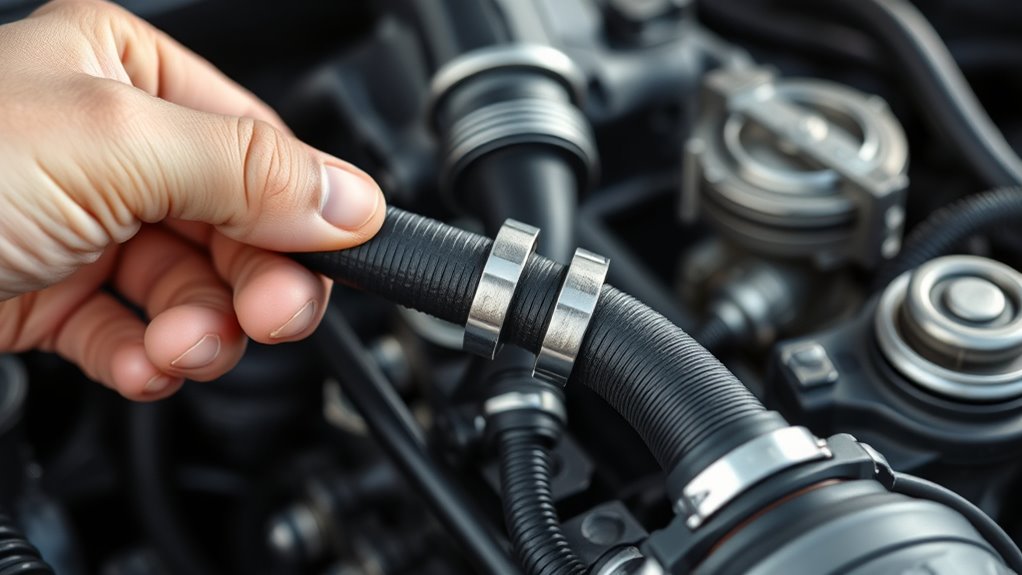
Before you plunge into more complex diagnostics, check all vacuum hoses and connections for signs of damage like cracks, brittleness, or loose fittings. You’ll want to inspect each hose carefully, focusing on connection points and fittings where leaks often develop.
If you spot any dried-out or cracked vacuum hoses, replace them immediately to prevent vacuum leaks that might cause rough idling or poor engine performance. Don’t forget to verify that all hose clamps are tight and secure; a loose clamp can easily break the seal and let air escape.
Also, examine any plastic vacuum components for cracks or broken parts, especially if they’ve been exposed to heat or age. Taking these steps guarantees your vacuum system maintains proper pressure and performance.
Catching these issues early saves you time and money by avoiding more serious engine problems down the road.
Listen for Hissing Sounds Around Vacuum Fittings
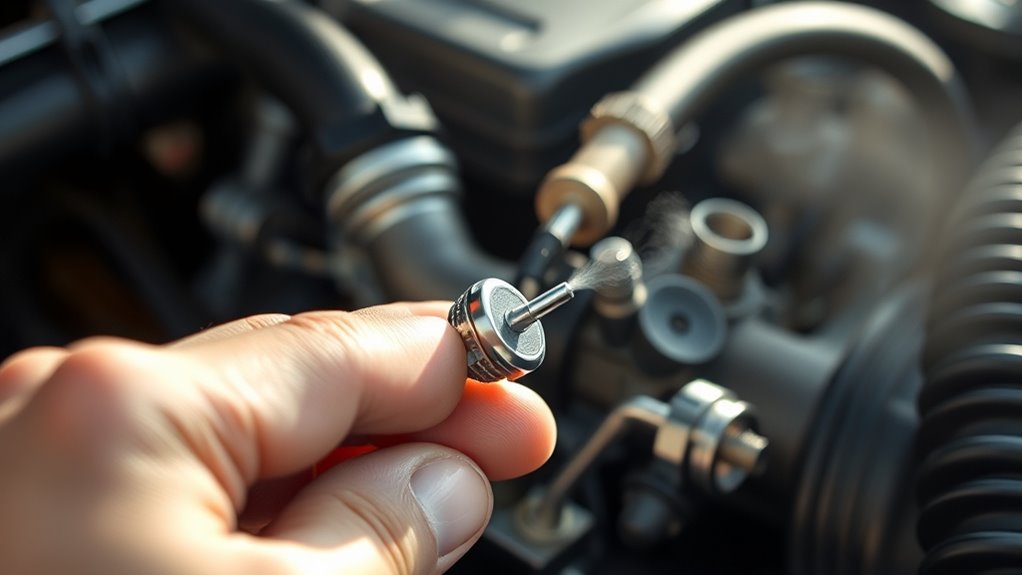
After checking hoses and connections for visible damage, your next step is to listen closely for any hissing sounds around vacuum fittings. A hissing noise usually signals a vacuum leak, so focus on detecting where it’s coming from.
You can press a funnel against your ear to isolate subtle hissing sounds more effectively. Slowly move the funnel around each vacuum hose and fitting, paying attention to changes in the volume of the hissing.
When the hissing gets louder, you’ve likely found the leak’s exact location. This method helps you pinpoint leaks accurately without resorting to risky gas spray tests.
Listening carefully for hissing sounds lets you identify problem spots quickly, saving you time and effort in the repair process. By concentrating on vacuum fittings, you’ll catch leaks that might otherwise go unnoticed.
Listening closely for hissing sounds helps quickly spot leaks, saving time and preventing unnoticed damage.
This way, you ensure your system runs efficiently and avoid any further damage.
Use a Funnel to Find Vacuum Leak Sounds

When you place a small funnel against your ear, it blocks out surrounding noise and sharpens your ability to detect subtle hissing sounds from vacuum leaks. The funnel acts like a sound amplifier, letting you hear faint leaks that might otherwise go unnoticed.
Start by covering your ear completely with the funnel, then move it slowly around engine vacuum fittings, hoses, and modules. Listen closely for any loud hissing or popping sounds coming through the funnel—these noises pinpoint potential leak locations.
If you suspect a spot, bring the funnel closer to increase the sound intensity and confirm the source. This method helps you locate leaks precisely without the hazards of gas spray testing.
Using a funnel is a simple, effective way to identify vacuum leaks by enhancing your hearing and isolating noise. It makes your inspection safer and more accurate.
Frequently Asked Questions
What’s the Easiest Way to Find a Vacuum Leak?
The easiest way to find a vacuum leak is by using a funnel as a listening device. You’ll move it around engine parts, listen for hissing sounds, and quickly pinpoint where the leak’s coming from without any expensive tools.
It’s pretty simple, really. Just grab a funnel, put your ear to the wide end, and slowly scan around the engine. When you hear that hissing, you’ve found your leak!
Can You Use WD-40 to Find a Vacuum Leak?
You can use WD-40 to find a vacuum leak, but it’s risky and imprecise. Spraying it might change engine RPM, hinting at leaks.
But honestly, dedicated tools do the job safer and better. So, if you try using WD-40, be cautious!
What Can I Spray on My Engine to Find a Vacuum Leak?
You can spray carburetor cleaner, brake cleaner, or propane around your engine’s vacuum hoses and fittings. Watch for changes in RPM to spot leaks.
But be careful with flammable sprays near sparks or hot parts. Safety first when you’re working around the engine!
What Are Common Signs of a Vacuum Leak?
Oh sure, your engine loves surprise parties—like rough idling, stalling, or RPMs doing the cha-cha.
You’ll also hear hissing or popping sounds, plus that charming check engine light might join the fun.
Conclusion
Now that you know how to find a vacuum leak in just three easy steps, don’t underestimate the power of your ears. Many believe vacuum leaks are invisible or impossible to detect without fancy tools, but that’s not true.
By checking hoses, listening carefully for hissing, and using a simple funnel, you can quickly pinpoint leaks yourself. These basic checks can make a big difference in catching issues early.
Trust these straightforward methods—they really work and save you time and money! Finding a vacuum leak doesn’t have to be complicated or expensive. With a little patience and attention, you can identify vacuum leaks at home without special equipment. So, next time you suspect a problem, remember these easy steps to find vacuum leaks and keep your engine running smoothly.




One Comment