
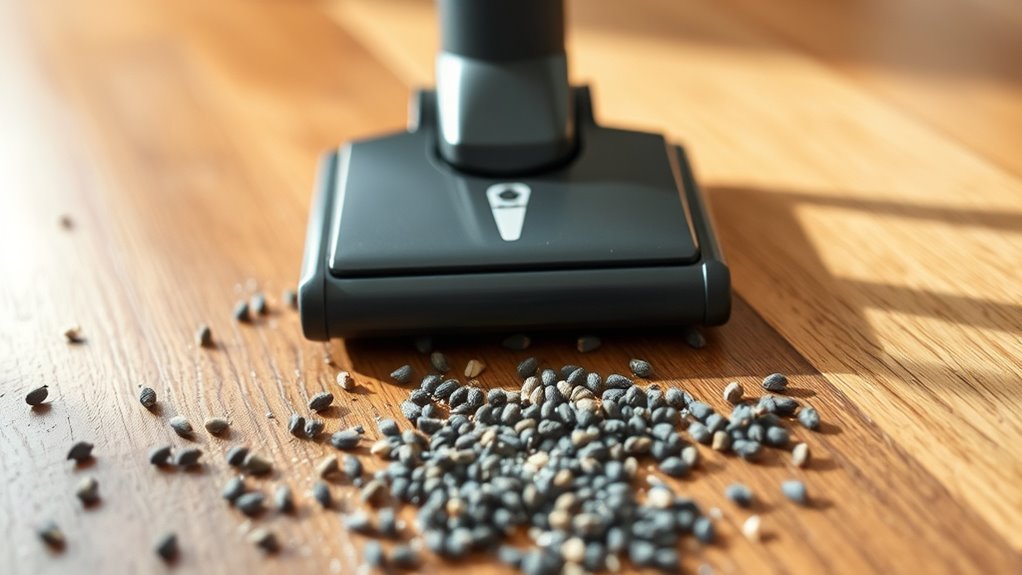
Can You Vacuum Mouse Poop?
You shouldn’t vacuum mouse poop because it can release harmful virus particles like hantavirus into the air. This increases your risk of serious respiratory illness, which is definitely something you want to avoid.
Vacuuming stirs up contaminated dust and spreads dangerous pathogens instead of removing them safely.
Instead, use disinfectant, protective gear, and careful cleanup methods to avoid health hazards.
If you want to keep yourself and your space safe, there are better ways to handle mouse droppings without risking exposure to harmful viruses.
Taking the right precautions makes all the difference in keeping your environment healthy.
Key Takeaways
- Vacuuming mouse droppings is unsafe because it can spread harmful virus particles like hantavirus into the air.
- The CDC actually advises against vacuuming rodent waste to avoid breathing in airborne pathogens.
- When you vacuum, it stirs up contaminated dust, which raises the risk of respiratory infections.
- The safest way to clean up is by spraying disinfectant first. Then, you can manually remove the droppings while wearing protective gear.
- It’s best to avoid vacuuming, sweeping, or any method that might aerosolize virus-laden particles during cleanup.
Why Vacuuming Mouse Droppings Is Risky
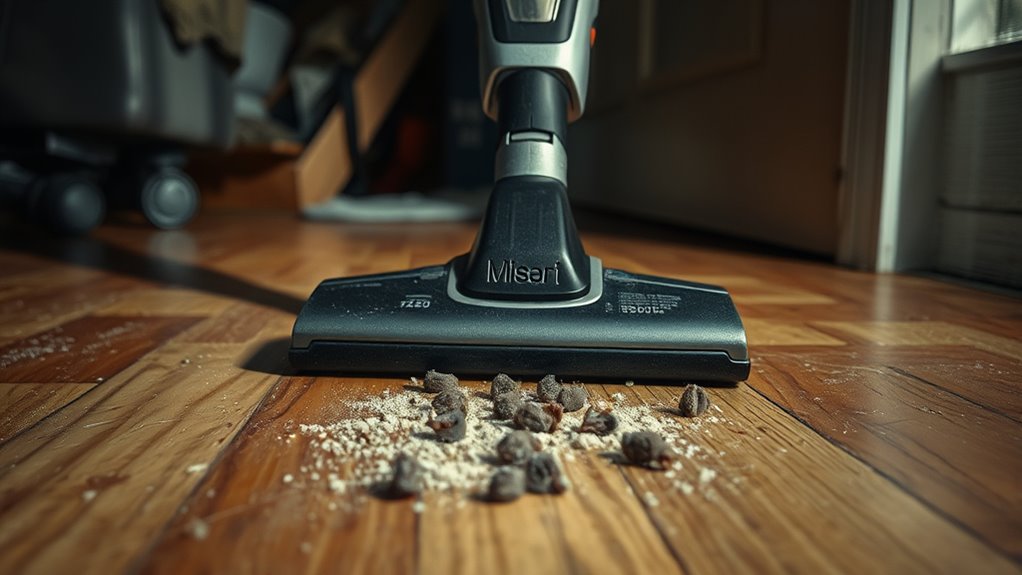
Although vacuuming might seem like a quick way to clean up mouse droppings, you shouldn’t do it because it can release harmful virus particles like hantavirus into the air. When you vacuum, tiny airborne particles containing pathogens become disturbed and spread throughout the area.
This contaminated dust increases the health risk of inhaling dangerous agents linked to rodent-borne illnesses. The CDC recommendations clearly advise against vacuuming rodent waste to avoid disease transmission through airborne particles.
Using a vacuum stirs up safety hazards by dispersing virus particles instead of containing them. These airborne particles make you vulnerable to infections, especially hantavirus, which can cause serious respiratory illness.
How to Clean Mouse Droppings Safely Without Vacuuming
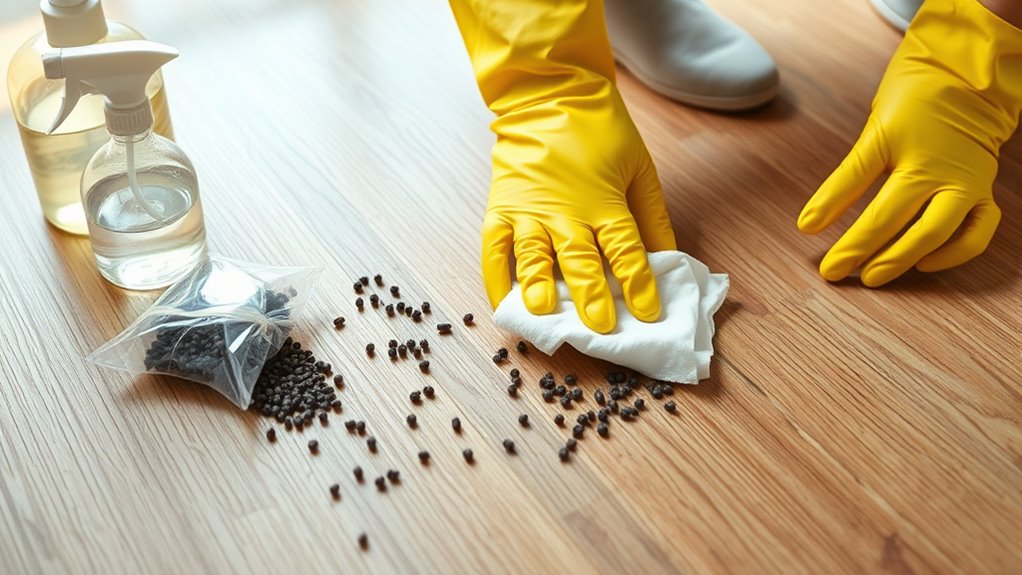
When you need to clean mouse droppings, spray disinfectant directly onto the affected area and let it soak for at least five minutes. This helps neutralize harmful viruses before you start cleaning.
Always wear proper protective gear like gloves and an N95 mask to keep yourself safe from rodent-borne diseases. After the disinfectant has soaked in for 5 minutes, carefully pick up the droppings and any contaminated items using paper towels or disposable materials.
Wear gloves and an N95 mask, then carefully remove droppings with disposable materials after disinfecting.
Place everything in sealed plastic bags to prevent the spread of airborne particles, and dispose of them safely. Avoid sweeping or vacuuming because it can aerosolize dangerous particles.
Once the area is cleared, sanitize the surface again to make sure it’s thoroughly cleaned. Finally, clean any tools you used with disinfectant, and don’t use those tools for rodent waste in the future.
Following these steps helps you minimize health risks while effectively cleaning mouse droppings without vacuuming.
Frequently Asked Questions
Do All Mouse Droppings Carry Hantavirus?
No, not all mouse droppings carry hantavirus. You should still treat all droppings cautiously since infected mice don’t always show signs.
How Long Do Mouse Droppings Remain Infectious?
Mouse droppings can stay infectious for up to four days, but cold temperatures may extend this.
You should always clean affected areas carefully and disinfect to reduce risk. Bacteria like Salmonella can survive even longer, so it’s better to be safe than sorry.
How Do You Clean up Mouse Droppings Without Getting Hantavirus?
You shouldn’t vacuum mouse droppings. Instead, spray disinfectant and wait five minutes.
Then, put on gloves and a mask before carefully picking them up with paper towels.
Make sure to seal the waste before you toss it out. After that, disinfect the area and ventilate the space well.
Is It Better to Sweep or Vacuum Mouse Droppings?
You shouldn’t vacuum mouse droppings because it can aerosolize viruses. Instead, you’re better off sweeping carefully, then disinfecting.
The CDC reports hantavirus exposure risk increases considerably with airborne particles from vacuuming. So, it’s really safer to avoid vacuuming altogether.
Stay safe and use wet cleaning. It’s a simple step that makes a big difference.
Conclusion
When dealing with mouse droppings, it’s best to avoid vacuuming because it can spread harmful particles into the air. Instead, take the time to wear gloves, spray the area with disinfectant, and carefully wipe up the droppings.
Remember, “an ounce of prevention is worth a pound of cure.” By cleaning safely, you protect yourself and your home from potential health risks.
It’s a small effort that makes a big difference in keeping your space safe. When it comes to mouse poop, vacuuming isn’t the way to go. Taking precautions by disinfecting and wiping up droppings helps prevent dangerous particles from becoming airborne. So, always choose safe cleaning methods over vacuuming to maintain a healthy environment free from mouse-related health risks.


