Can You Vacuum Seal Frozen Meat?
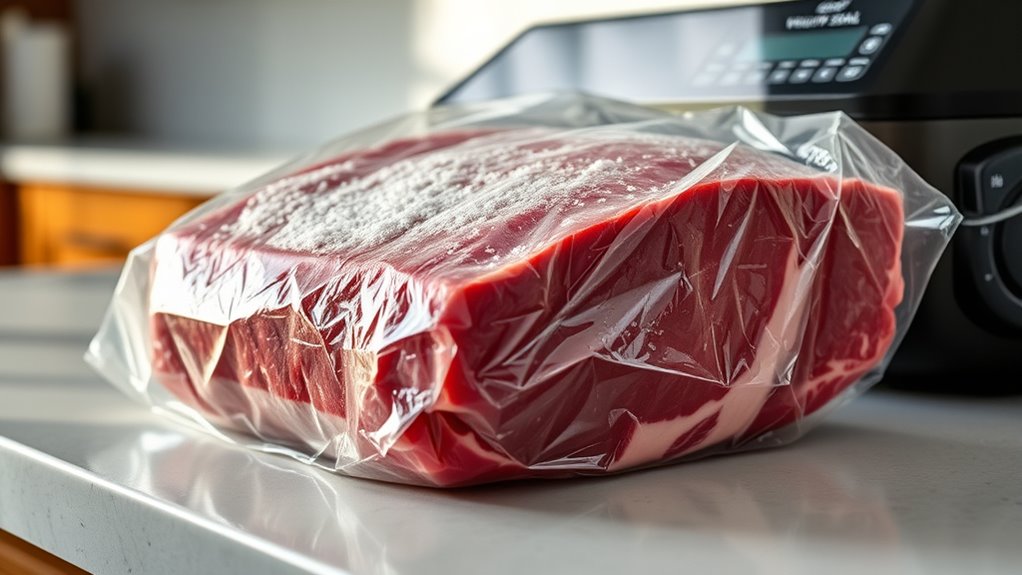
Yes, you can vacuum seal frozen meat, and it’s a fantastic way to keep your meat fresh for much longer. Vacuum sealing frozen meat removes air, which helps prevent freezer burn and keeps moisture locked in.
This also stops oxidation, which can degrade the flavor and texture of your meat over time.
For the best results, it’s a good idea to pre-freeze the meat briefly to firm it up before sealing. Then, use a proper vacuum bag to seal the frozen meat without thawing it first.
This method not only extends the shelf life but also preserves the quality of your meat.
Want to learn how to seal your meat like a pro? It’s easier than you think, and perfect storage is just a few steps away!
Key Takeaways
- Yes, you can vacuum seal frozen meat without fully defrosting it for effective preservation.
- Pre-freezing meat for 30-60 minutes firms the surface, which helps improve the vacuum seal quality.
- Just make sure the meat is dry before sealing. This prevents seal failure and stops moisture from building up inside the bag.
- Use approved vacuum bags that have extra space at the top. Double-sealing the bag adds extra protection.
- Vacuum sealing frozen meat blocks oxygen, prevents freezer burn, and significantly extends the shelf life.
Why Vacuum Sealing Keeps Frozen Meat Fresh and Prevents Freezer Burn
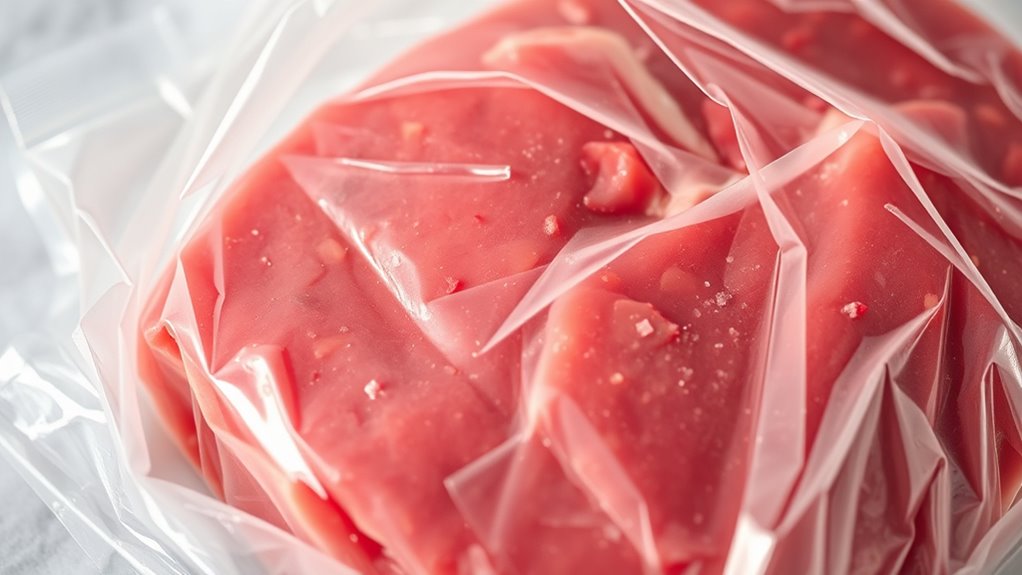
Because vacuum sealing removes oxygen from around your frozen meat, it stops mold, bacteria, and yeasts from growing and spoiling it. This process creates an airtight barrier that prevents oxidation, a key factor in freezer burn and spoilage.
When you vacuum seal frozen meat, you effectively preserve freshness by locking in moisture and juices, which keeps the meat from drying out. Without oxygen, lipid oxidation slows considerably, maintaining the meat’s color, texture, and taste during extended storage.
Vacuum sealing also prevents dehydration, which causes freezer burn, so your meat stays flavorful and moisture-rich. Compared to traditional packaging, vacuum sealing offers a long shelf life—up to three years versus six months—by reducing exposure to environmental factors.
How to Vacuum Seal Frozen Meat Properly to Maximize Storage Life
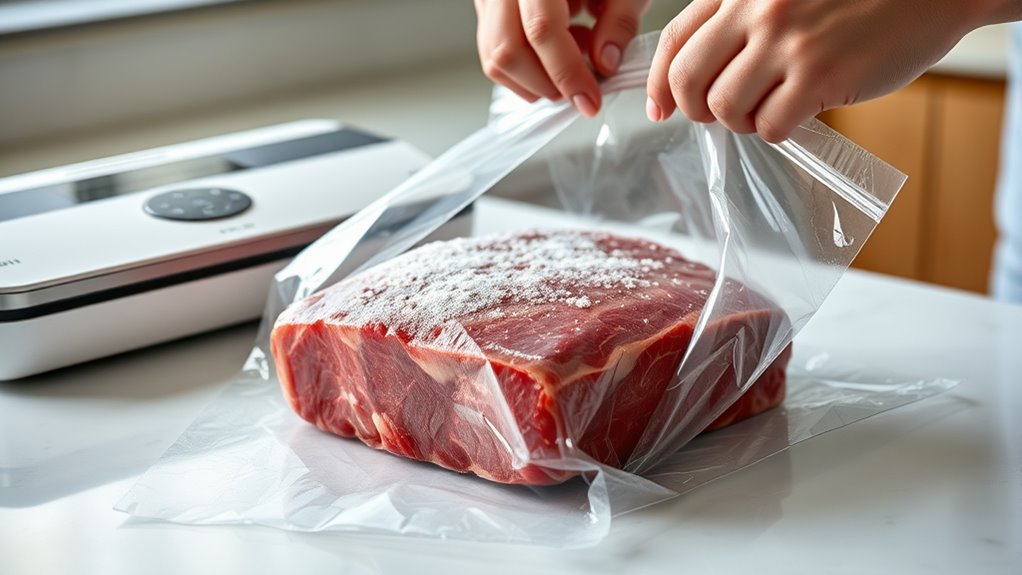
When you want to maximize the storage life of your frozen meat, vacuum sealing it properly is essential. Start by pre-freezing your meat for 30-60 minutes to firm the surface. This step really helps boost seal effectiveness.
To maximize frozen meat’s storage life, pre-freeze for 30-60 minutes to improve vacuum seal effectiveness.
Avoid fully defrosting meat before vacuum sealing to maintain quality and prevent moisture buildup. It’s a simple trick but makes a big difference.
Follow these steps to ensure proper sealing and extend shelf life:
- Use vacuum bags approved for freezer storage, leaving 3-4 inches of space at the top for a strong seal.
- Insert the frozen meat, making sure it’s dry to avoid seal failure.
- Activate your vacuum sealer to remove all air, then double-seal the bag for extra protection.
This method removes oxygen and prevents freezer burn. It helps you extend storage life while preserving flavor and texture.
Proper vacuum sealing of frozen meat is key to safe, long-term freezer storage. So, take these steps and keep your meat fresh for longer!
Frequently Asked Questions
Is It Okay to Vacuum Seal Already Frozen Meat?
Yes, you can vacuum seal already frozen meat without thawing. It helps preserve quality, prevents freezer burn, and extends the storage life.
Just make sure your vacuum sealer can handle frozen surfaces. That way, you’ll get a strong, airtight seal every time.
What Foods Cannot Be Vacuum Sealed?
You shouldn’t vacuum seal soft bread, fresh berries, leafy greens, or carbonated drinks because they’ll get crushed, soggy, or burst.
Also, avoid liquids unless you use special bags to prevent spills and bag damage. It’s just not worth the mess!
How Long Will Vacuum Sealed Frozen Meat Last?
A stitch in time saves nine—you’ll keep vacuum-sealed frozen meat fresh for 2 to 3 years.
Just make sure your freezer stays below 0°F. Using quality bags helps lock in that flavor and texture.
Is It Safe to Eat 2 Year Old Frozen Meat Vacuum Sealed?
Yes, you can eat 2-year-old vacuum-sealed frozen meat if it’s been stored continuously at 0°F and shows no spoilage signs.
Just make sure to check for any off-odor, discoloration, or sliminess before cooking.
These little checks help you stay safe and enjoy your meat without worries.
Conclusion
Think of vacuum sealing frozen meat like wrapping a gift in airtight paper—just like that gift stays pristine until it’s opened, your meat stays fresh and free from freezer burn.
When my friend started vacuum sealing her steaks, she noticed they lasted twice as long without losing flavor or texture.
By sealing out air and moisture, you’re giving your meat the best chance to stay delicious. This method helps prevent freezer burn, which can ruin the taste and texture of your meat over time.
So, can you vacuum seal frozen meat? Absolutely! Vacuum sealing frozen meat is a smart way to extend its shelf life while preserving quality.
It saves you money by reducing waste and keeps your meat tasting fresh whenever you’re ready to cook. If you want to keep your frozen meat fresh and flavorful, vacuum sealing is definitely the way to go.