
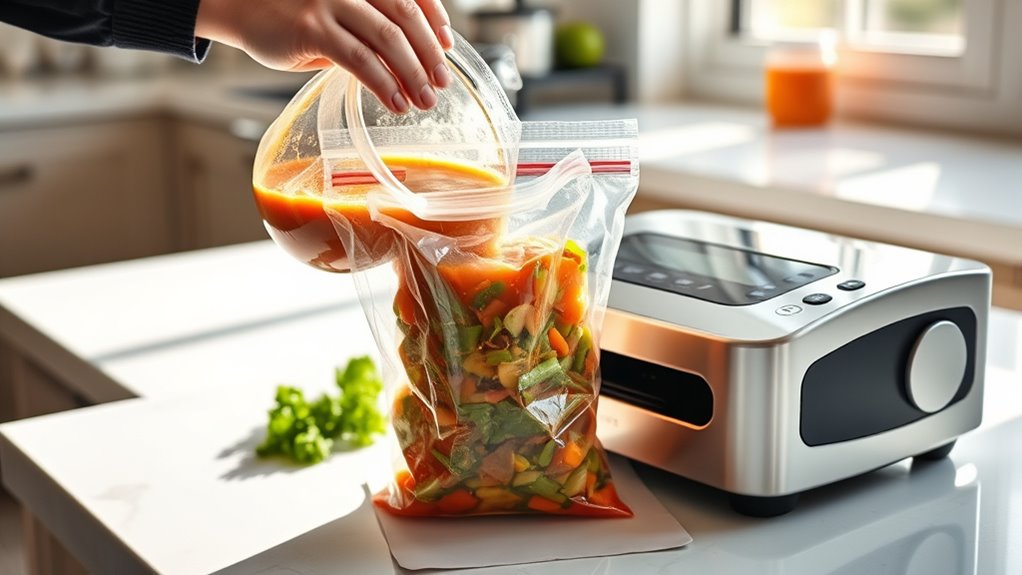
How You Vacuum Seal Soup Safely and Effectively
To vacuum seal soup safely and effectively, it’s important to let it cool completely to room temperature first. This step helps prevent any steam or condensation from forming inside the bag, which can cause leaks later on. Nobody wants their freezer leaking soup everywhere, right?
Once the soup is cooled, portion it into flat, shallow containers. This makes sure it cools evenly and fits nicely in your freezer.
Before sealing, wipe the edges of the vacuum bag dry for a tight, secure seal.
Always use your vacuum sealer only on soup that is fully frozen solid. Sealing warm or even just cool soup can cause spills and won’t create that airtight seal you need for freshness.
Follow these simple steps, and you’ll keep your soup fresh, tasty, and leak-free with confidence!
Key Takeaways
- Cool soup completely to room temperature before handling. This helps prevent steam and condensation inside vacuum bags, which can mess things up.
- Freeze soup into a solid block before sealing. It stops spills and makes sealing way easier.
- Use dry bag edges and leave some headspace in the bags. This way, you get a secure and airtight seal every time.
- Seal vacuum bags flat and keep them slightly elevated. That helps remove air effectively without letting any liquid get into the machine.
- Stir soup while it’s cooling and portion it into shallow containers. This helps it cool evenly and stops that annoying skin from forming.
How to Prepare and Cool Soup for Vacuum Sealing
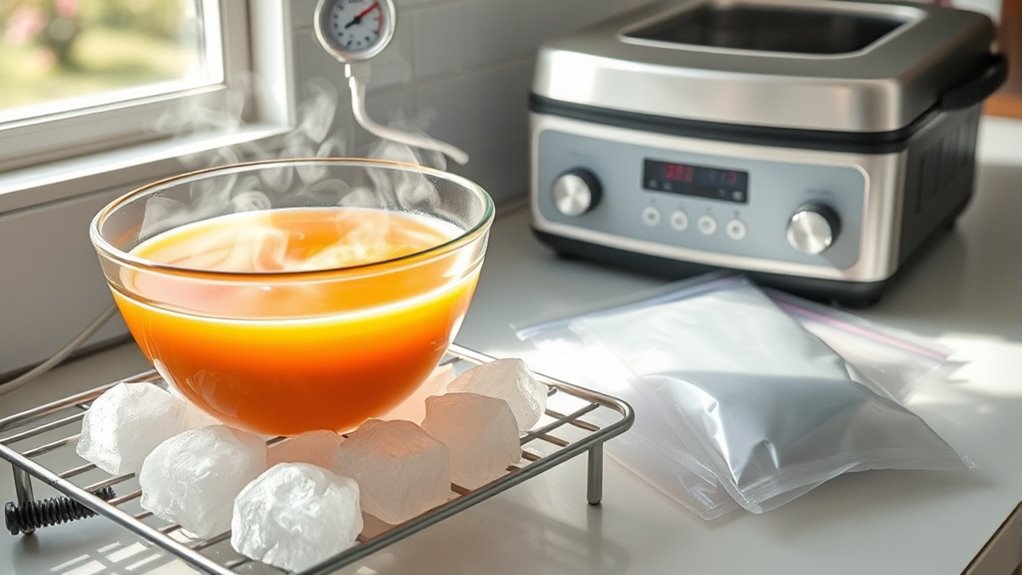
Before you vacuum seal your soup, make sure it’s completely cooled to room temperature. This usually takes about one to two hours.
Cooling hot soup too quickly in vacuum bags can cause moisture buildup. That weakens the bag and risks leaks during sealing.
Cooling hot soup too fast in vacuum bags creates moisture, weakening the bag and causing potential leaks.
To speed cooling and reduce bacterial growth, portion your soup into smaller amounts using a shallow container. This helps the soup cool evenly by increasing surface area. It also avoids thermal shock to the bag.
Stir or mix the soup occasionally while it cools to prevent a skin from forming. This also ensures the temperature drops uniformly.
Avoid sealing warm or hot soup directly. Doing so traps steam inside, which encourages condensation and can mess up the seal.
Taking these steps during preparation helps keep your soup’s quality intact. Plus, it guarantees a safe and effective vacuum seal.
How to Vacuum Seal Soup Without Leaks or Messes
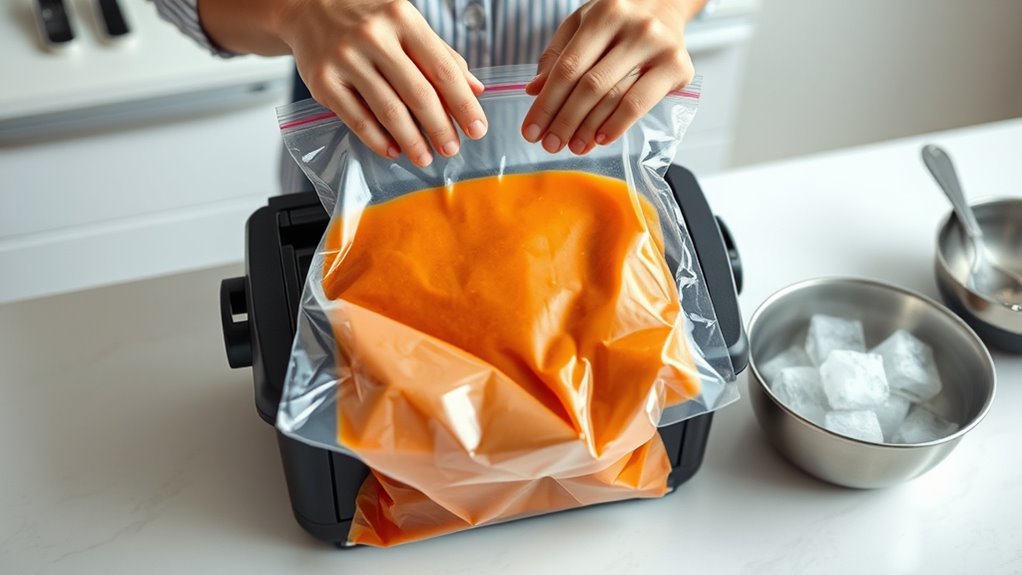
Although vacuum sealing soup might seem straightforward, preventing leaks and messes requires careful steps. First, freeze your soup until it’s a solid block—this freezing step is essential to avoid liquid spillage and leaks during vacuum sealing.
When filling the bag, use a canning funnel or spatula and leave enough headspace to minimize spillage. Before you seal, wipe the bag’s top edge with a damp cloth to make sure it’s dry for a secure bag sealing.
Use your vacuum sealer machine to remove air only after the soup is fully frozen. Seal the bag in a flat position while slightly elevating the bag or machine.
This setup helps bubbles and excess liquid escape, guaranteeing the bag is sealed properly. Following these steps lets you vacuum seal soup without leaks or messes, effectively preventing liquid from getting sucked into your vacuum sealer machine and keeping your kitchen clean.
Frequently Asked Questions
How Long Will Vacuum Sealed Soup Last in the Refrigerator?
You can expect vacuum-sealed soup to last about 1 to 2 weeks in the refrigerator. Just make sure it’s fully cooled before sealing and stored properly.
Always check for any signs of spoilage before eating. It’s better to be safe than sorry!
How to Avoid Botulism When Vacuum Sealing?
To avoid botulism, always allow your soup to cool completely, freeze it fully, and use a vacuum sealer’s moist setting.
Never seal warm soup, and store it frozen to stop harmful bacteria from thriving and toxin forming.
This way, you keep your food safe and enjoy it without worry!
What Are the Disadvantages of Vacuum Sealing Food?
You risk crushing delicate foods, leaks from improper sealing, and faster freezer burn if not stored right.
High-moisture foods need special settings, and even vacuum sealing won’t stop nutrient loss or flavor fading over long storage.
Can You Vacuum Seal Soup in Mason Jars?
You can vacuum seal soup in mason jars, but remember, “a stitch in time saves nine.” Always cool the soup, leave headspace, and use a proper jar attachment to avoid breakage and guarantee a safe, airtight seal.
It’s really important to let the soup cool down first. Hot soup can cause the jar to crack or create pressure that might break the seal later. Also, don’t forget to leave enough headspace at the top of the jar.
Using the right jar attachment for your vacuum sealer is a must. This helps avoid any accidents and ensures your soup stays fresh and sealed tight.
Conclusion
So, you’ve mastered the art of soup vacuum sealing—congratulations, kitchen wizard! Now, instead of your fridge looking like a science experiment, you’ve got perfectly sealed, leak-free soup ready to impress.
Just remember, if your vacuum-sealed soup starts plotting world domination, it’s probably time to eat it. Until then, keep sealing like a pro and enjoy the magic of mess-free meals.
Who knew vacuum sealing soup could make you this cool? With safe and effective vacuum sealing, you’re not only preserving flavor and freshness but also minimizing waste. Keep practicing these tips for how you vacuum seal soup safely, and you’ll enjoy delicious, convenient meals anytime.





One Comment