
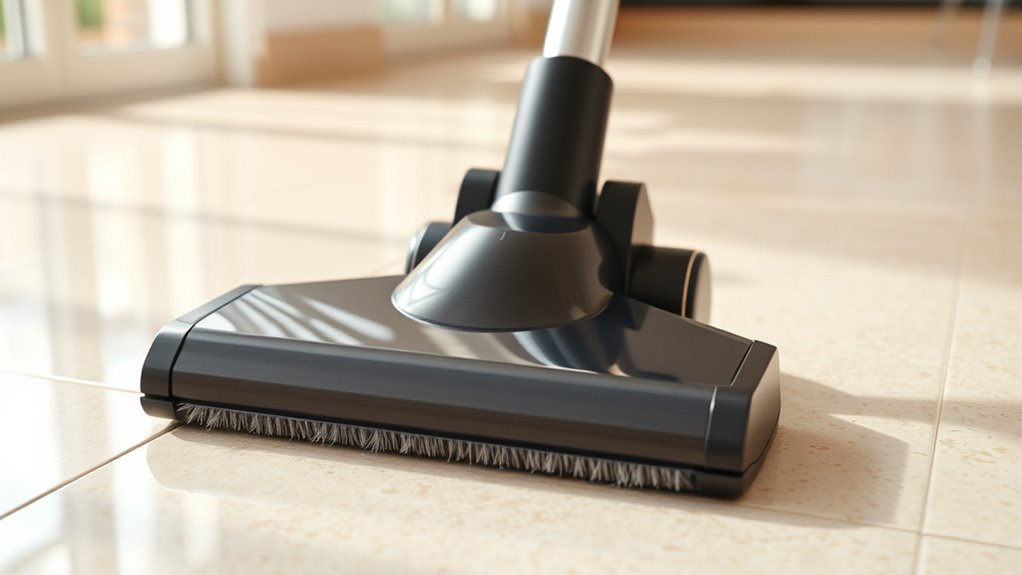
Can You Vacuum Tile Floors?
Yes, you can vacuum tile floors safely and effectively if you use the right vacuum. Tile floors need gentle care to avoid scratches or damage, so choosing the right cleaner is key.
Look for vacuums with soft roller brushes, adjustable suction, and rubber wheels to protect your tiles and grout.
Avoid vacuums that have metal baseplates or aggressive brush rolls, especially if you have natural stone tiles.
Regular vacuuming helps keep dirt from settling into grout lines, which can be tricky to clean later.
If you want to know which vacuums work best and how to maintain your tile floors properly, there’s more useful info ahead. Keeping your tile floors clean doesn’t have to be a hassle!
Key Takeaways
- Yes, you can vacuum tile floors using vacuums with soft roller brushes or soft-bristle heads designed for hard surfaces. Just make sure to disable aggressive brush rolls to prevent scratching or chipping tile surfaces during vacuuming.
- Using vacuums with adjustable suction and specialized attachments makes it easier to clean grout lines effectively. It’s all about getting into those little crevices without causing damage.
- Also, choose models with rubber wheels and avoid metal baseplates to protect tile and grout from damage. This helps keep your floors looking great for longer.
- Regular vacuuming helps prevent dirt buildup and keeps your tile floors looking fresh. Plus, it maintains both the appearance and safety of your floors.
Can You Vacuum Tile Floors Safely and Effectively?
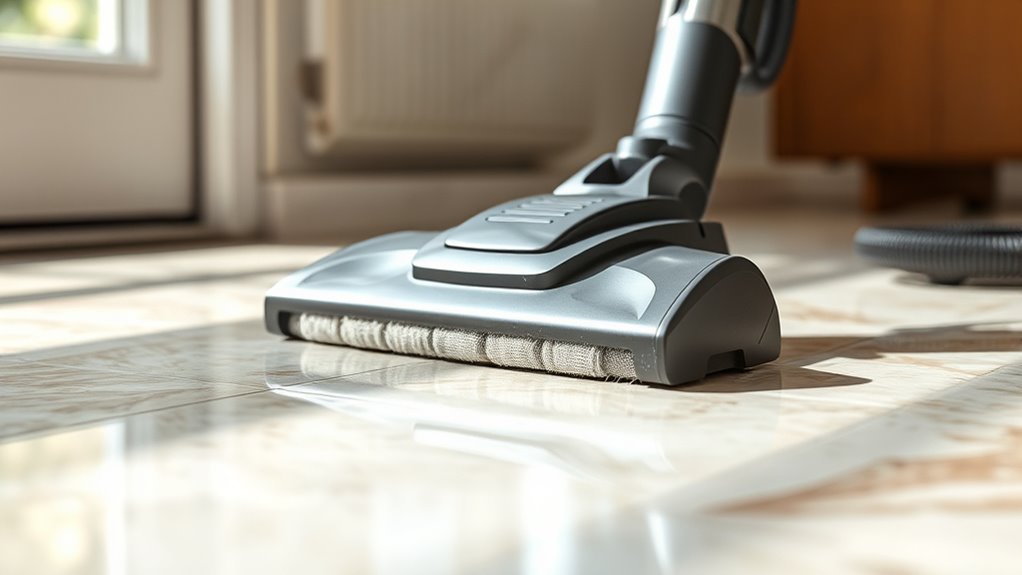
Although tile floors may seem delicate, you can vacuum them safely and effectively by choosing models with soft roller brushes and adjustable suction. When you vacuum tile floors, using a hard floor vacuum with specialized attachments helps protect the tile surface from scratches and chips.
This is especially important if you have natural stone tiles, which are more vulnerable to damage from metal baseplates or aggressive brushrolls. Soft roller brush heads and rubber wheels provide tile surface protection while efficiently removing grout line debris.
Adjustable suction lets you customize the power to avoid harming glazed or textured tiles. Regular maintenance by vacuuming prevents dirt buildup in grout lines, reducing micro-abrasions and keeping your floors looking fresh.
Which Vacuum Should You Use on Tile Floors: And How?
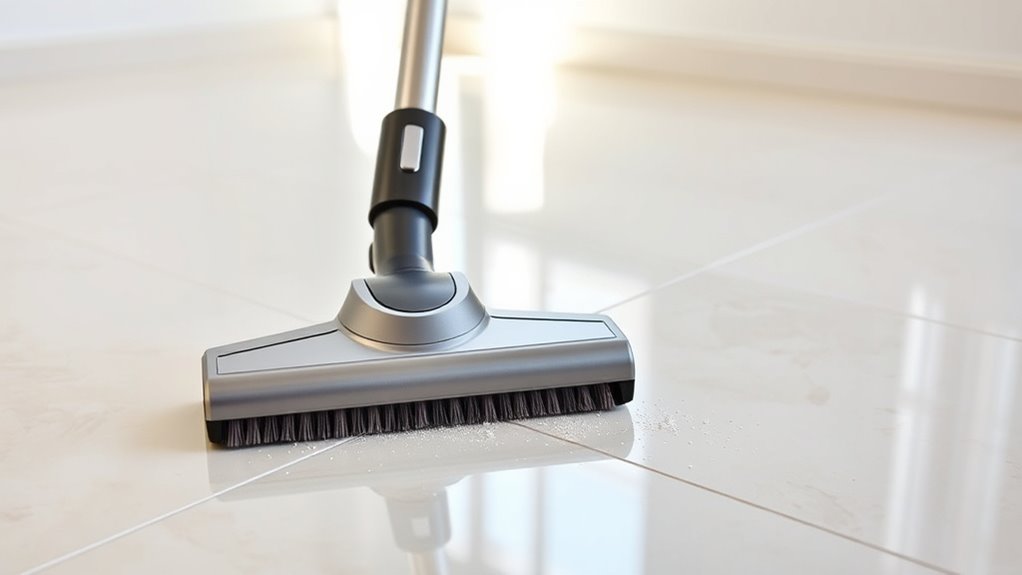
Choosing the right vacuum for your tile floors can make all the difference in maintaining their appearance and longevity. You’ll want a vacuum designed specifically for hard floor cleaning, ideally with a soft-bristle brush or a soft roller head to avoid scratching your tiles.
Models with adjustable height settings and rubber wheels protect delicate surfaces and allow smooth movement across grout lines. Avoid vacuums with aggressive brush rolls or metal baseplates, which can damage both tile and grout.
To guarantee thorough debris pickup, especially from grout lines and textured areas, maintain your vacuum’s filter regularly to keep suction strong. When vacuuming, disable the brush roll if possible, or use a brush designed for hard surfaces to protect your tile.
For sensitive or high-end tiles, consider vacuums with HEPA filters and soft-bristle attachments to minimize risk. Following these guidelines helps you keep your tile floors clean and looking their best without damage.
Frequently Asked Questions
What Is the Best Way to Clean a Tile Floor?
The best way to clean a tile floor is to vacuum regularly with a soft brush attachment. Then, mop with a pH-neutral cleaner.
Don’t forget to clean grout lines too. This helps keep dirt from building up or staining.
What Vacuum Works Best on Tile Floors?
Think of a vacuum gliding like a gentle river over your tile.
You’ll want a cordless stick like the Dyson V15 or a Shark DuoClean with soft brush rollers—they clean thoroughly without scratching your floors.
These vacuums are great because they’re lightweight and easy to maneuver. Plus, the soft brushes make sure your tiles stay shiny and damage-free.
Can You Use a Dyson Vacuum on Tile Floors?
Yes, you can use a Dyson vacuum on tile floors. Just switch to the appropriate mode or turn off the brush roll to avoid scratches.
Using soft roller heads is a great idea for effective and safe cleaning. This way, you won’t damage your tiles while keeping them spotless.
What Is the Best Vacuum for Hard Floors and Tiles?
You’ll want a vacuum like the Dyson V15 Detect or Shark Stratos, with soft roller heads and adjustable height. These protect your tiles, offer strong suction, and come with attachments perfect for gentle, effective cleaning.
They’re designed to be gentle yet powerful, so you don’t have to worry about scratching your floors. Plus, the adjustable height means you can customize the vacuum to fit your needs perfectly.
Conclusion
You can definitely vacuum tile floors safely and effectively, as long as you choose the right vacuum and use it carefully. Don’t drag heavy brushes or wheels that might scratch your tiles—think of your vacuum as a trusty steed, not a clunky iron horse from the past.
With the right tool, you’ll keep your floors spotless and gleaming, making cleanup quicker and less of a chore. Your tile’s shine will thank you!
Vacuuming tile floors is a smart way to maintain their beauty without risking damage. Just be sure to pick a vacuum designed for hard surfaces or one with adjustable settings to avoid scratching. This helps keep your tile floors looking fresh and clean longer.
In sum, yes, you can vacuum tile floors safely by using the right vacuum and handling it with care. Doing so not only speeds up your cleaning routine but also preserves your tiles’ shine and durability. So go ahead, vacuum your tile floors confidently and enjoy a spotless, gleaming home!


3 Comments