
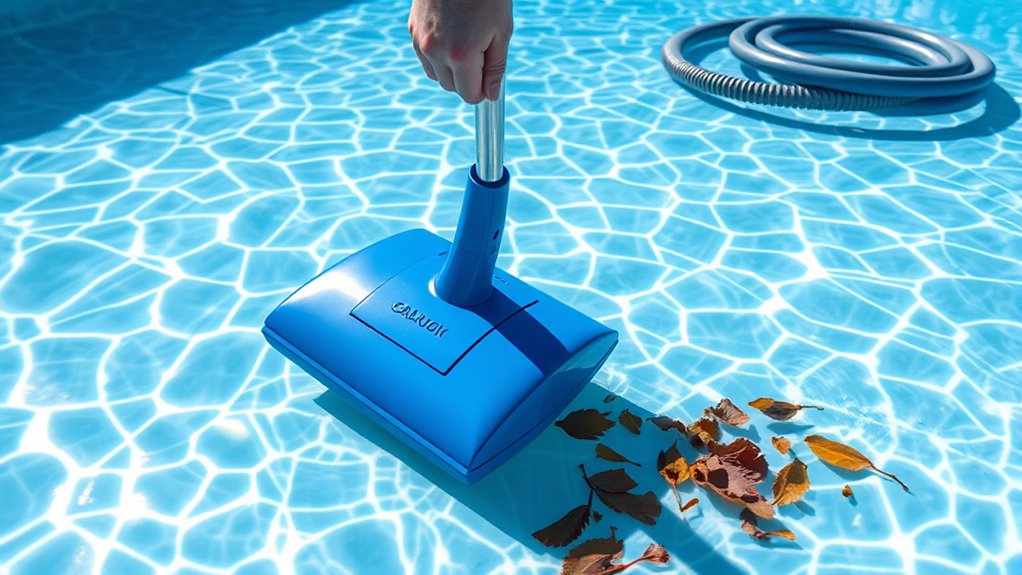
How to Use a Pool Vacuum in 10 Easy Steps
Start by gathering your pool vacuum, telescopic pole, hose, and vacuum plate. Make sure the water level is halfway up the skimmer and that your pump is running on high.
Next, attach the vacuum head to the pole and connect the hose. Fully submerge the hose to remove any air trapped inside. This step is super important for proper suction.
Then, secure the vacuum plate over the skimmer and turn on the pump.
Slowly vacuum the pool using overlapping strokes to ensure you don’t miss any spots.
Keep an eye on the suction and water levels as you go.
Stick with it, and you’ll soon have crystal-clear water. Keep reading for tips on troubleshooting and maintaining that sparkling clean pool!
Key Takeaways
- Assemble and check vacuum equipment, making sure the hose reaches all corners of the pool. Double-check that all connections are secure.
- Confirm the pool water level is about halfway up the skimmer. Also, make sure the pump is running at high speed for proper suction.
- Attach the vacuum head to the pole and connect the hose. Then, fully submerge the hose in the water to get rid of any air bubbles.
- Secure the vacuum plate over the skimmer basket. Turn on the pump, and start vacuuming slowly and steadily, using overlapping strokes.
- When you’re done vacuuming, turn off the pump and carefully remove the equipment. Don’t forget to clean the parts and store everything dry to prevent any damage.
Gather Essential Pool Vacuum Supplies and Tools
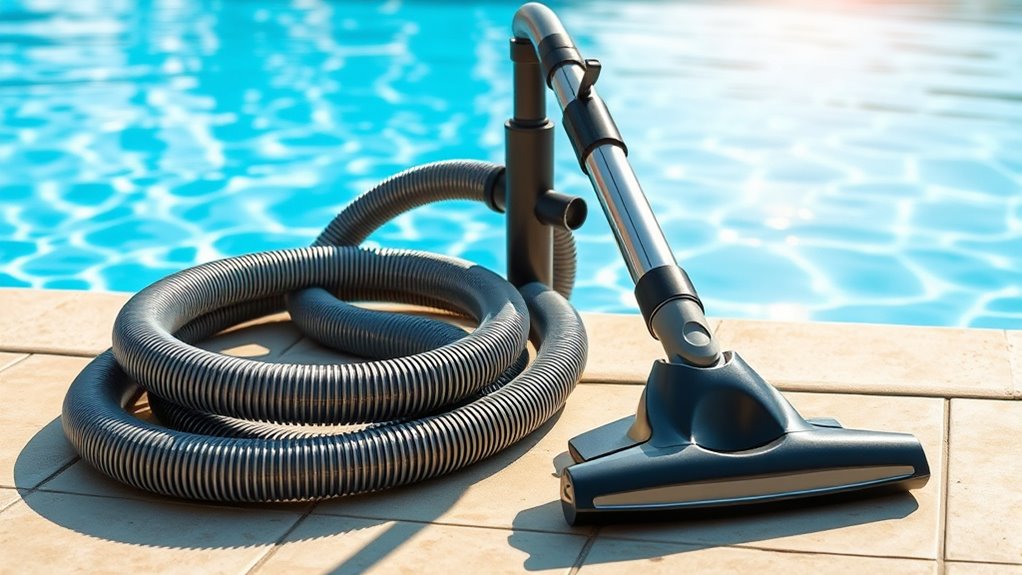
Before you start vacuuming your pool, make sure you’ve gathered all the essential supplies and tools. For effective pool maintenance, you’ll need a telescopic pole, vacuum head, vacuum hose, and vacuum plate.
The vacuum hose should be long enough to reach every corner of your pool, ensuring thorough cleaning. Check that the vacuum head fits securely onto the telescopic pole so you can maneuver it easily without hassle.
Also, confirm the vacuum plate is compatible with your skimmer basket to prevent debris from clogging your pump. Don’t forget to grab a bucket of water to prime the hose and some cleaning cloths for quick maintenance on your equipment.
Having everything ready before you begin not only streamlines the process but also helps keep your pool in top shape. Proper preparation is a key step in smart pool maintenance, saving you time and effort down the line.
Check Water Level and Pump Status Before Vacuuming
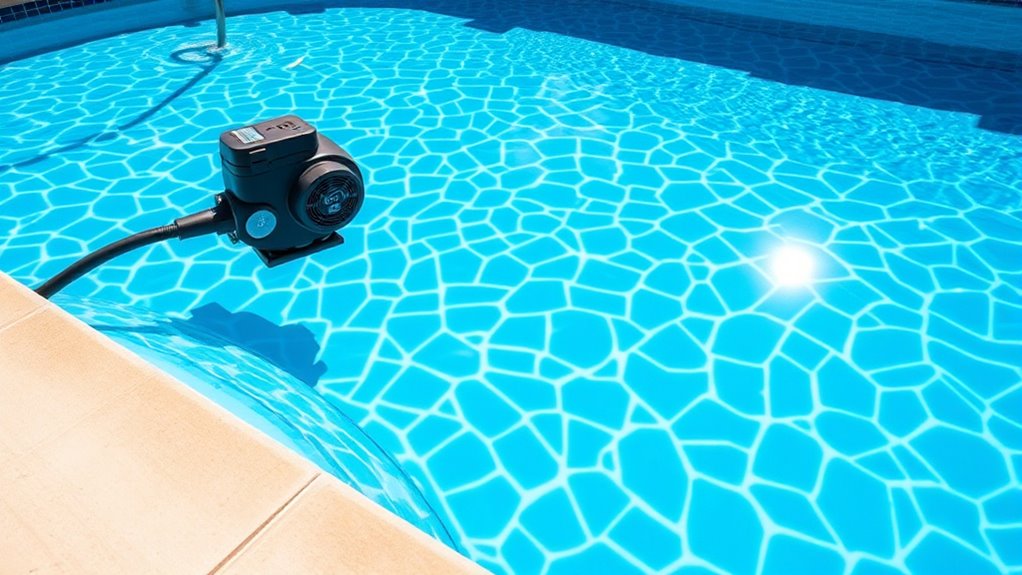
Before you start vacuuming, make sure the pool water level is at least halfway up the skimmer opening to guarantee proper suction. Check that your pump is running on high speed and the skimmer basket is clear of debris.
Keeping these in check helps maintain strong water flow for effective cleaning. It’s a simple step that makes a big difference!
Verify Water Level
How do you guarantee your pool vacuum works efficiently? Start by verifying the water level before you begin. The water level plays a vital role in ensuring your vacuum operates with proper suction and flow.
Here’s what you need to do:
- Make sure the water level is at least halfway up the skimmer opening to enable effective circulation.
- Adjust the water level if it’s too low to maintain consistent suction throughout vacuuming.
- Check that the skimmer basket isn’t overflowing or clogged with debris to prevent suction loss.
- Monitor the water level during the process to guarantee it stays stable for peak vacuum performance.
Confirm Pump Operation
Since proper suction depends on your pump’s performance, you’ll want to make sure it’s running smoothly and at the right speed before you start vacuuming. Verify pump operation by checking that the pump is on, running at high speed, and free of unusual noises or vibrations.
Also, guarantee the water level is at least halfway up the skimmer to avoid air intake.
| What to Check | Why It Matters |
|---|---|
| Pump Running at High Speed | Provides adequate suction for vacuuming |
| Water Level at Skimmer | Prevents pump from losing prime or sucking air |
| Smooth Pump Operation | Avoids damage and ensures consistent suction |
| Clean Skimmer Basket | Maintains proper water flow to the pump |
Make sure you verify pump operation thoroughly to keep your pool vacuuming effective and efficient. It really makes a difference!
Attach Vacuum Head and Connect Hose to Telescopic Pole
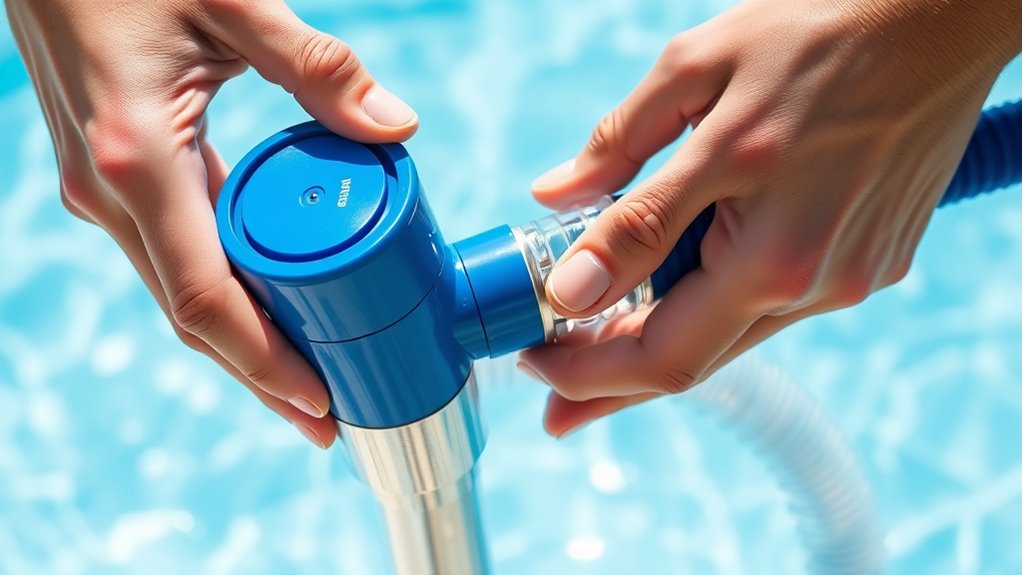
When you attach the vacuum head to the telescopic pole, make certain it’s firmly secured to guarantee effective cleaning. This tight connection is essential to maintain control and efficiency as you move the vacuum around your pool.
Next, connect the vacuum hose to the vacuum head, ensuring the fit is snug to prevent any air leaks that could reduce suction. Extend the telescopic pole to a comfortable length, allowing you to reach every corner of the pool without strain.
Finally, attach the other end of the hose to the vacuum plate or skimmer, making sure it’s fully submerged to retain suction.
Follow these steps to connect the vacuum properly:
- Securely attach the vacuum head to the telescopic pole
- Connect the vacuum hose tightly to the vacuum head
- Extend the pole to your desired length
- Submerge the hose’s other end fully in the skimmer or vacuum plate
Double-check all connections before you move on.
Prime the Pool Vacuum Hose to Maintain Suction
To keep your pool vacuum working properly, you need to remove all air from the hose before use. Submerge the hose fully in the water until you see a steady flow. Make sure no air pockets remain.
This continuous water flow guarantees strong suction throughout your cleaning session. It really helps to keep things running smoothly while you clean. Give it a try and see the difference!
Remove Air From Hose
Before connecting the vacuum hose to the vacuum head, you’ll want to submerge it fully in water to remove any trapped air. This step is vital to prevent air bubbles from disrupting suction.
Here’s how to effectively remove air from your hose:
- Submerge the entire hose underwater to fill it completely and eliminate air pockets.
- Keep one end submerged while attaching the other end to the vacuum head, avoiding air entry.
If fully submerging is tricky, use a bucket or pool water to prime the hose before connecting. After connecting, watch for escaping air bubbles at the joints and re-submerge or tighten connections if needed.
Following these tips guarantees your vacuum hose is free of air bubbles and ready for efficient cleaning. Easy, right? Just a little prep goes a long way!
Ensure Continuous Water Flow
One essential step to keep your pool vacuum working efficiently is ensuring continuous water flow through the hose. This means priming the vacuum hose properly before you start.
To do this, fully submerge the hose in the pool water to expel any trapped air pockets that can break suction. You can hold one end underwater and fill the hose or move the entire hose around underwater to make sure it’s completely filled.
Air inside the hose reduces suction power, making debris pickup harder. Always double-check that the hose is entirely filled with water and free of air bubbles before attaching it to the vacuum head and skimmer plate.
Proper priming of the vacuum hose guarantees consistent suction, so your vacuum runs smoothly throughout the cleaning process. It’s a simple step, but it makes a big difference!
Secure the Vacuum Plate Over the Skimmer Basket
Although it might seem straightforward, securing the vacuum plate over the skimmer basket is essential for maintaining proper suction while cleaning your pool. If the vacuum plate isn’t positioned correctly, air can enter the system, reducing suction and making your vacuuming less effective.
To secure the vacuum plate properly, start by placing it firmly over the skimmer basket, covering the entire opening to create a tight seal. Make sure the edges of the vacuum plate are flush against the skimmer opening to prevent any air leaks.
Next, attach the vacuum hose securely to the vacuum plate’s fitting so it won’t disconnect while you’re using it. Also, keep the vacuum plate submerged in water as you set it up. This helps maintain continuous suction and stops air from sneaking in.
Before you start vacuuming, double-check that the vacuum plate is stable and properly seated. Doing this will help your pool vacuum work efficiently and keep your pool sparkling clean.
Turn On the Pump at High Speed
Why does turning on the pump at high speed matter when vacuuming your pool? Running the pump at high speed creates strong suction, which is essential for an effective vacuuming session. Before you start, make sure the pump is turned on and functioning properly.
This high-speed setting ensures that the vacuum hose maintains solid suction, preventing any loss as you work. Many variable speed pumps even offer a specific high-speed option designed just for vacuuming, making it easier to maximize efficiency.
When the pump runs fast, it pulls debris efficiently through the vacuum and into the skimmer or filter system, keeping your pool cleaner. Without this strong suction, the vacuum won’t capture dirt and debris effectively, leaving your pool less clean.
Vacuum the Pool Slowly Using Overlapping Strokes
Move the vacuum head slowly and steadily across the pool surface to pick up debris effectively. Use overlapping strokes to make sure you don’t miss any spots and keep the cleaning consistent.
Keeping a steady pace also helps prevent stirring up debris that can cloud the water. So, take your time and go over each area carefully. This way, your pool will stay clean and clear!
Maintain Steady Movement
When you vacuum your pool, glide the vacuum head slowly and steadily across the surface or floor to pick up debris effectively. Maintaining steady movement is essential to avoid stirring up dirt and clouding the water.
Keep your pace consistent, adjusting only if you notice debris floating back or uneven suction. A deliberate, controlled motion ensures the vacuum works efficiently while protecting your equipment.
To maintain steady movement:
- Move the vacuum head slowly for thorough debris pickup
- Keep a consistent pace to prevent water cloudiness
- Adjust speed as needed for suction balance
- Use deliberate, controlled strokes to protect the vacuum
Use Overlapping Strokes
Gliding the vacuum head using overlapping strokes guarantees you cover every inch of your pool without missing spots. Move the vacuum slowly across the surface to pick up debris effectively, adjusting your speed based on how much dirt you encounter.
When the debris load is heavier, slow down to prevent disturbing the water and stirring up cloudiness. Using overlapping strokes assures consistent suction by thoroughly cleaning each area before moving on.
Keep your movements steady and deliberate, paying close attention to the vacuum’s suction and water flow throughout the process. This method not only maximizes cleaning efficiency but also helps maintain clear water by avoiding sudden disruptions.
Stick to overlapping strokes, and you’ll achieve a spotless pool floor with minimal effort every time.
Prevent Water Clouding
Because vacuuming too quickly can stir up dirt and debris, you should vacuum your pool slowly to prevent water clouding. Moving the vacuum head at a deliberate pace helps lift debris without disturbing settled dirt, keeping your water clear.
To prevent water clouding, follow these tips:
- Use overlapping strokes to cover every inch thoroughly.
- Maintain a steady, controlled motion to reduce turbulence.
- Avoid rushing to stop debris from suspending in the water.
- Take your time to ensure all dirt is removed effectively.
Keep an Eye on Suction and Water Levels While Vacuuming
Although vacuuming your pool, you need to keep a close watch on both suction and water levels to guarantee effective cleaning. Make certain the water level stays at least halfway up the skimmer opening; this ensures proper skimming and maintains strong suction.
Regularly check your vacuum hose connections to prevent air leaks that reduce suction power. Pay attention to the pump’s noise and pressure gauges—any sudden changes could signal a drop in suction or a clog.
Move the vacuum head slowly and deliberately to avoid stirring up debris and losing suction efficiency. Also, after you start vacuuming, confirm the vacuum plate is properly seated to keep suction consistent throughout the process.
Staying attentive to these details helps your pool vacuum work efficiently and keeps your pool sparkling clean.
Troubleshoot Common Pool Vacuum Issues
If your pool vacuum isn’t working as expected, checking common problem areas can save you time and frustration. Start by inspecting the hose for leaks or blockages that reduce suction power.
Troubleshoot your pool vacuum by first inspecting the hose for leaks or blockages that reduce suction.
Next, make sure the vacuum plate is properly seated and all hose connections are secure to prevent air from entering the system. Also, verify that the water level stays at least halfway up the skimmer; low water levels can cause inconsistent pump pressure, which really messes with vacuum efficiency.
Finally, confirm the pump runs at the correct speed—usually high—to provide enough suction.
Here’s a quick checklist to troubleshoot:
- Inspect the hose for leaks or clogs
- Ensure the vacuum plate and hose connections are tight
- Keep the water level halfway up the skimmer
- Check the pump is set to the right speed
Addressing these issues will help you maintain strong suction and get your pool vacuum working smoothly again. It’s usually just a few simple fixes away!
Turn Off Equipment and Clean Up Debris
When should you turn off your pool equipment after vacuuming? You should always turn off the pool pump before disconnecting or removing your vacuum equipment. This prevents damage and keeps you safe.
Once the pump is off, carefully remove the vacuum hose and head. Try to avoid spilling debris back into the pool while you do this.
Next, empty the skimmer basket. It collects dirt and debris during vacuuming, and keeping it clean helps maintain proper water flow and pump efficiency.
Don’t forget to check and clean the vacuum plate too. Make sure it’s seated correctly and ready for next time.
Finally, store all your vacuum equipment in a dry, secure place. This prevents damage and makes your next cleaning much easier.
Following these steps helps keep your pool system running smoothly and extends the life of your vacuum gear.
Frequently Asked Questions
How to Use a Pool Vacuum for Beginners?
You’ll connect the vacuum head to the pole, attach the hose, and prime it with water. Then, run the pump on high.
Place the vacuum plate on the skimmer, and slowly vacuum the pool floor for best results. Take your time to cover the entire area evenly.
What Setting Should the Pool Pump Be on for Vacuuming?
You should set your pool pump to high speed when vacuuming. This guarantees strong suction and effective debris removal.
After you finish, switch it back to the regular setting to save energy and protect your equipment. It’s a simple step, but it really helps keep everything running smoothly.
Do You Turn the Pump off When Vacuuming a Pool?
You don’t turn the pump off when vacuuming a pool. Keeping it running maintains suction and water flow, making vacuuming effective.
If you turn it off, it disrupts suction and can cause air to enter the system. That just makes cleaning harder. So, it’s best to keep the pump on while you vacuum.
Which Is the Most Essential Step When Vacuuming a Pool?
The most essential step is making sure your vacuum is properly connected and sealed. Without a tight seal, you’ll lose suction, making your cleaning ineffective and frustrating.
Conclusion
Now that you’ve mastered using a pool vacuum, you’re basically a pool-cleaning superhero! No more battling endless dirt or algae invasions—your sparkling pool will be the envy of the neighborhood.
Just follow these simple steps, and you’ll keep your pool crystal clear without breaking a sweat. So grab your gear, plunge in, and watch your pool transform from a murky mess to a shimmering oasis in no time!
Using a pool vacuum makes maintaining a clean pool easier than ever. With regular vacuuming, you can prevent debris buildup and keep algae at bay. This way, your pool water stays inviting and safe for everyone to enjoy.
So, get ready to enjoy a sparkling pool all summer long by mastering the pool vacuum. It’s a simple, effective way to keep your pool looking its best without hassle!



3 Comments