How Do You Vacuum a Wool Rug in 7 Essential Steps?
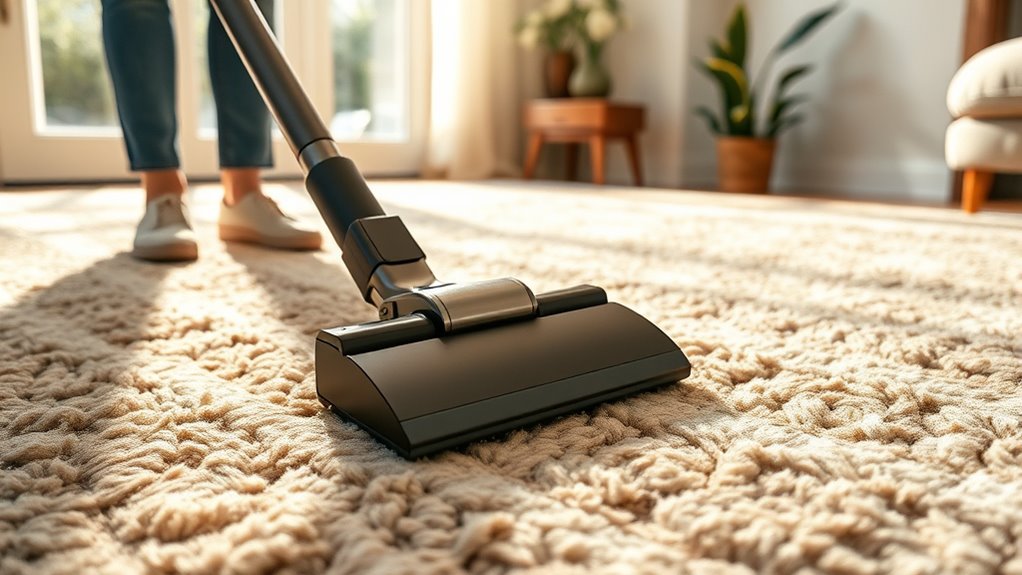
To vacuum your wool rug safely and effectively, start by shaking out any loose dirt or debris. This helps to loosen particles before you begin vacuuming.
Then, set your vacuum to gentle suction, making sure to turn off any beater bars or rotating brushes to protect the fibers.
Vacuum along and across the pile, using short, overlapping strokes for thorough cleaning. Be careful to avoid the fringes, and use vacuum attachments when cleaning edges and corners.
High-traffic areas will need more frequent vacuuming to keep your rug looking fresh.
Every 6 to 12 months, rotate or flip your rug to prevent uneven wear.
Always treat spills right away, and when vacuuming up dry residue, do so gently.
Keep following these tips, and you’ll find even more ways to protect and maintain your wool rug’s beauty for years to come.
Key Takeaways
- Remove loose debris by shaking or brushing the rug outside before vacuuming. This helps get rid of dirt that’s just sitting on the surface.
- Use gentle suction and turn off beater bars or rotating brushes to avoid fiber damage. You want to be careful with those delicate wool fibers!
- Vacuum in the direction of the pile using short, overlapping strokes for effective dirt removal. This way, you’re really lifting out the dirt without harming the rug.
- Avoid vacuuming fringes; clean them manually with a soft brush to prevent breakage. Fringes can be fragile, so a gentle touch works best.
- Rotate and flip the rug every 6-12 months to ensure even wear and maintain its condition. This little habit keeps your rug looking great for longer!
Get Your Wool Rug and Vacuum Ready for Gentle Cleaning
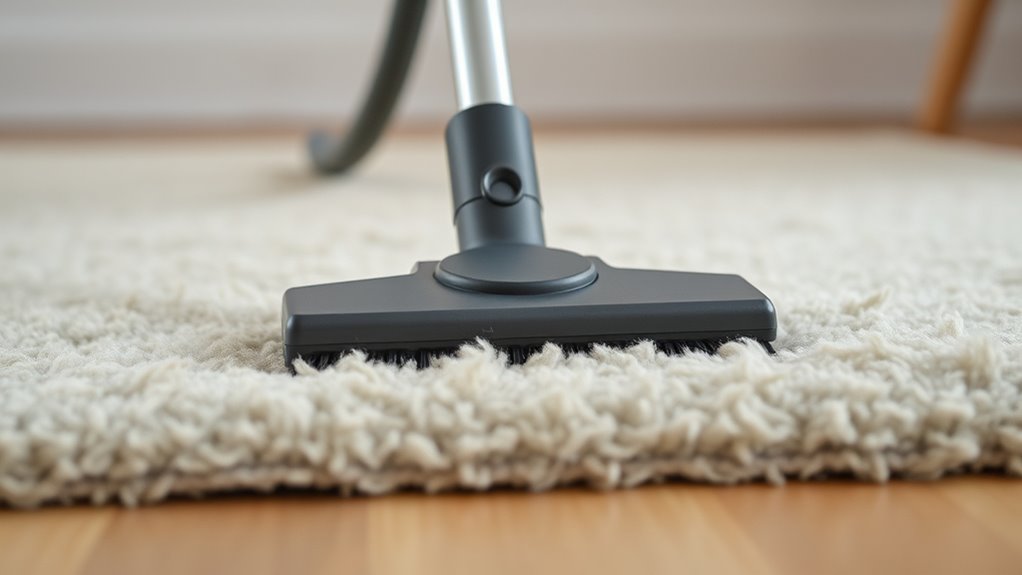
Before you start vacuuming your wool rug, make sure to remove any loose debris by gently shaking or brushing it outside. This step helps prevent dirt from scratching or embedding deeper into the fibers during cleaning.
When you’re ready to vacuum, choose a gentle suction setting to protect the delicate wool fibers. Avoid aggressive settings or beater bars, which can pull or damage the rug’s surface.
Use appropriate attachments like upholstery or stair tools to dust the rug carefully without snagging. Always vacuum in the direction of the pile to lift dirt effectively while minimizing stress on the fibers.
Don’t forget to check and empty your vacuum’s bag or canister regularly to maintain strong suction and avoid redistributing dirt onto the rug. By preparing your wool rug and vacuum thoughtfully, you guarantee a gentle cleaning process that preserves its beauty and longevity.
Set Vacuum for Wool Rugs to Avoid Damage
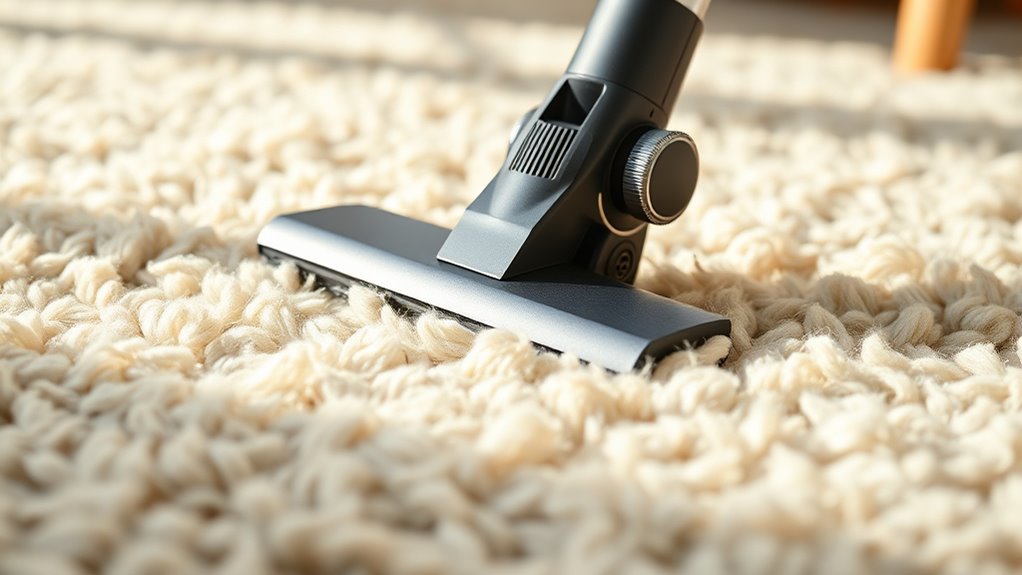
When you vacuum your wool rug, setting the vacuum correctly is essential to avoid damaging its delicate fibers. Start by adjusting the vacuum height so the brush barely touches the rug surface. This helps remove dust without crushing fibers.
Avoid using the automatic height adjustment. Instead, choose the highest or lowest vacuum settings to prevent the vacuum from pulling or harming the wool fibers.
Make sure to turn off the beater bar or any rotating brushes on upright vacuums. These can scratch or fray your rug’s fibers, causing fiber damage over time.
If possible, switch to suction-only mode or use upholstery attachments to clean gently without applying too much force. It’s a softer way to keep your rug clean.
Before fully vacuuming, test your chosen vacuum settings on a small, hidden spot of the rug. This helps ensure no fuzzing or fiber damage occurs.
Proper vacuum settings protect your wool rug’s integrity and keep it looking beautiful for years. It’s worth taking the time to do it right!
Vacuum in Multiple Directions to Lift Deep Dirt
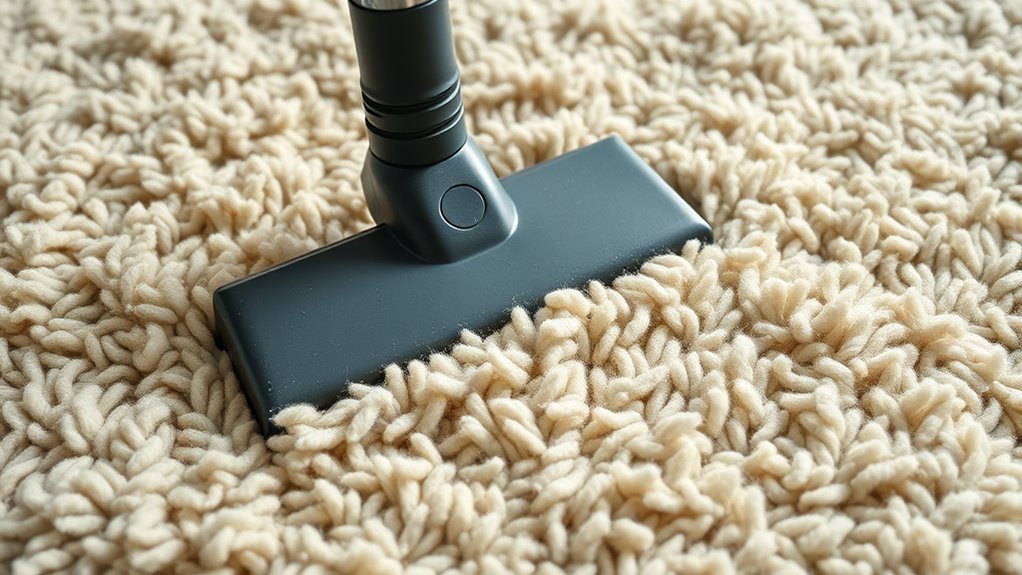
To lift deep dirt from your wool rug, vacuum along the pile first to loosen surface debris. Then, change directions and vacuum crosswise to reach soil trapped between fibers.
This method guarantees a thorough clean without damaging the rug’s texture. Give it a try—you’ll notice the difference!
Vacuum Along Pile
Although vacuuming along the pile’s direction might seem simple, it’s essential for gently lifting surface dust without damaging the fibers. When you vacuum, always follow short, overlapping strokes aligned with the pile to guarantee thorough cleaning.
This method protects the delicate wool fibers and keeps them looking fresh. Here’s a quick guide to vacuuming along the pile:
| Step | Action | Purpose |
|---|---|---|
| 1 | Vacuum along pile’s grain | Lift surface dust gently |
| 2 | Use short, overlapping strokes | Prevent fiber damage |
| 3 | Keep vacuum direction consistent | Maintain rug’s texture |
| 4 | Vacuum regularly | Prolong rug’s lifespan |
Cross-Directional Cleaning
Vacuuming in multiple directions helps you lift deep dirt that hides within the wool fibers. By using a cross-directional approach—vacuuming north-south and east-west—you dislodge soil trapped at different angles.
This method promotes thorough cleaning by breaking up dirt clusters that a single direction might miss. To maximize soil removal, regularly switch directions during each pass, using gentle side-to-side motions across the rug surface.
This prevents matting and uneven wear, helping maintain your rug’s appearance and prolong its lifespan. Cross-directional vacuuming guarantees every inch of your wool rug gets cleaned effectively, reaching dirt embedded deep within the fibers.
Adopting this technique makes your cleaning routine more efficient and keeps your rug looking fresh longer.
Clean Edges Carefully and Skip Vacuuming Fringes
When you clean the edges of a wool rug, you need to be gentle to prevent damage. Always vacuum edges with care, using a handheld or upholstery tool to avoid stressing delicate fibers. Follow the border’s direction with short, gentle strokes to prevent fraying or pulling.
Avoid vacuuming fringes entirely, as the suction can cause tearing and breakage. Instead, use a soft brush to manually clean or dust the fringes, which helps preserve their integrity. Make sure the vacuum’s beater bar is turned off or removed when working near the edges to protect the fibers.
Also, keep your rug away from direct sunlight, which can weaken fibers over time and make them more prone to damage during cleaning. By adopting this vacuuming technique, you’ll extend the life of your wool rug’s edges and fringes while keeping it looking its best.
Vacuum More Often in High-Traffic Areas
How often should you vacuum the busiest spots on your wool rug? In high-traffic areas, you should vacuum at least 2-3 times per week to keep surface dirt from embedding into the wool fibers.
Regular vacuuming in these zones prevents matting and helps maintain the rug’s appearance over time. By removing dirt before it settles deeper, you protect the fibers from accelerated wear and extend the intervals between deep cleanings.
When vacuuming these areas, use a gentle suction setting and avoid beater bars to minimize fiber damage and shedding. Sticking to a consistent cleaning schedule in high-traffic areas ensures your wool rug stays clean, vibrant, and durable.
Prioritizing frequent vacuuming where foot traffic is heaviest really helps preserve your rug’s quality without causing unnecessary wear. This approach keeps your wool rug looking its best for years to come.
Rotate and Flip Your Wool Rug for Even Wear
To keep your wool rug looking its best, rotate it every 6 to 12 months. This helps prevent uneven wear and fading.
Flipping the rug lets you vacuum both sides. That way, you remove dirt and protect the fibers.
When you flip or rotate, take a moment to check for any damage. Catching it early means you can fix it before it gets worse.
Benefits of Regular Rotation
Why should you rotate and flip your wool rug regularly? Rotation ensures even distribution of foot traffic and sunlight, preventing uneven wear and fading.
By flipping the rug periodically, you distribute the pressure on the fibers more evenly, reducing the risk of matting on one side. This simple practice minimizes high-traffic areas, extending your rug’s lifespan.
Rotation also promotes uniform fading, especially in sun-exposed rooms, helping preserve your rug’s vibrant appearance. Regular flipping maintains the plush texture by preventing pile crushing.
So, your wool rug stays soft and visually appealing. Incorporating rotation and flipping into your routine is a smart way to protect your investment.
And enjoy your wool rug’s beauty and durability for years to come.
How To Flip Properly
Although flipping your wool rug may seem simple, doing it correctly helps maintain its integrity and appearance over time. To protect rug fibers and ensure even wear, rotate your rug every 6 to 12 months.
When you flip it, lift gently from a corner or side to avoid stressing the fibers. Using a rug pad can protect the backing and make handling easier.
It’s also a good idea to mark the rug’s orientation discreetly. This way, you can keep track of its rotation and make sure it wears evenly.
Always flip your rug on a clean, flat surface to prevent dirt from embedding.
| Step | Action | Purpose |
|---|---|---|
| 1 | Lift from corner/side | Protect fibers during flip |
| 2 | Use rug pad | Protect backing, ease flip |
| 3 | Mark orientation | Track rotation consistency |
| 4 | Flip on clean surface | Avoid dirt embedding |
Treat Spills and Vacuum Dry Residue Safely
How should you handle spills on your wool rug to prevent stains and damage? First, immediately blot the spill with a clean, white cloth to absorb as much liquid as possible without rubbing. Rubbing can push the stain deeper into the fibers.
If solid debris is present, gently lift it off using a spoon or dull knife. This helps avoid damaging the rug’s delicate fibers.
Once the area is dry, vacuum the dry residue carefully. Use a handheld vacuum or upholstery attachment with gentle, short strokes that follow the pile direction.
This prevents unnecessary wear or damage to the fibers. For best results, vacuum the affected spot multiple times to make sure all loosened debris is removed thoroughly.
Frequently Asked Questions
Can You Vacuum a 100% Wool Rug?
Yes, you can vacuum a 100% wool rug, but you should turn off the beater bar. Use suction only, and vacuum gently in the pile’s direction.
This prevents damage and keeps your rug looking great longer. Just take it slow, and your wool rug will thank you!
Do Dust Mites Live in Wool Rugs?
Yes, dust mites can live in wool rugs since the fibers trap dead skin cells, their food source.
You’ll need to vacuum regularly with a HEPA filter and keep humidity low to control their growth effectively.
That way, you can keep your wool rugs cleaner and reduce the chances of dust mite buildup.
Why Is My Rug so Hard to Vacuum?
Your rug’s hard to vacuum because wool fibers resist suction, and aggressive settings can push dirt deeper or damage the pile.
You’ll need gentle suction and a brushless vacuum to clean effectively without harming the fibers.
What Kind of Vacuum for a Wool Rug?
Looking for the perfect vacuum for your wool rug? You’ll want a canister vacuum with adjustable suction and no beater bar.
Don’t forget a HEPA filter for allergens, and use gentle attachments to protect delicate fibers. It really helps keep your rug looking great without damaging it.
Conclusion
Now that you’ve mastered these seven essential steps, your wool rug will stay fresh and vibrant, like a prized tapestry in a medieval castle. Remember to prepare your rug and vacuum, use gentle settings, and always vacuum in multiple directions.
Don’t forget to care for edges and high-traffic spots, rotate your rug, and handle spills promptly. These little habits make a big difference in keeping your wool rug looking great.
With this careful routine, your wool rug will remain a timeless treasure in your home for years to come. Regular vacuuming with the right technique helps maintain the rug’s texture and color while preventing dirt buildup. So keep your wool rug clean and well-maintained—it’s an investment that pays off with lasting beauty and comfort.