
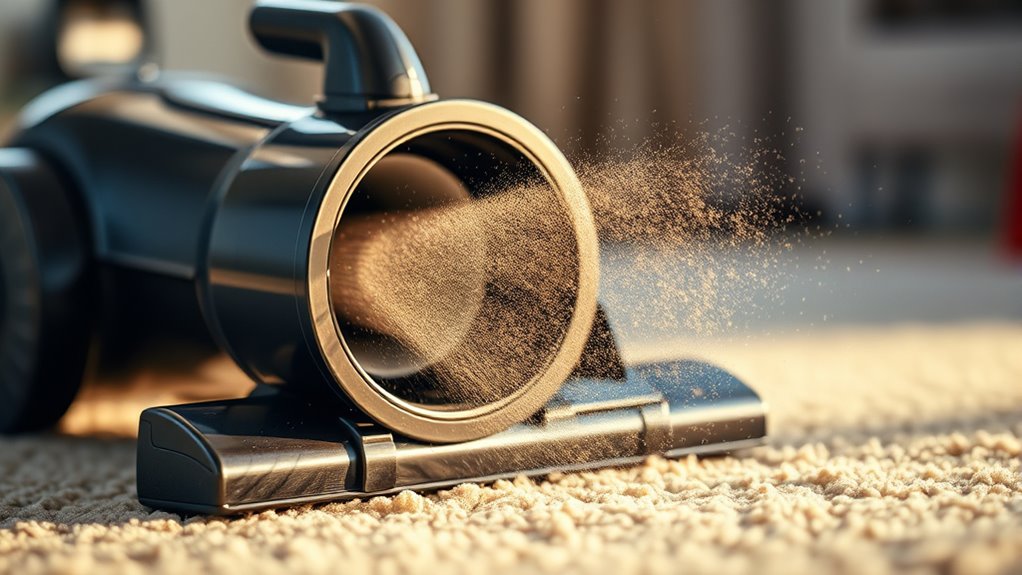
Why Is My Vacuum Blowing Out Dust and How to Fix It
Your vacuum is blowing out dust because airflow is getting blocked or seals are damaged, letting dust escape instead of being trapped.
Overfilled dust containers, clogged filters, or blocked hoses restrict suction, while worn gaskets or seals cause leaks. These issues stop your vacuum from working properly and make cleaning frustrating.
Fix it by emptying dust bins regularly, cleaning or replacing filters, clearing hoses, and tightening or swapping out seals.
Keeping your brushroll maintained also helps. When airflow is smooth and seals are tight, your vacuum traps dust where it belongs.
To fully resolve this, understanding these parts and steps in detail will guide you.
Knowing how each component affects performance makes fixing dust blowout easier and keeps your home cleaner.
Key Takeaways
– Overfilled dust canisters or bags restrict airflow, causing dust to escape; empty them regularly to maintain proper suction.
It’s a simple fix but super important to keep your vacuum working well.
– Damaged seals or gaskets create air leaks, allowing dust to bypass filters; inspect and replace these components as needed.
If you notice any cracks or wear, swapping them out can stop the dust from sneaking past.
– Clogged filters reduce dust trapping efficiency and increase backpressure, so clean or replace filters frequently.
A dirty filter just won’t do its job, and your vacuum won’t perform like it should.
– Blocked hoses and ducts restrict airflow, forcing dust out of vents; clear any obstructions promptly.
Make sure nothing’s stuck inside that could be messing with the airflow.
– A worn or jammed brushroll scatters dirt, so ensure it functions correctly and replace the drive belt if necessary.
If the brushroll isn’t spinning right, it can make a bigger mess instead of cleaning up.
Common Causes of Vacuum Dust Blow-Out

If your vacuum is blowing out dust, it’s often because airflow is being blocked or redirected. One common cause is an overfilled dust canister or sealed bag that restricts airflow, forcing debris to escape through vents.
Air leaks from damaged gaskets or worn vacuum seals create gaps where dust bypasses filters, causing dust blow-out. Clogged filters or a blocked hose also cause airflow restriction, increasing backpressure and pushing dust out instead of trapping it.
Damaged seals and clogged filters increase backpressure, forcing dust to escape instead of being trapped.
You might not realize that a worn drive belt can jam the brushroll, scattering dirt rather than collecting it, which worsens dust blow-out. Additionally, damaged gaskets and improperly sealed components let air—and dust—escape during operation.
These issues disrupt your vacuum’s suction and filtration, leading to dusty messes despite your cleaning efforts. Understanding these common causes can help you identify why your vacuum’s dust blow-out problem occurs in the first place.
How to Fix Your Vacuum’s Dust Blow-Out
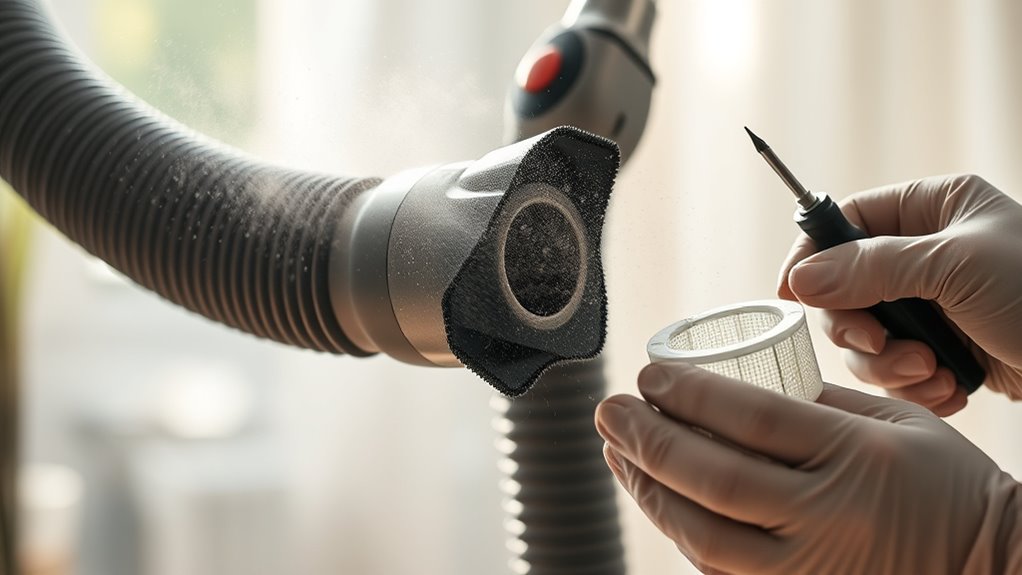
When your vacuum starts blowing out dust, the first step is to check all seals, gaskets, and connections to make certain they’re tight and properly installed. Air leaks caused by loose seal or gasket areas often lead to dust blow-out.
Next, inspect the filter for clogging or damage—replacing a clogged filter is vital since it can’t trap dust effectively. Don’t forget to examine the dust bag or dust canister; overfilling either one causes airflow restriction, which can make dust escape back into your home.
Also, check hoses and ducts for blockages that might reduce airflow and contribute to blow-out issues. Regular vacuum maintenance, like cleaning or replacing filters and emptying dust bags or canisters before they’re full, helps prevent these problems.
Finally, make sure the brushroll works correctly. A malfunctioning brush can scatter dirt and actually make dust blow-out worse. Following these steps will help you fix your vacuum’s dust blow-out and improve its overall performance.
Frequently Asked Questions
Is It Cheaper to Fix a Vacuum or Buy a New One?
It’s usually cheaper to fix minor vacuum issues like filters or seals. But if repairs cost over $100 or your vacuum is older than 8 years, buying a new one with better features often makes more sense for you.
Think about it this way: spending a little now can save you a lot later. Plus, newer models can be way more efficient and easier to use.
How to Fix a Vacuum That Spits Out Dirt?
You fix a vacuum that spits out dirt by clearing clogs, emptying the dust container, and replacing dirty filters.
Also, check the belt and brushroll to make sure they’re working properly.
Don’t forget to adjust the vacuum’s height and mode for the right suction and airflow.
These simple steps usually do the trick!
Why Is My Vacuum Blowing Air Out Instead of In?
Your vacuum’s blowing air out instead of in because something’s blocking its breath or a seal’s broken—like a sneeze gone wrong.
Check hoses, filters, and assembly to restore proper suction and keep dust where it belongs.
Why Is Dirt Coming Out of My Vacuum?
Dirt’s coming out because your filters might be clogged, the dust canister isn’t sealed properly, or there’s a blockage inside. Check these areas, clean or replace filters, and fix seals to stop dust escaping your vacuum.
Give your vacuum a quick once-over. Sometimes, it’s just a simple blockage causing the problem.
If the filters are dirty or the canister isn’t sealed right, dirt will find a way out. So, clean or replace those filters and make sure everything fits snugly.
Conclusion
If your vacuum is blowing out dust, don’t ignore it. Check for clogged filters, full bags, or damaged seals. These are common culprits that can cause dust to escape back into your home.
Clean or replace parts as needed, and guarantee proper assembly. It’s simple stuff, but it makes a big difference. When everything fits and works right, your vacuum sucks up dust instead of blowing it out.
Fixing these issues not only improves suction but also protects your air quality and prolongs your vacuum’s life. You’ll stop the mess, save your health, and keep your home cleaner—all by taking simple, consistent steps to maintain your vacuum. Regular maintenance is key to preventing dust blowback and ensuring your vacuum works efficiently for years to come.


