

Why Is My Vacuum Not Sucking Fast Fix
Your vacuum’s suction likely drops because of clogged filters, blocked hoses, or air leaks. These are the most common reasons why your vacuum is not sucking properly.
Start by detaching the hose and feeling for airflow. If you notice strong airflow at the connection, it means the blockage is further inside.
Empty the dustbin, clean or replace filters, and clear any visible clogs. Also, check seals and connections to make sure they’re tight and not letting air escape.
These quick fixes usually restore power fast. Keep going to uncover more ways to pinpoint and solve common vacuum suction issues efficiently.
Key Takeaways
- Check for blockages by detaching the hose and feeling for strong airflow at the connection point. This helps you figure out if something is stuck inside.
- Empty the dustbin or replace the vacuum bag if it’s full. A full bin or bag can really slow down the suction power.
- Clean or replace clogged filters to improve airflow and suction efficiency. Filters can get dirty faster than you think!
- Inspect and clear obstructions in hoses, wands, and attachments. These little blockages can cause big problems with airflow.
- Make sure all seals and connections are tight. Any air leaks here can seriously reduce suction, so double-check everything.
How to Test Vacuum Suction Loss Quickly
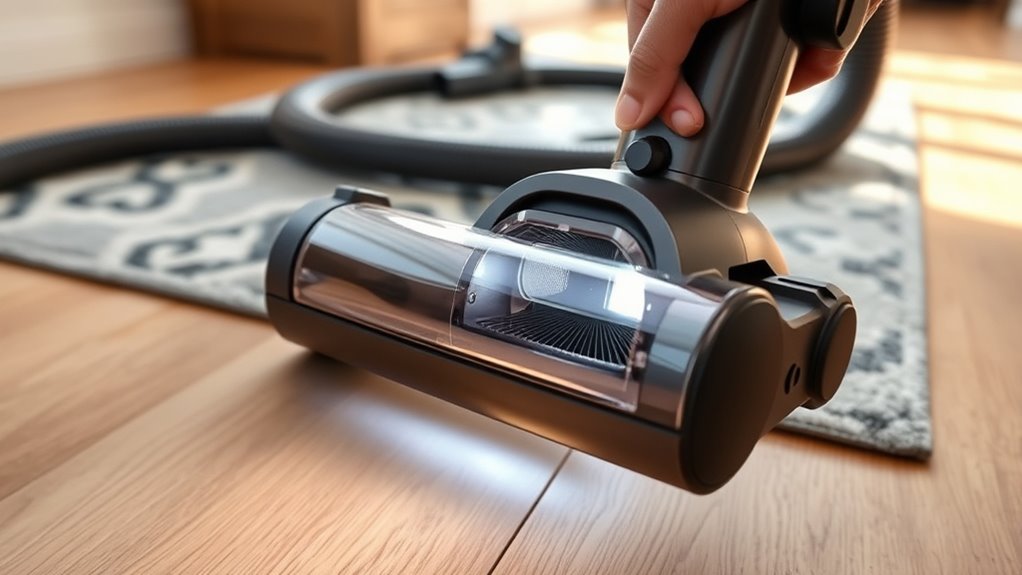
If you suspect your vacuum isn’t sucking properly, start by detaching the hose or wand and feeling for airflow at the connection point. Strong airflow here means the blockage is likely further down the line.
Next, reattach the hose and cover the air intake with your hand to check the suction strength—firm resistance shows good vacuum suction.
Reattach the hose and cover the air intake—firm resistance means your vacuum has strong suction.
You can also test suction by holding a tissue or piece of paper near the vacuum’s port; if it pulls in quickly, the airflow is adequate.
Turn the vacuum on and listen for airflow sounds—a consistent, loud noise generally indicates no blockage, while silence or weak noise points to suction loss.
Don’t forget to check airflow at other points like the floor head or dustbin opening to pinpoint where the issue might be.
Also, inspect the hose and filter, as clogs here often cause suction loss.
These quick checks help you identify where to focus your cleaning efforts.
Simple Fixes for Common Vacuum Suction Issues
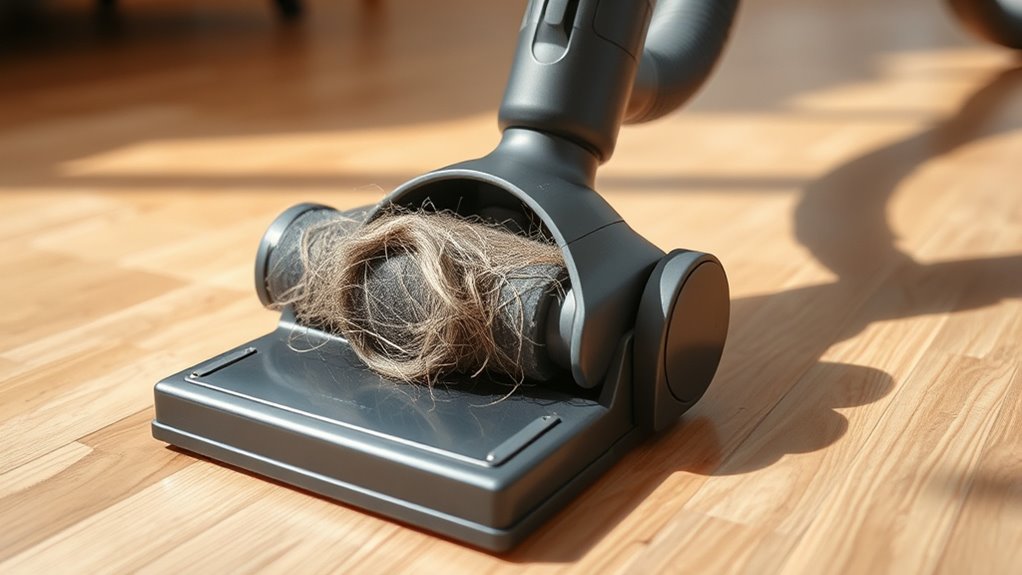
When your vacuum doesn’t suck properly, start by emptying the dustbin or replacing the bag to clear any airflow blockages. A full container often causes loss of suction, so don’t overlook this simple fix.
Next, clean filters or replace clogged filters to restore proper airflow. Dirty filters can severely reduce suction power.
Then, inspect hoses, wands, and attachments carefully for hose obstructions or clogs and clear blockages as needed.
Also, check seals and connections to ensure they’re tight—air leaks here can cause suction loss.
Finally, adjust height settings to match your flooring type; incorrect height can reduce debris pickup efficiency.
Following these steps helps you quickly fix common vacuum suction issues without needing professional help. By emptying the dustbin, cleaning filters, inspecting hoses, checking seals, and adjusting height, you’ll restore your vacuum’s performance in no time.
Frequently Asked Questions
How to Fix a Vacuum With Weak Suction?
You should empty the dustbin or replace the bag, clean or swap filters, check for clogs in hoses, and make sure all seals are tight.
Also, clear the brush roll and fix any belt issues to boost suction power. That way, your vacuum will work much better!
How to Make a Vacuum Have More Suction?
You can boost your vacuum’s suction by regularly cleaning or replacing filters, emptying the dustbin, and clearing blockages.
Also, try adjusting the height setting and checking seals for leaks.
These simple steps help keep your vacuum’s suction strong and consistent. It’s pretty easy to do!
Why Is My Vacuum Taking so Long?
Your vacuum’s taking so long because filters might be clogged, dustbins full, or hoses blocked.
Check brush rolls, belts, and height settings too. Cleaning or replacing these parts will speed up your vacuum’s performance.
Give these a look—you’ll probably get it running smoothly again in no time!
Why Do Vacuums Lose Suction Power?
Like a river slowed by fallen trees, your vacuum loses suction because blockages, full bags, dirty filters, or leaks disrupt airflow.
Check these parts regularly, and you’ll restore its power to glide effortlessly again.
Conclusion
Imagine your vacuum humming smoothly, effortlessly drawing in every crumb and dust speck. When it’s not sucking like it should, you don’t have to wait or stress.
By quickly checking for clogs, emptying the bag or bin, and inspecting the hose, you can restore that powerful suction in no time. These simple fixes often solve the problem faster than you’d think.
With these quick steps, your vacuum will roar back to life, making your cleaning routine fast and satisfying again. If your vacuum is not sucking, don’t worry—most issues come down to blockages or a full dust bin.
So, to fix your vacuum not sucking, start by clearing any clogs and emptying the debris container. Regular maintenance like this keeps your vacuum running strong and ensures it sucks up dirt effectively every time.


