
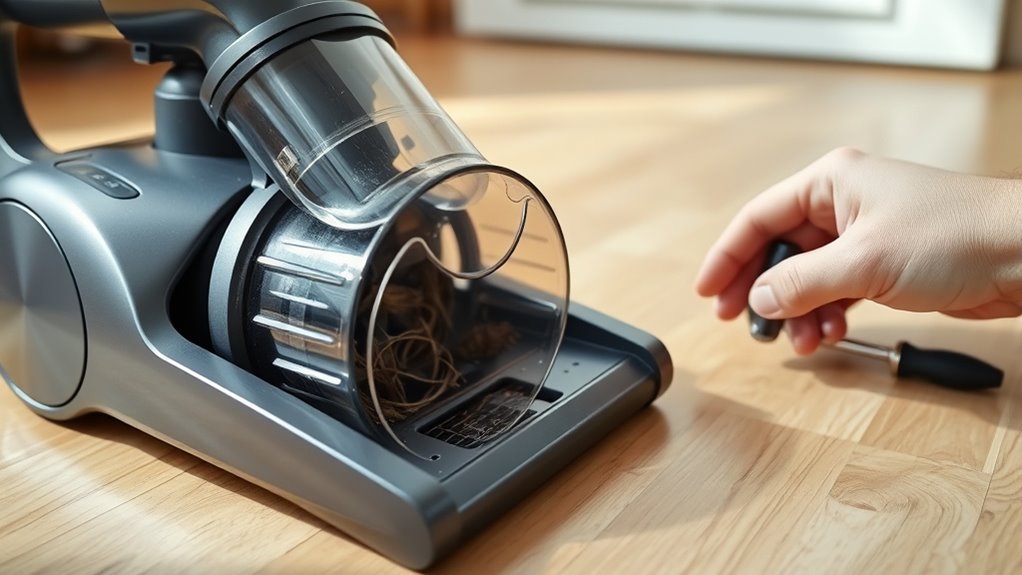
Why Is My Vacuum So Loud and How Can I Fix It Fast?
Your vacuum’s loud noise likely comes from blockages, worn belts, or improper settings disrupting airflow and stressing the motor. These issues can make your vacuum sound much louder than usual and affect its performance.
You can fix it fast by clearing debris from the brush roll and hose, cleaning or replacing filters, and tightening any loose parts like belts or wheels. Adjust your suction and height settings for smoother operation, too.
If you want to make sure your vacuum runs quietly and efficiently, there are simple steps you can follow. Taking care of these common problems will help your vacuum last longer and work better every time you use it.
Key Takeaways
- Clean or replace clogged filters and full dust bags to reduce motor strain and loud noise. This simple step can make a big difference in how your vacuum sounds.
- Remove debris from brush rolls and hose to prevent airflow blockages and rattling sounds. It’s surprising how little things stuck inside can cause such a racket.
- Tighten or replace worn belts to eliminate squeaking and rattling noises during operation. Worn belts can be noisy and affect performance, so don’t overlook them.
- Check for fan damage or misalignment causing grinding or humming and fix or replace as needed. A damaged fan can really crank up the noise level.
- Adjust suction power and vacuum height settings to minimize airflow turbulence and noise quickly. Sometimes, just tweaking these settings can quiet things down right away.
Why Is My Vacuum So Loud? Common Causes and How to Spot Them
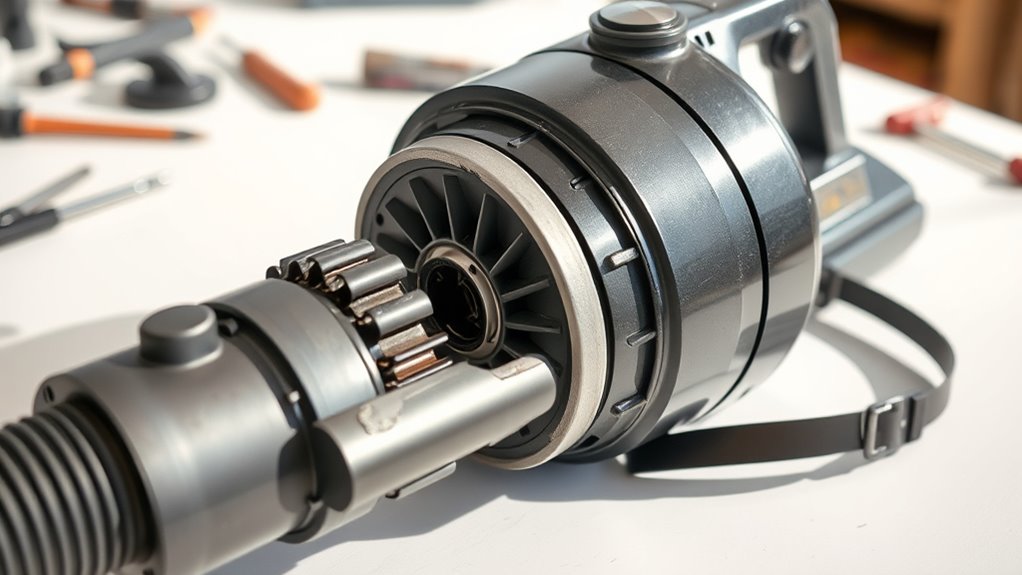
Why is your vacuum suddenly so loud? Vacuum loudness often comes from airflow blockages like full dust bags or clogged filters, which strain the motor and create a loud noise.
Sudden vacuum loudness usually signals airflow blockages like full bags or clogged filters straining the motor.
You might also notice noise from your vacuum when debris caught in the brush roll housing or internal obstructions disrupt smooth operation. Worn or loose drive belts can rattle or squeak, adding to the problem.
Fan damage or misaligned fans produce irregular grinding or humming sounds that stand out. If your vacuum’s suction power is very high or the height setting isn’t right, airflow turbulence can increase noise levels too.
By paying attention to these common issues—airflow blockages, clogged filters, debris caught in brush roll housing, drive belts, fan damage, and internal obstructions—you can identify why your vacuum is louder than usual.
Spotting these causes early helps you understand the source of the loud noise and prepares you for quick fixes ahead. It’s easier than you think to get your vacuum back to normal!
Step-by-Step Fixes to Quiet Your Vacuum Fast
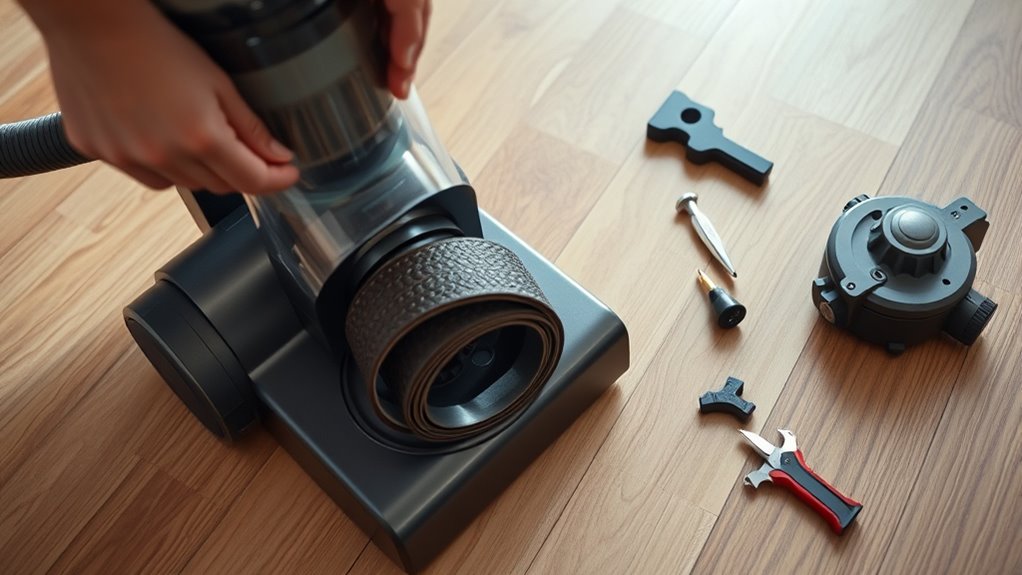
Now that you know what causes your vacuum to get loud, you can take quick action to fix it. First, clean the brush and the brushes on the roll to remove debris that blocks air passages.
Next, make sure the hose is clogged-free, as blockages cause excessive noise. Don’t forget to clean the filters regularly; dirty filters restrict airflow and make your vacuum abnormally loud.
Inspect and tighten any loose parts like belts or wheels to stop rattling sounds. Adjust the suction power and height settings to optimize airflow and reduce noise.
If noise persists, replace worn parts with OEM components to cut down vibrations. Finally, schedule cleanings during less disruptive times if your vacuum has this feature.
Frequently Asked Questions
Why Is My Vacuum Extremely Loud?
Your vacuum’s extremely loud because it might have clogged filters, full dustbins, or worn belts. Check for blockages and worn parts, clean or replace them, and adjust settings to fix the noise quickly and prevent damage.
Sometimes, dust and debris can build up and cause your vacuum to work harder than it should. It’s a good idea to give it a thorough look-over now and then.
If you spot anything clogged or worn out, don’t wait to clean or swap it out. This simple step can save your vacuum and keep it running smoothly.
How to Make a Vacuum Less Loud?
Think of your vacuum as a roaring river—you can calm it by cleaning filters, replacing worn parts, lowering suction power, and scheduling vacuuming during quiet times.
These simple steps will help you tame the noise quickly. Just give them a try!
Is a Vacuum Too Loud?
If your vacuum exceeds 85 decibels or sounds unusually harsh, it’s too loud. You should check for worn parts, clogs, or airflow issues and fix them quickly to prevent damage and reduce noise.
It’s a good idea to take care of these problems as soon as you notice them. That way, you keep your vacuum running smoothly and keep the noise down.
How to Fix Noisy Vacuum Cleaner?
You can fix your noisy vacuum by clearing blockages in filters and hoses, removing debris from the brush roll, tightening loose parts, and replacing worn belts or damaged fans.
Regular maintenance keeps it running quietly and efficiently.
It’s really worth taking the time to check these things regularly. That way, your vacuum won’t get noisy again anytime soon!
Conclusion
If your vacuum sounds like it’s throwing a wild party, don’t worry—you can tame the noise quickly. Often, a little cleaning or a simple fix can turn that roar into a gentle hum.
By checking for clogs, worn belts, or loose parts, you’ll have your vacuum whispering again in no time. So, roll up your sleeves and give it some TLC; your ears—and your floors—will thank you!
A loud vacuum usually means something’s off inside. It could be a clogged hose, a dirty filter, or even a belt that’s stretched out or broken. Fixing these common issues is often fast and easy.
To get your vacuum back to normal, start by unplugging it and inspecting the hose and brush roll for blockages. Clean or replace filters if they look dirty. Tightening or swapping out worn belts can also make a huge difference.
In short, tackling these simple fixes can quickly reduce the noise level and improve your vacuum’s performance. Keeping your vacuum clean and well-maintained not only lowers loud noises but extends its life too. So, if your vacuum is too loud, don’t ignore it—check for clogs, worn belts, and loose parts right away for a fast and effective fix.





One Comment