
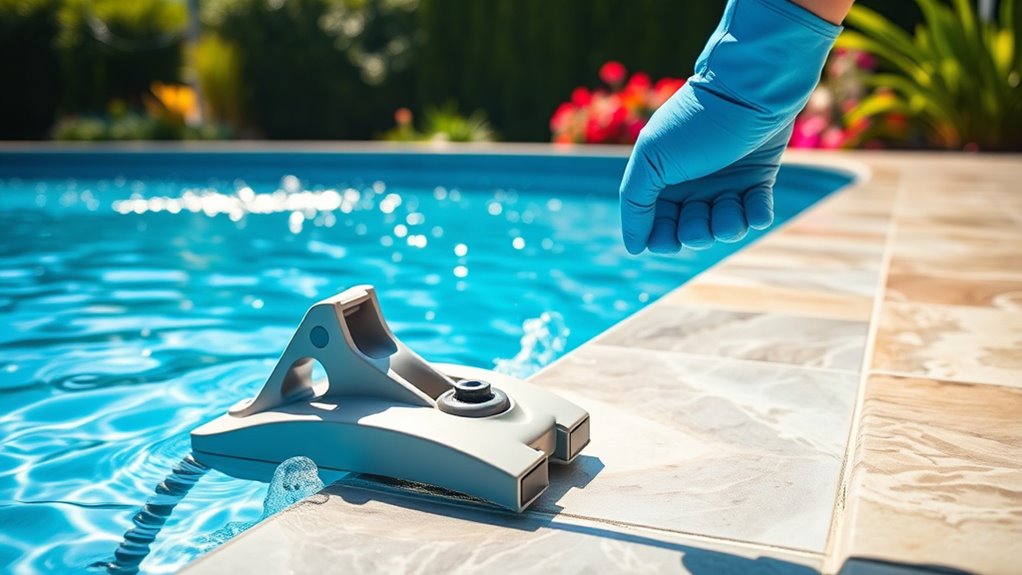
How to Vacuum a Pool in 10 Easy Steps
To vacuum your pool in 10 easy steps, first gather your vacuum gear and attach the head to the telescopic pole.
Next, connect and prime the hose underwater to get everything ready.
Then, secure the vacuum plate over the skimmer basket.
Make sure to set your pump to high speed and check that the water level is halfway up the skimmer.
Vacuum slowly with overlapping strokes for the best results.
If you have heavy debris, use the waste setting to clear it out more effectively.
After you finish vacuuming, don’t forget to clean the skimmer basket and maintain your filter.
These simple steps will help keep your pool sparkling clean all season long.
Keep following along to uncover tips that make your process even smoother.
Key Takeaways
- Assemble and connect the vacuum head, telescopic pole, and hose. Make sure the hose is fully primed underwater before you start.
- Set the pool pump to high speed. Keep the water level about halfway up the skimmer opening.
- Move the vacuum head slowly in overlapping straight paths. This helps cover the entire pool floor evenly.
- Use the waste setting on the filter if you have heavy debris. It prevents clogging and speeds up cleaning.
- After vacuuming, turn off the pump and clean the skimmer basket. Don’t forget to maintain your equipment for the next time.
Get Your Pool Vacuum Gear Ready
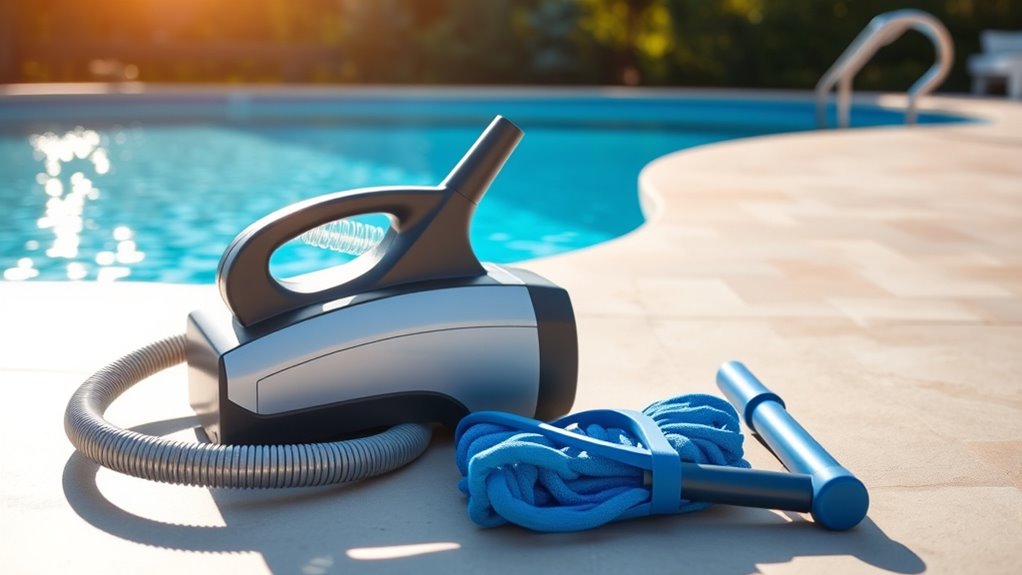
Before you begin vacuuming, make sure you gather all the necessary gear: a telescopic pole, vacuum head, vacuum hose, and vacuum plate. Having the right vacuum gear ready is essential to a smooth cleaning process.
Start your equipment setup by checking the vacuum hose length—it must reach across the entire pool without stretching. Next, securely attach the vacuum head to the telescopic pole to guarantee effective maneuvering during cleaning.
Begin by ensuring the vacuum hose is long enough, then firmly attach the vacuum head to the telescopic pole.
Proper connection is vital, so prime the vacuum hose with water to eliminate air pockets that could break suction. Then, fit the vacuum plate snugly over the skimmer basket; this prevents leaks and maintains consistent suction.
Finally, connect the hose carefully to the vacuum plate, confirming all connections are tight. By paying attention to these details in your equipment setup and making proper connections, you’ll prepare your vacuum gear correctly for efficient pool cleaning.
Check Pump Speed and Water Level for Proper Suction
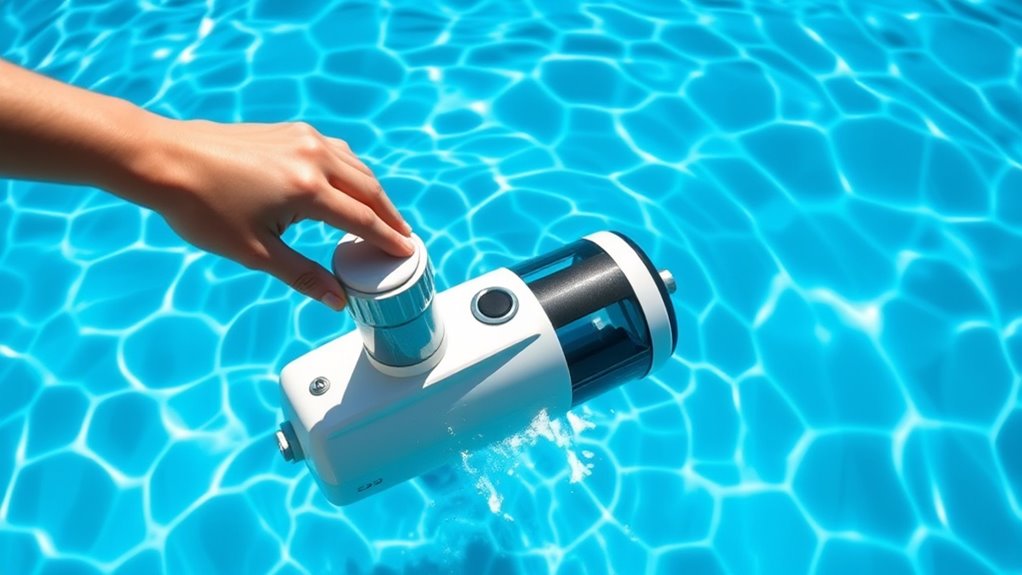
While setting up your vacuum gear is essential, you also need to verify that your pool pump runs at high speed and the water level is at least halfway up the skimmer opening to guarantee strong suction. Proper pump speed and water level are critical for efficient vacuuming.
Here’s what you should do:
- Set your pump speed to high, especially if you have a variable speed pump, to ensure enough suction power.
- Check that the water level is at least halfway up the skimmer opening. Low water levels cause the pump to draw in air, which reduces suction.
- Regularly inspect and clear the skimmer basket and pump strainer of debris. This helps maintain unobstructed water flow and keeps everything running smoothly.
Assemble the Vacuum Head and Telescopic Pole
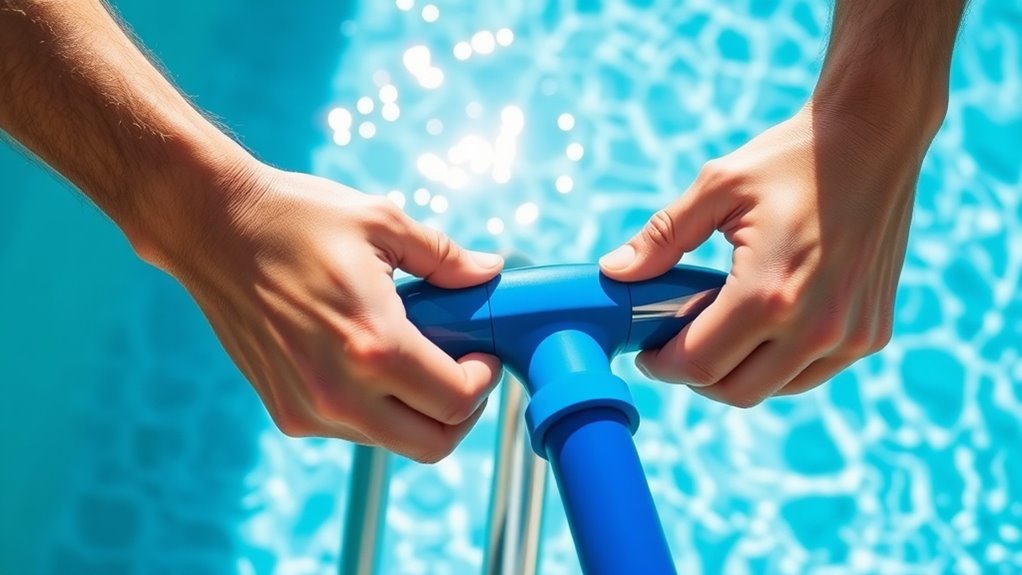
Once you have your pump running at the right speed and water level set, attach the vacuum head securely to the telescopic pole, making sure it clicks or locks into place. Start by aligning the vacuum head’s connector with the end of the telescopic pole and push until you hear a click or feel it lock.
Ensure the vacuum head clicks securely onto the telescopic pole after setting pump speed and water level.
This secure connection prevents the vacuum head from detaching during use. Next, extend the telescopic pole to a comfortable length for reaching across your pool’s surface. Make sure the pole locks firmly at your desired length to avoid slipping or collapsing while vacuuming.
Before you proceed, double-check the connection points between the vacuum head and telescopic pole to guarantee they’re tightly connected. A stable, well-connected vacuum head and pole setup is essential for effective pool cleaning and smooth maneuvering.
With these steps complete, you’re ready to move on to attaching and priming the vacuum hose.
Attach and Prime the Vacuum Hose for Pool Vacuuming
Start by firmly attaching one end of the vacuum hose to the vacuum head. Make sure any swivel connections are secure.
Next, submerge the hose completely to fill it with water and push out all the air.
Finally, connect the other end to the skimmer or vacuum port while keeping it underwater. This guarantees proper priming before you begin vacuuming.
Connecting Vacuum Hose
Before attaching the vacuum hose, make sure you submerge it completely in the pool to fill it with water and remove any air pockets. This step ensures the hose is primed and ready for use.
Next, follow these steps to connect everything properly:
- Securely connect one end of the vacuum hose to the vacuum head, making sure any swivel connection is properly engaged for smooth movement.
- Attach the other end of the hose underwater to the vacuum plate or skimmer. Doing this underwater helps prevent air from entering the system.
- Finally, confirm water flows freely through the hose. This shows it’s fully primed and that suction will be consistent.
Priming Hose Properly
How do you make sure your pool vacuum works efficiently? Start by priming the hose properly.
Submerge the entire vacuum hose in water before attaching it to the vacuum head to eliminate air pockets. You can hold the hose’s end underwater or pour water into it using a bucket until it’s fully saturated.
Keep the hose submerged as you connect it to both the vacuum head and skimmer, ensuring no air enters the system. This step is crucial because it helps maintain suction by preventing air from disrupting water flow.
Once connected, watch for bubbles escaping from the hose or connections—this confirms you’ve primed the hose correctly and your vacuum will perform smoothly.
Secure the Vacuum Plate Over the Skimmer Basket
Now, secure the vacuum plate firmly over the skimmer basket. Make sure it fits snugly to prevent leaks.
Align the plate carefully so the hose stays fully submerged underwater. This helps keep the suction consistent.
Before you press the plate into place, double-check that the vacuum hose is properly connected. That way, everything works smoothly.
Proper Vacuum Plate Fit
Why does securing the vacuum plate properly matter? A tight vacuum plate fit ensures effective sealing and maintains suction, which keeps your pool debris-free.
Without a proper fit, you risk losing suction and letting debris escape back into the pool.
To achieve the best results, follow these three steps:
- Confirm the vacuum plate is compatible with your skimmer basket model to avoid leaks or dislodgement.
- Make sure the vacuum plate sits flush against the skimmer opening, creating a tight seal before you start vacuuming.
- Regularly inspect for cracks or damage and periodically check during use that the vacuum plate stays securely in place.
Doing this guarantees a smooth vacuuming process and keeps your pool sparkling clean.
Skimmer Basket Alignment
Where should you position the skimmer basket before attaching the vacuum plate? You need to verify the skimmer basket sits correctly inside the skimmer. This positioning is essential because the vacuum plate must fit snugly over the skimmer basket to create a proper seal.
When you place the vacuum plate, check that it completely covers the skimmer opening without any gaps. This tight seal maintains suction and prevents water or debris from bypassing during vacuuming.
Secure the vacuum plate firmly in place, so it won’t shift or loosen while you work. Regularly inspect the skimmer basket and vacuum plate alignment throughout the process to keep your vacuuming effective and efficient.
Proper alignment is key to a smooth pool cleaning experience. So, take your time to get it right—it really makes a difference!
Ensuring Underwater Hose Placement
How do you guarantee your vacuum hose stays submerged and free of air pockets? Proper underwater hose placement is key to maintaining suction and avoiding interruptions.
First, make sure the vacuum plate fits snugly over the skimmer basket. This creates a proper seal that blocks debris from entering the pump.
Next, fully submerge the vacuum hose in water before connecting it to the vacuum head. Doing this helps get rid of any trapped air.
Keep the hose underwater while attaching it, and check from time to time that the vacuum plate stays securely seated. This way, you’ll have consistent suction.
Start the Pump and Connect the Vacuum Hose
Before you connect the vacuum hose, make sure the pool pump is running at high speed to maintain strong suction. Start pump operation and confirm it’s running smoothly to guarantee the water flow is steady.
Next, attach the vacuum head to the telescopic pole, then securely connect the vacuum hose to the head. To prevent loss of suction, prime the hose by filling it with water, removing any trapped air.
Once primed, connect the hose to the vacuum plate, often called a skim vac, and place it carefully over the skimmer basket. Be sure the hose stays underwater throughout this process.
Double-check all connections for tightness and watch for consistent water flow through the hose. This careful setup ensures your vacuum will work efficiently when you begin cleaning.
Taking these steps guarantees you’re ready to vacuum your pool effortlessly without interruptions or suction loss. It’s a simple routine that makes a big difference!
Vacuum the Pool Floor Using Slow, Overlapping Strokes
With your vacuum properly connected and the pump running smoothly, you can start cleaning the pool floor. To get the best results, use deliberate strokes with the vacuum head, moving slowly across the floor.
This helps avoid stirring up settled dirt and keeps the water clear.
Here’s what you need to make certain you do:
- Move in straight, overlapping strokes, covering about 50% of the previous path to ensure no spots are missed.
- Maintain a steady pace and consistent pressure on the vacuum head to maximize suction and pick up debris effectively.
- Regularly check the vacuum’s water flow and suction to confirm it stays strong throughout the cleaning.
Use the Pool Vacuum Filter’s Waste Setting for Heavy Debris
When you’re dealing with heavy debris like leaves or algae, switch your pool filter to the waste setting. This lets the pump expel debris directly, boosting suction and preventing your filter from clogging.
Just make sure the valve is properly set to avoid water loss or damage while cleaning. It’s a simple step that can save you a lot of hassle!
When To Use Waste
If you’re dealing with heavy debris like leaves or algae, you should use the waste setting on your pool vacuum filter. This setting helps protect your filtration system from clogging and guarantees efficient cleaning.
You’ll want to switch to the waste mode in these situations:
- When debris is too large or heavy for the standard filtration system to handle.
- If you notice your pool vacuum losing suction power while cleaning.
- When you want to prevent debris from circulating back into the pool water during vacuuming.
Using the waste setting directs water and debris straight out through a waste line, bypassing the filter. Just remember to switch back to the regular filtration system once the heavy debris is removed. That way, you keep your pool running smoothly.
Benefits Of Waste Setting
Because heavy debris can quickly clog your pool’s filter, you’ll want to use the waste setting on your pool vacuum filter to keep things running smoothly. This setting lets water and debris bypass the filter, preventing strain and clogging when dealing with thick debris or algae.
By switching to waste, debris gets expelled directly out of your pool through the waste line, ensuring efficient removal. This not only keeps your pool water clear but also reduces how often you need to backwash the filter afterward.
Plus, the waste setting speeds up filtration and lowers filter pressure, making vacuuming heavy debris easier and more effective. Using this setting helps maintain your filter’s longevity while saving you time and effort during cleanup.
Troubleshoot Common Pool Vacuum Issues
Why isn’t your pool vacuum working properly? You might be facing suction issues or poor cleaning performance. To troubleshoot, start by checking these common problems:
- Vacuum Plate and Hose Connections: Make sure the vacuum plate is seated correctly and all hose connections are secure. Loose fittings can cause suction loss.
- Water Level: Ensure the pool water is at least halfway up the skimmer. Low water reduces pump efficiency and vacuum suction.
- Hose Inspection and Priming: Look for leaks or blockages in the vacuum hose. Always prime the hose with water before starting to prevent air pockets that disrupt suction.
Additionally, adjust your pump speed to the recommended setting to maintain strong suction. Keeping these factors in check will help you get your pool vacuum working efficiently without frustration.
Shut Off the Pump, Clean the Skimmer Basket, and Maintain the Filter
Before you start cleaning or removing the skimmer basket, always shut off the pool pump. This prevents debris from flowing back into the pool.
Carefully remove the skimmer basket, empty out any debris, and rinse it thoroughly with water. This step is really important to keep the water flowing smoothly and avoid any clogging.
After vacuuming, make it a habit to check and clean the skimmer basket regularly. Doing this helps you avoid blockages that can put extra strain on your pump.
Also, don’t forget to keep your pool filter clean or backwashed according to the manufacturer’s instructions. A well-maintained filter helps remove debris efficiently during vacuuming and reduces wear on your pump.
By consistently taking care of the skimmer basket and filter, you’ll extend your equipment’s lifespan. Plus, it makes vacuuming your pool much easier and more effective.
These simple actions save you time and effort while keeping your pool water clear and inviting.
Frequently Asked Questions
What Is the Easiest Way to Vacuum a Pool?
The easiest way to vacuum your pool is to use a telescopic pole with a vacuum head. Prime the hose with water and keep the pump on high.
Move the vacuum slowly and make certain all connections stay tight for consistent suction. This way, you’ll get the best results without any hassle.
What Setting Should the Pool Pump Be on for Vacuuming?
You should set your pool pump to high speed or the highest setting if it’s variable speed. This maximizes suction and helps prevent debris from escaping.
It also guarantees your pool gets thoroughly cleaned during vacuuming. Running the pump on high makes the whole process more effective and quicker.
Which Is the Most Essential Step When Vacuuming a Pool?
The most vital step is ensuring the vacuum plate seals properly over the skimmer basket. Without a good seal, you won’t get the suction needed to clean effectively.
Do You Vacuum a Pool on Backwash or Filter?
You don’t vacuum on backwash; instead, use the filter setting like a trusty net catching every speck.
Only switch to waste when heavy debris threatens to choke the system, then backwash to clear the path.
Conclusion
Now that you’ve mastered these simple steps, keeping your pool spotless is a breeze. With the right gear and technique, vacuuming your pool doesn’t have to be a chore.
Why spend extra time stressing when you can glide through the process smoothly? Regular pool vacuuming makes a huge difference. It keeps your water sparkling and your pool looking great.
Remember, regular maintenance not only keeps your water clear but also extends your pool’s life. So grab your vacuum, plunge in, and enjoy a cleaner, clearer pool all season long!
Vacuuming your pool regularly is the key to hassle-free pool care. It helps prevent dirt buildup, algae growth, and keeps your pool inviting. Stick to these easy steps, and you’ll save time and effort while enjoying crystal-clear water every day.


2 Comments