
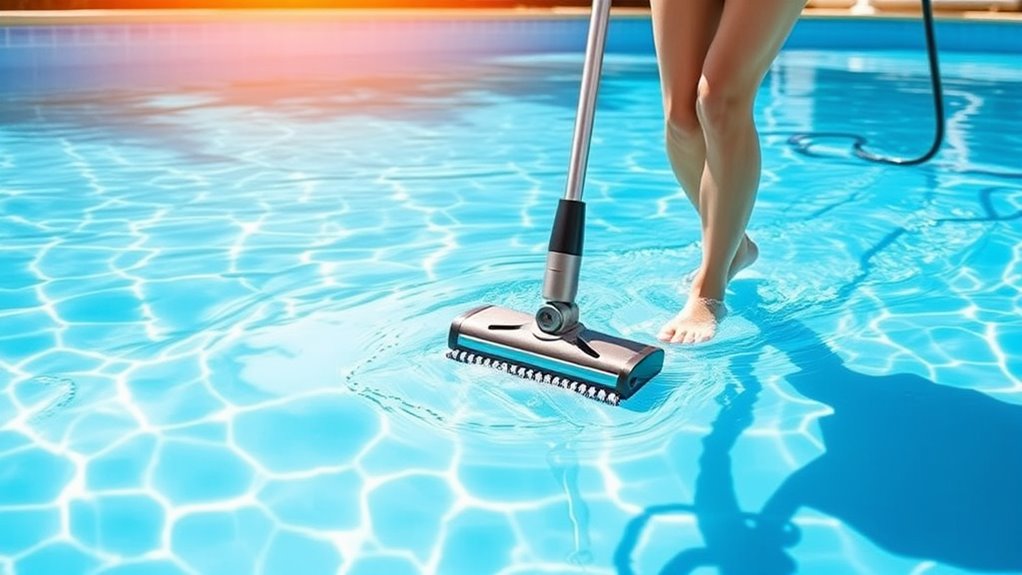
Vacuum Your Pool in 3 Easy Steps
To vacuum your pool in three easy steps, start by gathering and preparing your pool vacuum equipment. Attach the vacuum head to the pole and connect the hose securely to ensure no leaks. This setup is key for effective pool cleaning and maintenance.
Next, fully submerge and prime the hose to remove any trapped air. Once the hose is primed, connect it tightly to the skimmer. This step helps maintain strong suction, making your vacuuming more efficient.
Finally, run the pump and move the vacuum head across the pool floor in overlapping strokes. This technique ensures you cover every inch of the pool bottom.
When you’re done, remember to turn off the pump before disconnecting everything. Keep going to discover tips for better efficiency and maintenance.
Key Takeaways
- Assemble the vacuum head, telescopic pole, hose, and vacuum plate that suits your pool type.
- Submerge the vacuum hose completely and prime it to get rid of any air before you connect it to the vacuum head.
- Attach the vacuum plate securely to the skimmer and make sure the hose is connected tightly for a good seal.
- Keep the pool pump running while you vacuum the pool floor. Use overlapping, straight-line passes to cover every inch.
- When you’re done, turn off the pump before you disconnect the equipment.
- Don’t forget to clean the skimmer basket and the filter afterward.
Get Your Pool Vacuum Equipment Ready
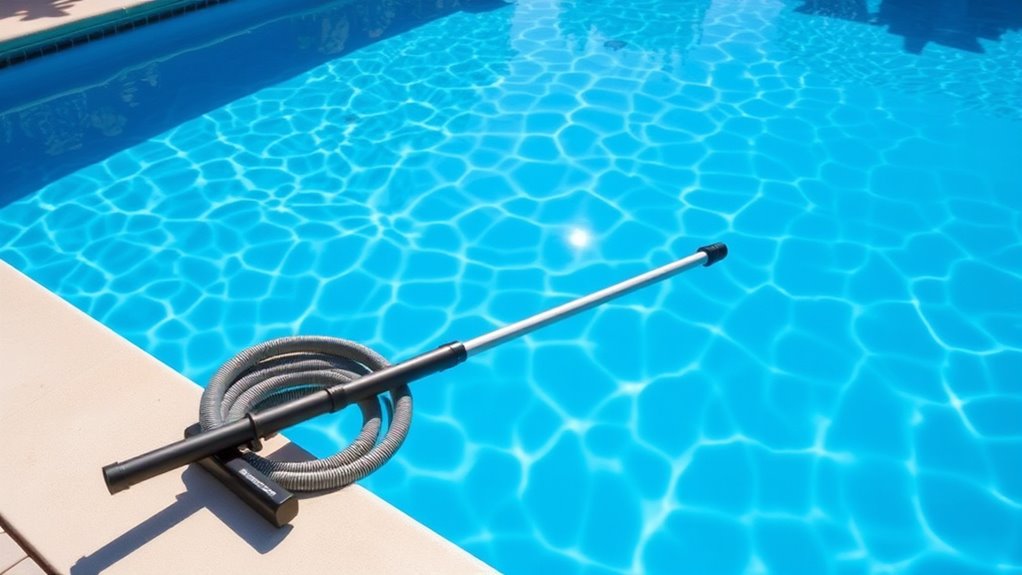
Before you start vacuuming, gather all the essential equipment: a vacuum head, telescopic pole, vacuum hose, and vacuum plate that fit your pool type. Begin by securely attaching the vacuum head to the telescopic pole, then connect the vacuum hose firmly to the vacuum head to prevent leaks.
Gather your vacuum head, pole, hose, and plate, then securely connect them for leak-free cleaning.
Make sure your vacuum equipment is compatible with your pool to guarantee effective cleaning. Next, remove the skimmer basket from the pool skimmer to avoid clogging the filter system with debris.
Attach the vacuum plate to the pool skimmer opening securely, creating a tight seal for suction. Check that the pool pump is running at the correct speed and that water levels are adequate to maintain proper flow through the filter system.
These steps prepare your pool vacuum setup, ensuring the system works efficiently and prevents damage. Properly priming the hose comes next, but for now, focus on assembling and readying your vacuum equipment before moving forward.
Prime And Connect Your Pool Vacuum Hose
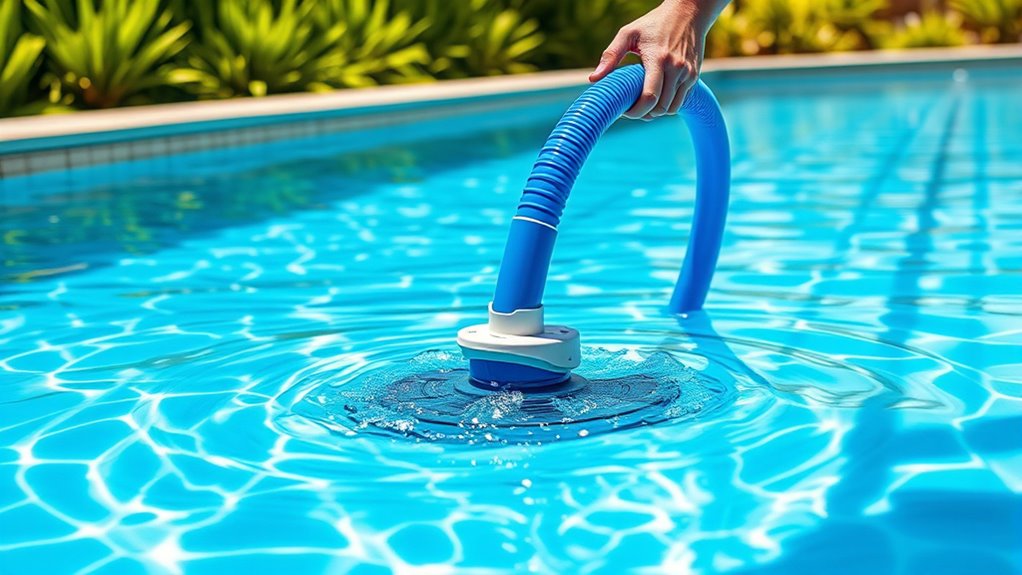
Once you’ve assembled your vacuum equipment, fully submerge the vacuum hose in your pool to flush out any air pockets. Holding the pool hose underwater helps remove air bubbles that can disrupt water flow and reduce suction.
Next, attach one end of the hose securely to the vacuum head, making sure it clicks or fits tightly for a solid connection.
To prime the hose, keep it submerged and fill it with water—either by holding it against a pool jet or using a garden hose—until water flows steadily through. This step ensures the hose is free of air and ready for effective vacuuming.
Then, connect the other end of the hose to the skimmer inlet using the vacuum plate, which creates a tight seal and prevents leaks.
Keeping the hose submerged and properly connected guarantees ideal suction and smooth operation once you start vacuuming your pool.
Vacuum With The Pump On And Clean Up Afterward
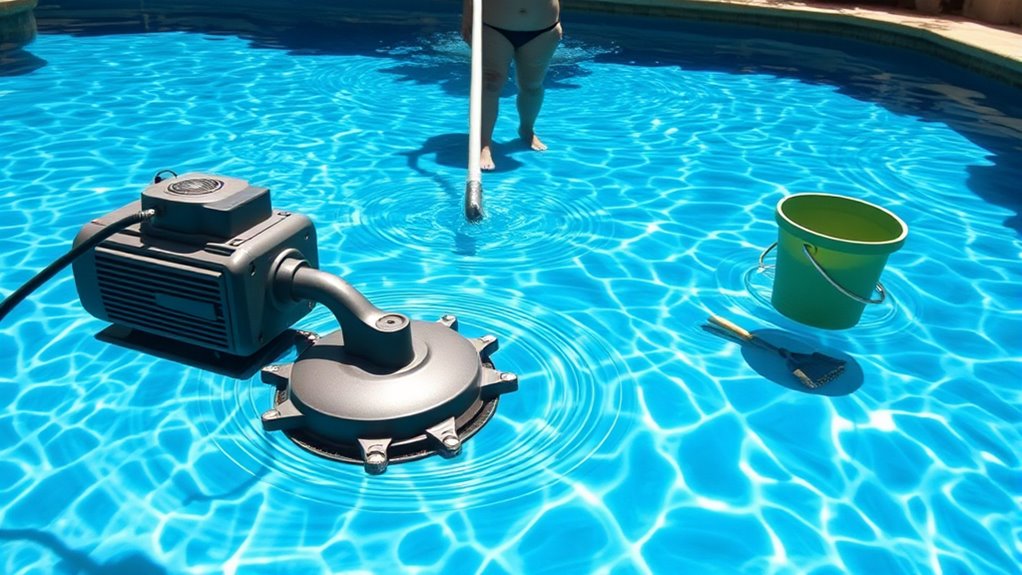
Keeping your pool pump running while vacuuming guarantees continuous suction and effective debris removal, so never turn it off mid-cleaning. With the pump running, slowly move the vacuum head across the pool floor in overlapping, linear passes to pick up all debris efficiently.
Make sure the hose stays securely connected to the skimmer or suction port throughout vacuuming to maintain steady water flow. Keep an eye on the water level to avoid air entering the system, which can reduce suction.
Once you’ve cleaned the entire pool floor, turn off the pump before you disconnect the vacuum and hose to prevent water pressure issues. Afterward, clean out the skimmer basket to remove trapped debris and backwash or clean your filter to maintain ideal water quality.
Taking these steps guarantees your pool stays clean and your equipment runs smoothly, making your next vacuuming session easier and more effective.
Frequently Asked Questions
What Is the Easiest Way to Vacuum a Pool?
The easiest way to vacuum your pool is by using a manual vacuum with a telescopic pole and hose.
First, prime the hose with water, then connect it to the skimmer.
Next, move the vacuum slowly in overlapping passes.
This way, you’ll make sure you don’t miss any spots and get your pool nice and clean.
What Are the 3 C’s of Pool Cleaning?
The 3 C’s of pool cleaning are Circulation, Cleaning, and Chemistry. You’ll keep your pool healthy by ensuring water flows well, removing debris regularly, and balancing chemicals like pH and chlorine for safe, clear water.
Think of it this way: good circulation keeps the water moving so it doesn’t get stagnant. Cleaning means scooping out leaves and scrubbing surfaces to keep things fresh.
And chemistry? That’s all about making sure the water is balanced and safe to swim in. It’s easier than it sounds once you get the hang of it!
What Setting Do I Put My Pool Pump on When Vacuuming?
You should set your pool pump to “Filter” for light debris or “Waste” for heavy debris or algae. Keep the pump running during vacuuming, and adjust speed if possible for consistent suction and effective cleaning.
It’s pretty simple once you get the hang of it. Just make sure you’re using the right setting depending on what kind of debris you’re dealing with. That way, your pool gets cleaned thoroughly without any hassle.
Do You Vacuum a Pool on Backwash or Waste?
You vacuum your pool on the waste setting to avoid clogging the filter and guarantee debris is removed efficiently.
Use backwash only afterward to clean the filter, not during vacuuming itself.
Conclusion
Just like tending a garden keeps it blooming, vacuuming your pool regularly guarantees it stays clear and inviting. By preparing your equipment, priming the hose, and letting the pump do its work, you’re not just cleaning water—you’re nurturing a space for relaxation and joy.
So, plunge in with care, knowing every sweep brings clarity. Small efforts in life lead to a brighter, fresher tomorrow. Regular pool vacuuming ensures your water stays crystal clear, making your swimming experience safe and enjoyable. Remember, maintaining your pool isn’t just about cleanliness—it’s about preserving a refreshing oasis right in your backyard.



5 Comments