How to Check a Vacuum Leak in 3 Easy Steps
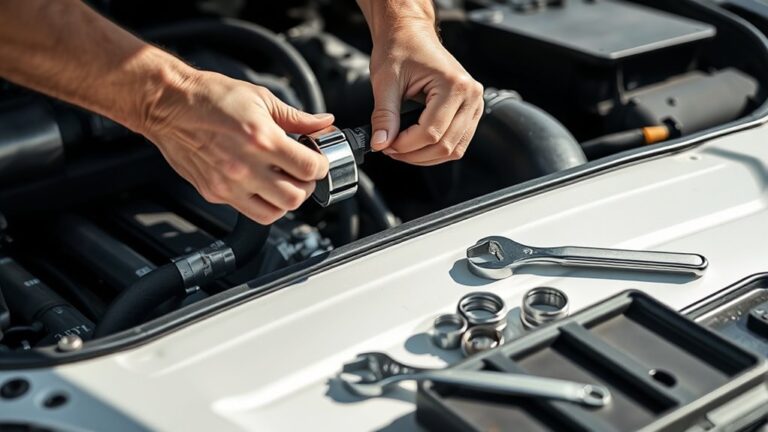
First, visually inspect your vacuum hoses for cracks, disconnections, or swelling near connections and bends. These issues can cause leaks that affect your engine’s performance.
Next, listen closely for any hissing sounds around the vacuum system. Also, watch for an unstable engine idle—this often signals leaks.
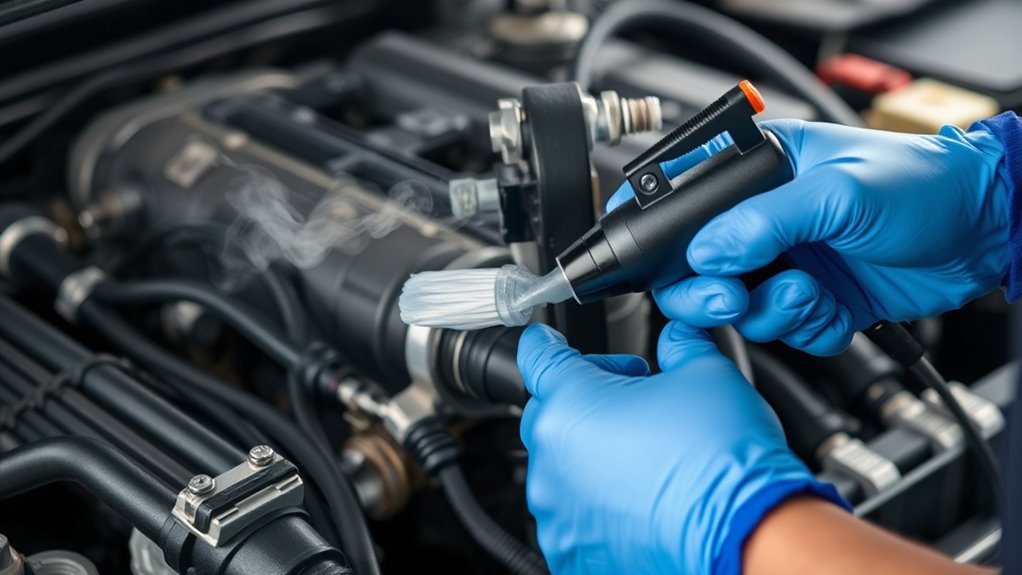
Finally, spray soapy water or brake cleaner on suspected areas while the engine idles. Bubbles will appear where air is escaping.
Taking these simple steps helps catch vacuum leaks early.
If you want to dig deeper, exploring other detection methods can be even more effective. But starting here gives you a quick and easy way to spot common vacuum leaks before they become bigger problems.
Key Takeaways
- Visually inspect vacuum hoses for cracks, brittleness, and loose connections near fittings and bends. Take your time to look closely at each hose.
- Listen closely for a hissing sound near hoses and intake components while the engine idles. That sound can be a clear sign of a leak.
- Spray soapy water or brake cleaner on suspected leak areas and watch for bubbles indicating escaping air. It’s a simple trick that really works.
- Use a smoke machine if available to detect leaks in hard-to-see areas. This tool can save you a lot of guesswork.
- Recheck engine idle stability after repairs to confirm the vacuum leak is fixed. If the idle feels steady, you’re good to go!
Visually Inspect Vacuum Hoses for Cracks, Disconnections, and Damage
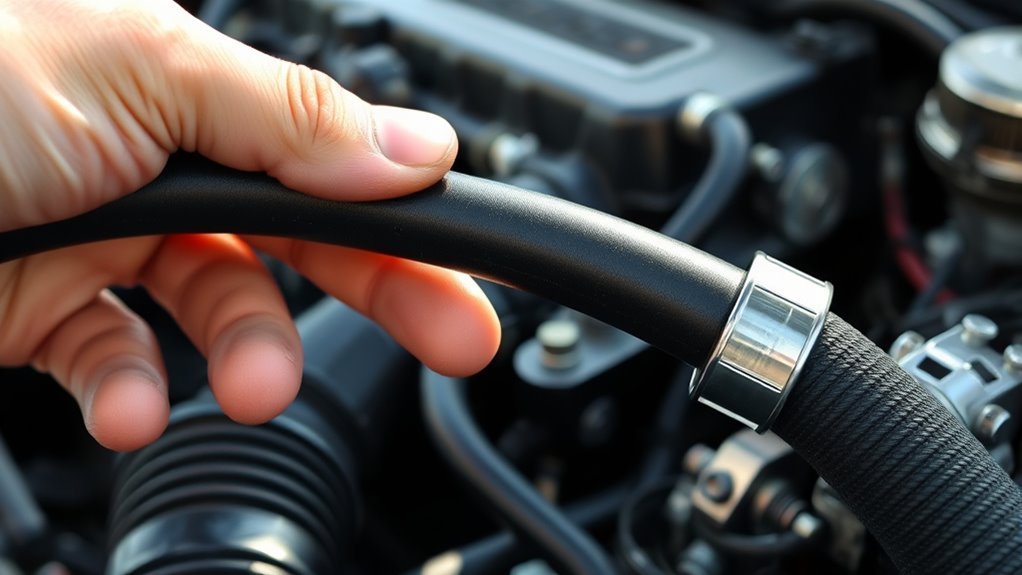
Before you begin testing for leaks, closely examine all vacuum hoses for cracks, splits, or brittleness, especially near connection points and bends. You want to carefully inspect each vacuum hose for any signs of damage or deterioration.
Look for hoses that appear soft, swollen, or deformed, as these often indicate leaks. Make sure none of the hoses are loose or disconnected from their fittings or ports, since disconnections can cause performance issues.
Don’t forget to check the rubber grommets and seals at connection points—they can wear out over time, leading to leaks. Also, watch for oil or debris buildup around hoses, which might signal a hidden leak or damage.
Listen for Vacuum Leak Hissing and Engine Idle Fluctuations
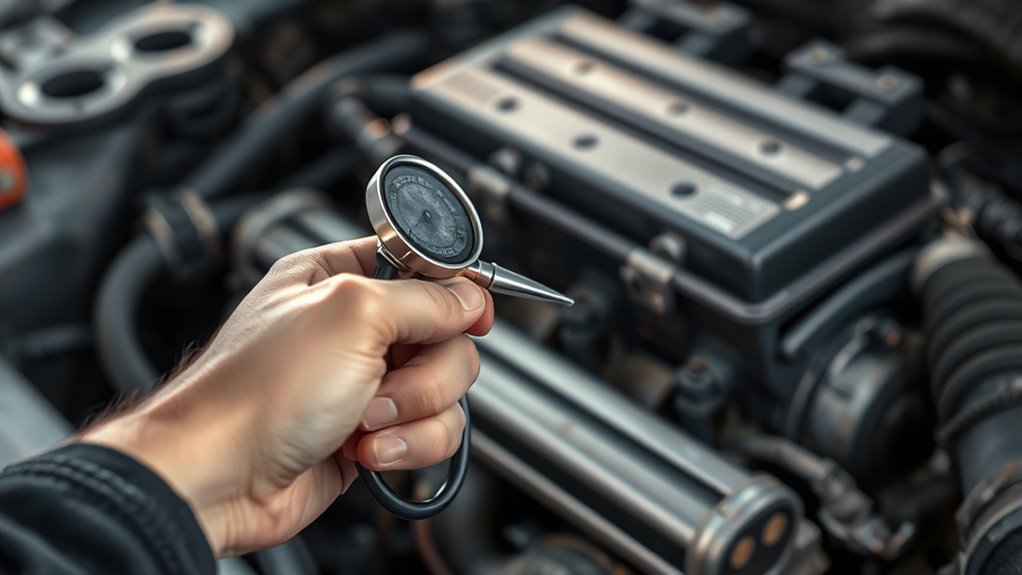
When you listen closely near vacuum hoses or intake components, you might hear a distinct hissing sound that signals a vacuum leak. This hissing sound happens as unmetered air escapes from the vacuum system, messing with normal engine performance.
Engine idle fluctuations often come with this noise. The idle speed can wobble unexpectedly because inconsistent air is entering the intake.
Engine idle may fluctuate unexpectedly due to inconsistent air entering the intake system.
For spotting a vacuum leak, try using a stethoscope or just put your ear close to the vacuum hoses to find where the leak is coming from. When you hear that hissing, keep an eye on the engine idle — stable or unstable — since that confirms air is escaping where it shouldn’t.
If you notice consistent hissing and clear engine idle changes, that’s a strong sign of a vacuum leak. This can cause poor engine performance and really should be fixed quickly.
Listening carefully is a simple but powerful way to diagnose vacuum system issues before you move on to more hands-on checks.
Spray Soapy Water or Cleaner to Confirm Vacuum Leak Locations
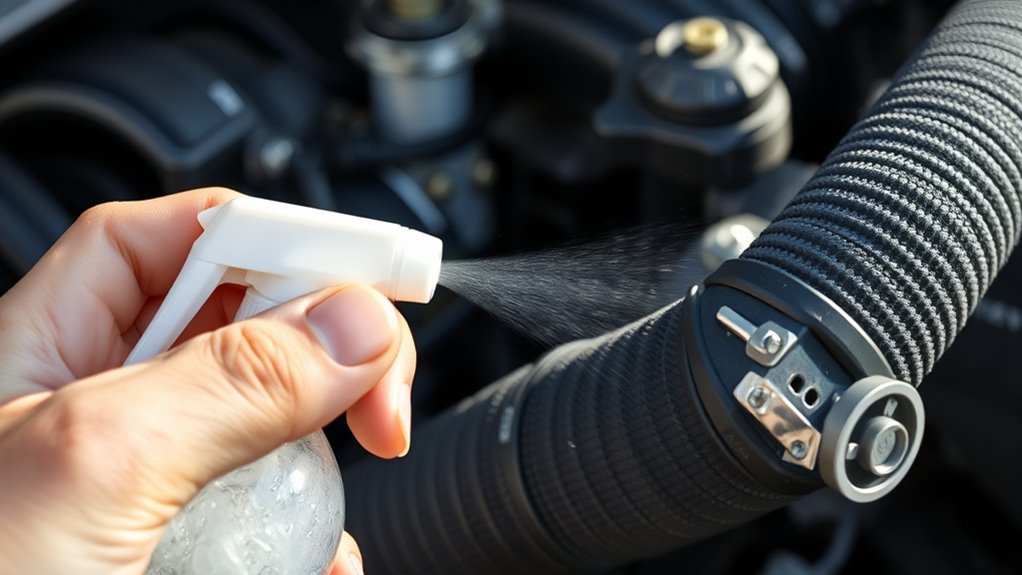
Although listening can help identify a vacuum leak, spraying soapy water or a cleaner onto suspected hose connections provides a clear visual confirmation. While the engine is idling, spray a mixture of soapy water or brake cleaner onto vacuum hose connections around the air intake system.
Watch closely for bubbles forming, which indicate escaping air and help you detect vacuum leaks. Use a spray bottle to apply the solution evenly, covering all potential leak points without oversaturating electrical parts or hot surfaces.
If you don’t spot bubbles on the first try, repeat the process at different locations since small leaks can be tricky to find. While a smoke machine is another effective tool for leak detection, soapy water or brake cleaner offers a simple, accessible way to confirm leak spots.
This method complements your initial listening tests, helping you accurately find a vacuum leak and verify your engine runs smoothly.
Frequently Asked Questions
What’s the Easiest Way to Check for Vacuum Leaks?
The easiest way to check for vacuum leaks is by spraying soapy water on hoses while the engine runs. You’ll see bubbles where air escapes, quickly pinpointing leaks without needing special tools or complicated procedures.
It’s a simple trick anyone can do at home. Just keep an eye out for those bubbles, and you’ll find the problem fast!
Can You Use WD-40 to Find a Vacuum Leak?
Finding a vacuum leak with WD-40 is like shining a flashlight in the dark—you can spot it quickly. Spray suspected areas; if the engine revs up, you’ve found the leak.
Just be careful around hot parts! You don’t want to spray WD-40 on something that’s too hot and cause a fire hazard.
Where Is the Most Common Place for a Vacuum Leak?
The most common place for a vacuum leak is the intake manifold gasket. It often deteriorates over time, letting unmetered air into your engine and causing rough idling, poor performance, and increased fuel consumption.
What Are the Methods of Vacuum Leak Test?
You can test for vacuum leaks by visually inspecting hoses, spraying carb cleaner or soapy water, listening for hissing sounds, using a vacuum gauge, or employing a smoke machine to spot escaping smoke at leak points.
It’s pretty straightforward to start with a visual check of all hoses. If you see any cracks or wear, that might be your leak right there.
Spraying carb cleaner or soapy water can help too. When you spray it around the hoses and connections, any bubbles or changes can show where air is escaping.
Listening carefully for hissing sounds is another simple trick. Sometimes the leak makes a noise you can hear if you’re quiet and patient.
Using a vacuum gauge gives you a more precise way to detect leaks. It measures the vacuum pressure, and if it’s off, you know there’s a problem somewhere.
And finally, a smoke machine is really handy. You pump smoke into the system and watch for where it escapes — that’s your leak!
Conclusion
Now that you know how to check for vacuum leaks, don’t underestimate how small cracks can cause big engine problems. You might think a silent leak isn’t a big deal, but even a tiny hissing sound or slight idle fluctuation can mean trouble.
By visually inspecting, listening carefully, and using soapy water, you’ll catch leaks early and save yourself costly repairs. These simple steps really work to keep your engine running smoothly.
Remember, checking for vacuum leaks regularly is key to maintaining your engine’s health. Small leaks might seem harmless, but they can lead to poor performance and expensive repairs down the line. So, take a few minutes, follow these easy steps, and keep your engine in top shape. Trust me, your car will thank you!